The old computer waited.
You clicked a button. It responded. You filled a form. It stored the record. You opened ten tabs, compared details, copied a number, checked a calendar, wrote a message, and hoped you did not lose the thread halfway through. Most software was powerful, but passive. It could move fast only after a person had already decided what should happen next.
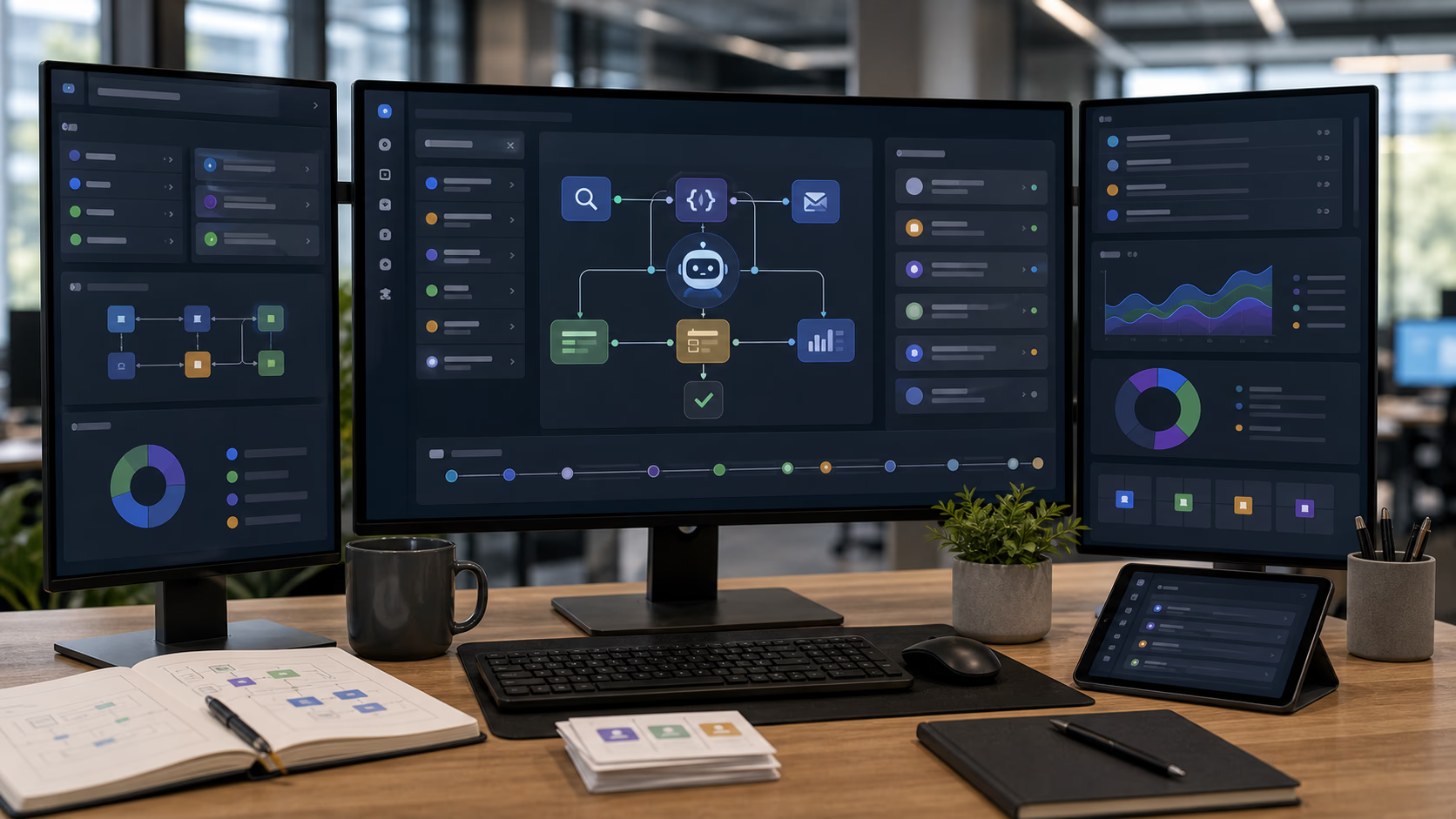
An AI agent changes that rhythm. It is a software system that can pursue a goal on behalf of a person or organization. It can break the goal into steps, choose tools, inspect the result, revise its plan, and continue until it has something useful or until it needs help.
That definition matters because an agent is not just a chatbot with a fashionable name. A chatbot talks. An agent acts.
The plain definition
An AI agent combines four things:
- A model that can reason over language, images, code, or other inputs.
- Tools that let it search, read files, write files, use APIs, browse pages, run code, or operate software.
- State, memory, or context so it can keep track of what it is doing.
- Rules that define what it may do alone and when it must ask.
OpenAI described agents in March 2025 as systems that can independently accomplish tasks for users, supported by tools such as web search, file search, computer use, orchestration, and tracing. In April 2026, OpenAI expanded its Agents SDK with controlled workspaces where agents can inspect files, run commands, edit code, and continue long tasks in sandboxes. Those details are not trivia. They show the center of gravity: agents need a place to work, tools to act, and records of what happened.
What makes an agent different
Traditional automation is excellent when the path is fixed. If an invoice arrives, extract the amount, match the vendor, route approval, and archive the PDF. The workflow is written in advance.
Agents are useful when the path is not fully known. Suppose a customer asks why a shipment is late. The agent may need to read the order record, check the carrier, inspect inventory, look for a known service issue, draft an apology, propose a refund, and wait for a human to approve the refund before sending. The agent is not simply following one line of instructions. It is navigating.
That navigation is why agents feel new. They sit between human judgment and ordinary software automation. They can do some of the connective work that people do all day: gather, compare, decide, draft, check, and hand off.
The agent loop
Most agents follow a simple loop:
- Read the goal.
- Make a plan.
- Use a tool.
- Observe the result.
- Decide what changed.
- Continue, stop, or ask for help.
This loop can be short, like searching a knowledge base and writing an answer. It can also be long, like investigating a bug across a repository, editing code, running tests, reading the failure, and trying again.
The loop is powerful because the agent can recover from small surprises. It is dangerous for the same reason. A system that can keep trying can also keep trying the wrong thing. Good agent design is not only about giving the model more freedom. It is about shaping the work so that the system can make progress without quietly crossing lines it should not cross.
Why the word became popular
AI agents became a serious product category because models improved in three connected ways.
First, they became better at multi-step reasoning. Second, they became better at tool use. Third, they became better at working across mixed material: text, files, images, code, tables, and sometimes screens.
Anthropic’s public beta for Claude computer use in 2024 made the idea vivid: a model could look at a screen, move a cursor, click buttons, and type. Microsoft spent 2025 talking about agents across GitHub, Azure AI Foundry, Copilot Studio, and the open agentic web. Google positioned Agentspace around enterprise knowledge, search, and agent adoption. Salesforce put Agentforce in the language of a digital workforce.
The names differ. The pressure behind them is the same. Software is moving from answering requests to carrying out work.
What agents are not
Agents are not employees. They do not understand consequences the way people do. They can misread a page, use stale context, overtrust a source, invent a missing link, call the wrong tool, or make a confident mess. They can also be manipulated by malicious instructions hidden inside pages, documents, emails, or tickets.
An agent should be treated like a capable junior operator with unusual speed, no common sense beyond its training and tools, and a need for clear permissions. That is not an insult. It is the right starting point.
A useful test
When someone calls a product an agent, ask five questions:
- What goal can it pursue?
- What tools can it use?
- What does it remember during the task?
- What actions require approval?
- How can a person inspect what it did?
If the answers are vague, you may be looking at ordinary chat in a new jacket. If the answers are concrete, you are looking at the early version of a new kind of software.
Put the guide into a real workflow
AI agent work becomes useful when the task, evidence, permissions, and review loop are all visible. For What AI Agents Are: The Moment Software Started Taking Initiative, the important question is not whether an agent sounds capable. It is whether the surrounding workflow can tell good progress from confident drift.
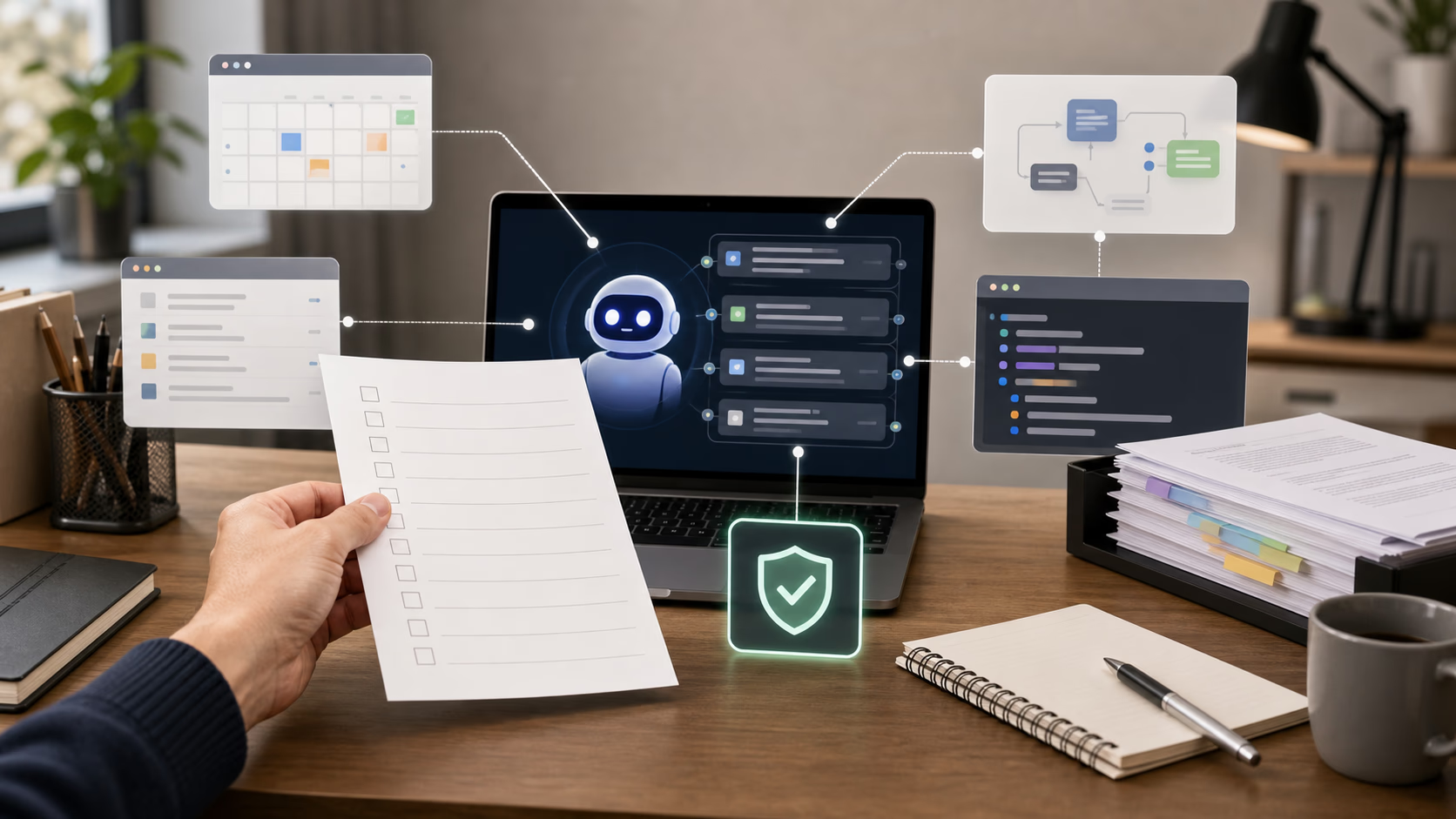
Start with a concrete job. Name the input, the desired output, the tools allowed, the files or systems in scope, and the point where a human should review. The clearer the boundary, the easier it is to give the agent autonomy without losing control of the result.
Then decide what evidence counts. A passing test, a reproduced bug, a saved artifact, a source citation, a diff, or a deployment log can all be evidence. A fluent status update is not enough by itself. The workflow should make verification natural.
Good agent practice also includes stopping rules. If credentials are missing, instructions conflict, tests cannot run, or the task touches sensitive data, the agent needs a path to pause and ask. Escalation is not failure. It is part of keeping the system trustworthy.
This definition of agents should be read as an operating habit, not a slogan. The goal is a workbench where humans stay in charge of intent and standards while agents handle bounded execution with a clear audit trail.
What to notice after you use this guide
After finishing this guide, choose one next action that can be observed. A guide becomes more valuable when it changes a real choice, not only when it adds more facts.
Name the context. Where are you, what are you trying to improve, and what would count as a good result? The answer keeps the advice grounded in daily life.
Change one variable first. A small controlled change teaches more than a dramatic reset because you can tell what mattered.
Keep one note. Write the date, the choice, the outcome, and the thing you would repeat. The note can be plain and still useful.
Look for tradeoffs. Better AI agent decisions often involve cost, time, maintenance, comfort, fit, risk, or skill. Seeing the tradeoff makes the decision calmer.
If the result is unclear, wait before adding another fix. Some lessons need a second use, a different day, or a quieter comparison.
If the stakes are high, use qualified sources and professional guidance where appropriate. A guide can organize the question, but it should not pretend to replace expertise.
The goal is practical confidence. What AI Agents Are: The Moment Software Started Taking Initiative should make the next step easier to choose and easier to repeat.