Beginner Aquarium Plants That Forgive Real Life
Choose beginner aquatic plants for planted aquariums by matching light, substrate, growth speed, trimming needs, and livestock compatibility.
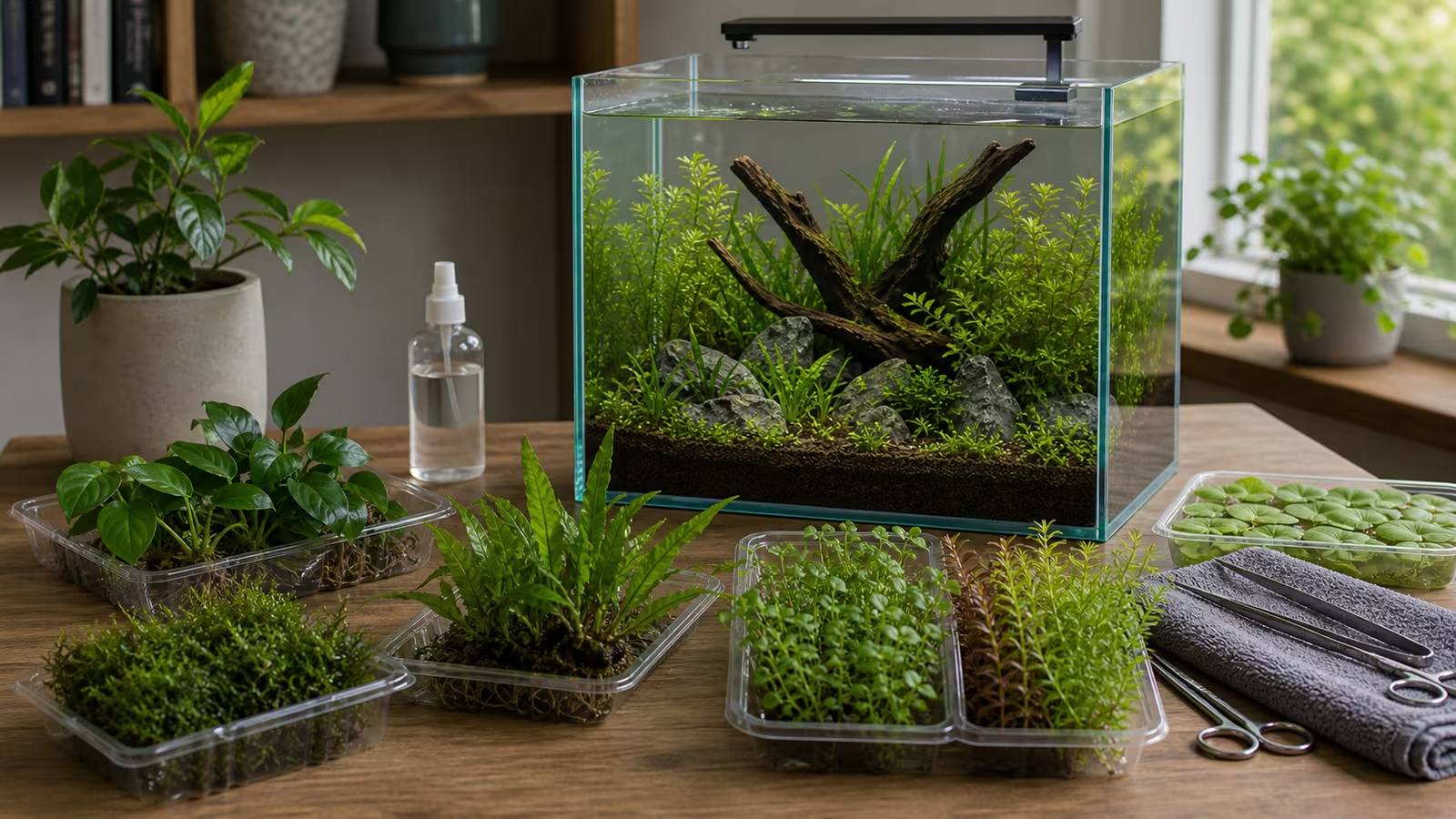
The easiest aquarium plants are not always the cheapest, fastest, or most dramatic. A good beginner plant can tolerate a learning curve, but it still needs suitable light, nutrients, and regular care.
Start with plants that match your equipment. If the tank has modest light and no injected CO2, choose plants known to grow in those conditions. Check the adult size, temperature range, and water preferences of the particular species or variety, as well as whether your intended fish or other animals may uproot or eat it.
Heads up
Plant sourcing boundary
Buy aquatic plants from responsible sources, inspect for pests, and never release aquarium plants into local waterways. Some species may be restricted or invasive in your region, so check local rules before buying or trading. Never empty aquarium water into a waterway or storm drain. Connecticut’s environmental agency
explains why even apparently dead material can spread. For unwanted trimmings, check local disposal guidance; the invasive species disposal guide
offers a starting point.
Reliable First Choices
| Plant and place | Why it can work | What to plan for |
|---|---|---|
| Anubias on wood or rock | Slow-growing and suited to modest light; smaller varieties fit as accents. | Keep the thick rhizome exposed. Check the variety’s eventual size. |
| Java fern on wood or rock | A low-light option with taller leaves and no need for planted substrate. | Keep its rhizome exposed and leave room for the leaves. |
| Cryptocoryne in the substrate | A rooted midground plant available in different sizes and leaf colors. | Plant the roots, leaving the crown where the leaves meet the roots above the substrate. Some old leaves may melt after a move. |
| Moss on hardscape | Softens wood or rock and provides surfaces for shrimp to graze. | Attach a thin patch and trim it before it traps too much debris. |
| An easy stem, such as water wisteria (Hygrophila difformis), toward the back | Faster growth adds plant mass and can use nutrients in the water. | Check local rules and adult size; trim and replant healthy tops as needed. |
| Floating plants at the surface | Provide shade and can grow quickly in suitable conditions. | Check the species’ needs and local status; thin regularly, leaving open water for light, feeding, and surface movement. |
Tropica’s profiles describe Anubias nana and Java fern as low-light plants. The standard Java fern can reach 15–30 cm or more in height, so check the variety before choosing it for a small tank. For Cryptocoryne wendtii ‘Tropica’ , Tropica gives a leaf length and rosette width of 10–20 cm: a small purchase still needs room to grow. Tropica includes water wisteria in a no-injected-CO2 layout , where it describes the plant as fast growing. That layout also uses light and fertilizer; no injected CO2 does not mean no care. Availability and legal status vary by location.
Fast-growing plants use nutrients, but they do not guarantee an algae-free tank. Light, plant health, maintenance, and other conditions matter too. Choose a plant you can keep trimmed rather than adding a species solely as an algae fix.
Match Plant To Place
| Area | Beginner-Friendly Options |
|---|---|
| Hardscape | Anubias, Java fern, Bucephalandra if budget allows, moss |
| Midground | Crypts, small swords with enough room, compact stems |
| Background | Water wisteria or other suitable stems, taller crypts, Vallisneria where legal and suitable |
| Surface | Floaters managed with a ring or open feeding area |
For a simple first list, put a small Anubias on a removable rock, plant a few crypts with space between their crowns, and group several individual water wisteria stems behind them. This is a starting layout, not a required combination: use a different legal, suitable stem if wisteria will outgrow the tank or needs more trimming than you want to do. Leave space to reach the glass, filter, and substrate.
Choose the faster plant by the work you prefer: stems need cutting and occasional replanting, while floaters need regular scooping and an open area at the surface. A very small tank can fill quickly with either. If you prefer less frequent trimming, start with the Anubias and crypts and accept slower growth; they still need light and nutrients.
Plant And Care For Them
- Inspect before planting. Look for damaged tissue, algae, and hitchhikers. Remove pots, bands, and packing material gently, and rinse tissue-culture medium from plants. Separate individual stems or rosettes rather than planting a whole bundle tightly together. See Plant Quarantine and Pest Inspection for ways to observe new plants before introducing them.
- Place each plant by its growth form. Secure Anubias or Java fern to hardscape with the rhizome exposed; tie loosely enough not to crush it and check ties as the plant grows. The rhizome is the thick horizontal stem from which leaves and roots emerge, not the thin roots themselves. Bury crypt roots but keep the crown exposed; remove the lower leaves from stem cuttings and plant the bare ends individually, with space for light and flow. Tropica’s planting guide illustrates these different approaches.
- Keep light and nutrition consistent. A timer set to about eight hours is a practical starting point, not a guarantee for every fixture or tank. If algae becomes a problem, check light intensity and other conditions rather than automatically extending the lighting period. Crypts may benefit from root tabs in inert gravel or sand; plants attached to hardscape also need nutrients in the water. Follow fertilizer directions and adjust to the plant list and tank rather than adding more whenever growth slows. See Light Balance for Aquatic Plants and Fertilizing Aquatic Plants .
- Observe and maintain. Remove soft, decaying leaves, thin floaters, and trim stems before they shade the rest. Newly submerged crypts can lose old leaves while adapting; leave a firm crown and roots in place and look for new growth. Check new growth each week rather than expecting damaged leaves to repair themselves. If tissue keeps decaying or the crown becomes soft, investigate placement, light, and water conditions rather than assuming all melt is normal. The plant melt guide helps with the distinction.
On Java fern, small black spots on the undersides of leaves can be reproductive structures, according to Tropica’s profile; they are not automatically a disease. Look at the whole plant, including the firmness of the rhizome and the condition of new leaves, before treating it.
Plants do not replace fishless cycling, water testing, or water changes. Before adding animals, follow the Cycling a Planted Aquarium plan and choose livestock suited to the tank.
What To Avoid At First
Some plants are sold as easy but need stronger light, CO2, soft water, frequent trimming, or careful nutrition. Carpeting plants are a common example. Red plants can be possible, but many beginners buy them before the tank can support the color and compact growth they expect.
Also avoid non-aquatic houseplants sold for full submersion. They may survive underwater for a while and then rot. Some houseplants can grow with roots in aquarium water and leaves above it, but that is a different setup; confirm the plant’s needs and compatibility before trying it.
Common Mistakes
- Burying the rhizome of Anubias or Java fern, or the crown of a crypt.
- Expecting a small amount of plant growth to prevent algae on its own.
- Choosing plants only from a social-media photo, without checking adult size and needs.
- Letting floaters block every surface opening or shade the plants below.
- Throwing away crypts at the first sign of transition melt without checking the crown and new growth.
Related Fondsites Path
- Epiphyte Plants: Anubias and Java Fern for hardscape plants.
- Carpeting Plants Reality Check before buying a foreground carpet.
- Floating Plants Control for managing shade and surface access.
- Houseplant Clinic for the habit of reading plants from patterns, not panic.
Try This Next
Build a first plant list with a slow hardscape plant, a rooted plant, and a faster-growing stem or floater. Check each one’s adult size, light and temperature needs, livestock compatibility, and local rules. Sketch its position and decide when you will trim it before buying.