CO2 Versus Low-Tech Planted Tanks
Choose between low-tech planted aquariums and injected CO2 by weighing plant goals, maintenance, equipment risk, livestock safety, and budget.
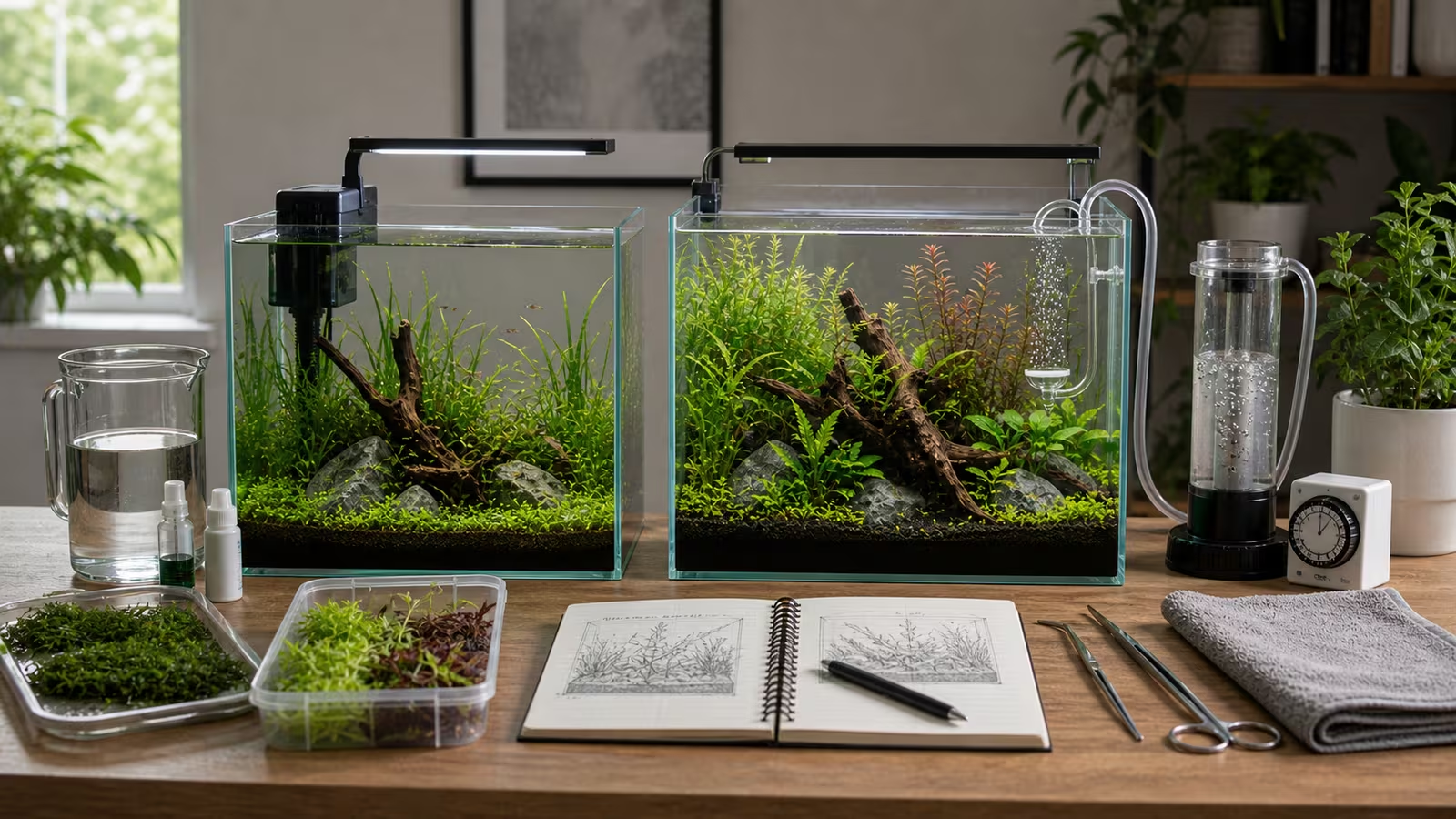
Injected CO2 can support faster growth and make some demanding plants easier to grow. It also adds equipment, expense, and another system to monitor. A low-tech tank can be lush and rewarding without injection, though a particular carpet or fast-growing layout may take longer or need different conditions.
Choose for the plants you want and the routine you can sustain. Neither path replaces cycling, water changes, suitable stocking, or attention to the animals.
Heads up
CO2 safety boundary
Too much dissolved CO2 can harm or kill livestock. Secure the cylinder, follow equipment instructions, and seek experienced help before adding CO2 to a stocked tank. If animals show distress, turn off the CO2 and increase surface agitation or aeration immediately; seek experienced aquatic or veterinary help if they do not recover.
What Low-Tech Means
Low-tech usually means no injected CO2, not no equipment or care. Plants still need carbon, available from dissolved CO2 and other sources in the water. A filter, suitable light on a timer, a heater when needed, and regular maintenance remain part of the setup. Livestock waste supplies some nutrients, but may not supply everything the plants need.
Anubias, Java fern, many crypts and mosses, some floaters, and undemanding stems are useful starting choices. Check the species and its adult size rather than assuming every plant in a group has the same needs. Attach Anubias and Java fern with their rhizomes exposed; rooted plants may need nutrients at their roots. The low-tech setup guide walks through planting, cycling, and stocking.
Growth is often slower without injection, which can mean less frequent trimming, but it is not a promise of a maintenance-free tank. The Ornamental Aquatic Trade Association’s planted aquarium guide notes that many planted tanks grow well without added CO2, while some species struggle without it.
What CO2 Changes
Injection increases the carbon available to plants. With suitable light, nutrients, and circulation, it can help support demanding foreground plants, dense stems, and faster growth after pruning. Results still depend on the particular plant and the conditions at its leaves. Adding gas does not fix poor stocking, an uncycled filter, inadequate light or nutrients, or neglected maintenance.
More light can increase demand for carbon and nutrients, while faster growth can mean more trimming and closer attention to the whole system. CO2 injection is an addition to a balanced setup, not a reason to increase light immediately. A missed refill, clogged diffuser, or timer problem can interrupt a routine. Use Light Balance for Aquatic Plants before turning up the fixture in pursuit of faster growth.
Choosing A Path
| Goal or constraint | Practical starting choice |
|---|---|
| Relaxed beginner aquascape with adaptable plants | Start low-tech and allow time for growth. |
| Shrimp-focused nano tank | Low-tech avoids the added CO2 adjustment; if using injection, monitor animals closely and seek experienced help. |
| Dense carpet in bright light | Check the exact plant’s needs; injection may improve the chances of the desired result. |
| Minimal equipment and recurring costs | Low-tech avoids a cylinder, regulator, and refills. |
| Fast, frequently trimmed stem layout | CO2 may fit if you can maintain and monitor the system. |
If you are unsure, start with plants that suit a low-tech tank. You can add injection later; record your light schedule, plant growth, and livestock behavior first so you have a baseline for comparison. If you want a particular demanding plant from the start, check its requirements and budget for the complete system before buying it.
A carpet is not a single requirement: some foreground plants can grow without injection, but may spread slowly or remain sparse. For example, Tropica describes Lobelia cardinalis ‘Mini’ as a low-light foreground plant that does not need injection. It is a compact, bushy stem plant, not a guarantee of a grass-like lawn. A dense lawn of a more demanding plant is a different goal. Compare options in Carpeting Plants Reality Check .
Price The Whole Routine
For low-tech, budget for the tank, filter, appropriate heater and light, plants, water conditioner, tests, and any substrate or fertilizer your plants need. For pressurized CO2, add a compatible cylinder and regulator, CO2-rated tubing, a diffuser, appropriate check valve, and a way to control the schedule, such as a solenoid and timer. Check compatibility and manufacturer instructions before buying parts separately.
Also ask where the cylinder can be secured, where it can be refilled or exchanged, what refills cost locally, and how you will check and clean the equipment. Before committing, decide who will check the system and animals when you are away, and how you will recognize and respond to a problem. Faster plant growth may bring additional trimming and fertilizer costs. The Aquascape Budget Starter helps price the rest of the tank.
A bubble counter is useful for observing a setting, but bubbles per second are not a transferable dose or a measurement of dissolved CO2. Tank size, diffusion, circulation, and surface movement differ. A drop checker gives a delayed, approximate indication; follow its own instructions for solution and placement. For example, ADA’s drop checker instructions note the delay and limitations at extreme pH or KH. Neither tool proves the water is safe for every animal or replaces watching livestock. See CO2 Tuning for Stable Planted Tanks for timing, distribution, and observation.
If You Decide To Add CO2
- Start with a stable routine. Establish suitable light, flow, plant care, and water changes first. Confirm that the aquarium is cycled before adding animals.
- Install and inspect the system. Secure the cylinder and follow the equipment directions for connections, leak checks, and check-valve placement. Plan for consistent on and off times, with CO2 starting before the lights and ending before lights out, and maintain surface movement for gas exchange. The timing depends on the tank; observe the daily pattern rather than copying a fixed schedule.
- Adjust gradually and observe. Seek experienced help for a stocked tank. Watch animals throughout the light period, including after any adjustment. Rapid breathing, gasping at the surface, loss of balance, or unusual shrimp behavior can indicate distress; these signs have other possible causes too, so check water quality as well.
- Change one non-urgent variable at a time. Record the light schedule, equipment settings, animal behavior, and new plant growth. Give plants time to respond before changing the light or fertilizer as well.
If livestock are distressed, stop injection and increase aeration immediately rather than waiting for a test or indicator to change. The Merck Veterinary Manual describes excess CO2 and low oxygen as fish hazards and recommends vigorous aeration for CO2 toxicity. Check ammonia, nitrite, temperature, and other relevant conditions, and get help if needed. Keep the filter running; do not restart injection until the animals have recovered and the cause and equipment have been checked. The water testing guide covers interpreting tests in context.
Common Mistakes
- Buying CO2 before learning water changes, testing, and plant selection.
- Running strong light on a low-tech tank and assuming more light always means better growth.
- Adding CO2 to a stocked aquarium without monitoring livestock behavior.
- Treating CO2 as a substitute for fertilizer, flow, or maintenance.
- Choosing demanding plants while wanting a very low-attention tank.
Related Fondsites Path
- Low-Tech Planted Tank Setup for the simpler path.
- Plant Light Matcher for matching ambition to light.
- Aquascape Budget Starter for cost planning.
Try This Next
Write down your three must-have plants, the result you want from each, and how much time you can spend trimming and checking equipment. If adaptable plants satisfy the plan, start low-tech. If a demanding carpet or fast stem layout matters most, price the complete CO2 system and its upkeep before buying the plants.