Driftwood Tannins and Preparation for Planted Tanks
Prepare aquarium driftwood, understand tannin-stained water, protect livestock and plants, and decide when amber water is harmless, useful, or unwanted.
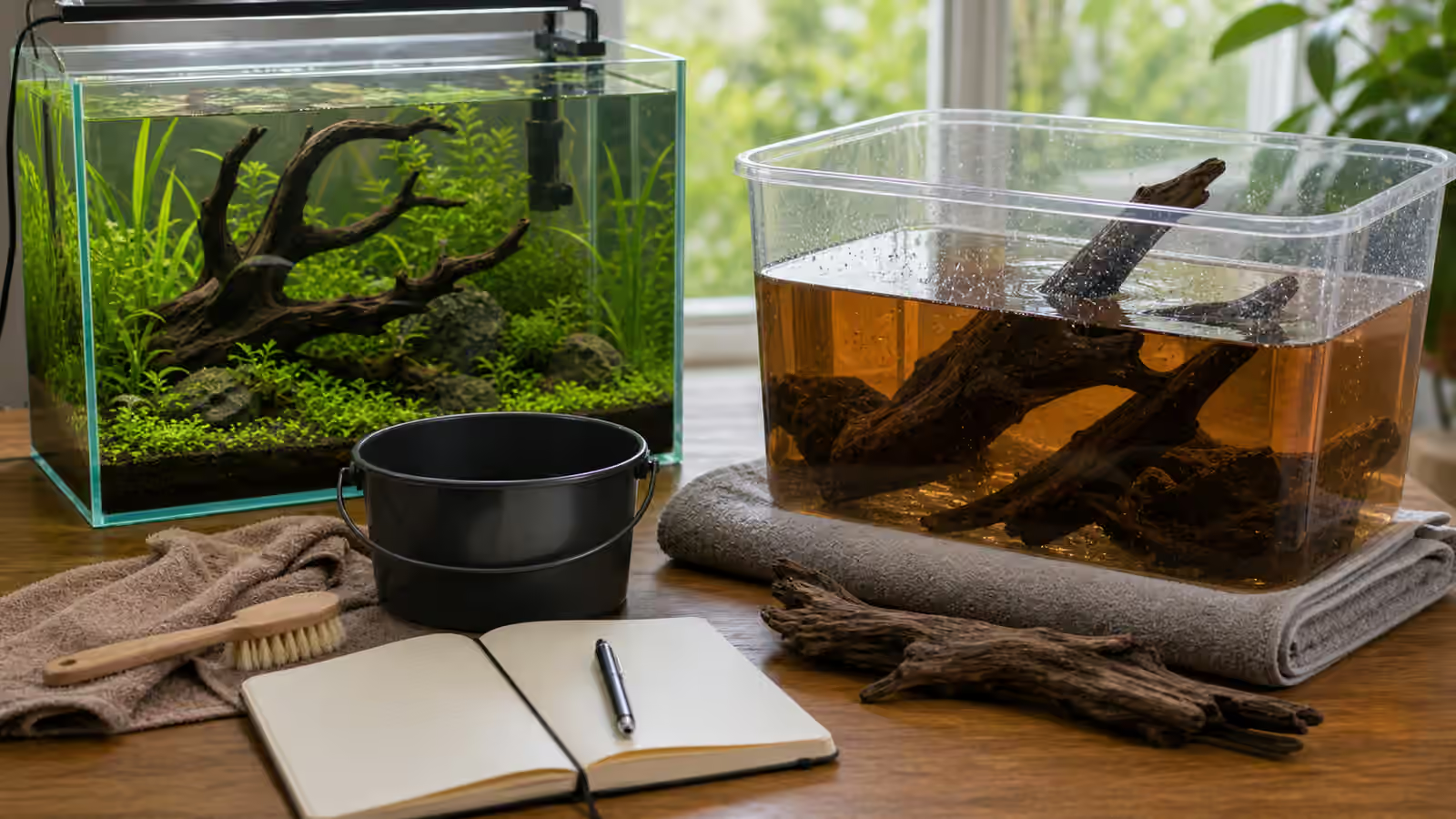
Driftwood changes a planted aquarium before any plant grows on it. It gives scale, shade, anchoring points, grazing surfaces, and a natural line for the eye to follow. It can also tint water amber, grow temporary biofilm, float when you expect it to sink, and carry debris into the tank if it is chosen or prepared carelessly. None of those facts make driftwood a bad material. They make it a material that deserves a little patience before it becomes the center of the aquascape.
Tannins are the most visible surprise. Many aquarium woods release organic compounds that stain water tea-colored. Some aquarists like the look and the softer visual mood. Others want crystal-clear water because the aquascape depends on bright greens and clean depth. The key is to decide what kind of tank you are building, then prepare the wood enough that amber water is a choice rather than a shock.
Heads up
Hardscape boundary
Use aquarium-safe wood from reliable sources. Do not collect or use wood that may be contaminated, chemically treated, rotten, protected by local rules, or unsafe for the livestock you plan to keep.
Tannins Are A Water Clue, Not Dirt
Amber water from driftwood is often mistaken for dirty water. It can look alarming if the aquarist expected a clear display. Tannins themselves are not the same as ammonia, nitrite, or decaying waste, and many fish species naturally live in tannin-stained waters. Still, a beginner should not use that general truth as permission to ignore water quality. Stained water can coexist with safe water, and stained water can also hide other problems.
Testing matters because color alone does not tell the whole story. If a new piece of wood tints the tank but ammonia and nitrite remain undetectable, livestock behave normally, and the wood is sound, the issue may be aesthetic rather than urgent. A foul smell, cloudy water, soft disintegrating wood, stressed animals, or detectable ammonia or nitrite calls for a closer look. Remove questionable wood and decaying material, test the water, and respond to unsafe readings with an appropriate partial water change using conditioned, temperature-matched water. Water Testing for Aquascapes explains how to interpret the results.
Wood can also lower pH, but the effect depends on the amount of wood, water volume, and buffering. In strongly buffered water, a small piece may have little effect, as Aqueon’s pH guide explains. Record pH and carbonate hardness (KH) before adding wood, then check them again over the following days and after water changes, especially in a low-KH tank. Do not use water color as a pH test or rely on wood to reach a precise target. The KH, GH, and pH guide gives the wider water-chemistry context.
Tannins usually lessen with time, soaking, and water changes. Some woods release heavily at first and then calm down. Others continue tinting for a long period. The aquarist does not need to remove every trace before using the wood, but knowing its behavior reduces surprises.
Soaking Is Preparation And Observation
Soaking driftwood in a clean aquarium-only container lets you see three things: how much it floats, how much it stains water, and whether loose debris or soft areas appear. The container does not need to be fancy. It should be large enough to submerge the wood as much as possible, placed where spills will not damage anything, and kept away from household cleaners or scented products.
Rinse and scrub the piece with plain water and an aquarium-only brush, removing loose dirt and splinters. Submerge it in the container with a secure aquarium-safe weight, then change the water as it darkens. Fluval’s driftwood guidance suggests starting with about a week of soaking and changing the water once or twice daily; treat that as a starting point, not a deadline. Check the piece and smell the water at each change. Discard wood that becomes mushy or smells rotten.
Before installation, see whether the piece stays submerged without the weight and whether the tint released between water changes is acceptable to you. Some pieces take weeks to sink, and others may never sink on their own. A longer soak reduces the initial staining but cannot promise permanently clear water. If the wood still floats, secure it with a stable aquarium-safe anchor or continue soaking; do not rely on a precarious rock pile that could shift and damage the glass or uproot plants. Rinse with conditioned water before placing it in the tank; see Dechlorinator and Source Water .
Avoid soaps, detergents, bleach, and scented cleaning products. Boiling a small piece is optional and can help release tannins, but hot water and heavy pots can cause burns, and boiling may damage wood. Never force a large piece into a pot or pour boiling water into an aquarium. Soaking or boiling does not make contaminated or treated wood safe.
Biofilm Is Common On New Wood
New driftwood often grows a pale or translucent film after it is submerged; Fluval notes that this is common and usually passes on its own. This can look unpleasant, especially in a carefully planted tank. In many cases it is temporary biofilm associated with fresh organics from the wood. It can be siphoned, gently brushed, or left for suitable cleanup organisms if the tank is otherwise stable and the livestock plan supports them.
Biofilm is not the same as a dead fish, a chemical spill, or a cycle crash. Context matters. If the film is light, the water tests are safe, and livestock behave normally, it may be a passing phase. If the wood smells rotten, sheds mush, clouds the tank heavily, or causes distress, remove it and reassess the material. A good aquascape does not require tolerating questionable wood.
Snails and shrimp may graze on biofilm, but they should not be added to an unready tank just to clean a new branch. Stocking should still follow the animal-first restraint in Plant Before Fish Plan and Shrimp Tank Basics . Cleanup animals are livestock, not disposable tools.
Tannins And Aquascape Style
Amber water changes the way an aquascape reads. Greens may look warmer and darker. Red stems may appear richer but less crisp. Fine depth cues can soften. Fish colors may show differently. A nature-style layout with roots, shade, and leaf litter may welcome that mood. A bright carpeting layout with high clarity goals may not.
That visual decision connects to Aquascape Composition Rules That Actually Help . The wood is not only a biological object. It is a line, shadow, and mass in the composition. If the tint is darker than you want, soak the wood longer before use and keep up regular partial water changes with prepared, temperature-matched water. Aquarium activated carbon in the filter can also remove color; follow the media instructions and check medication directions because carbon can remove some medicines. Wood may continue releasing tannins, so the color can return as the media is used up. Aqueon’s guide to discolored water discusses both approaches. Keep biological filter media in place, and do not treat carbon or clear water as a substitute for testing or maintenance. If the amber tint supports the intended habitat mood, there is no need to remove it solely for appearance.
The important part is honesty. Do not call the water dirty only because it is warm-colored, and do not call it natural only to avoid testing and maintenance. A planted tank can be clear, lightly amber, or intentionally darkened. Each version still needs stable water, safe materials, and suitable animals.
Wood Placement Before Planting
Driftwood should be stable before delicate planting begins. A branch that shifts after carpeting plants are planted can uproot hours of work. A large piece placed against the glass can block cleaning. Wood that traps debris in a dead corner can create maintenance frustration. Dry layout planning helps, and the basics in Driftwood, Rocks, and Substrate still apply.
Think about the future size of plants. A beautiful branch may disappear behind fast stems if the background is planted too densely. Moss tied to wood may need trimming so it does not become a debris sponge. Keep the rhizomes of attached plants above the substrate, as explained in Attaching Epiphytes to Hardscape . The wood should make maintenance easier to understand, not harder.
Also consider removal. If the wood later needs to come out, can it be lifted without tearing the whole aquascape apart? A centerpiece buried under heavy stone, rooted plants, and equipment can become a trap. Stability matters, but so does serviceability.
Disposal And Source Responsibility
Aquarium wood, plants, and water should not be dumped carelessly outdoors. Even if the wood itself is not alive, it may carry plant fragments, snails, eggs, or organisms from the tank. Local rules vary, and invasive-species boundaries matter. Invasive Species Disposal for Aquariums is the right companion when hardscape leaves a tank.
Responsible sourcing matters too. Avoid wood from protected areas, polluted sites, roadsides, treated lumber, unknown yard waste, or places where collection is not allowed. A store-bought aquarium piece can still need rinsing and observation, but it begins with a clearer safety story than a mystery branch.
Well-prepared driftwood becomes part of the tank’s rhythm. It may tint water for a while. It may grow a film. It may need moss trimmed and debris siphoned from around its base. Those are manageable realities when the aquarist expects them. The best wood is not the piece that never changes the tank. It is the piece whose changes are understood before animals and plants have to live with them.