Epiphyte Plants: Anubias, Java Fern, and Friends
Use Anubias, Java fern, mosses, and other epiphyte plants in planted aquariums without burying rhizomes or creating algae magnets.
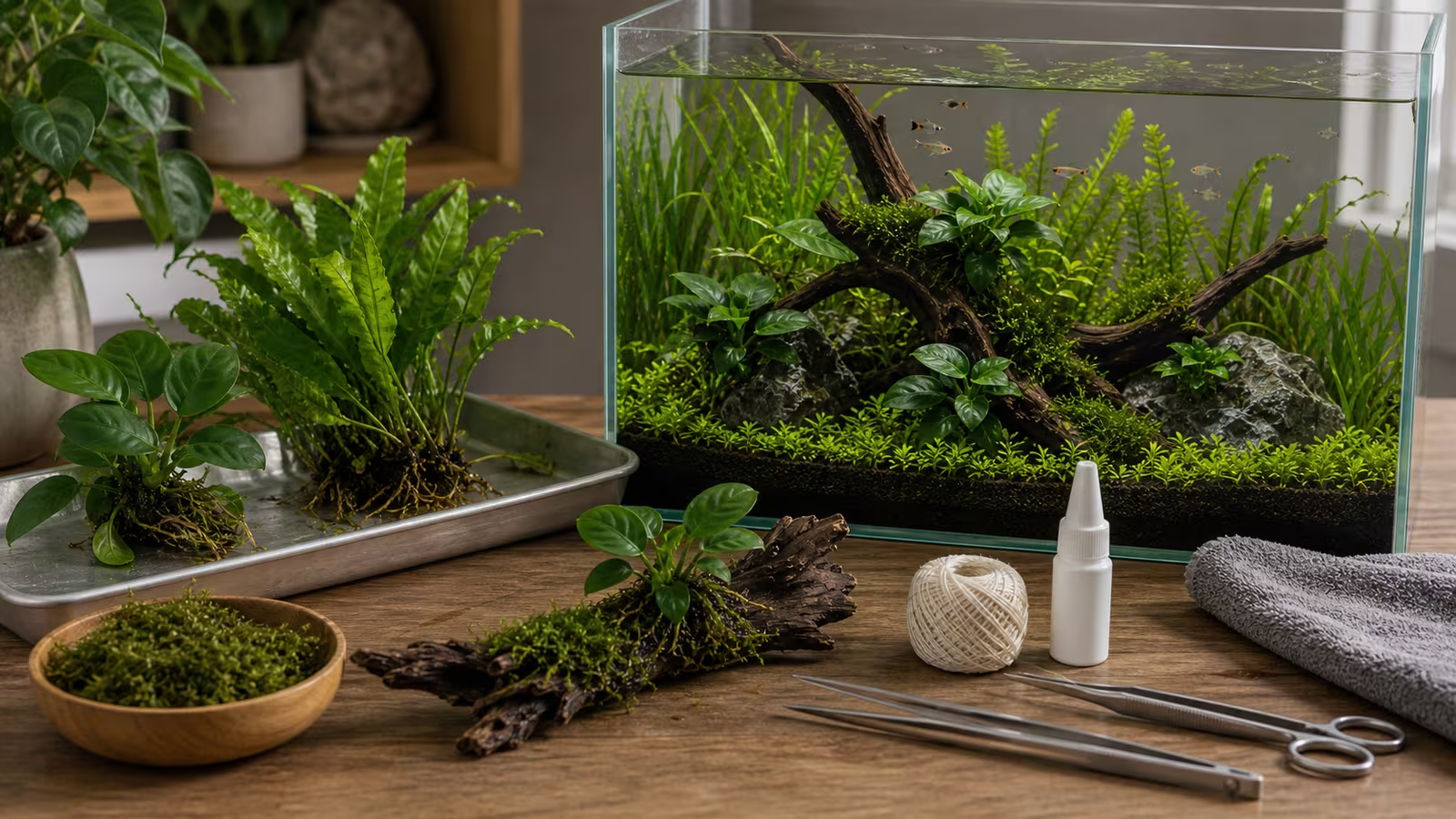
Epiphyte plants are useful in a beginner aquascape because they can grow on wood, stone, or other decor instead of needing a deep substrate. Anubias, Java fern, and many aquarium mosses add texture to hardscape and can work in a low-tech tank. They still need suitable light, nutrients, and regular care.
For Anubias and Java fern, the main rule is simple: do not bury the rhizome. This thick horizontal stem produces leaves and roots. Look for the thick stem joining the leaf bases: the thinner strands coming from it are roots. Roots can grip the hardscape or enter the substrate, but keep the rhizome above the substrate; covering it can lead to rot. Moss does not have the same rhizome structure, so attach it as a thin patch rather than looking for a stem to keep uncovered.
Heads up
Attachment boundary
Use aquarium-safe materials and avoid loose threads, sharp wire, or excess adhesive that could trap or injure animals. Follow the product directions and let glue set before exposing livestock.
Choose A Plant For The Space
| Plant | Best Use | What To Expect |
|---|---|---|
| Anubias ‘Petite’ | Small hardscape accents and nano tanks | Tiny leaves and slow growth; the rhizome can still spread 5–10 cm or more. |
| Larger Anubias | Midground anchors in bigger tanks | Leaf size and eventual spread vary by variety; check the plant label before buying. |
| Java fern | Taller texture on wood or rock | Ordinary Java fern can reach 15–30 cm or more; leave space above and around it. |
| Moss | Softening branches, shrimp grazing surfaces, fry cover | A thin patch fills in over time and needs trimming and debris removal. |
Tropica’s profiles for Anubias ‘Petite’ , Anubias barteri var. nana , and Java fern describe slow growth and low light demand. Java fern may be sold as Microsorum pteropus; check the specific variety because leaf shape and size differ. Do not assume a small plant at purchase will stay small.
Prepare And Place Them
- Inspect the plant for damaged tissue, algae, and hitchhikers. Remove the pot and packing material gently, including any rock wool around the roots. Rinse tissue-culture growing medium away. The plant quarantine guide covers inspection and observation before adding plants to a display.
- Choose a stable piece of wood or stone with a textured surface and enough space for growth. Leave a path for cleaning and keep filter intakes and equipment accessible. A small removable stone makes later maintenance easier.
- Set the roots against the surface with the rhizome visible. Gently wedge the plant in a crevice or secure it with cotton thread. Tie just firmly enough to hold it without cutting into the rhizome, and trim loose ends. Fishing line can also work, but check for loose loops and remove or tidy it when no longer needed.
- Alternatively, use a small amount of aquarium-safe cyanoacrylate gel according to its directions. Work outside the stocked tank when possible, keep glue away from leaves and growing points, and let it set. Avoid coating the rhizome. Keep the plant moist while you work. Spread moss thinly rather than attaching a thick clump.
- Check that the plant and hardscape stay in place when the filter runs. The roots may take time to grip, so inspect the attachment during routine maintenance and retie if needed. Once the roots hold, remove fishing line carefully without pulling the plant loose; cotton may break down on its own, but remove any loose pieces.
For more detail on methods and placement, see Attaching Epiphytes to Wood and Rock .
Light, Feeding, And Maintenance
Start with modest, consistent light. Anubias and Java fern can grow without injected CO2 in a suitable low-tech setup, but low light does not mean darkness. For a typical planted tank, eight continuous hours on a timer is a starting point; the fixture, tank, and livestock may call for a different schedule. A lightly shaded position can help protect their long-lived leaves from excessive light. If algae builds up, remove what you can and review the tank’s light duration and intensity, maintenance, and nutrient routine rather than assuming the plant needs more light. Change one part of the routine at a time and watch new growth before making another adjustment. Light Balance for Aquatic Plants and Algae Prevention Basics offer starting points.
Epiphytes still need nutrients, even when they are not planted in soil. Anubias and Java fern take up nutrients from the water, so a suitable liquid fertilizer can feed them without burying root tabs beneath the plant. Use a measured routine suited to the whole tank and follow the product directions; do not add extra fertilizer just because an old leaf is marked. Aquarium Co-Op’s rhizome plant guide explains water-column feeding and placement; Fertilizing Aquatic Plants helps plan a routine. Gently clear settled debris during water changes and remove badly decaying leaves at their base without cutting the rhizome. Keep healthy leaves, even if imperfect, while watching for new growth. Trim moss before it becomes a dense debris trap; see Mosses for Nano Aquascapes .
Make More Plants
A mature Java fern can be divided by cutting its horizontal rhizome with clean scissors, as described in Tropica’s profile . Leave each section with several healthy leaves and roots, then attach each piece with its rhizome exposed. Anubias can also be divided along a healthy rhizome; avoid cutting a small or struggling plant just to make more pieces.
Java fern can also produce small plantlets on its leaves, as shown in Aquarium Co-Op’s Java fern guide . Let them develop leaves and roots before gently separating and attaching them elsewhere. A plantlet is different from a dark spot alone, which may be a sporangium.
Read The Signs Before Changing The Tank
- Older leaves fading after purchase: Plants grown emersed may lose some old leaves as they adjust underwater. Remove soft, decaying tissue and watch for new growth. A firm rhizome is more encouraging than a soft, disintegrating one. See Plant Melt and Recovery .
- Black spots under Java fern leaves: These may be normal sporangia, the fern’s reproductive structures, according to the Tropica Java fern profile . Spots alone are not a reason to discard a firm leaf; widespread soft or decaying tissue deserves closer inspection.
- Algae or debris on slow leaves: Gently clear what you can and review light and maintenance. Slow-growing leaves remain in the tank for a long time, giving algae opportunities to settle; increasing light is not a reliable fix.
- Soft, mushy rhizome: Check whether it was buried, damaged, or trapped under debris. Remove decaying material with clean tools. If a firm, healthy section remains, keep it exposed and observe it; recovery is not guaranteed.
Common Mistakes
- Burying the rhizome or covering it with adhesive.
- Placing slow leaves under excessive light or in a spot where debris collects.
- Buying a large variety for a tiny layout without checking its eventual size.
- Letting moss become a dense mat or leaving loose attachment material around animals.
- Pulling a plant off its hardscape repeatedly before roots establish.
Related Fondsites Path
- Beginner Aquarium Plants That Forgive Real Life for first plant lists.
- Mosses for Nano Aquascapes for texture and care.
- Algae Prevention Basics for slow-leaf algae control.
Try This Next
Choose one stable piece of driftwood or stone and attach two or three small epiphytes before filling the tank. Leave the rhizomes exposed, allow space for growth, and check the ties as the plants settle. In an established tank, a removable stone offers the same advantage without dismantling the layout.