Filter Flow and Surface Agitation
Tune planted aquarium filtration, flow direction, surface agitation, intake safety, oxygen exchange, and calm zones for plants and livestock.
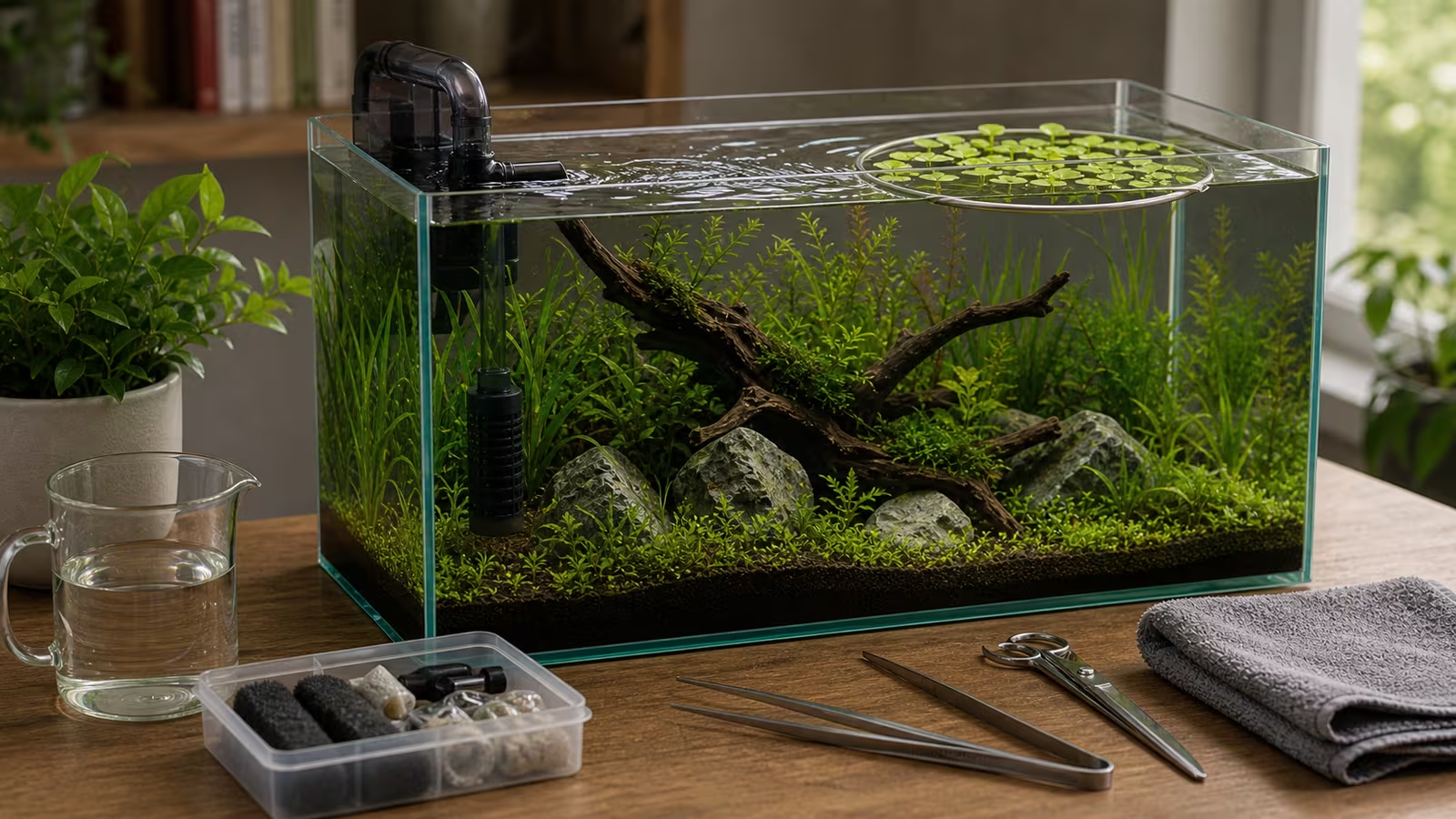
Filtration is not only about a box of media. In a planted aquarium, flow distributes oxygen, nutrients, and heat, and carries suspended waste toward the filter. Too much current, though, can exhaust fish, uproot plants, and make feeding difficult. The aim is circulation through the tank with sheltered places where animals can rest.
Surface movement is part of the same conversation. Water exchanges gases with the air at the surface, and a persistent film or a stagnant surface is a reason to check the setup. A visible ripple is a useful starting point, but it does not prove that oxygen is adequate everywhere in the tank.
Heads up
Equipment boundary
Use equipment sized and installed for the aquarium. Guard intakes for shrimp, fry, long fins, and small animals. If equipment overheats, leaks, shocks, or behaves unpredictably, stop using it and get qualified help.
What Good Flow Looks Like
Good flow is visible but not violent. Leaves may move gently, while fish can swim normally, feed, and rest without constantly fighting the current. Shrimp should not be pulled toward the intake. A little debris settling in a quiet spot is normal; a growing pile behind hardscape is a prompt to check circulation and remove the waste.
The right pattern depends on tank shape, hardscape, plants, filter type, and livestock. A long tank or dense plant wall can leave a sheltered pocket even when the outlet is powerful. Conversely, a small tank with a strong narrow jet can have too much current near the outlet and little movement elsewhere. Observe the whole tank, including behind wood and near the substrate.
Choose And Adjust The Flow
The filter’s advertised flow rate is a starting point, not a measurement of circulation in your aquarium. Media, tubing, height, and accumulated debris can reduce the actual output. A turnover figure alone cannot tell you whether a particular fish has a comfortable resting place or whether water reaches the far end of the tank.
Start with an outlet directed along the surface or across the length of the tank. With the filter running normally, note the ripple, where leaves move, and where fish feed and rest. Watch the far end and behind hardscape as well as the outlet. Then make one small adjustment at a time:
- For a concentrated jet: aim it toward the glass, use a compatible spray bar or diffuser, or reduce the flow with the filter’s intended control. Check the manufacturer’s instructions before restricting a pump or fitting an accessory.
- For a sheltered debris pocket: redirect the outlet slightly toward the area, trim obstructing plants, or move hardscape enough to open a path. Remove accumulated debris during maintenance; flow alone does not remove waste from the tank.
- For fish avoiding the current: provide a calm zone behind plants or hardscape, and direct the outlet away from resting and feeding areas. Gentle-flow species may need a different filter or outlet if adjustments do not help.
- For a suddenly weaker output: check the water level, intake, prefilter, media, tubing, and impeller according to the manufacturer’s instructions. Unplug equipment before opening it. Do not assume the pump needs replacing before checking for a blockage. After reassembly, confirm that flow has returned and check for leaks.
Give the new setting time to show its effects and compare it with your starting observations. If a gentle outlet still leaves large areas poorly circulated, the layout or filter may need a different solution; increasing a narrow jet can make the area near it uncomfortable without reaching the sheltered pocket.
Mechanical media can clog as it collects solids. Clean it when flow falls or as the filter requires, while protecting established biological media. The filter media maintenance guide explains how to rinse media in removed tank water without discarding every mature surface at once. A University of Florida IFAS Extension guide to recirculating systems explains why filters need both water flow and regular removal of trapped solids; its system designs are for aquaculture, not a sizing formula for a home aquarium.
Surface Agitation
Aim for a visible, gentle ripple over some open surface without unnecessary splashing. This helps water exchange gases with the air and can discourage a film from collecting. Leave an open patch among floating plants and check that roots do not obstruct the outlet or intake. A persistent film deserves investigation rather than repeated skimming alone; see Surface Film and Gas Exchange .
Plants produce oxygen in the light but continue to consume it in the dark. Warmer water also holds less oxygen at saturation. The Merck Veterinary Manual’s discussion of dissolved gases describes these effects and notes that flow patterns and oxygen demand can leave poorly mixed areas. Check the tank before the lights come on as well as during the day. If oxygen is in doubt, use a dissolved oxygen test or meter, following its instructions. A reading shortly before the lights come on can help reveal overnight depletion; compare it with the needs of the animals you keep. A ripple or normal-looking plants cannot substitute for a measurement.
Injected CO2 adds a tradeoff: stronger surface movement can let CO2 escape faster. Keep reliable gas exchange and adjust CO2 around a consistent flow pattern, rather than eliminating surface movement to retain gas. See CO2 Tuning for Stable Planted Tanks for a cautious routine.
Heads up
Signs of distress
If fish are gasping at the surface, breathing rapidly, or suddenly struggling, increase aeration promptly with an air stone or by safely directing the outlet to disturb the surface, and turn off injected CO2 if used. Do not wait for test results before increasing aeration. Check that the filter is running, test ammonia and nitrite, and seek an aquatic veterinarian or experienced help. These signs can have several causes, including low oxygen and water-quality problems; do not assume the flow setting is the only cause. Normal occasional surface visits by air-breathing fish are different from sustained distress.
Intake And Outlet Placement
Place intakes where water can reach them without trapping animals, and keep them accessible for inspection. A prefilter sponge or suitable guard can protect shrimp, fry, and long fins, but no guard is universally safe for every animal. Choose an appropriate pore size, check that it fits securely, and inspect it for trapped animals and clogging. A dirty sponge reduces flow, so rinse it gently in removed tank water when needed.
Aim outlets to move water across the tank and around hardscape, not directly at timid fish or freshly planted stems. Leave room to clean the glass and remove equipment. The guide to hiding equipment without hurting flow has practical placement ideas.
Common Mistakes
- Using flow so strong that fish cannot rest.
- Letting plants or a clogged guard block the filter intake.
- Ignoring a persistent surface film or a gradual drop in output.
- Leaving shrimp or fry exposed to unguarded intakes.
- Cleaning or replacing all filter media at once.
- Assuming a clear tank or visible ripple proves that oxygen and water quality are safe.
Related Fondsites Path
- Betta Planted Tank Ethics for gentle-flow planning.
- Shrimp Tank Basics for intake protection.
- Maintenance Day Checklist for filter care.
- Water Testing for Aquascapes for checking water-quality clues.
Try This Next
Drop a small, clean piece of plant trimming near the outlet and watch where it travels. Check the surface, the far end, and sheltered areas behind hardscape; remove the trimming afterward so it cannot clog the intake. A floating piece shows surface movement only, not flow at every depth or oxygen concentration. If it collects behind one rock or blasts across the tank, make one adjustment and observe again. Check livestock behavior and the filter output over the following day, including before the lights come on.