Floating Plants Without Losing Control
Use floating aquarium plants for nutrient uptake and shade while preserving gas exchange, feeding access, light balance, and local disposal safety.
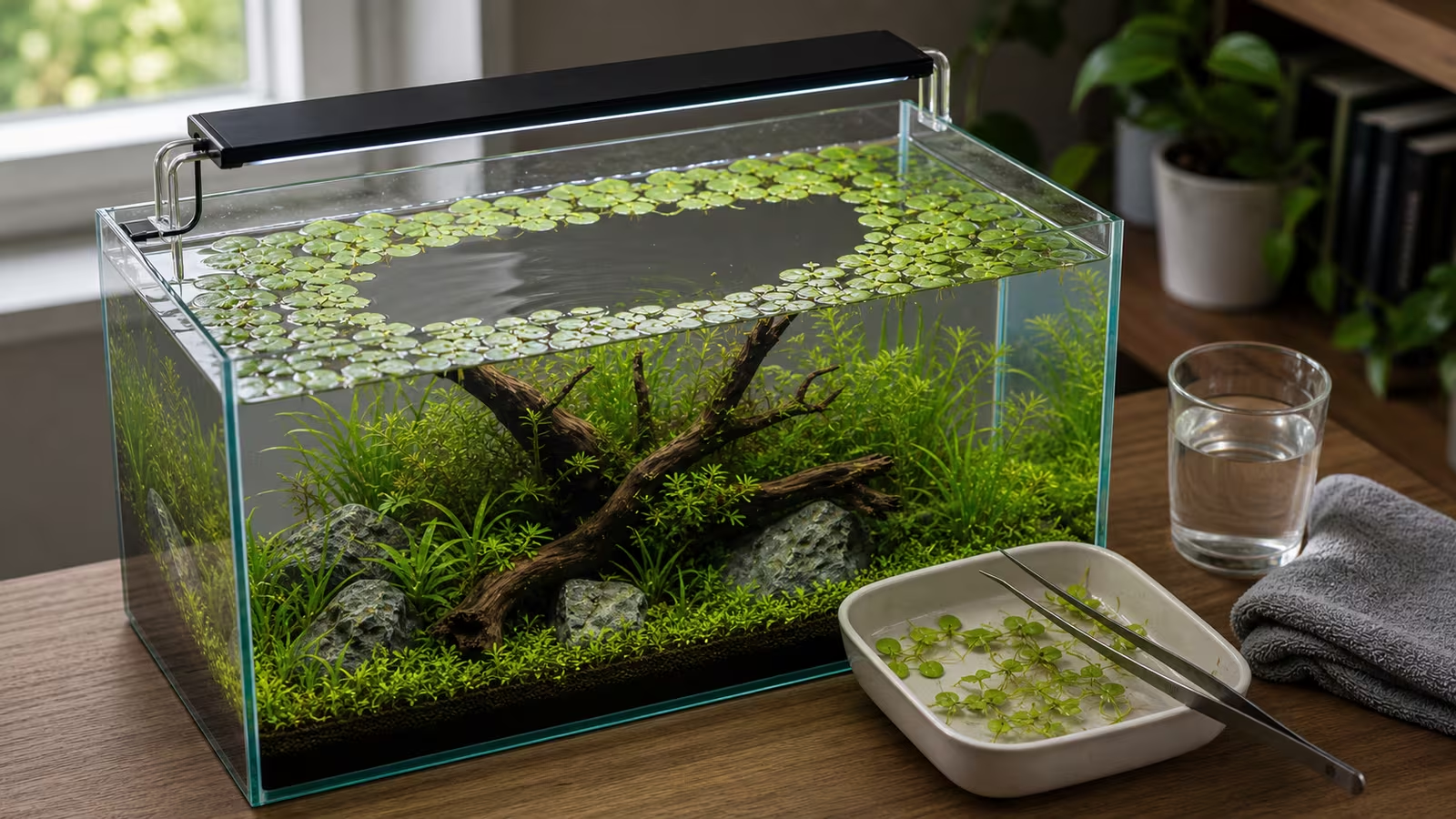
Floating plants can soften bright light, take up nutrients from the water, and give fish, fry, and shrimp some cover. They can also spread over the surface, shade plants below, catch food, and make filter flow harder to see. A small, regularly maintained patch is easier to manage than a full mat.
Heads up
Disposal boundary
Never dump aquarium plants, water, animals, or substrate into ponds, streams, storm drains, or local habitats. Some floating plants are invasive or restricted. Dispose of removed plants according to local guidance.
Choose Floaters You Can Manage
Before buying, identify the plant by its scientific name and check local possession, sale, and disposal rules. Common names can cover several species, and a plant sold online may be restricted where you live. Ask the seller about its mature size and needs, including light, humidity, temperature, and tolerance of surface movement. Give it room beneath the lid and keep leaves clear of hot lights.
Larger individual plants are usually easier to pick out than tiny duckweed. Duckweed can arrive unnoticed among other plants and is difficult to remove completely because small fronds cling to leaves, equipment, and tank walls. Inspect new plants in a separate container, as described in Plant Quarantine and Pest Inspection . Collect loose fronds and rinse water in a container; strain and bag visible fragments, then handle the water according to local disposal guidance . Observation and rinsing reduce hitchhikers but do not guarantee a duckweed-free tank.
Make Room For Light And Movement
Floaters use nutrients as they grow, and removing excess growth takes some of those nutrients out of the tank. They may compete with algae, but they do not guarantee algae control, remove every waste product, or replace water changes and filter care. Watch the growth of submerged plants too: Purdue Extension notes that a thick layer of duckweed reduces the light reaching them.
Leave a clear area for feeding and a visible ripple near the filter outlet. A feeding ring keeps food in an open patch; a corral around the plants holds them away from the outlet or intake. Use aquarium-safe materials and secure the ring so it rises and falls with the water level without obstructing equipment. Check it after water changes. Make sure fish that breathe at the surface can still reach open air, and keep a suitable lid in place for fish that may jump.
There is no single coverage percentage that guarantees enough oxygen. Dense floating cover can limit surface exchange and shade submerged plants; Clemson Extension describes these effects when duckweed covers a pond. Tank conditions also matter, including temperature, stocking, flow, and CO2 use. Check the surface and livestock before the lights come on, when plants have been respiring in the dark. A visible ripple is useful, but it does not prove oxygen or water quality is safe. If oxygen is in doubt, a dissolved oxygen test or meter can help; compare the reading with your animals’ needs. See Surface Film and Gas Exchange and Filter Flow and Surface Agitation .
If animals breathe rapidly, gather at the surface, or show other signs of distress, promptly increase safe aeration and turn off injected CO2 if used. Check the filter, test for ammonia and nitrite, and seek experienced help; do not wait for test results before increasing aeration. Do not assume the plants are the only cause.
A Weekly Thinning Routine
Check the patch daily when it is new, then thin at least as often as needed to keep the feeding area and outlet clear. Weekly is a starting rhythm; fast growth may need attention sooner. A photo from above after thinning gives you a useful comparison for the next check.
- Observe first. Note how much of the surface is covered, whether the outlet still makes a ripple, and whether submerged plants are becoming shaded. Check roots around the intake and look for trapped food or decaying leaves.
- Lift out the excess. Use clean hands, a cup, or a fine net to remove plants until the feeding area and outlet are clear again. Start with a modest amount; if coverage returns before the next water change, remove more or thin more often.
- Inspect the catch. Return any shrimp, fry, or snails you want to keep to the tank. Remove damaged leaves and collect loose fragments from the waterline, lid, and equipment. Keep roots away from intakes and outlets without damaging the filter guard.
- Contain the waste. Put removed plants and fragments in a sealable bag. Where local rules allow, place the sealed bag in household trash; do not compost aquatic plants at home or rinse fragments toward an outdoor drain. If you suspect a restricted species, keep it contained and ask the responsible local authority for instructions. Michigan’s invasive species guidance recommends sealing aquatic plants in a bag for the trash; follow the rules for your own area.
- Check again. Restore the normal water level, reposition the ring if needed, and confirm that the filter is flowing and animals can feed and reach the surface. Record how quickly the patch returns so the next thinning is easier to plan.
When The Patch Is Not Working
If submerged plants decline after the floaters spread, thin the cover and give them time to respond before changing the light or fertilizer as well. The Light Balance guide can help distinguish shade from other possible causes.
If floaters gather at the outlet or are constantly pushed underwater, move the corral to a quieter area while preserving surface movement. Keep the intake guard clear and check it regularly. A tank with strong flow may simply be a poor match for a particular floater; choose a plant that suits the tank rather than shutting down necessary filtration.
If you want to remove duckweed, skim repeatedly with a fine net and inspect the rim, roots, other plants, and equipment for remaining fronds. Recheck after maintenance and water changes. A few missed fronds can grow into another patch, so complete removal may take repeated effort and is not guaranteed.
Common Mistakes
- Letting floaters shade the whole tank or block access to the surface.
- Assuming a ring or a visible ripple ensures adequate oxygen levels.
- Buying or sharing a plant without checking its identity and local rules.
- Allowing roots or leaves to obstruct filter equipment.
- Disposing of live fragments outdoors or treating floaters as a substitute for water changes.
Related Fondsites Path
- Light Balance for Aquatic Plants for shade and plant growth.
- Invasive Species and Aquarium Disposal for responsible handling of plants, water, and equipment.
- Algae Prevention Basics for a broader approach to light, nutrients, and maintenance.
Try This Next
Choose an open feeding zone and check that the filter outlet can maintain a gentle ripple. At the next water change, thin the plants, inspect the catch for animals, and note how long it takes for the patch to grow back. Adjust the amount or frequency of removal to keep those zones usable.