Heater, Thermometer, and Electrical Safety
Set up planted aquarium heaters, thermometers, cords, drip loops, timers, and outlets with practical safety habits and livestock protection.
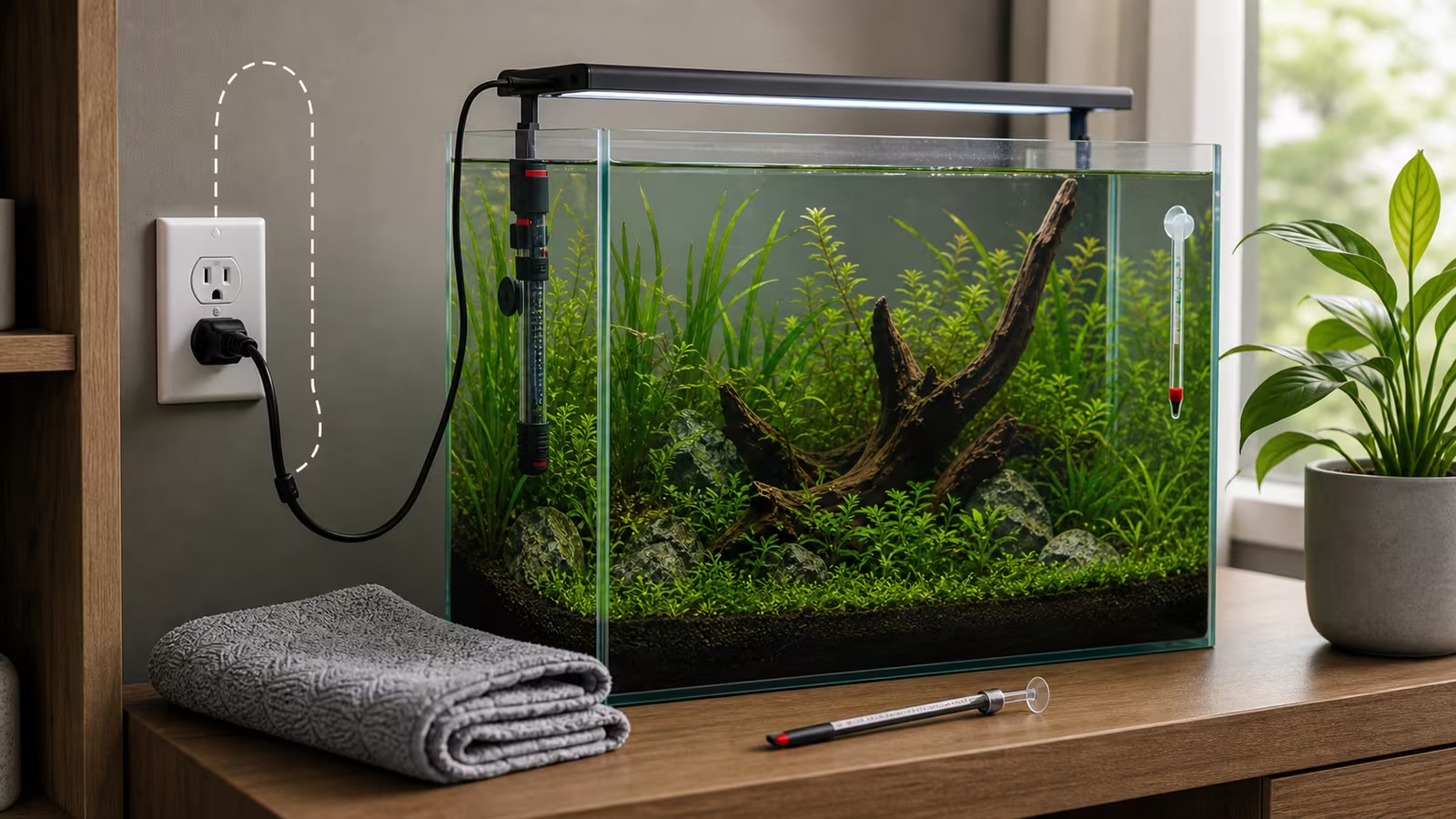
Aquariums put water, glass, cords, heaters, timers, lights, and filters into one small area. A few repeatable habits protect both the home and the animals: keep connections dry, disconnect equipment before maintenance, and check the actual water temperature rather than trusting a dial.
Heads up
Electrical boundary
Follow your equipment instructions and local electrical requirements. If a plug or outlet is wet, do not touch it, unplug it, or reach into the water. Shut off the circuit at the breaker only if you can do so safely; otherwise keep clear and call an electrician. Have the wet connection assessed before restoring power. Do not use damaged equipment.
Heater Basics
Choose a heater for the actual water volume, the difference between room and desired water temperature, and the needs of the animals. Check the manufacturer’s sizing guidance: a heater suitable for a warm room may struggle in a cold one. Some tanks need no heater if the room stays within the inhabitants’ suitable range day and night; measure before deciding.
Mount the heater securely in a place with enough water movement to distribute heat, following its instructions for orientation, minimum water level, and maximum depth. Keep plants and decorations from obstructing flow around it or touching the heater where its instructions prohibit contact. Check the water level as it evaporates so the heater stays within its operating limits. Make sure the heater and its water-level marks remain visible enough to inspect.
Use a separate aquarium thermometer, preferably away from the heater and direct sunlight, and check it daily. Set a temperature appropriate for all the species you keep, then allow time for the water to stabilize before making small adjustments. Check the temperature before adding animals to a new setup. Record the reading and heater setting after adjustments so you can spot a trend. If a reading seems wrong, compare it with another reliable thermometer in the same water; respond promptly if animals are distressed or the reading is dangerously high or low. A heater dial is a setting, not proof of the water temperature. See Aqueon’s heater guidance for placement and routine checks.
Cord And Outlet Habits
Arrange a drip loop in each cord: let the cord dip below the outlet or connector and rise back up to it, so water traveling along the cord can drip off before reaching the connection. Keep outlets, timers, and power strips away from splashes and above the floor, where a spill or leak could collect. A drip loop helps with water traveling along a cord; it cannot protect a connection from a direct splash or flood.
Use a GFCI-protected outlet or circuit, called an RCD in some regions, and follow local requirements. This protection reduces the risk of electric shock but does not replace dry connections or unplugging equipment. The U.S. Consumer Product Safety Commission’s GFCI guide recommends testing after installation, at least monthly, and after a power failure. Follow the device instructions; the test interrupts power, so check that aquarium equipment restarts afterward. If the test fails or protection trips repeatedly, leave it off and have a qualified electrician investigate rather than relying on it or repeatedly resetting it.
Label plugs, keep them accessible, and dry your hands before handling them. Do not overload a circuit or daisy-chain power strips. Inspect cords, plugs, and equipment for damage; stop using anything cracked, frayed, unusually hot, or malfunctioning. Timers for lights are useful, but they also need a dry, accessible position.
During Maintenance
- With dry hands, unplug all aquarium electrical appliances before putting hands in the water. Pull by the plug, not the cord.
- Before the water level drops below the heater’s required level, let the unplugged heater cool in the water for the time specified by its manufacturer. For example, Fluval’s M-series instructions specify at least 30 minutes before removing that heater from water; check your own model.
- Complete the water change, refill to the correct level, and make sure the heater is securely positioned and immersed as directed. Allow the heater to sit in the water for the manufacturer’s specified time before switching it back on.
- With dry hands and dry connections, restart the equipment. Prime the filter if its instructions require it, confirm that water is flowing, and check the thermometer after the tank has had time to settle. See Water Change Rhythm for the rest of the routine.
If a heater has run exposed to air, unplug it safely and follow its instructions before handling or reusing it; do not immediately put a hot heater back into water. Replace damaged equipment. If the thermometer shows a temperature outside the livestock’s safe range, check it against another thermometer if available and safely disconnect a suspected faulty heater. Check room temperature and water flow as well, and monitor the water while the cause is addressed. Seek prompt help from an aquarium professional or aquatic veterinarian if animals are distressed or the temperature is far outside their range. Avoid sudden temperature corrections. The power outage plan covers monitoring when heating or filtration is interrupted.
Common Mistakes
- Trusting the heater dial without checking a separate thermometer.
- Letting a power strip sit on the floor or in a splash zone.
- Forgetting a drip loop for a cord or connector.
- Draining water before an unplugged heater has cooled, or restarting it before it is properly immersed.
- Plugging equipment back in without checking the water level, filter flow, and temperature.
Related Fondsites Path
- Aquarium Location, Stand, and Floor Safety for placement.
- Water Damage and Leak Prevention for home protection.
- Power Outage Plan for Planted Aquariums for temperature monitoring and a safe restart.
- Keepers Guild for maintenance-minded safety habits.
Try This Next
Trace every cord from the tank to its outlet. Add labels, check each drip loop, and move connections away from spills. Read your heater’s cooling and restart instructions, then check the thermometer against the temperature your livestock needs.
Sources
- Fluval M-series heater instructions cover placement, immersion limits, cooling, restart, and temperature checks for that model.
- U.S. Consumer Product Safety Commission: GFCI Fact Sheet explains ground-fault protection and testing.
- Aqueon: Fish Tank Heater Tips for Cold Weather discusses heater sizing, placement, and thermometer checks.