Invasive Species and Aquarium Disposal
Dispose of aquarium plants, animals, substrate, and water responsibly so planted tank waste does not reach local waterways or habitats.
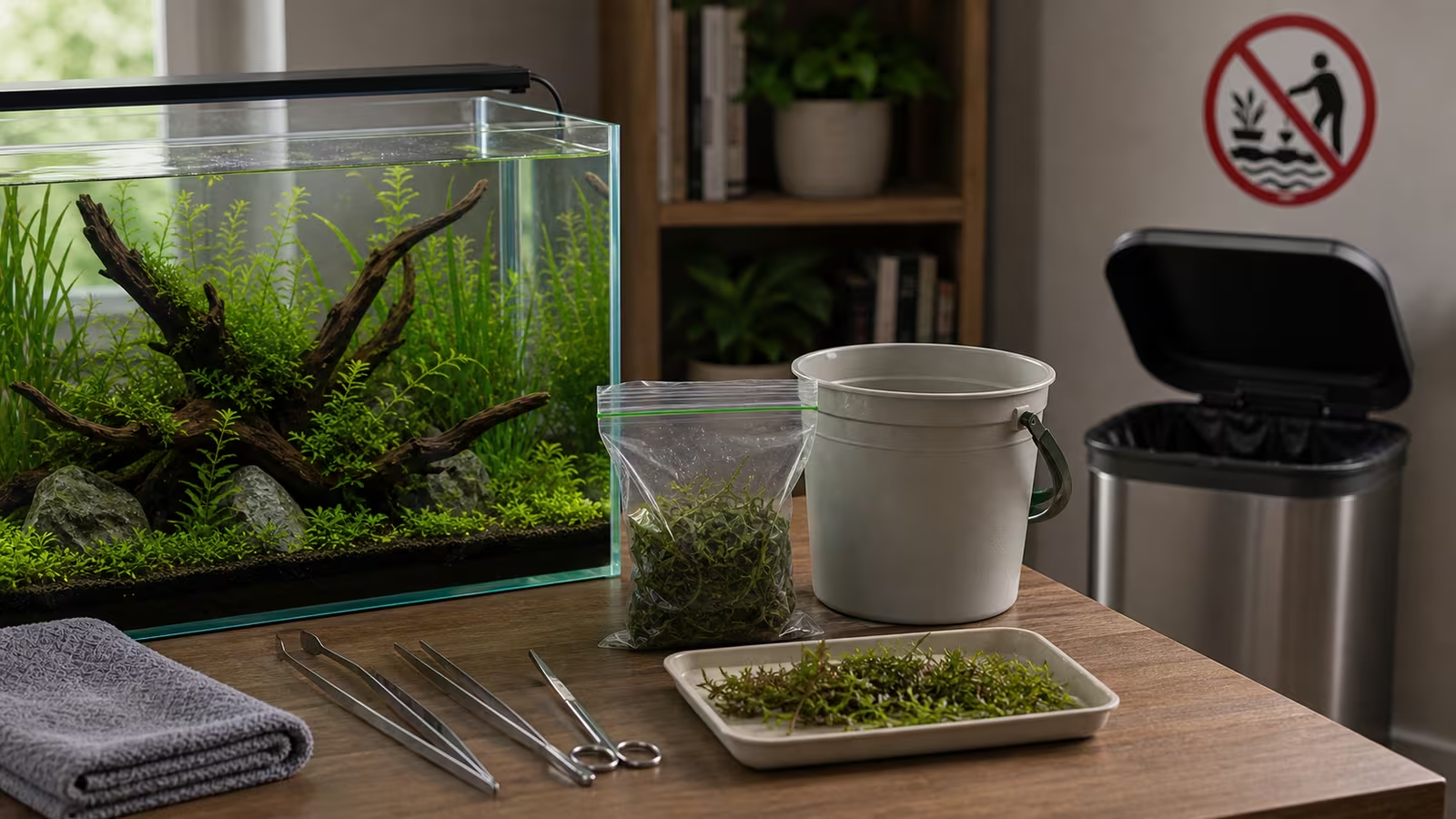
Aquarium plants, snails, fish, shrimp, eggs, and tiny fragments can cause harm if they reach local habitats. Some introduced species survive and spread; aquarium water can also carry parasites or pathogens. What leaves the tank should not reach a pond, stream, storm drain, canal, or wetland.
That boundary applies to plant trimmings, unwanted animals, substrate, filter debris, and water. A few minutes of containment during maintenance can keep a small fragment from becoming someone else’s problem.
Heads up
Legal and ecological boundary
Local rules vary. Some aquarium plants and animals are restricted, regulated, or illegal to possess or transport. Never release aquarium life into the environment, even if it is native locally. If you suspect a regulated species or a reportable pest, keep it contained and ask the responsible local authority for handling and reporting instructions.
Why Fragments Matter
Some aquatic plants can regrow from small pieces, and snail eggs can travel on leaves or equipment. Animals and plants that appear dead may still survive. A mesh strainer catches visible debris but cannot guarantee that microscopic organisms or every egg have been removed.
Not every aquarium species becomes invasive, but it can be hard to know which one will survive in a particular waterway. Do not rely on a tropical label, a cold winter, or a familiar common name as a disposal plan.
Responsible Disposal Habits
Set a bucket, fine net or strainer, and sealable bag beside the tank before trimming or changing water. Keep the bucket away from drains that lead outdoors. Check cuttings and debris for animals you intend to keep, and return those animals to the tank. Catch floating pieces as you work instead of washing them away. Check the bucket, siphon, net, and strainer for fragments before putting the tools away.
Plants and debris: Collect trimmings, loose leaves, algae, and material caught in the strainer. Seal them in a bag and put it in the household trash if local rules allow. Do not put aquatic plants in a home compost pile or leave them where rain or flooding could carry them away. Michigan’s invasive species program recommends sealed trash disposal and advises against composting aquatic plants. Some local programs specify drying or freezing first; follow their directions for the species and material involved. Do not assume a short drying or freezing period will kill every species or its seeds.
Water and filter squeezings: Keep aquarium water out of natural waters and storm drains. For ordinary maintenance, collect visible plants and animals with a fine net or strainer, bag the debris, and dispose of the remaining water through an indoor sink connected to a sanitary sewer or septic system only if local wastewater guidance permits it. Hennepin County’s pet-store guidance describes straining aquarium water before using a drain; check your own local guidance and plumbing. Do not assume an outdoor drain connects to a treatment system. If you do not know where a drain leads or what your system accepts, keep the water contained and ask your wastewater utility or local environmental authority. Ask them about medicated water as well, since it may need different handling.
Straining is not disinfection. If a tank contains a suspected regulated pest, or there is a disease concern, hold the water securely and ask the relevant authority or an aquatic veterinarian for specific instructions before disposal. Do not add bleach or other chemicals to an occupied tank or improvise a treatment for the water.
Substrate and equipment: Sift out any animals you intend to keep and collect plant fragments. Bag unwanted gravel or substrate for disposal under local waste rules; do not spread it in a garden or near water. Remove debris from nets, buckets, and tools over the collection container, and keep equipment from a suspect tank separate until you have appropriate cleaning instructions. Avoid moving wet equipment between tanks or into natural waters. For ordinary tank care, see Cleaning Glass, Tools, and Equipment .
When You Cannot Keep An Animal
Keep the animal contained and cared for while arranging a solution. Contact the original shop, an aquarium society, a suitable experienced keeper, or a rescue to ask whether they can accept it. Describe the species, size, health, and care needs honestly; do not transfer a sick animal without discussing the risk. Check that possession, transport, and transfer are legal before moving it. If identification or legal status is uncertain, contact the appropriate wildlife or invasive species authority first.
Never flush or abandon a live animal. If rehoming is not possible, ask an aquatic veterinarian about humane options rather than improvising a method. Michigan’s guidance also recommends contacting a veterinarian for unwanted aquatic animals.
If You Suspect A Restricted Hitchhiker
Keep the organism, its water, and any exposed equipment contained; do not trade, return, or transport them until the responsible authority tells you how. Photograph the organism in its container and note where and when it came from, including the seller and product if known. Contact your local invasive species or wildlife authority with those details and ask whether to report it and how to handle the tank, water, and equipment. Do not collect or ship a specimen unless instructed. For a disease concern, also consult an aquatic veterinarian.
Instructions can be specific to the pest. For example, North Carolina’s response to zebra mussels in aquarium moss balls addressed the moss balls, tank water, and equipment separately. Use current local instructions for your situation rather than applying that response to every tank.
Before Buying Or Trading
Check whether a plant or animal is legal in your region and whether you can meet its long-term needs. Ask for its scientific name, not just a common name, and check rules for possession, transport, and transfer. If you cannot identify a plant, do not share it as harmless. Inspect plants for hitchhikers before adding or trading them, while recognizing that inspection cannot catch everything. Plant Quarantine and Pest Inspection offers a routine.
Common Mistakes
- Dumping floaters, tank water, or substrate into outdoor water or a storm drain.
- Flushing unwanted snails or fish, or releasing them because they are native nearby.
- Composting aquatic trimmings where viable fragments or seeds may escape.
- Trading unidentified plants or moving a potentially restricted species without checking rules.
- Assuming a strainer removes pathogens or that a tropical species cannot survive locally.
Related Fondsites Path
- Local Regulations for Plants and Animals for rule-checking habits.
- Floating Plants Without Losing Control for fast-growing surface plants.
- Snails in Planted Tanks for population responsibility.
Try This Next
Keep a fine net and a sealable disposal bag with your aquarium tools. Before the next water change, check where your indoor drain leads and find your local authority’s instructions for aquarium waste. Save the contact details in case you later encounter an unfamiliar or restricted organism.