Iwagumi, Nature Aquarium, and Dutch Style Basics
Understand common aquascape styles so you can borrow useful layout ideas without forcing your planted tank into an unrealistic template.
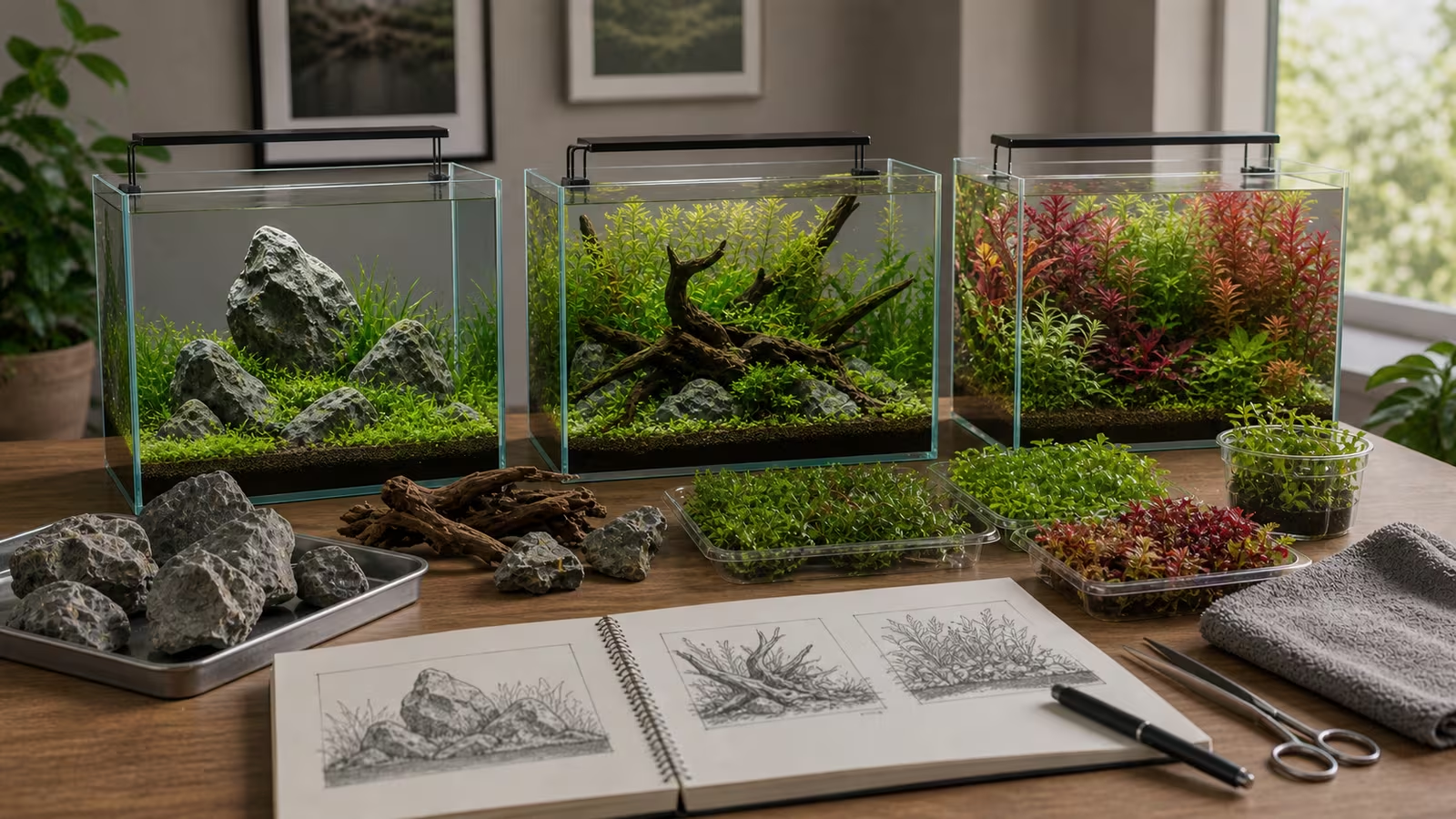
Aquascape style names can help you describe what you like. They can also make beginners feel as if a home aquarium must follow contest rules. You do not need a pure style to build a good tank. You need a layout that fits the glass box, the plants, the livestock, and your maintenance habits.
Use style language as a reference shelf. Borrow the useful ideas and leave the pressure behind.
Heads up
Style boundary
Style goals do not override livestock needs. Schooling fish need space, shrimp need stable water, bottom dwellers need suitable substrate, and all animals need a cycled, maintained tank.
Compare The Styles
| Style | Main Visual Idea | Maintenance To Plan For |
|---|---|---|
| Iwagumi | A stone arrangement is the focal structure, often with restrained planting and open space. | Keep stone faces and foreground visible; some carpet plants need careful light, CO2, and trimming. |
| Nature Aquarium | A composition inspired by nature, using plants and often stone or wood to suggest a landscape. | Keep plants from hiding the structure, and leave access around roots and equipment. |
| Dutch-inspired | Distinct plant groups provide contrast in height, leaf shape, and color. | Trim and thin groups so they stay healthy and distinct. |
These are overlapping ideas, not three mutually exclusive categories. Iwagumi is also a form of Nature Aquarium; the distinction here helps you choose between a stone-led layout and a broader landscape idea. A Dutch-inspired home tank can borrow plant grouping without following a competition rulebook.
Iwagumi
Iwagumi layouts are stone-focused. They often use a strong main stone, supporting stones, open foreground, and restrained planting. They can look calm and powerful, especially in shallow tanks. In the three-stone Sanzon arrangement, the main stone establishes the direction and the smaller stones support it; Aqua Design Amano’s Iwagumi guide also shows other stone arrangements. You do not need an exact stone count to make a pleasing home layout.
Try one main stone and a few smaller pieces with related texture. Turn and partly embed the stones so they look connected, then compare the arrangement from your usual viewing angle. Set heavy stones on a stable base before building substrate around them, and check that they cannot shift if substrate is disturbed. Leave a cleaning lane at the glass and room for animals to move. Check whether your chosen rock affects water chemistry and whether that suits the intended inhabitants; see Driftwood, Rocks, and Substrate .
The challenge is that sparse layouts leave algae and plant health more exposed. Many classic Iwagumi carpets need strong light, CO2, and regular trimming, though requirements vary by plant. For example, Tropica’s Monte Carlo profile describes it as more adaptable than some carpets, while recommending moderate or high light and added CO2 for the best results. If you want the feeling without the demands, borrow the stone grouping and use open sand or scattered low plants instead of relying on a continuous carpet. Open sand still needs gentle cleaning, and an open look must leave enough shelter for the animals you choose.
Nature Aquarium
Nature Aquarium, associated with Takashi Amano, takes inspiration from natural scenery rather than requiring a literal copy of a particular habitat. Wood, stone, slopes, moss, epiphytes, and mixed plant textures can suggest forests, riverbanks, roots, cliffs, or miniature landscapes. Stone-only Iwagumi belongs within this broader tradition. This style is flexible and can adapt well to low-tech tanks if plants are chosen carefully.
Start with one visual direction: for example, a root reaching across a stone group with lower plants around its base. Leave open water and a route for a siphon, and allow for the mature size of the plants. Anubias or Java fern can soften wood without a carpet; keep their rhizomes exposed, as explained in Epiphyte Plants: Anubias, Java Fern, and Friends .
The trap is overloading the tank with every beautiful branch and plant. A natural look still needs structure. Before filling, remove a piece that competes with the focal area and check that the remaining wood and stones are stable. Some wood floats until waterlogged, so soak or securely anchor it and check the layout again after filling. Avoid sharp edges and do not lean heavy stones against the glass. Hardscape Layout Basics covers stability and access in more detail.
Dutch-Inspired Planting
Dutch-style aquariums emphasize distinct plant groups, color contrast, texture, terraces, and careful trimming. Hardscape may be minimal or hidden. The display depends on healthy plant growth and deliberate pruning. The Aquatic Gardeners Association’s Dutch-style judging comments highlight contrasts between groups, variation in height and leaf shape, and plant “streets” that suggest depth.
A beginner can borrow group planting and contrast without building a demanding show tank. Sketch a simple top-down plan with a few species: for example, a fine-leaved stem group beside a broader-leaved green group, with shorter plants in front. A plant street is a band of one plant that runs from the foreground toward the back, often narrowing to suggest distance; it is an optional composition idea, not an open sand path. Leave room between groups for growth and tools. Check each plant’s eventual size and requirements before buying; color and growth will depend on the species and conditions, not the style label.
As stems grow, trim or thin selected plants to keep one group from shading its neighbors. Remove loose cuttings and make larger changes gradually in a stocked tank. The stem plant trimming guide explains when to shape, thin, or replant.
Compare The Same Tank Three Ways
Imagine a rectangular tank with room for the intended livestock and equipment. Before buying plants, sketch these alternatives from the front and above:
- Stone-led: Place a prominent stone with smaller supporting stones, leaving a clear foreground. Choose low plants suited to the available light, or keep part of the foreground as sand. Plan how you will clean exposed stone and sand.
- Landscape-led: Use one branching piece of wood with a few stable stones, attach epiphytes, and plant behind it. Leave an open area and a route to the filter; allow space for the wood and plants at their full size.
- Plant-led: Group a few compatible species in contrasting heights and leaf shapes. Reserve space between them and in front of the glass, and plan to thin the faster growers before they shade their neighbors.
Each sketch can work without injected CO2 if its plants suit those conditions, but a dense carpet or brightly colored stem group may have different requirements. Compare specific plants before choosing equipment; CO2 vs. Low-Tech Planted Tanks helps with that decision. None of the sketches determines how many animals the tank can support.
Choose A Starting Point
- Pick the feature you want to see every day. Choose stones, a wood-and-plant scene, or contrasting plant groups as the main idea. One clear focal area is easier to plan than several competing ones.
- Match plants to the actual setup. Check the available light, whether you intend to add CO2, plant size, and the time you can spend trimming. An open foreground or slower-growing plants can work when a dense carpet or stem garden does not.
- Plan around the living tank. Reserve appropriate swimming or bottom space, cover, flow, and access to equipment. Arrange stable hardscape and plant before adding livestock; cycle the aquarium and confirm suitable water conditions first.
- Expect the layout to change. Plants grow, slopes shift, and algae may appear. Take a photo after planting and adjust gradually as the tank establishes, rather than rebuilding it to match a reference image.
Common Mistakes
- Copying a style without matching equipment and plant requirements.
- Choosing livestock for the photo instead of the animal’s needs.
- Filling a nano tank with too many style cues or no room for growth.
- Forgetting that contest photos are often timed for peak condition.
- Treating mixed-style home tanks as failures.
Related Fondsites Path
- Aquascape Composition Rules That Actually Help for practical layout decisions.
- Carpeting Plants Reality Check before trying classic foregrounds.
- Plant Before Fish Plan for sequence.
Try This Next
Save three reference images and name what you actually like in each: stone shape, open sand, plant color, wood angle, or calm stocking. Sketch one layout using those specifics, then mark the space needed for plant growth, livestock, and maintenance before buying anything.