Local Regulations for Plants and Animals
Check local aquarium rules for aquatic plants, fish, shrimp, snails, transport, sale, disposal, and invasive species before buying or sharing.
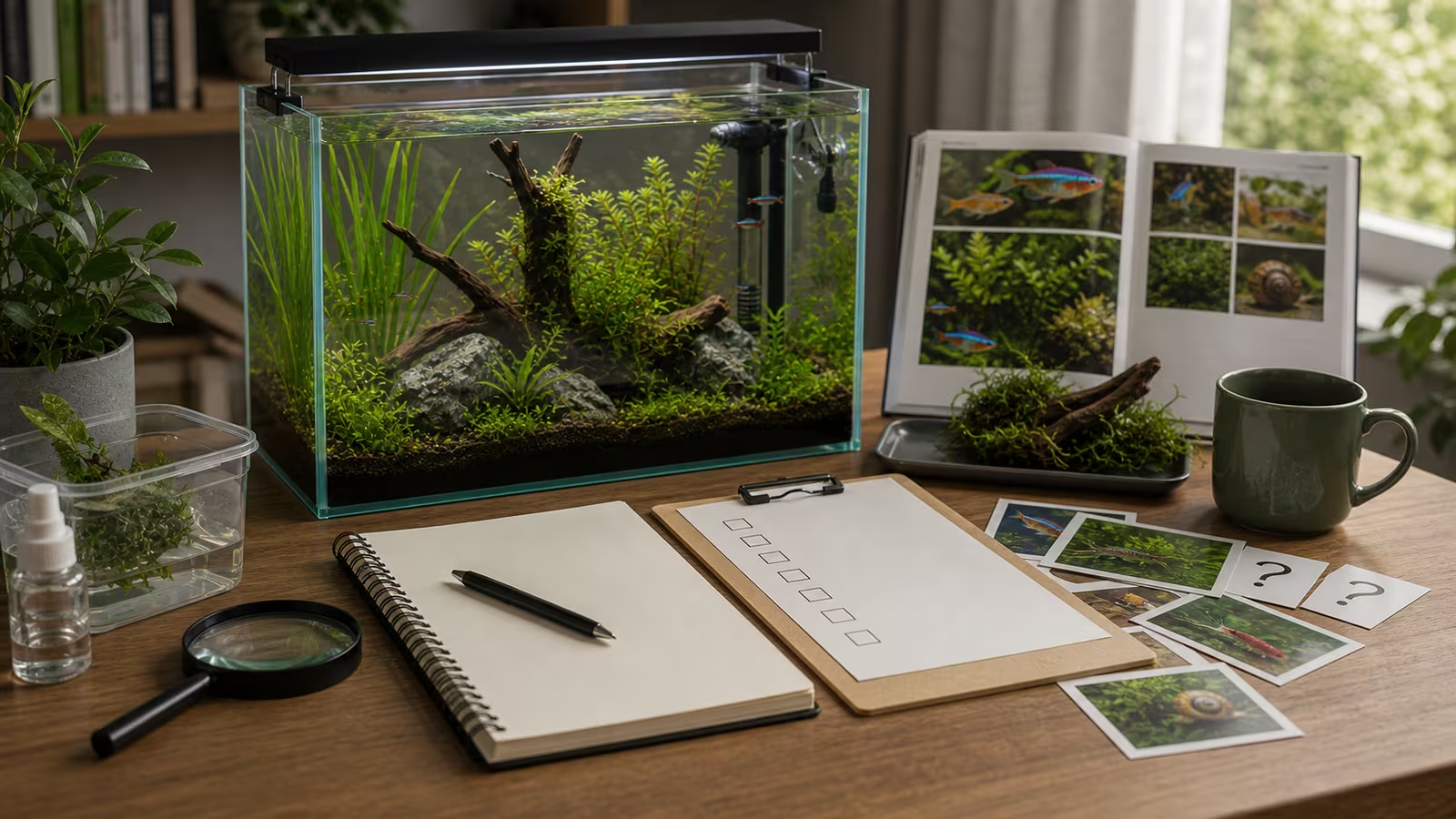
Aquarium shopping can feel global. Plants, shrimp, snails, fish, wood, and equipment may be shipped across regions and borders. Local rules still matter. A species that is common in one place may be restricted, invasive, protected, or illegal in another.
Checking rules is a normal part of responsible buying, trading, and disposal. Do it before ordering or collecting, while choosing a different species is still easy.
Heads up
Regulatory boundary
This guide is not legal advice. Regulations change by country, state, province, municipality, and water body. Check official local sources before buying, importing, transporting, selling, trading, or disposing of aquatic species.
What To Check
The answer depends on both the organism and the action. Permission to keep something does not necessarily mean permission to import it, move it across a boundary, breed it, sell it, give it away, collect it, or release it. Plants, fish, shrimp, snails, crayfish, and live foods may all be regulated. Native species may have collection rules, while protected species can carry additional restrictions.
Check the rules at the origin and destination, as well as any jurisdictions crossed in transit. For imports, ask the relevant authority about permits, health or plant certificates, inspections, and shipping requirements before paying. Confirm who must obtain each document and whether approval must be in place before shipment. Applying for a permit is not the same as receiving one. A seller willing to ship something does not prove the shipment is legal or appropriate for your location.
Use Exact Names
Common names are messy. One “moss,” “grass,” “snail,” or “algae eater” can refer to several species. Ask the seller for the scientific name, including the species, and search that name and any known synonyms in the official rules. Check whether a listing covers a whole genus, a hybrid, or a particular life stage or plant part. Labels can be wrong, so a name on a package is a starting point, not proof of identity.
If the identification is uncertain, ask a knowledgeable supplier or the responsible authority for help. Until you can identify the organism and establish which rules apply, leave it off the order or swap list.
A Practical Rule Check
- Write down the organism and the plan. Include its scientific and common names, where it comes from, where it will go, and whether you intend to keep, import, collect, sell, or give it away. For a shipment, include the route if known and whether it contains plants, animals, eggs, or other live material.
- Find the authorities for that action. Start with national agriculture or plant-health and wildlife agencies, then check state, provincial, territorial, and local authorities as relevant. For collection, also check the landowner and the rules for the particular water body or protected area.
- Read the actual entry and conditions. Check the jurisdiction, listed names, prohibited activities, exemptions, permit requirements, and effective dates. A list that does not mention a species does not by itself establish that every activity is allowed; other rules may apply.
- Ask when the answer is unclear. Give the agency the exact name, origin, destination, and proposed activity. Keep the reply, source link, date, seller information, and any required permit or certificate with your aquarium notes. Check again before a later purchase or transfer.
For example, in the United States, USDA APHIS explains federal noxious-weed rules and permits and advises checking state restrictions directly. Its plant import guidance also describes plants with special requirements or import prohibitions. For animals, the U.S. Fish and Wildlife Service explains injurious wildlife listings and the different federal import and transport rules. These are starting points, not a complete check of state or local law.
In England and Wales, government guidance on invasive non-native plants lists affected species and restrictions, including conditions and exemptions. For example, curly waterweed (Lagarosiphon major) appears on that list: someone considering a trade should read the restrictions on exchange and any relevant conditions rather than rely on the common name or a shop listing. Separate guidance for listed invasive animals explains restrictions and exceptions for animals, including existing pets. These examples apply to England and Wales; readers elsewhere should use their own authorities.
Trading, Hitchhikers, And Disposal
Local hobby swaps can spread invasive plants or pests. Share only species you can identify and legally distribute. Tell recipients the name, growth rate, known hitchhikers, and how to check local disposal guidance. Inspect plants before sharing or adding them to a tank; Plant Quarantine and Pest Inspection offers a practical routine. Inspection reduces surprises but cannot guarantee that every egg or fragment has been removed.
Never release unwanted aquarium life into a pond, stream, storm drain, or other natural habitat. If an organism may be restricted, do not assume that giving it away, returning it to a seller, or transporting it for disposal is allowed. Keep it and its water contained, note where it came from, and ask the responsible local authority for handling and reporting instructions before moving it. For animals you can legally rehome, contact a suitable aquarium shop, experienced keeper, or rescue first; do not leave an animal outside or abandon it. See Invasive Species and Aquarium Disposal for handling trimmings and other aquarium waste.
Common Mistakes
- Assuming pet-store availability equals legality.
- Checking possession rules but overlooking import, transport, or transfer rules.
- Trading unidentified plants or buying restricted floaters online.
- Collecting local plants or animals without checking the site and species rules.
- Releasing unwanted aquarium life as a “humane” solution.
Related Fondsites Path
- Invasive Species and Aquarium Disposal for end-of-life handling.
- Beginner Aquarium Plants That Forgive Real Life for plant choices to check against local rules.
- Clear Water Lab for the habit of checking local source evidence.
Try This Next
Pick one plant or animal from your wishlist. Record its scientific name, source, destination, and the action you plan to take. Check the relevant official rules and note the link and date; also check its adult size, care needs, and disposal options before adding it to the shopping list.