Mosses for Nano Aquascapes
Use aquarium moss in nano tanks for texture, shrimp grazing, hardscape softness, and scale without letting it trap debris or take over.
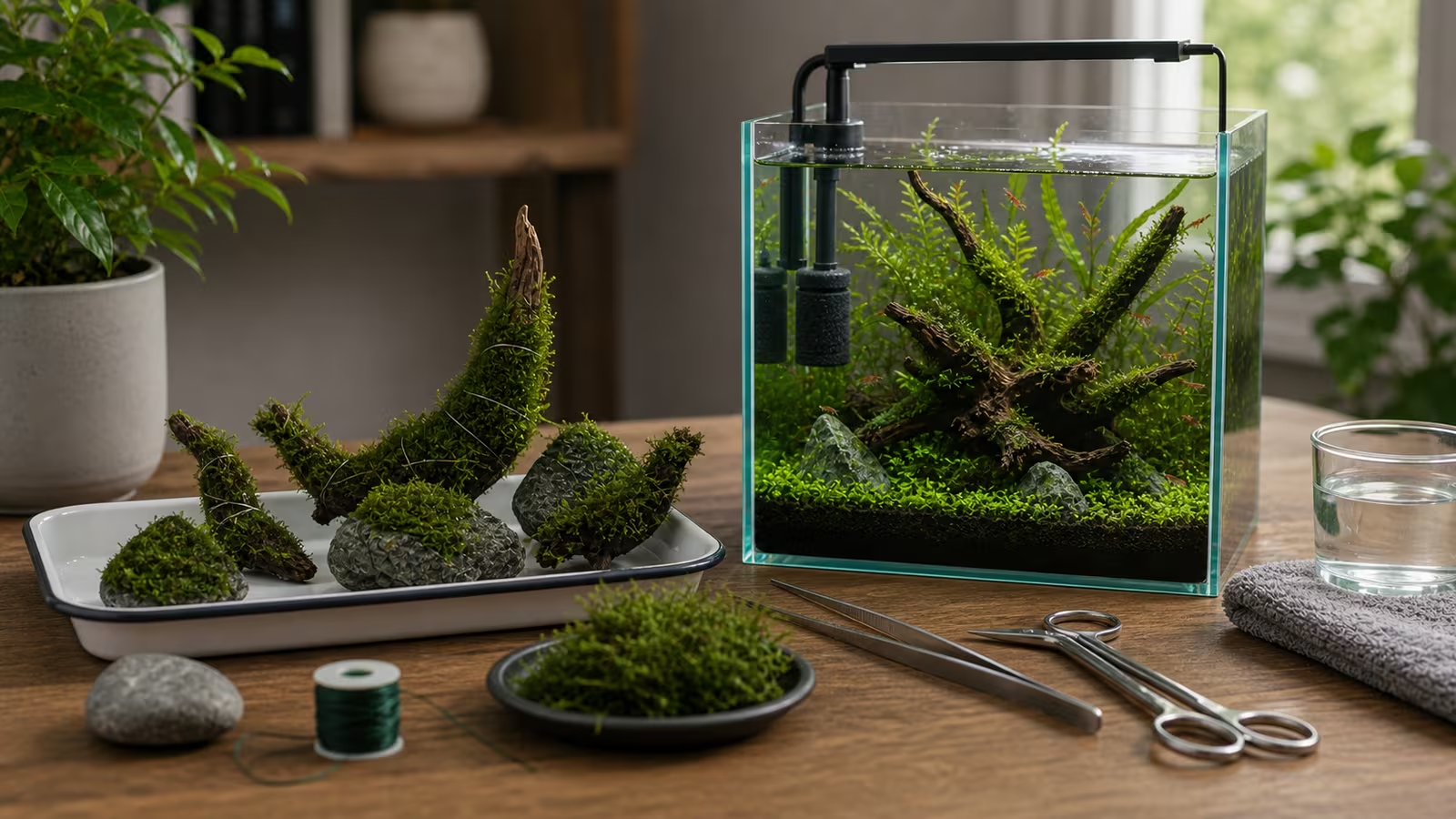
Moss is one of the easiest ways to add age and detail to a small aquascape. A little moss on wood, stone, or mesh can make a nano tank feel like a tiny underwater garden. Shrimp often graze through it, fry can shelter in it, and hardscape looks softer with a green edge.
Moss also catches debris. In a small tank, that matters quickly. Place it where you can trim it, gently free trapped debris, and siphon around it without dismantling the layout.
Heads up
Nano tank boundary
Nano tanks change quickly. Do not use moss as an excuse to overstock or skip maintenance. Dense moss can hide dead leaves, uneaten food, and livestock problems until water quality has already suffered.
Choose A Moss For The Space
For a first patch, Java moss (Taxiphyllum barbieri) is a forgiving choice that can attach to wood or stone. Christmas moss (Vesicularia montagnei) has branching growth and makes a compact accent, but needs pruning to keep its shape. Tropica describes Christmas moss as more demanding and slower growing than Java moss; see its moss selection and Christmas moss profile . Growth will still depend on the tank and the material you receive.
Buy a named aquatic moss from a reliable supplier rather than collecting an unidentified outdoor moss. Common names and labels can vary, so use the scientific name and the supplier’s care information to check what you are buying. Inspect the strands for algae, snails, damaged material, and other hitchhikers before introducing them. A sealed tissue-culture cup is another option; rinse away its growing medium and inspect the plant. Plant Quarantine and Pest Inspection explains the limitations of inspection and a separate observation period.
Good Moss Jobs
Moss works well on branch tips, stone cracks, shrimp grazing ledges, and small background accents. It can hide joins between hardscape pieces and create a sense of scale. In breeder or shrimp tanks, it provides surface area for biofilm and cover, but it does not replace suitable food, water quality, or space.
Use small amounts first. A golf-ball-sized clump can become a messy mass if left alone under decent light. Choose a spot with gentle water movement and enough access for scissors and a siphon. Leave filter intakes, equipment, and a maintenance path clear.
Attach A Small Patch
- Rinse and inspect the moss in a clean, aquarium-only container with conditioned water. Remove damaged strands and divide the healthy moss into small portions.
- Spread a thin layer over a removable, stable piece of wood or stone. It should look sparse enough that water can move through it; a thick wad can trap debris and shade its interior.
- Tie it gently with cotton thread, tuck it into a crevice, or use a small amount of aquarium-safe cyanoacrylate gel according to the product directions. For glue, work outside the stocked tank where possible and let it set before returning the piece. Avoid crushing the moss or covering it in adhesive.
- Trim loose thread ends, check that the piece is secure, and place it where you can reach it later. If using aquarium-intended mesh, secure it so animals cannot become trapped and cover or remove sharp edges.
Cotton can eventually break down, so check the patch during maintenance and retie if it comes loose before it holds on. The attachment guide covers these methods in more detail.
Light, Flow, And Maintenance
Start with the tank’s regular, modest lighting schedule rather than increasing light just for moss. Java moss is an undemanding option, and Tropica shows moss growing in a low-light layout without added CO2 . Growth may be slow; extra light or injected CO2 is not a substitute for stable care. Choose conditions that also suit the tank’s livestock and other plants.
During a normal water change, gently wave a hand near the patch or use a small amount of tank water from a baster to loosen debris, then siphon it out. Keep the siphon away from shrimp and fry, and check the bucket before discarding water. If the piece is removable, it can be swished gently in a container of removed tank water. Avoid vigorous scrubbing that tears the moss from its mount.
Trim before the patch becomes a heavy mat. Check for animals in the moss first, then cut small sections and collect fragments with a net or siphon so they do not settle elsewhere. If the interior is brown or decaying, thin or remove that material instead of only trimming the outside. Check whether the patch is packed too tightly or collecting debris; do not assume browning has one cause. If algae appears, remove what you can and review light and maintenance before making large changes. Algae Prevention Basics offers a measured starting point.
Common Mistakes
- Adding a giant clump to a tiny tank or placing it where tools cannot reach.
- Letting moss block flow behind hardscape or grow into a filter intake.
- Leaving trim fragments to spread or using rough, loose attachment materials around livestock.
- Assuming all moss species behave the same or that moss will clean the tank for you.
- Releasing unwanted moss or aquarium water into natural waterways. Follow local disposal rules; see Invasive Species Disposal .
Related Fondsites Path
- Shrimp Tank Basics for grazing and stability.
- Epiphyte Plants: Anubias, Java Fern, and Friends for attachment basics.
- Maintenance Day Checklist for routine cleanup.
Try This Next
Attach a thin patch to one removable stone or wood piece. Observe it during your regular water changes and trim when it starts to obscure the hardscape or collect debris. If it becomes messy, you can lift the piece for careful cleaning instead of dismantling the whole nano tank.