The Nitrogen Cycle Without Mystery
A plain-language guide to aquarium waste, beneficial bacteria, filter media, plants, ammonia, nitrite, nitrate, and gentle cleaning.
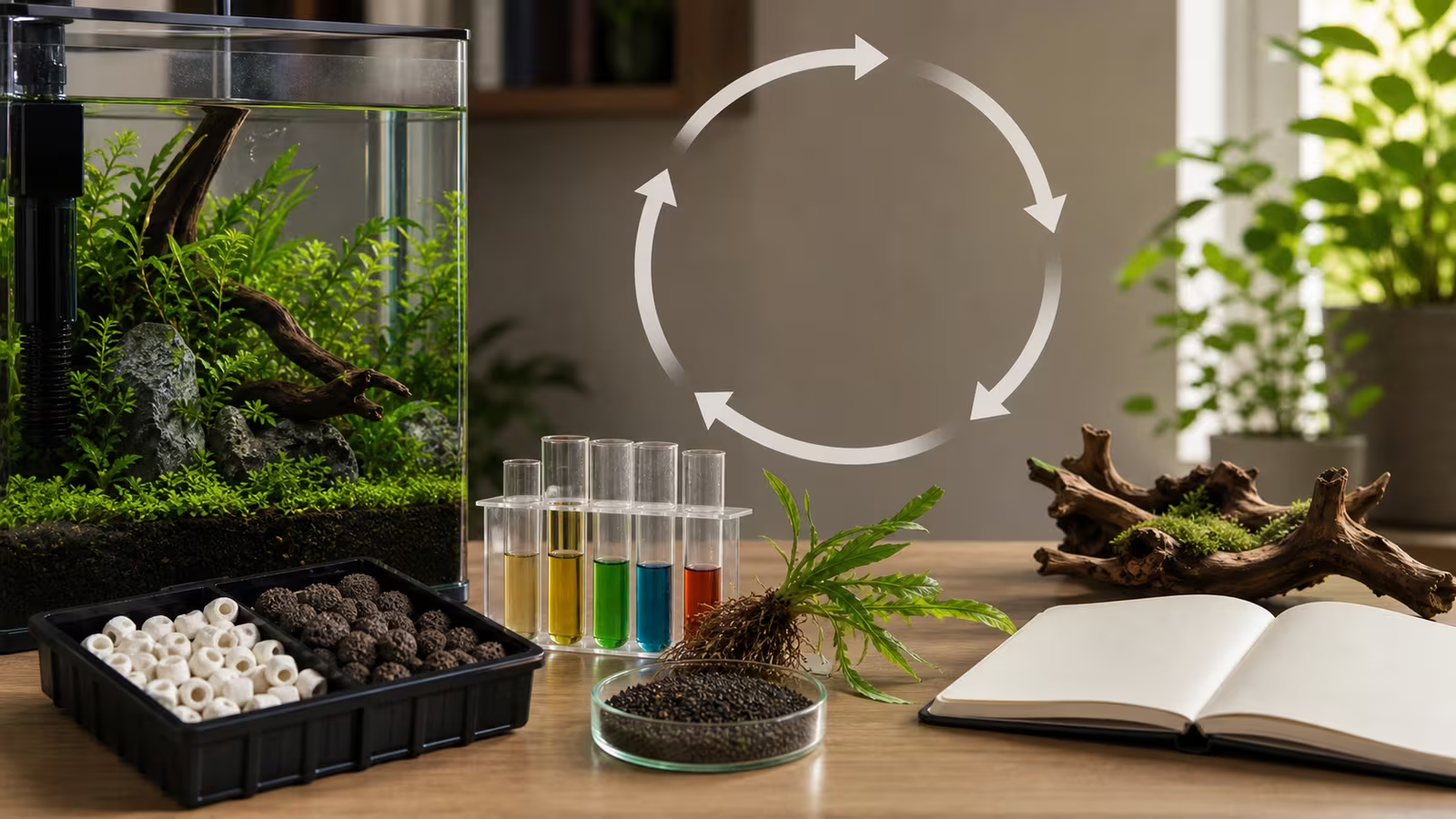
The nitrogen cycle can sound like hidden chemistry, but the practical idea is simple: animals and decaying material release waste, and useful microbes help process it. In a planted aquarium, plants also use nitrogen, but they do not erase the need for filtration, testing, and stocking restraint.
The cycle is a living process, not a product you buy once or a week you wait through. Its capacity can be strained by a sudden increase in waste or damaged when established filter media is lost or neglected.
Heads up
Cycle and animal boundary
If ammonia or nitrite is detectable in a tank with animals, act promptly: change some water with conditioned, temperature-matched water from a suitable source, check the filter and water movement, and retest. Test the replacement water too; it may contain ammonia or nitrite. If animals are gasping, lethargic, or dying, increase aeration and seek experienced aquatic or veterinary help promptly.
The Basic Chain
| Stage | Plain Meaning |
|---|---|
| Waste enters | Fish excrete ammonia, largely through their gills. Uneaten food, dead leaves, and other decaying material can add to the load. |
| Ammonia is processed | Nitrifying microbes convert ammonia to nitrite. Ammonia can harm animals, even when the water looks clear. |
| Nitrite is processed | Other nitrifying microbes convert nitrite, which is also harmful, into nitrate. |
| Nitrate is managed | Plants can use nitrate, but it can accumulate. Water changes, sensible feeding, and suitable stocking help manage it. |
This ammonia-to-nitrite-to-nitrate sequence is called nitrification. It needs oxygen and consumes alkalinity, the water’s buffering capacity. The University of Florida’s ammonia guide explains the process and why low oxygen or depleted buffering can disrupt it. The broader nitrogen cycle includes other pathways; a filter does not simply make all nitrogen disappear.
Most aquarium ammonia tests measure both ammonia and ammonium. The more toxic un-ionized ammonia makes up a larger share as pH and temperature rise. A detectable total-ammonia result still deserves attention; do not assume it is harmless because the pH is low.
Where The Cycle Lives
Beneficial microbes live on surfaces: filter media, sponge, substrate, wood, rocks, glass, plant surfaces, and equipment. Filter media matters because water passes through it repeatedly, supplying oxygen and waste. Keep the filter running and maintain flow and surface movement. Replacing all mature media at once can remove much of the biological filter.
Plants complicate the picture in a useful way. Growing plants can take up nitrogen compounds, and roots and leaves provide surfaces for microbes. Plants can also melt, shed leaves, or trap debris. Remove decaying material and remember that a planted tank still has a waste budget.
Read The Tests In Context
In a new tank, ammonia and nitrite often rise and fall as the biological filter develops. Plants may take up nitrogen before a test detects a spike, and nitrate can come from source water or fertilizer as well as nitrification. Nitrate alone does not prove the tank is ready. Likewise, zero ammonia and nitrite in an unfed tank does not show how it will handle waste.
Before adding animals, use a measured fishless ammonia source and check that ammonia and nitrite return to zero after a dose, following the cycling guide . Do not add cycling ammonia when animals are present. Add livestock gradually after the response check, then test frequently as the tank adjusts.
In an established tank, aim for undetectable ammonia and nitrite on your test kit. Record nitrate before routine water changes and compare it with your source water. A rising trend calls for a review of feeding, stocking, plant growth, and water changes; choose a suitable nitrate goal for the species kept. Follow the kit’s timing and units, and check its expiry date. The water testing guide explains how to build a useful log.
Protecting The Cycle
Clean gently. When flow drops or media collects debris, gently rinse it in a bucket of removed aquarium water and put it back promptly. Preserve mature media; do not replace all cartridges just because a calendar says so without understanding what biological media remains. Treat replacement tap water for chlorine or chloramine as directed. See Filter Media Maintenance and Dechlorinator and Source Water Basics .
Avoid stacking disruptions. A major rescape, filter replacement, heavy trim, substrate vacuum, and livestock addition all in one weekend make the system harder to read. If a filter has stopped or mature media was replaced, restore flow, test ammonia and nitrite frequently, and avoid adding animals while investigating. If either is detectable in a stocked tank, use the water-change response above and continue monitoring until readings stabilize.
Common Mistakes
- Replacing every filter part at once or letting established media dry out.
- Assuming plants make overstocking safe.
- Treating bottled bacteria, clear water, or a nitrate reading as permission to skip testing.
- Deep-cleaning the tank whenever it looks imperfect.
- Adding a full stock at once before the system can adjust to the extra waste.
Related Fondsites Path
- Cycling a Planted Aquarium Before Animals for the setup sequence.
- Clear Water Lab for testing discipline.
- Keepers Guild for maintenance records and replacement habits.
Try This Next
Identify the sponge, biological media, and any chemical media in your filter. Write down what you would rinse and what you would replace, then test and record ammonia, nitrite, and nitrate before your next routine water change. If you cannot tell which part protects the cycle, pause before replacing it.