Quarantine and Acclimation Basics
Introduce fish, shrimp, and plants to planted aquariums with quarantine thinking, acclimation restraint, observation, and source-risk awareness.
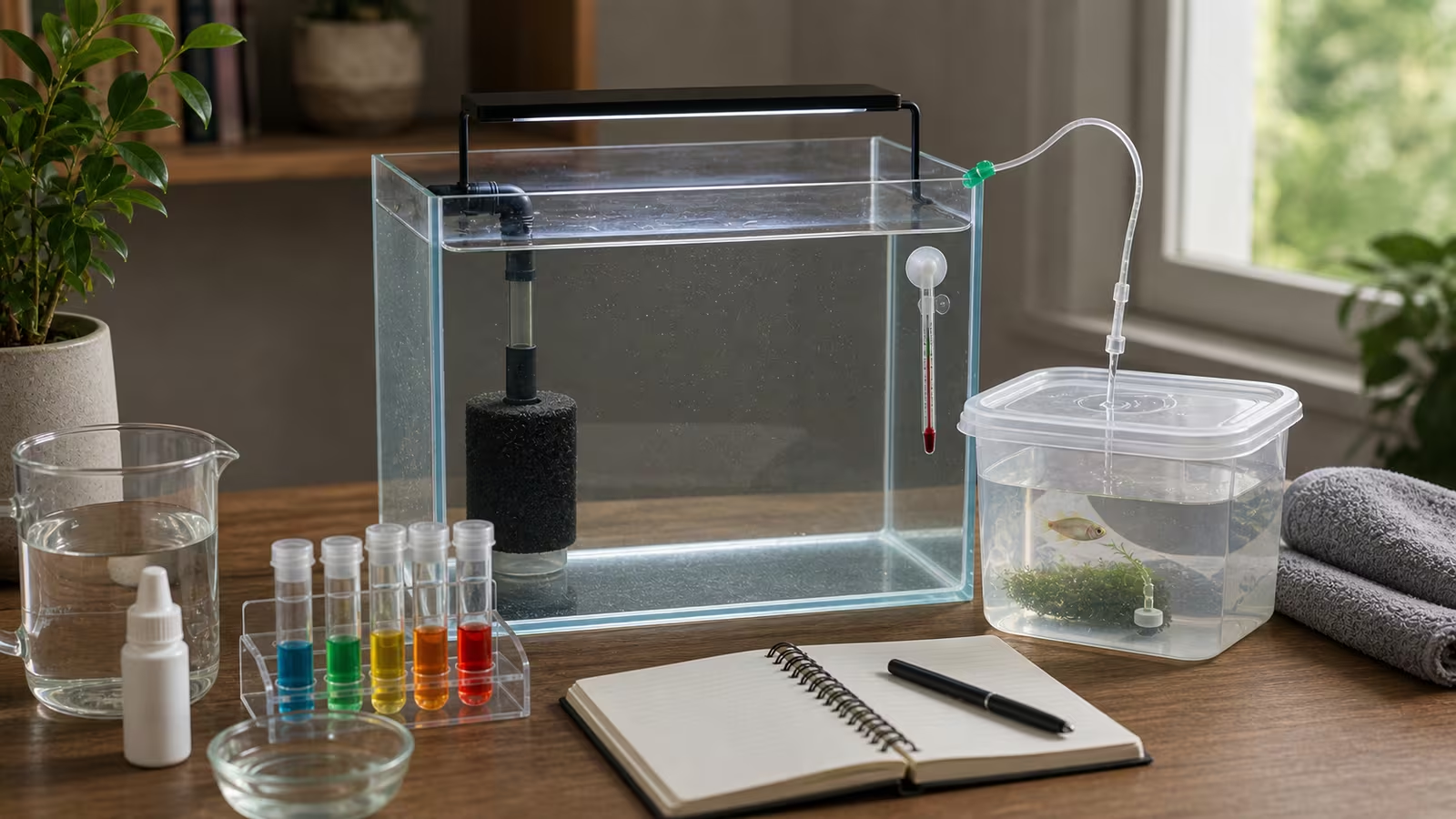
New livestock is exciting, which is exactly why many mistakes happen on arrival day. Fish, shrimp, and snails may be stressed by transport, temperature shifts, and unfamiliar water. Plants can carry pests, algae, eggs, or hitchhikers. A careful introduction protects both the newcomer and the established aquarium.
Quarantine and acclimation are practical risk controls. Quarantine separates an arrival for observation; acclimation manages the transition between its old water and its new home. Neither guarantees that an animal is disease-free.
Heads up
Health boundary
This guide is not veterinary advice and does not diagnose disease. If animals show severe distress, injury, parasites, or illness, consult an aquatic veterinarian promptly. Follow medication labels and never medicate casually in a display tank.
Prepare Before Buying
Ask for the animal’s species, the water conditions it has been kept in, its food, and any recent illness or treatment. Compare temperature and pH with your prepared quarantine water; for shrimp, also ask about GH and KH. If there is a large mismatch, discuss a safe transition with the supplier or an aquatic veterinarian before shipment. Do not try to fix an unsuitable tank by abruptly adding chemicals on arrival day. Shrimp Tank Basics explains why mineral needs differ by species.
Set up a separate, appropriately sized tank with conditioned water, a thermometer, gentle filtration and aeration, a lid where needed, and a heater if the species needs one. Provide species-appropriate cover that is easy to clean and still allows observation. A bare bottom can make waste easier to see, but animals that need substrate or shelter still need those accommodations.
A cycled filter is important: a new sponge filter is not automatically ready to process waste. The Merck Veterinary Manual suggests seeding a disinfected sponge filter in a disease-free established tank before it is needed. Test ammonia and nitrite before stocking and regularly afterward, especially in a newly set up quarantine tank. If either is detectable, use appropriately treated, temperature-matched replacement water and seek guidance if levels persist or animals are distressed. See Cycling a Planted Aquarium and Water Testing for Aquascapes .
Arrival And Acclimation
- Prepare the space. Dim the lights, check the quarantine tank’s temperature and equipment, and have a clean, animal-appropriate transfer container or net ready. Avoid delaying unpacking after a long journey.
- Check the bag and the animals. Look for leakage, badly fouled water, gasping, or injury. If an animal is in severe distress, contact an aquatic veterinarian promptly rather than leaving it in the bag through a long routine.
- Match temperature. Float the sealed bag in the quarantine tank away from strong light until the temperatures are close. Merck describes roughly 20–30 minutes for fish, but check the temperatures and the supplier’s instructions rather than treating the clock as proof of a match. Keep bag water out of the tank.
- Transfer with a plan. For normally shipped fish with compatible receiving water, open the bag after temperature matching and gently transfer the fish without adding transport water to the quarantine tank. Use a suitable net or container that minimizes handling and injury; leave the bag water behind. Observe the animal afterward.
Chemistry differences, species, and transport time matter. Drip acclimation may be useful for some arrivals, including sensitive invertebrates, but it is not a universal prescription. After a long shipment, waste can accumulate in the bag; once opened, escaping carbon dioxide can raise pH and increase the toxic fraction of ammonia. Adding higher-pH tank water can worsen that exposure. The University of Alaska Sea Grant’s shipping guidance discusses this tradeoff for shipped fish. For a large water mismatch or uncertain bag condition, get species-specific advice before opening the bag; do not leave an animal in deteriorating water for hours to follow a generic drip schedule.
Observe During Quarantine
For fish, plan at least 30 days of separation; longer may be appropriate. Merck recommends a minimum of 30 days and notes that quarantine cannot detect every pathogen. Do not add later arrivals to an existing group without restarting the observation period, as Merck’s fish health guidance explains. Ask a knowledgeable aquatic veterinarian about a suitable period for shrimp or snails rather than assuming the fish schedule proves they are clear of every risk.
Check behavior, breathing, appetite, body condition, and equipment daily. Feed suitable food sparingly and remove leftovers. Record the arrival date, source, observations, test results, water changes, and any treatment. Gasping, persistent refusal to eat, visible parasites, wounds, or symptoms spreading through a group warrant prompt advice; they are signs, not diagnoses. When to Call a Specialist helps organize the first call.
Use separate nets, buckets, and siphons for quarantine. Care for the established tank first, wash hands between systems, and keep splashes and quarantine water out of the display. Clean and disinfect the quarantine setup and equipment between groups using a method suitable for aquarium equipment, then rinse and dry thoroughly before reuse. Do not return potentially contaminated filter media to the display.
Move To The Display
Move only animals that have completed the observation period and are behaving and feeding normally. If illness or treatment occurred, ask the veterinarian when the group can safely move; a calendar alone is not clearance. Check that the display is cycled, the water conditions are suitable, and existing inhabitants have enough space and compatible temperaments.
Compare the two tanks’ temperature and water chemistry before the move. Plan a gradual, species-appropriate transition if conditions differ, and transfer the animals without their quarantine water. Continue watching for stress or aggression in the display and keep the quarantine records.
Plants Need Intake Too
Inspect plants before adding them. Remove packaging and dead leaves, check for snails, eggs, and algae if those matter to your plan, and rest plants in a separate clean container when practical. Inspection and observation reduce visible surprises but do not sterilize a plant. Plant dips can damage plants or harm hitchhikers; do not improvise with household chemicals. Follow local rules for handling and disposal. Plant Quarantine and Pest Inspection covers the process in more detail.
Common Mistakes
- Adding new animals directly to a mature display tank.
- Assuming an uncycled quarantine filter is ready for a full stocking load.
- Skipping temperature matching or ignoring a major chemistry mismatch.
- Leaving a shipped animal in an opened bag for a long drip without considering water quality.
- Sharing equipment or mixing transport and quarantine water into the display.
- Treating all symptoms with random medications.
Related Fondsites Path
- Plant Before Fish Plan for sequencing.
- Water Testing for Aquascapes for arrival-day checks.
- When to Call a Specialist for escalation.
Try This Next
Before buying livestock, prepare an arrival checklist: cycled quarantine space, thermometer, lid, test kit, separate net and siphon, observation notes, and a plan for the bag water. Ask the supplier about its water and shipping method while there is still time to prepare.
Sources
- Merck Veterinary Manual: Management of Aquarium Fish — quarantine, biosecurity, and filter preparation.
- Merck Veterinary Manual: Routine Health Care of Fish — observation and quarantine periods.
- Merck Veterinary Manual: Providing a Home for Fish — temperature matching and transport water.
- University of Alaska Sea Grant: Shipping Practices in the Ornamental Fish Industry — receiving fish and shipping-water chemistry, page 90 of the PDF.