Schooling Fish and Space Reality
Choose schooling fish for planted aquariums by respecting group size, swimming room, adult size, water needs, and behavior instead of buying by color alone.
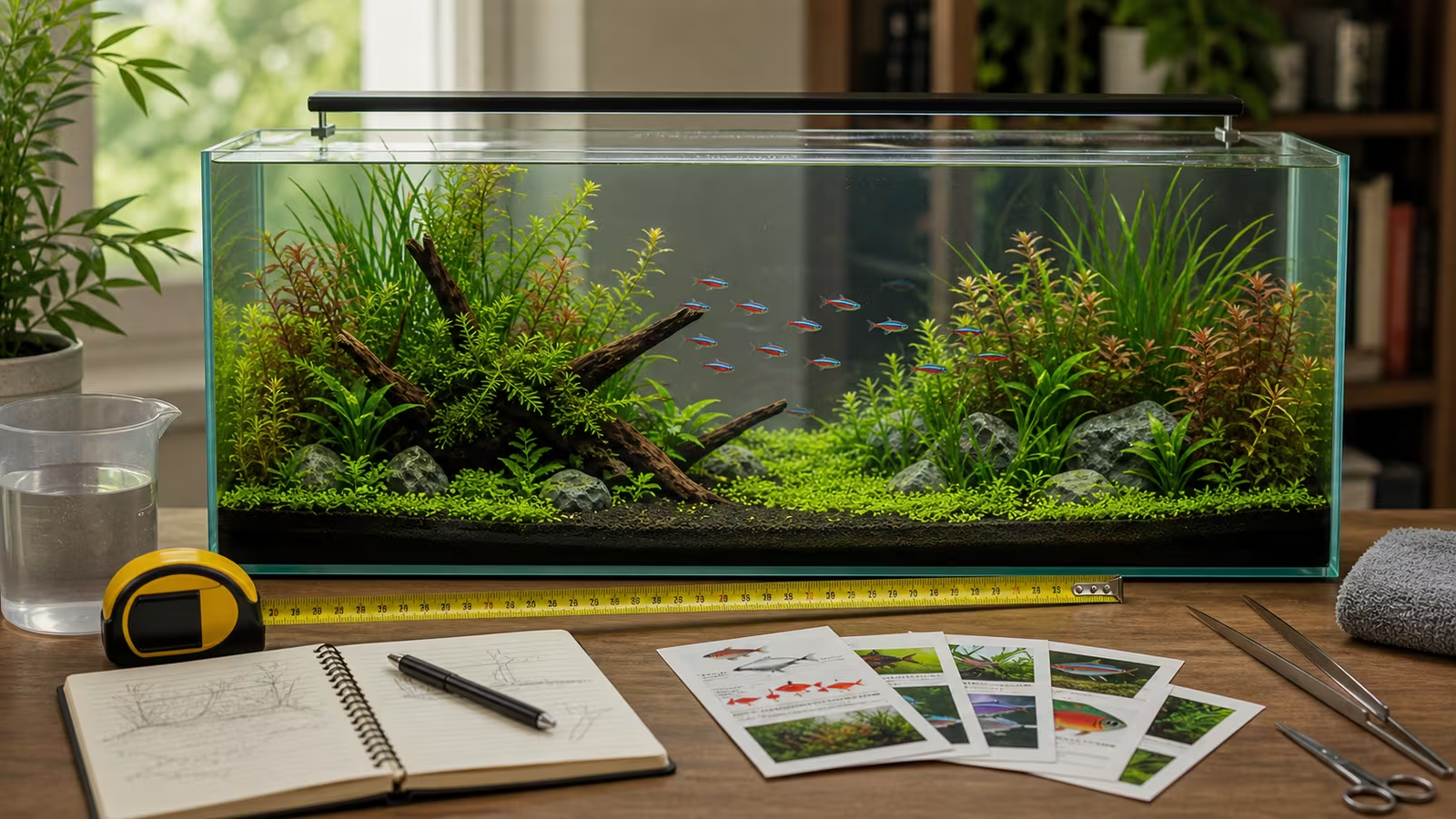
Small schooling fish are often marketed as perfect for planted tanks. Many are beautiful, active, and peaceful when kept well. The catch is that schooling fish need a group, and a group needs space. A fish that is tiny alone may still be a poor fit for a tiny tank.
A planted aquarium can provide cover and comfort, but plants do not erase swimming needs, adult size, or water quality limits.
Heads up
Schooling welfare boundary
Research the exact species, adult size, group size, temperature, water parameters, and activity level before buying. Do not keep schooling fish singly or in token groups for decoration.
Group Size Matters
Shoaling fish stay together socially; schooling describes more coordinated swimming. A group may spread out to feed or explore and come together at other times. Do not expect a tight formation all day, or try to make fish school by adding a threatening tankmate.
Research the group size for the exact species, usually counting companions of the same species rather than adding up different fish. The RSPCA advises groups of six or more for many common shoaling fish, but that is a starting point, not a universal target. A study of four aquarium species found that behavior varied with group size and species; neon tetras and white cloud mountain minnows showed less aggression and darting in larger groups. It does not establish one ideal number for every fish.
Increasing a group also increases waste, oxygen demand, and space needs. If the appropriate group will not fit, choose a different animal or a larger aquarium rather than keeping a token group.
Swimming Shape Matters
Some fish are small but active. They need horizontal room to move, not just gallons on paper. Tall narrow tanks may hold water volume but still provide poor swimming length for active species.
Measure the inside length and width, then consider how much of that footprint remains usable after wood, rocks, equipment, and plant growth. Dense plants can provide cover at the edges while leaving an open lane through the tank. Keep access to the surface and allow the fish to move away from strong filter flow. Bottom-dwelling social fish may need open floor area as well as cover; research their particular habits.
A Worked Example: Neon Tetras
Seriously Fish’s neon tetra profile recommends a group of at least 8–10 and an aquarium base of at least 60 × 30 cm (about 24 × 12 inches). It lists an adult standard length of about 30 mm (1.2 inches), measured without the tail fin. That small body size does not make a short desktop cube an appropriate group tank.
Treat those figures as a starting point for Paracheirodon innesi, not a stocking limit or a rule for every tetra. A larger group or additional species needs more capacity and compatible water, temperature, temperament, and swimming space. Compare the profile with another reliable species-specific source and plan around the adult group before buying.
Stocking Questions
| Question | Why It Matters |
|---|---|
| How large is the adult fish? | Store size is often juvenile size. |
| How many should live together? | Social needs change stocking math. |
| How active is the species? | Activity affects tank length. |
| What water does it need? | Source water and temperature must fit. |
| Who else will live there? | Tankmates must be compatible and leave room for the whole group. |
| Can the system handle the group? | Filtration, oxygen, feeding, and maintenance must support the combined load. |
Before And After Adding Fish
Prepare a cycled aquarium and a suitably sized quarantine space for the planned group. Check that the filter can handle the intended load, and plan the introduction with the supplier or an experienced keeper so the fish are not left in undersized social groups. The quarantine and acclimation guide covers preparation and arrival.
After adding fish, test ammonia and nitrite regularly, especially in a new or recently stocked tank. If either is detectable, use appropriately treated, temperature-matched replacement water and seek help if readings persist or fish are distressed. Watch for persistent hiding, chasing, difficulty feeding, or rapid breathing; these are reasons to check water quality, equipment, and compatibility, not a diagnosis by themselves. See Water Testing for Aquascapes and When to Call a Specialist .
Common Mistakes
- Buying one or two schooling fish as accents.
- Trusting a generic inch-per-gallon rule.
- Choosing by color before behavior.
- Filling all swimming lanes with hardscape.
- Mixing species until every group is too small.
Related Fondsites Path
- Stocking Caution for Small Tanks for restraint.
- Tank Size Reality Check for planning.
- Plant Before Fish Plan for sequencing.
Try This Next
Pick one schooling species and write the minimum group, adult size, activity level, and recommended tank length from multiple responsible sources. If the group does not fit, choose a different plan before buying.
Sources
- RSPCA: Keeping Pet Fish Together — social needs and compatibility.
- Seriously Fish: Neon Tetra (Paracheirodon innesi) — species-specific size, group, and tank dimensions.
- Saxby and colleagues: The Effect of Group Size on the Behaviour and Welfare of Four Fish Species — research on species-specific responses to group size.