Snails in Planted Tanks
Understand aquarium snails as livestock, hitchhikers, algae grazers, and waste signals in planted tanks without panic or careless disposal.
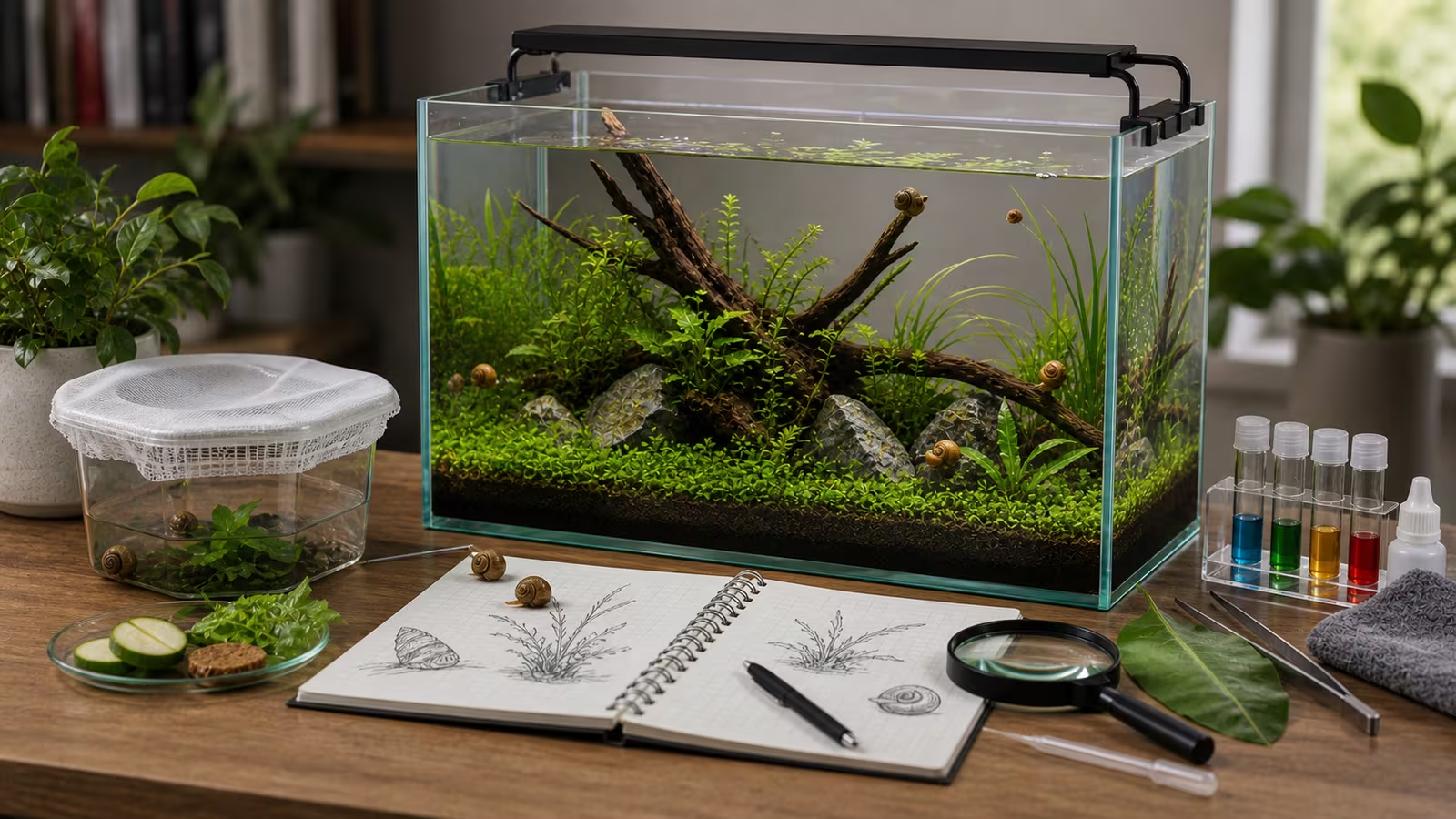
Snails are common in planted tanks. Some are chosen intentionally, while others arrive on plants or equipment and become noticeable only after they grow. Depending on the species, they graze algae and biofilm, eat leftover food or decaying leaves, or burrow through the substrate. They also produce waste and need appropriate food and water, just like other livestock.
A growing population can be a useful clue that food is plentiful, but a snail count is not a water-quality test. Look at feeding, plant health, and test results together before deciding what needs to change.
Heads up
Snail responsibility boundary
Never release aquarium snails or eggs into local waterways. Some species are restricted or invasive. Research legal status, adult size, breeding behavior, and compatibility before buying or sharing snails.
Common Snail Roles
Common names can cover more than one species. Ask for a scientific name when possible, then check its adult size, diet, water requirements, and local rules before bringing it home.
| Snail Role | What To Consider |
|---|---|
| Nerite-type grazers | Often graze film algae on hard surfaces. Some lay hard white egg capsules; breeding requirements vary by species. Do not assume every nerite has the same life cycle. |
| Ramshorn or bladder hitchhikers | Small snails often arrive on plants and can reproduce in freshwater. Their numbers can grow when food is abundant. |
| Malaysian trumpet snails | Burrow in the substrate and may be more visible after lights out. They can multiply heavily, so visible daytime counts may miss part of the population. |
| Mystery snails | Larger snails need more food and produce more waste than small hitchhikers. Check the exact species and its care needs rather than assuming all apple snails are alike. |
Snails move nutrients into their bodies and waste; grazing alone does not export those nutrients from the aquarium. Water changes, trimming, and removing debris still matter. Cleanup Crew Expectations helps set a realistic goal before adding an animal for algae.
Caring For Snails
Choose a cycled, stable tank with a suitable temperature and water chemistry for the species. Test ammonia and nitrite; both should read zero. Check hardness as well as pH, because snails need minerals for shell growth. If shells are pitted or damaged, compare new growth with older damage and review water, diet, and the species’ needs before adding a mineral product. Existing damage may not disappear even if conditions improve. Changes to water chemistry affect the other residents too. KH, GH, and pH in Planted Tanks explains the measurements.
Natural grazing may not supply enough food, especially in a clean or newly established tank. Offer a small portion of species-appropriate supplemental food, such as an algae wafer for a grazer, when needed. Watch whether the snail reaches and eats it, then remove uneaten food before it decays; adjust the next portion based on what was eaten. Do not starve a snail to make it clean glass. Check tankmates too: some fish, including loaches and puffers, may eat snails. A lid helps prevent escape. The Ornamental Aquatic Trade Association’s freshwater invertebrate care sheet covers water quality, feeding, and compatibility.
Check medication labels before treating a tank. Copper-based treatments can harm snails and other invertebrates; ask an aquatic veterinarian for a treatment plan compatible with all residents rather than assuming a fish medication is safe for them.
Acclimate new snails to the tank’s temperature and water conditions, and avoid pouring transport water into the aquarium. The quarantine and acclimation guide covers the transition.
Why Snail Populations Grow
Extra fish food, dying leaves, algae films, and soft debris can support more snails. If a population grows quickly, look for those food sources before reaching for drastic measures. A newly visible group may also include snails that were already hiding in substrate or on plants, so compare observations at the same time of day.
Some species reproduce readily in freshwater: a study of the acute bladder snail, Physa acuta , observed reproduction in snails kept without mates. One hitchhiker therefore does not necessarily mean the tank will stay at one snail. Reproduction varies by species; identify the animal before predicting what will happen.
Reducing excess food can slow future growth, but it will not remove the snails or eggs already present overnight. Feed fish enough for their needs, remove uneaten food, and trim decaying leaves. Keep feeding intentional snails if natural food is insufficient. Feeding Without Polluting the Tank offers a practical routine.
A Calm Population-Control Plan
- Observe first. Count the snails you can see on the front glass at a consistent time, and note food or melting leaves nearby. This is an index, not a total: hidden and buried snails are missed. Check ammonia and nitrite if the tank is new, livestock is distressed, or many animals have died.
- Remove excess material. Siphon accessible leftovers and trim loose, decaying leaves during normal maintenance. Avoid disturbing the whole substrate or cleaning all filter media at once.
- Collect snails gradually. Pick visible snails from glass and hardscape, or place a small piece of suitable food in a dish and lift it out with the snails that gather. Remove the food afterward. Inspect leaves and glass for egg clutches if you want to limit future hatchlings, while recognizing that small eggs can be missed.
- Contain and review. Keep collected live snails contained and cared for while you arrange a lawful return or rehoming. If that is not possible, ask an aquatic veterinarian about humane options. Never flush or release them. Follow the aquarium disposal guide and local rules.
- Compare over two weeks. Repeat the same front-glass count every few days and record feeding and removals alongside it. Compare the trend, not an exact population; if sightings keep rising, review food sources and continue gradual collection.
Avoid snail-killing treatments as a shortcut. A sudden die-off can leave decaying bodies in the tank, and treatments may harm other invertebrates. Remove any dead animals promptly and test the water if you find several. If ammonia or nitrite is detectable, make a partial water change with dechlorinated, temperature-matched water and investigate the cause; see Water Testing for Aquascapes . Do not buy a snail-eating fish or snail solely to solve the problem unless you can meet its long-term needs after the population declines.
Do Snails Eat Plants?
Many common aquarium snails graze algae, biofilm, and soft or dying plant tissue. Snails gathering on a melting leaf do not necessarily mean they caused the damage. Examine the rest of the plant, its new growth, and the conditions in the tank; Plant Melt and Recovery can help.
Species differ, however, and some snails can damage healthy plants. For example, the University of Florida’s apple snail guide describes plant-eating behavior in the island apple snail, while other apple snail species have different diets. If you see repeated damage to firm new growth, identify the snail and observe it feeding before deciding what to do. Confirm the species and its diet before moving it to another planted tank.
Preventing Unwanted Hitchhikers
Inspect new plants, especially leaf undersides and stems, for snails and egg clutches. Also check pots, decorations, and equipment moved between tanks. Rinse and remove what you can in a separate container, and consider a period of observation before planting. Inspection reduces surprises but cannot guarantee every egg is found. See Plant Quarantine and Pest Inspection for a more complete routine. Do not collect wild snails for the aquarium: they can carry parasites, and local collection or possession may be restricted, as this Utah State University Extension response explains for trumpet snails.
Common Mistakes
- Adding snails without considering their food, adult size, and bioload.
- Killing many snails at once and leaving bodies to decay.
- Releasing unwanted snails or eggs outdoors, or flushing them.
- Blaming snails for every damaged plant without checking its health.
- Buying snail-eating animals as a tool without meeting their needs.
Related Fondsites Path
- Feeding Without Polluting the Tank for population control at the source.
- Invasive Species and Aquarium Disposal for responsible handling.
- Stocking Caution for Small Tanks for bioload thinking.
Try This Next
If snails are multiplying, note where you see them, reduce excess food, and remove dead plant matter. Compare sightings over two weeks while keeping the remaining animals fed and the water stable. Treat the population as feedback before treating it as an emergency.