Stem Plants and Trimming Without Chaos
Grow, trim, replant, and shape aquarium stem plants while protecting water quality, light access, and aquascape structure.
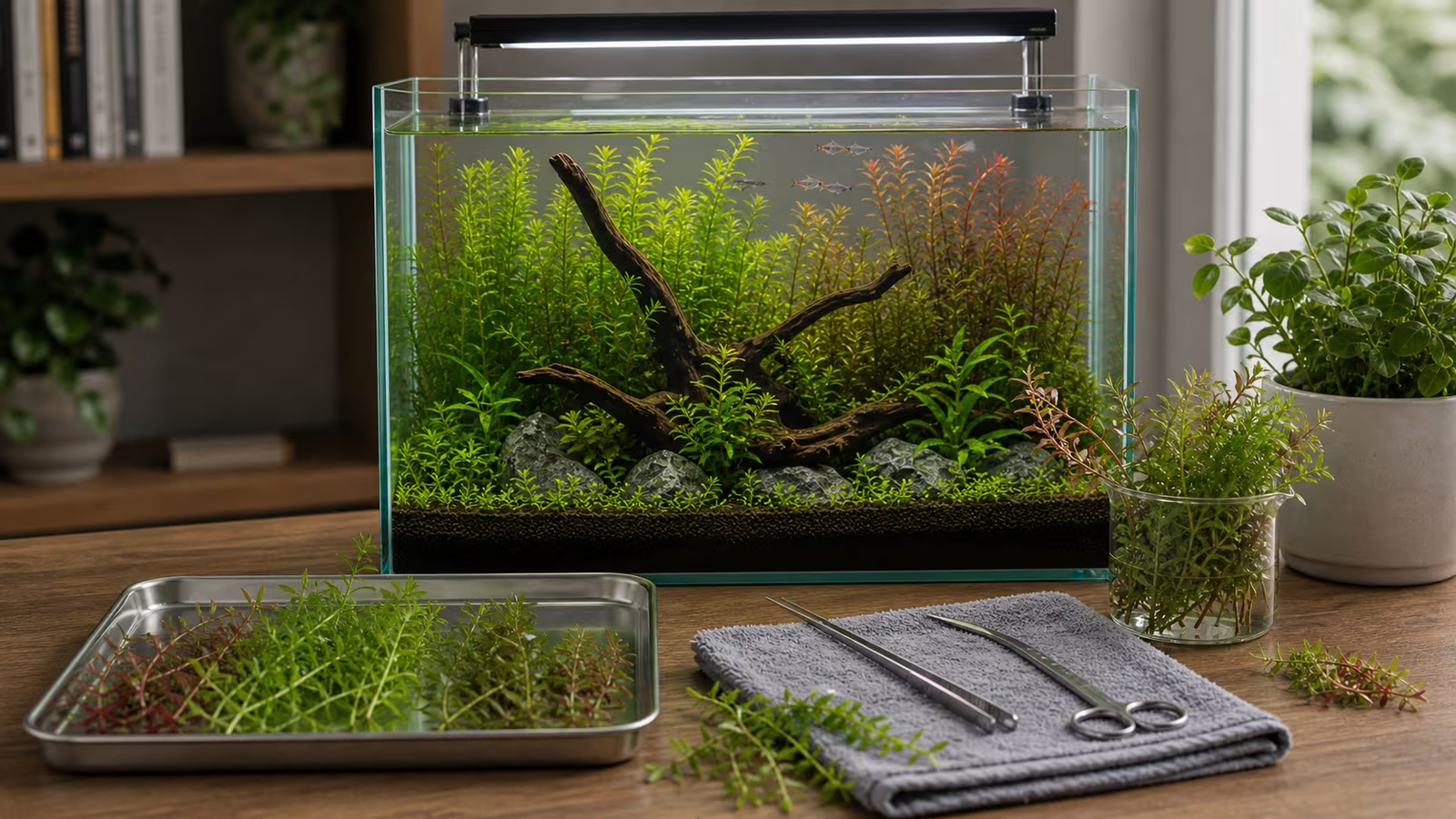
Stem plants bring motion, color, and quick growth to a planted aquarium. They can also turn into a tangled wall if left alone. Regular shaping keeps their growth useful without letting it hide the rest of the layout.
Growing stems take up nutrients, but they do not guarantee an algae-free tank or replace cycling and water care. When a group reaches the surface, shades its lower leaves, or crowds an intake, it is time to decide whether to trim, thin, or replant.
Heads up
Maintenance boundary
Large trims and uprooting can release debris and abruptly change cover, shade, and flow. In stocked tanks, work gradually, check plants for small animals, remove loose cuttings, and watch livestock after maintenance.
How Stem Plants Grow
Plants such as Rotala, Bacopa, and Ludwigia have recognizable stems with leaves along their length. Identify the plant before cutting: a rosette or a rhizome plant needs a different approach. The general trimming guide covers those plant types.
Many stem plants grow upward toward light. A node is the point on a stem where leaves or side shoots emerge. Cutting a healthy stem just above a node can encourage shoots below the cut, creating a bushier group. Growth rates and responses vary by species and tank conditions, so inspect the group during regular maintenance instead of trimming on a fixed schedule. Tropica’s trimming guide recommends regular small trims and describes cutting and replanting stem tops.
Leave new or melting plants time to establish before shaping them heavily. Remove decaying material, but look for healthy new growth before cutting back a struggling plant. See Plant Melt and Recovery for signs to watch. Weak, stretched, or pale growth can have several causes; check the plant’s requirements and the tank’s light, nutrients, and overall conditions before changing anything.
Choose The Cut
| Method | Use It When | What To Do |
|---|---|---|
| Top and replant | Healthy tops are growing above bare or declining lower stems. | Cut a firm top, replant it, and remove the old base gradually if it is deteriorating. |
| Shape the group | Established stems are growing unevenly or shading plants below. | Cut selected stems above nodes at different heights, leaving healthy foliage on the rooted portions. |
| Thin from the base | A group is too crowded for light, flow, or tool access. | Remove selected whole stems gently, leaving space between the remaining plants. |
| Gentle cleanup | New plants are adapting or growth is weak. | Remove decaying leaves and loose pieces; wait for healthy growth before a larger trim. |
For example, if a healthy Rotala group is simply too tall, cut a few of the longest stems and leave their leafy bases to branch. If the tops are healthy but the bases are bare and declining, replant a few tops instead. If the entire group is crowded, remove selected stems rather than adding every cutting back into it.
A hedge-shaped cut is convenient for an established group, but repeated cuts can leave a dense upper canopy and bare bases. Thin it or replace some old stems with healthy tops when lower growth is no longer doing well. Avoid pulling a large rooted clump at once: if substrate lifts with it, stop and work in smaller sections.
Trim And Replant A Group
- Set out clean aquarium scissors, tweezers, a net, and a container for cuttings. Wash and rinse your hands to keep soap and other residues out of the water. Check the group for shrimp, snails, and fish before cutting. Choose a few stems and leave nearby cover in place.
- Disconnect aquarium equipment from power before putting your hands in the water, keeping plugs and outlets dry. Keep filter media wet while it is stopped. If lowering the water level, follow your heater’s cooling and restart instructions; do not run it out of water. See Heater, Thermometer, and Electrical Safety .
- Cut each healthy stem just above a leaf node. If keeping the rooted portion, leave several leaves on it rather than cutting it down to bare substrate. Collect floating pieces as you work, especially near the filter intake.
- To replant, choose firm, healthy tops with several leaves. Remove the lowest leaves to expose a few nodes, hold the stem gently near its base with tweezers, and insert it cut end down, deep enough to stay anchored without burying the remaining leaves. Plant stems individually with space for light and growth; Tropica’s planting guide likewise recommends removing bottom leaves and planting stems one by one.
- Leave a healthy rooted base to produce shoots, or gently remove a deteriorating base as you replace it. Siphon loose debris from the substrate surface. If you change water, use conditioned, temperature-matched water. With dry hands, restart equipment once the water level and any waiting periods meet each device’s instructions; confirm filter flow and check the heater and temperature.
A healthy top of a typical rooted stem plant does not need existing roots to be replanted: roots can form from nodes on the buried stem, as described in LiveAquaria’s planting guide . If a cutting floats up, try anchoring a longer bare section in a stable spot rather than crushing it with tweezers. Over the following weeks, check that cuttings stay anchored and look for fresh leaves or side shoots. Remove any soft, decaying pieces. A photo makes changes easier to compare; regrowth is not on a fixed schedule. If several plants decline, review their needs and recent changes before adjusting light or fertilizer. For the wider maintenance routine and what to do after substantial substrate disturbance, see Trimming and Replanting Planted Tanks .
Check discarded plants for small animals. Bag unwanted cuttings for household trash according to local rules; never release them into waterways or storm drains. See Invasive Species and Aquarium Disposal for disposal and local restrictions.
Keep The Layout Readable
Groups of the same stem plant are easier to shape than single stems scattered everywhere. Taller stems can sit in the background or behind focal hardscape; shorter or trimmed groups can occupy the midground. Leave open space for swimming and access to equipment. Stagger cutting heights for a softer outline, and thin the group before it becomes a solid wall. Planting Density for New Aquascapes helps plan room for that growth.
Common Mistakes
- Waiting until stems shade every slower plant or obstruct equipment.
- Trimming all plant mass at once in a stocked tank.
- Replanting rotting bottoms instead of healthy tops.
- Packing cuttings so tightly that the lower stems stay shaded.
- Leaving loose cuttings to decay or collect around an intake.
- Treating a newly planted or melting group like an established hedge.
Related Fondsites Path
- Trimming and Replanting Planted Tanks for a maintenance-day workflow and other plant types.
- Fertilizing Aquatic Plants Without Overdoing It for growth support.
- Algae Prevention Basics for a broader view of plant growth and balance.
Try This Next
Pick one established stem group and trim a few of its longest shoots. Remove loose material, replant the best tops if needed, and compare the shape and new growth over the following weeks before deciding what to cut next.