Trimming and Replanting Planted Tanks
Trim, thin, replant, and clean up aquatic plants without clouding the aquarium, destabilizing the layout, or stressing livestock.
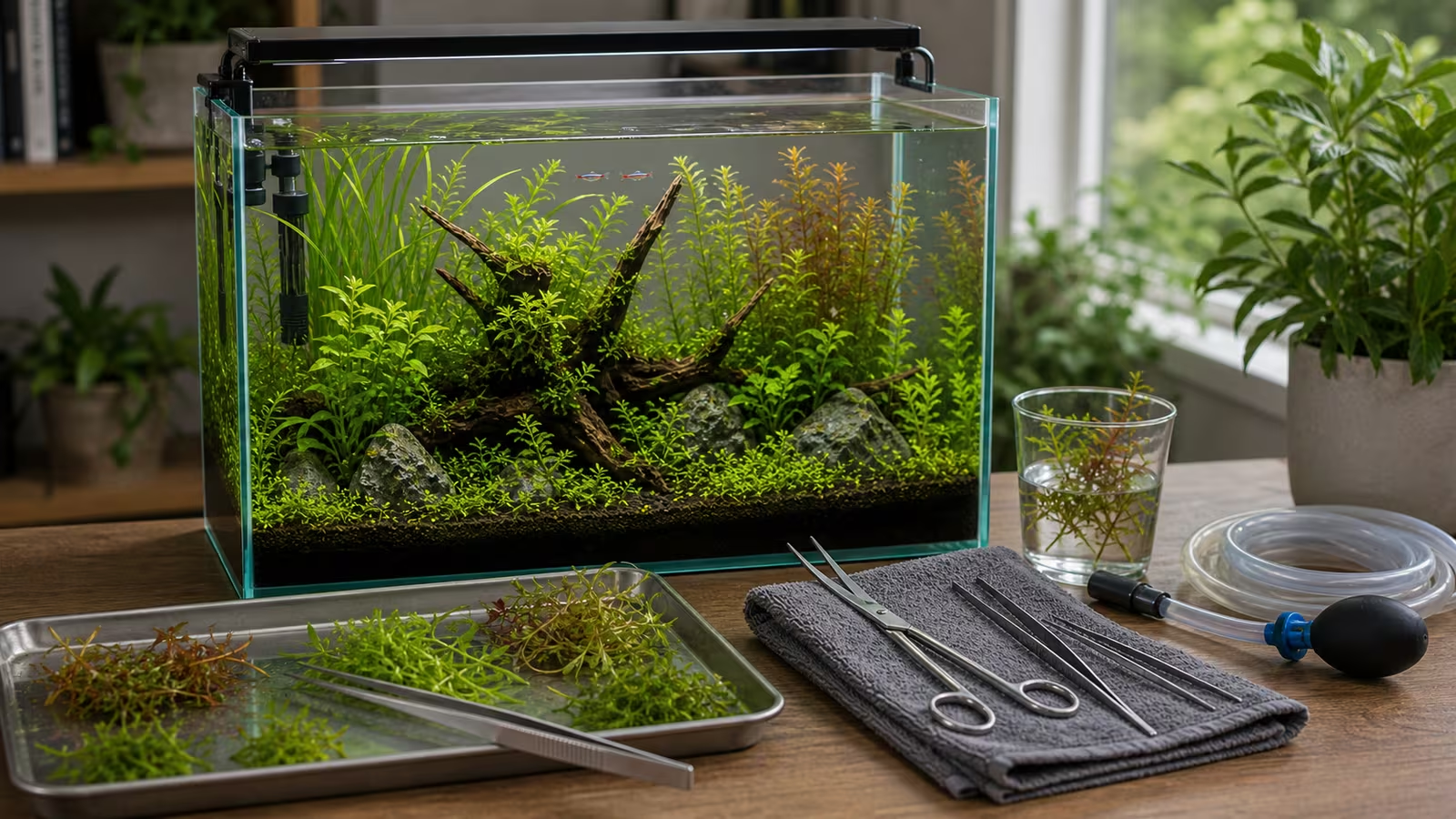
Plants grow out of the original design. That is a good problem, but it still needs management. Trimming opens space for light and flow, removes damaged growth, and lets you shape the aquascape instead of letting the fastest plant decide everything.
Replanting is useful when healthy tops are better than tired lower stems or when a group needs to become denser. The key is to work deliberately and avoid turning every trim into a full rescape.
Heads up
Disturbance boundary
Do not uproot large areas of a stocked tank casually. Disturbed substrate can release debris and cloud the water; a major change can also stress animals. Stage plant work, preserve the running filter, and monitor the tank afterward.
Decide The Goal First
Are you shaping a plant group, removing dying leaves, thinning a jungle, replanting healthy tops, or making room for flow? Each goal calls for a different cut. Trim selected long shoots to lower a group; remove selected whole stems if the base is crowded; replace a declining base with a healthy top if the group has become bare below. For a more natural outline, cut neighboring shoots at slightly different heights instead of making one flat shelf. Step back between cuts to check the shape and the cover left for animals. Start with one crowded group rather than removing a large share of the plants at once. Smaller, regular trims are easier to manage; Tropica’s trimming guide also recommends them over extensive pruning.
Take a photo before trimming. It helps you compare the result and stops you from chasing perfection while your arms are in the tank. Leave newly planted or melting plants time to settle; remove decaying leaves, but wait for healthy new growth before shaping them heavily. See Plant Melt and Recovery if you are unsure whether a plant is adapting or failing.
Choose The Cut For The Plant
| Plant type | Practical approach |
|---|---|
| Stem plants | Cut a healthy stem above a leaf node, the point where leaves or shoots emerge, leaving some healthy leaves on the rooted portion. Many stems produce side shoots below the cut. Replant healthy tops if the group needs refreshing or filling out. |
| Rosettes, such as Cryptocoryne and many swords | Remove damaged or older outer leaves close to the base without cutting the central crown. Thin whole plants only when necessary. |
| Rhizome plants, such as Anubias and Java fern | Remove damaged leaves at their stalks. Keep the thick rhizome exposed rather than burying it; follow species-specific guidance before dividing it. |
| Carpets and mosses | Trim small areas lightly and collect the pieces. Some carpeting plants spread by runners; cut a runner to limit its spread or separate an established plantlet, rather than treating it as a stem top. Avoid cutting an entire weak or newly established carpet down to the substrate. |
| Floating plants | Scoop out excess plants, leaving open surface area and access to equipment. Check the roots and leaves for small animals first. |
These are starting points, not interchangeable rules: identify the plant before cutting. Tropica’s guide illustrates different approaches for stems, rosettes, mosses, and rhizomes. For more on exposed rhizomes, see Epiphyte Plants: Anubias and Java Fern .
Replant Healthy Stem Tops
Choose firm, healthy tops with several leaves, not rotting or heavily algae-covered pieces. Keep selected cuttings wet in a container of aquarium water while you work. Cut with clean scissors, then remove the leaves from the short section that will go into the substrate. Hold one stem gently near its base with tweezers, insert it far enough to stay anchored, and release it carefully. Open the tweezers before withdrawing them slowly so the stem does not come back out. Keep the remaining leaves above the substrate and plant stems individually with some space between them for growth and light; do not pack the cuttings into a single bundle. Tropica’s planting guide likewise recommends removing bottom leaves and planting stems one by one.
If a lower stem is still healthy, you can leave it rooted to grow side shoots. If it is bare or deteriorating, remove it gradually when replacing it with a top. Loosen roots gently; if pulling lifts a large mat of substrate or clouds the water heavily, stop and leave the rest for another session. Some cloudiness can happen even with care. Do not force a delicate cutting deeper just because it floats up: try again in a more stable spot or allow a longer portion of stem to anchor. For a larger layout change, use the staged approach in Rescape Without Crashing the Tank .
Practical Workflow
- Set out aquarium-only scissors, tweezers, a net, and a container for cuttings. Wash and rinse your hands well; keep soap, oils, and cleaning residues out of the tank. Check dense plants for shrimp, snails, or fish before cutting or discarding anything.
- Disconnect aquarium equipment from power before putting your hands in the water. Keep plugs and outlets dry. If a plug or outlet is wet, switch off its circuit at the breaker before unplugging it. If lowering the water level, follow the heater’s cooling and restart instructions and never operate it out of water. The Fluval heater manual gives an example; follow the instructions for your own equipment. Keep the session short and filter media wet, then restore circulation promptly. For a long session, divide the work into shorter stages so the filter and water movement can run between them.
- Remove dead or melting leaves first. Trim or thin the chosen group, keeping healthy tops separate if you plan to replant them. Catch floating fragments as you go so they do not collect at the intake.
- Replant selected tops and gently siphon loose debris from the surface of the substrate. Avoid digging through the whole bed. The planted substrate vacuuming guide explains where to clean and where to leave roots alone.
- If you change water, use appropriately conditioned, temperature-matched replacement water. Check the intake guard, then restart equipment with dry hands once the water level and any waiting periods meet each device’s instructions. Confirm filter flow and check the heater and temperature. Watch livestock and clarity afterward. After substantial substrate disturbance, check ammonia and nitrite. If either is detectable in a stocked tank, make a partial water change with conditioned, temperature-matched water, retest, and seek experienced local or aquatic veterinary advice, especially if animals show distress. Water Testing for Aquascapes helps you track the results.
Dispose of unwanted cuttings and fragments in a sealed bag with household trash, subject to local rules. Never release them into natural water or a storm drain. The Minnesota DNR’s aquarium guidance recommends bagging unwanted plants and warns that composting may leave viable material. For restricted species or suspected pests, check local instructions before moving material; see Invasive Species and Aquarium Disposal .
Watch The Regrowth
Over the following weeks, check that replanted tops stay anchored and look for new leaves or side shoots on the plants you kept. Growth varies by species and conditions, so use those observations rather than a fixed trimming schedule. If a cutting floats free, replant it gently; if it turns soft or starts to decay, remove the affected material. If several plants decline, review their needs and recent changes before adjusting light or fertilizer. Photograph the same area again to see whether the group is filling in or shading its neighbors.
Common Mistakes
- Cutting every group heavily on the same day, leaving little cover and abruptly changing shade and flow.
- Leaving trimmed fragments to decay or block an intake.
- Replanting weak, rotting, or heavily algae-covered stems.
- Treating a rosette or rhizome plant like a stem cutting.
- Pulling a large rooted plant abruptly and stirring substrate throughout the tank.
- Discarding cuttings before checking them for small animals.
Related Fondsites Path
- Stem Plants and Trimming Without Chaos for stem-group decisions.
- Maintenance Day Checklist for order of operations.
- Aquascape Photo Journal for before-and-after records.
Try This Next
Choose one plant group for your next trim and leave the rest alone. Take a before-and-after photo, remove loose material, and watch the group’s new growth before deciding whether to cut again.