Beer Guidebooks
Beer is easy to enjoy and surprisingly deep to understand. The fastest way to level up isn’t memorizing trivia—it’s learning to notice a few repeatable signals: aroma families, bitterness shape, malt sweetness, carbonation, and how temperature and glass shape change what you perceive. These guidebooks are built to meet you where you are, then move you forward with practical explanations you can use immediately—at the bar, in the bottle shop, or at your own kettle.
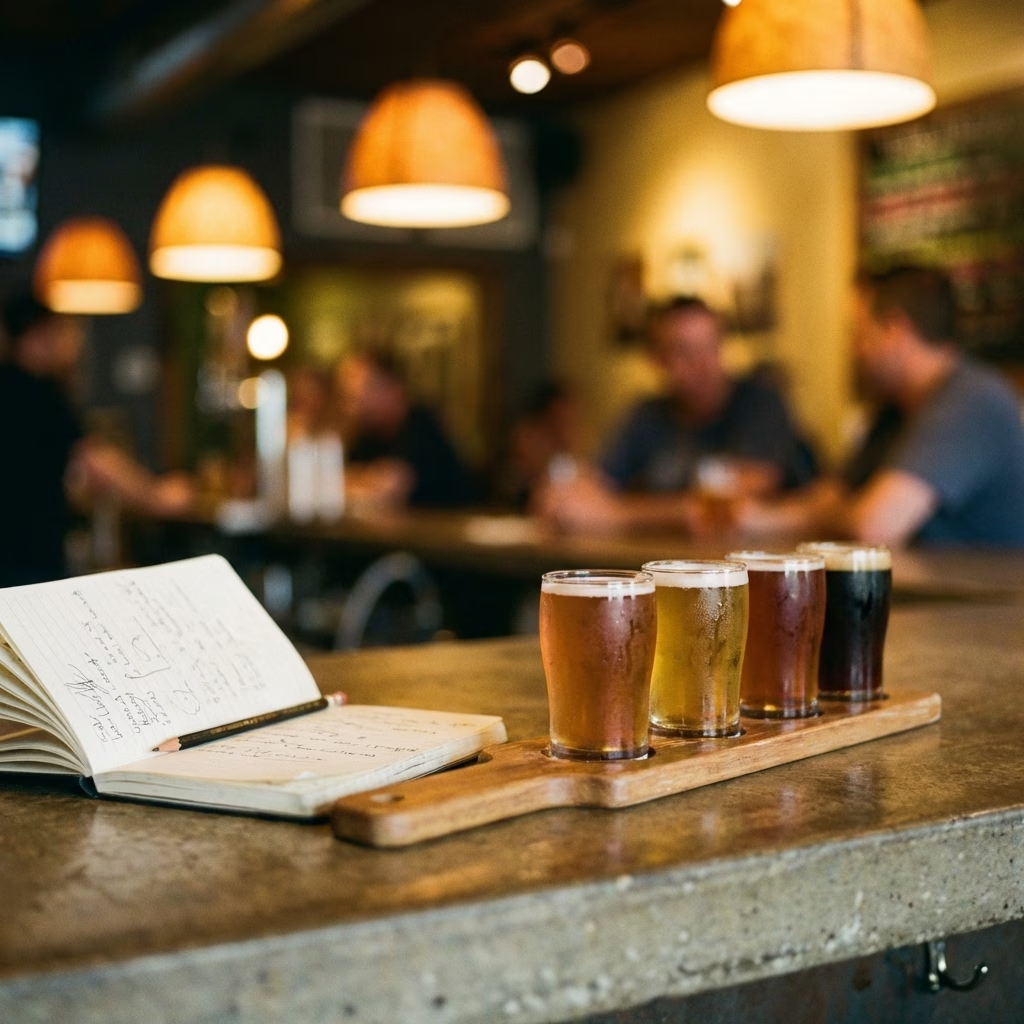
If you want a clean starting point, begin with the Quickstart Guide and treat it like a compass: it gives you the few concepts that make everything else click. Next, read Beer Tasting 101 and try it the same day with any two beers you already have—one pale and crisp, one dark or hoppy—so you can feel the contrast instead of just reading about it.
Once you have your bearings, the Beer Styles Guide helps you place a pint on the map quickly: “this is malt-forward,” “this is hop-forward,” “this is fermentation-forward.” From there, you can zoom in on what actually changes the experience—Understanding Hops for bitterness and aroma, Serving & Storage for keeping beer bright, and the Glassware Guide for the surprisingly large effect of head retention and aroma concentration.
If you’re brewing, Homebrewing Basics is your practical foundation. If you’re eating, Food & Beer Pairing is the shortcut to “wow, that works” moments without overthinking it. For quick definitions and deeper context as you read, keep the Beer Glossary and Beer History close at hand.
Each guide is written to be readable on a phone and useful in real life. The best way to use this library is to pick one small skill, apply it immediately, and write one sentence about what changed—your palate learns in short, repeatable loops.