Introduction
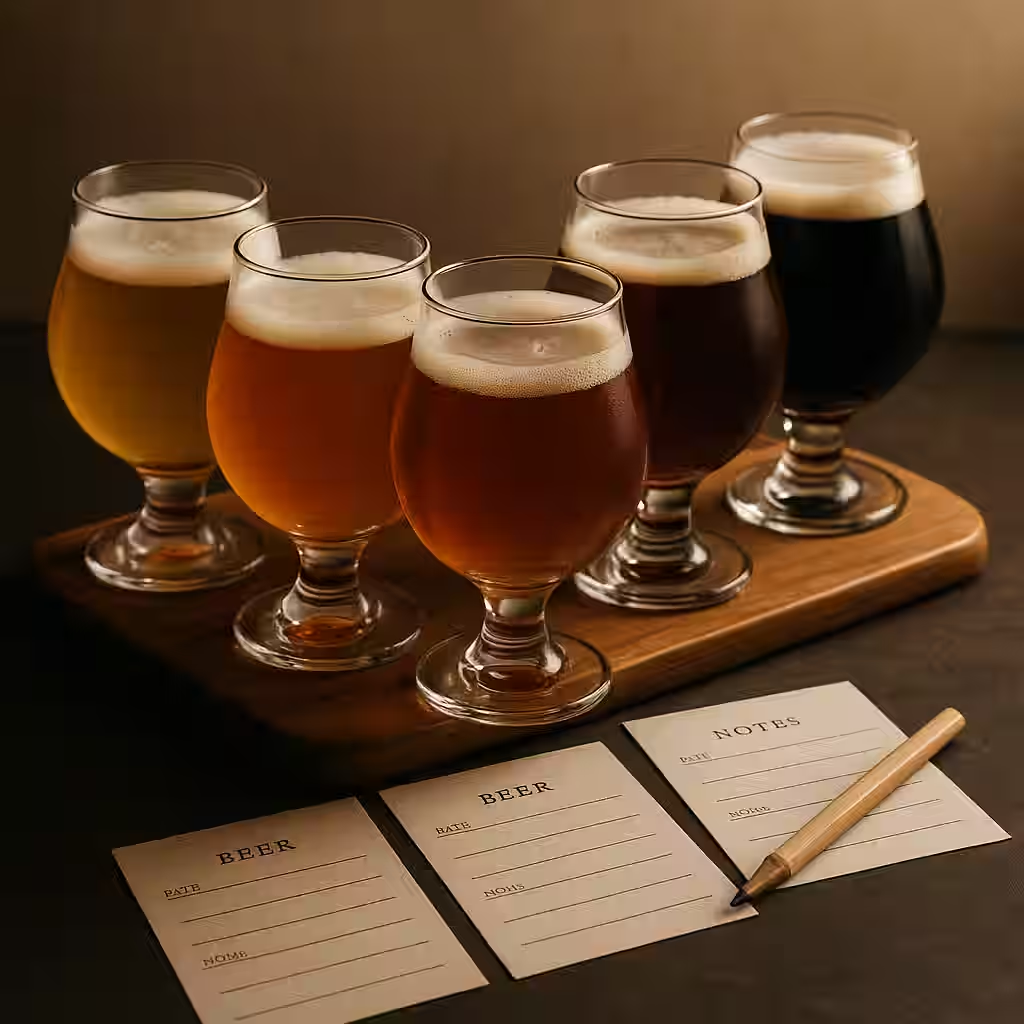
The right glass transforms beer drinking from casual to exceptional. Proper glassware enhances aroma, showcases appearance, maintains temperature, and improves overall experience. Think of the glass as the stage: a tulip gathers hop oils like stage lights focusing on a lead singer, while a stout in a snifter feels like velvet curtains framing a bassline of chocolate and roast.
This guide covers why glassware matters and how to choose the perfect glass for every beer—and invites you to pair styles and shapes in a quick interactive test.
Why Glassware Matters
You can judge a glass in four moves: what it does to aroma, how it shapes foam, what it reveals to the eye, and whether it honors the beer’s tradition.
Aroma: Narrow rims concentrate hop and yeast oils (tulip, snifter). Wide mouths let delicate aromatics waft freely (pilsner, nonic). Flared lips turn every swirl into a directed nose-first plume.
Foam: Etched nucleation points lift a steady stream of bubbles; bowl shapes cradle a mousse-like head; a clean surface keeps foam from collapsing. The head isn’t decoration—it’s the amplifier that makes malt and hop notes audible.
Appearance: A tapered, clear wall frames the show: pale straw lagers glowing like sunlight through linen, opaque stouts swallowing light, hazies turning the glass into frosted glass sculpture.
Temperature & tradition: Stems keep hands off cold beer; thick mugs insulate; thin walls give you an honest read on warmth. Some shapes are cultural shorthand: a tall weizen for Bavarian wheat, a stange for Kölsch, a tulip for Belgian ales. Using the right glass is a small bow to the people who brewed the style into existence.
The Essential Beer Glasses
Before we dive into shapes and specs, pair a few glasses with the styles they love—because choosing glassware is as much intuition as it is rulebook.
1. Shaker Pint (American Pint)
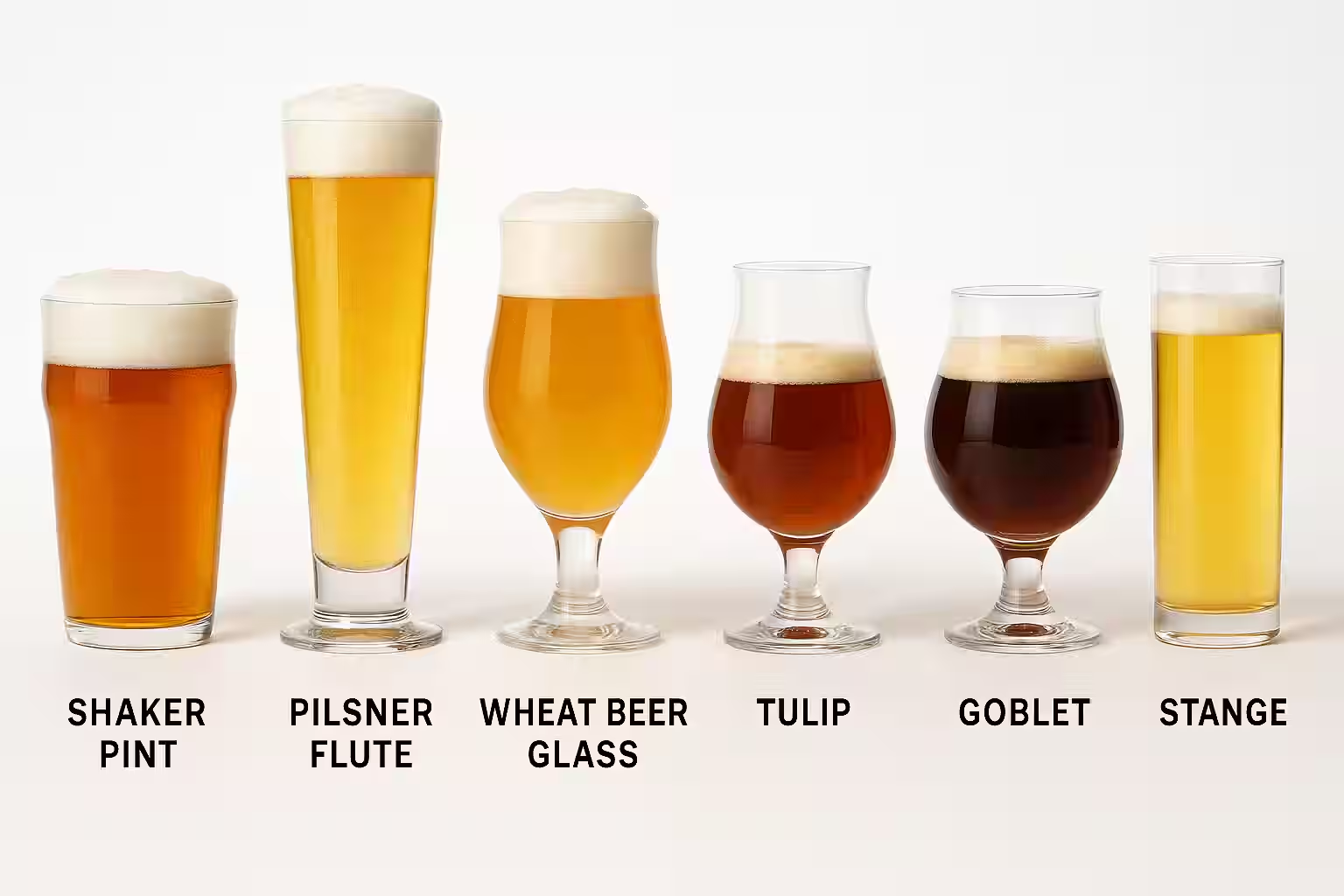
The shaker pint is probably the glass you picture when someone says “a beer, please.” It’s a straight-sided cylinder with a slight taper, holding 16 ounces (473 ml), and it actually started life in the United States as a cocktail-shaking vessel before bars adopted it as the default beer glass. You’ll find it everywhere, and for good reason: it’s universal, versatile, and wonderfully stackable—bar managers adore them because they nest into neat columns behind the counter. They show off a beer’s color nicely, they’re easy to clean, and they’re dirt cheap to replace when one inevitably takes a tumble.
That said, the shaker pint has real drawbacks. The wide, open mouth doesn’t do much to capture aroma, and without a stem your hand warms the beer faster than you might like. It’s not style-specific in any meaningful way. Think of it as the reliable pair of jeans in your wardrobe—great for casual drinking or when nothing else is available, but not the outfit you’d pick for a special occasion.
Here’s a fun bit of trivia: the “pint” glass is actually 16 ounces in the US, but cross the Atlantic and a proper Imperial pint in the UK clocks in at 20 ounces. Order a pint in London and you’ll get noticeably more beer.
2. Tulip Glass
If you could only own one beer glass, the tulip would be a brilliant choice. Born in Belgium, it features a bulbous body that narrows before flaring outward at the rim, all perched atop a slender stem. It typically holds 10 to 16 ounces, and it’s the Swiss Army knife of beer glassware.
The tulip shines with Belgian ales—Dubbels, Tripels, and Quads—but it’s equally at home cradling a hazy IPA, a funky saison, a puckering sour, a burly strong ale, or a bourbon-barrel-aged bruiser. The reason it works so well across so many styles comes down to physics: that bulbous bowl captures and concentrates aromatics, the flared rim directs them straight to your nose when you tip the glass, and the stem keeps your warm hand away from the cold beer. Give it a gentle swirl and you release even more complexity. It also does a beautiful job maintaining a persistent head of foam.
The trade-offs are minor. Tulips don’t stack easily, they’re more delicate than a shaker pint, and they cost a bit more. You may also encounter variations on the theme, like the Scottish thistle glass or the dedicated IPA glass, which are essentially tulips with personality tweaks. But for sheer versatility and elegance, nothing beats a tulip.
3. Snifter
The snifter is a glass borrowed from the brandy world and given a second career in craft beer. It has a wide, generous bowl that tapers to a narrow opening, sitting on a short, sturdy stem. Capacity ranges from 8 to 14 ounces, and everything about its design says “slow down and pay attention.”
This is the glass you reach for when you’re pouring something big and complex—imperial stouts, barleywines, Belgian quads, old ales, barrel-aged monsters, and anything north of 9% ABV that rewards contemplation. The wide bowl lets you cup the glass in your palm, gently warming the beer (which is intentional with these robust styles), while the narrow opening concentrates those intense aromas of dark chocolate, dried fruit, oak, and boozy warmth. A gentle swirl releases layers of complexity, and the small serving size encourages sipping rather than gulping.
The snifter is emphatically not for session beers. If you pour a crisp pilsner into one, your hand will warm it too quickly and the shape will feel all wrong for a beer meant to be light and refreshing. Save the snifter for those special-occasion bottles you’ve been aging in the back of the closet, cup it in your palm, swirl gently, and inhale deeply.
4. Pilsner Glass
Tall, slender, and tapered, the pilsner glass is a showcase in crystal. Originating in the Czech Republic and Germany, it holds 12 to 16 ounces and was designed with one mission: to celebrate the clarity, color, and carbonation of a well-made pilsner.
Pour a pale lager into this glass and you’ll see why it exists. The tall, narrow silhouette creates a beautiful column of golden beer with tiny bubbles streaming upward like champagne, topped by a crisp white head. It showcases clarity like no other shape, making it the ideal vessel for pilsners, light lagers, Kölsch, blonde ales, and Helles. The slender form also helps the beer stay cold longer than a wide-bodied glass would.
On the downside, that narrow opening doesn’t capture aroma the way a tulip or snifter does, and the slim base can make the glass a bit tippy on an uneven bar top. But for any style where visual beauty and crispness matter most, the pilsner glass is unbeatable.
5. Weizen Glass (Wheat Beer Glass)
The weizen glass is one of the most distinctive shapes in the beer world—tall, curvaceous, narrow at the base, and widening dramatically toward the top. It hails from Germany and typically holds 16 to 24 ounces, with the classic 500 ml size being the standard. That generous capacity is deliberate, because wheat beers produce massive, billowing heads of foam that need room to breathe.
This glass is purpose-built for hefeweizens, witbiers, dunkelweizens, and wheat beers of all kinds. The curved shape beautifully shows off the hazy, cloudy character of unfiltered wheat beers, while the wide top cradles that enormous head and channels the signature banana and clove aromas right to your nose.
There’s even a traditional pouring ritual: pour about three-quarters of the bottle into the glass, then swirl the last bit in the bottle to suspend the settled yeast, and finally pour that cloudy yeast slurry right into the glass. It’s a small ceremony that connects you to centuries of Bavarian brewing tradition. The weizen glass is admittedly very specific in its purpose—you won’t use it for much beyond wheat beers—and its height makes it a storage challenge and a bit tippy on the table, but for its intended style, nothing else comes close.
6. Goblet / Chalice
Wide-bowled, thick-glassed, and perched on a substantial stem, the goblet and chalice trace their lineage straight back to Belgian monastic brewing. Holding 10 to 16 ounces, these are glasses designed for ceremony and substance. They pair beautifully with Belgian Dubbels, Tripels, abbey ales, Trappist beers, and Belgian strong ales.
The wide mouth invites generous sips, the thick glass feels satisfying and substantial in your hand, and the shape maintains a large, creamy head. If you’ve ever seen photos of monks at Westvleteren or Chimay raising their glasses, those are goblets and chalices.
What’s the difference between the two? A goblet tends to be thinner and more delicate, while a chalice is heavier, thicker, and often more ornate—think medieval banquet hall versus upscale restaurant. Both work identically from a functional standpoint, so choose based on aesthetics. The main drawbacks are that they’re heavy, bulky, and the wide bowl means your hand can warm the beer if you cradle it too long. But for Belgian beer lovers, owning at least one is practically a requirement.
7. Stange
The stange is refreshingly minimalist—a narrow, straight cylinder that holds just 6.5 to 7 ounces (about 200 ml). It comes from Cologne, Germany, and it’s the traditional vessel for Kölsch, though it also works well with altbier, gose, and other delicate ales.
The small serving size is the whole point. A stange of Kölsch stays cold and carbonated from first sip to last because you finish it quickly. The narrow shape maintains fizz beautifully, and the petite volume means every glass is fresh and lively. In the traditional beer halls of Cologne, servers called Köbes circulate with trays of stange glasses, whisking away your empty and replacing it with a full one in a seamless, never-ending rotation. They keep track of your count by making marks on your coaster, and the only way to stop the flow is to place your coaster on top of your glass.
The stange is admittedly very small and very specific to German styles, so it won’t be the most-used glass in your collection. But if you love Kölsch or appreciate the charm of hyper-traditional glassware, it’s a delightful addition.
8. Mug / Stein
There’s something deeply satisfying about wrapping your hand around the handle of a thick, heavy beer mug. These sturdy vessels are available in glass or ceramic, hold anywhere from 16 ounces to a full liter or more, and carry centuries of German beer-garden heritage.
Mugs and steins are the natural choice for Oktoberfest and Märzen beers, Dunkels, Bocks, German lagers, and really any situation where the mood is festive and casual. The thick glass acts as insulation, keeping your beer cold, while the handle means your warm hand never touches the vessel itself. They’re durable, they’re large, and they just feel fun.
The traditional stein, by the way, was originally made from ceramic or stoneware and came with a hinged lid—not for decoration, but to keep flies out of your beer during outdoor drinking. Practical German engineering at its finest. The downsides of mugs are straightforward: they’re heavy, they hog cabinet space, and the insulation that keeps beer cold also means you can’t warm a beer with your hand if it’s been served too frigid. But for beer gardens and Oktoberfest celebrations, nothing else will do.
9. Nonic Pint
The nonic pint looks like an ordinary pint glass with one clever twist: a subtle bulge near the rim. This British invention holds a full 20 ounces (a true Imperial pint, not the smaller American version), and that distinctive bulge solves several real-world problems at once.
The name “nonic” comes from “no nick”—the bulge prevents the rim from chipping when glasses clink together or get stacked. It also makes the glass easier to grip and keeps stacked glasses from vacuum-sealing themselves together, which is a genuine annoyance in busy pubs. The nonic is the go-to glass for British ales, ESBs, brown ales, bitters, and milds.
Like its American shaker-pint cousin, the nonic doesn’t do much to capture aroma, but it’s a practical workhorse with a clever design. If you drink a lot of British-style ales, it’s a worthy addition to the shelf.
10. Oversized Wine Glass
Here’s a secret that sommeliers and beer judges share: a large wine glass is one of the best vessels for tasting beer. With a capacity of 12 to 17 ounces, the oversized wine glass offers excellent aroma capture, plenty of room for swirling, and a shape that’s been scientifically refined over centuries to deliver aromatics to your nose.
It’s fantastically versatile—equally at home with sours, saisons, wild ales, and essentially any beer you want to evaluate seriously. Professional beer judges and competition organizers often reach for wine glasses when they need a neutral, high-performance tasting vessel. The only real drawbacks are that it doesn’t look particularly “beer-like” and it breaks with tradition. But if you care more about what’s in the glass than what the glass looks like, an oversized wine glass is a quietly brilliant choice.
11. Teku (Craft Beer Glass)
The Teku is the new kid on the glassware block, and it’s made a strong impression fast. Designed in Italy specifically for craft beer, it features a stemmed, angular tulip shape that holds 11 to 14 ounces. Think of it as a tulip glass that went to design school—sleeker, sharper, and undeniably modern.
Its aroma-capturing ability rivals the tulip, making it superb for tasting IPAs, Belgian ales, and really any style you want to evaluate carefully. The angular bowl looks striking on a table, the stem is comfortable to hold, and craft breweries around the world have adopted it as their house glass. Many beer competitions now use Tekus as their standard tasting vessel.
The Teku does tend to be more expensive than other glasses, and purists may find it less traditional. But if you appreciate modern design and want a single glass that performs at the highest level across many styles, the Teku is hard to beat.
Specialty Glasses
Beyond the essential eleven, a few specialty glasses deserve a mention for their charm, history, or sheer entertainment value.
Thistle Glass (Scottish)
The thistle glass is shaped like the national flower of Scotland, with a bulbous base and a flared top. It’s designed for Scottish ales and Scotch ales, and it’s as much a cultural statement as a functional vessel.
Boot (Das Boot)
The boot glass—yes, shaped like an actual boot—is pure novelty, designed for large communal servings and a good laugh. Fair warning: there’s a real technique to drinking from one. If you tilt the toe toward you at the wrong angle, the air bubble trapped in the toe releases all at once, sending a tidal wave of beer straight into your face. Point the toe sideways and rotate as you drink to avoid a very public soaking.
Yard Glass
Standing a full three feet tall with a bulbous bottom, the yard glass holds two to three pints and exists primarily as a challenge-drinking novelty. It requires a similar rotation technique to the boot and generates plenty of spectator entertainment.
Kwak Glass
The Kwak glass is an oddity even by specialty standards—a round-bottomed flask that can’t stand on its own, nestled in a wooden holder. It’s the signature glass for Pauwel Kwak beer from Belgium, and its unusual shape is part of the fun of ordering one.
Choosing the Right Glass
By Beer Style
| Style | Best Glass | Why |
|---|---|---|
| Pilsner | Pilsner glass | Shows clarity, bubbles |
| IPA | Tulip, Teku, Pint | Aroma capture |
| Stout | Snifter, Tulip, Pint | Concentrates roasted aromas |
| Hefeweizen | Weizen glass | Traditional, holds head |
| Belgian Ale | Tulip, Goblet | Captures esters, traditional |
| Barleywine | Snifter | Intense aroma, sipper |
| Lager | Pilsner, Pint, Mug | Shows clarity |
| Sour | Tulip, Wine glass | Aroma complexity |
Minimal Collection (3 glasses)
If you’re just getting started, three glasses will cover the vast majority of your needs. Start with a tulip, which handles Belgian ales, IPAs, and strong ales with aplomb. Add a standard pint glass as your universal everyday backup. Round things out with a pilsner glass for lagers, and you’re surprisingly well-equipped for nearly any beer that comes your way.
Ideal Collection (6 glasses)
Once you’ve caught the glassware bug, expanding to six glasses lets you get more specific. Keep your tulip for Belgian ales, IPAs, and sours. Add a snifter for strong ales and barleywines. Your pint glass still earns its keep with pale ales and ambers. The pilsner glass covers lagers and pilsners. A weizen glass joins the lineup for wheat beers. And a Teku rounds out the set as your dedicated tasting and evaluation glass.
Complete Collection (10+ glasses)
For the true enthusiast, build on the ideal six by adding a goblet or chalice for authentic Belgian tradition, a stange for Kölsch, an oversized wine glass for professional-style tasting sessions, and a nonic pint for British ales. At this point, you’ll have a glass specifically suited to virtually any style you encounter.
Glass Care & Cleaning
The “Beer Clean” Standard
In the beer world, “beer clean” is a specific standard, not just a casual phrase. A beer-clean glass is completely free of soap residue, grease, oils, dirt, dust, lipstick, and lip balm. Any of these contaminants will destroy your foam, create weird bubble patterns, and subtly alter the flavor of your beer. It’s the single most important thing you can do to improve your at-home beer experience.
How to Achieve Beer Clean
The process is simple but requires discipline. Rinse your glass immediately after drinking—don’t let residue dry and harden. Wash it in very hot water with just a small amount of unscented dish soap, then rinse thoroughly until there is absolutely no soap residue left. Set the glass upside down on a drying rack to air dry, and store it upside down or in a closed cabinet.
There are a few critical rules to follow. Never towel-dry a beer glass, because lint from the towel will cling to the interior and destroy the head on your next pour. Don’t use scented soap, as it leaves an invisible film that interferes with foam and flavor. Keep your beer glasses separate from greasy dishes during washing, and avoid touching the inside of the glass with your fingers, since the oils from your skin are enough to compromise the surface.
Testing Beer Clean
There are two easy ways to check your work. For the water test, rinse the glass with cold water and watch how it flows down the sides. The water should sheet evenly across the surface in a smooth film. If you see droplets beading up anywhere, the glass isn’t beer clean—there’s residue in that spot.
The beer test is even more telling. Pour a beer and watch what happens. The foam should form thick and lasting on top, and as you drink, rings of foam should cling to the sides of the glass in what’s called lacing. If you see streams of tiny bubbles racing up from specific points on the glass wall, those are spots where contamination is providing nucleation points, and the glass needs another wash.
Dishwasher?
This is a surprisingly controversial topic among beer enthusiasts. Some dishwashers leave a film of residue that ruins foam, while others do a perfectly fine job. High heat can actually be beneficial for sanitizing, and results vary widely depending on your specific detergent. The best approach is simply to test: run a glass through your dishwasher, then perform the water-sheeting test. If the water sheets evenly, your dishwasher passes. If it beads, hand-wash your beer glasses instead.
Common Mistakes
One of the most widespread mistakes is using frozen or frosted glasses. It seems like it would keep your beer extra cold, but those ice crystals melt into the beer, diluting it and muting the flavors you’re paying good money to taste. Towel-drying is another common offender—the lint left behind is invisible to the eye but devastating to foam. Storing glasses right-side up lets dust settle inside, and soap residue from improper rinsing is a silent killer of head retention and flavor.
Using the wrong size glass is more damaging than people realize. A tiny glass makes a big beer feel cramped, while a huge glass makes a delicate beer look sad and lost. And perhaps the most common mistake of all is drinking straight from the bottle or can. You’re completely bypassing the aroma experience, which accounts for a huge portion of what you perceive as flavor. Even pouring into a simple water glass is dramatically better than drinking from the container.
The fix for all of these is straightforward: use a room-temperature or lightly chilled (never frozen) glass that’s been air-dried, properly sized for the pour, and genuinely clean.
Glassware Myths Debunked
Let’s clear up a few persistent myths. The idea that frosted glasses are best is probably the most stubborn one—freezing actually mutes flavor and creates ice crystals that dilute your beer. It’s a holdover from an era when most beer was mass-produced lager best served as cold as possible, and it does those beers no favors either.
The notion that “any glass is fine” is technically true in the way that any shoes are fine for hiking—you can do it in sandals, but proper boots make the experience dramatically better. Glass shape has a real, measurable effect on aroma delivery and the overall drinking experience.
Some people believe bigger is always better, but an oversized glass actually makes a normal pour look skimpy and sad, with too much headspace diluting the aroma concentration. Match the glass to the serving size and you’ll be much happier.
The myth that dishwashers ruin glasses is an oversimplification. Some do, some don’t—it depends entirely on your machine and detergent. Test yours and find out. And finally, the belief that a more expensive glass automatically means better beer is simply false. A clean glass in the appropriate shape matters infinitely more than the price tag on the glassware. A spotless ten-dollar tulip will outperform a dirty fifty-dollar Teku every single time.
Pro Tips
Before you pour your next beer, give the glass a quick rinse with cold water. This removes any dust that’s settled since the last wash and primes the surface for a smooth pour. Speaking of temperature, resist the urge to chill expensive or complex beers in the fridge until they’re ice cold—serve them at the temperature appropriate for their style, which for many craft beers is warmer than you might think.
If you’re going to invest in just one premium glass, make it a tulip. It’s the most versatile aroma-capturing shape and handles the widest range of styles with grace. Match your glass to the occasion: a casual weeknight calls for a no-fuss pint glass, while a special bottle deserves proper stemware and a moment of attention. And when you’re genuinely unsure which glass to use, reach for an oversized wine glass—it works beautifully for almost anything.
Learn More
- Read Serving & Storage for complete serving guide
- Master Beer Tasting to use your glassware properly
- Explore Beer Styles to know what glass suits what style