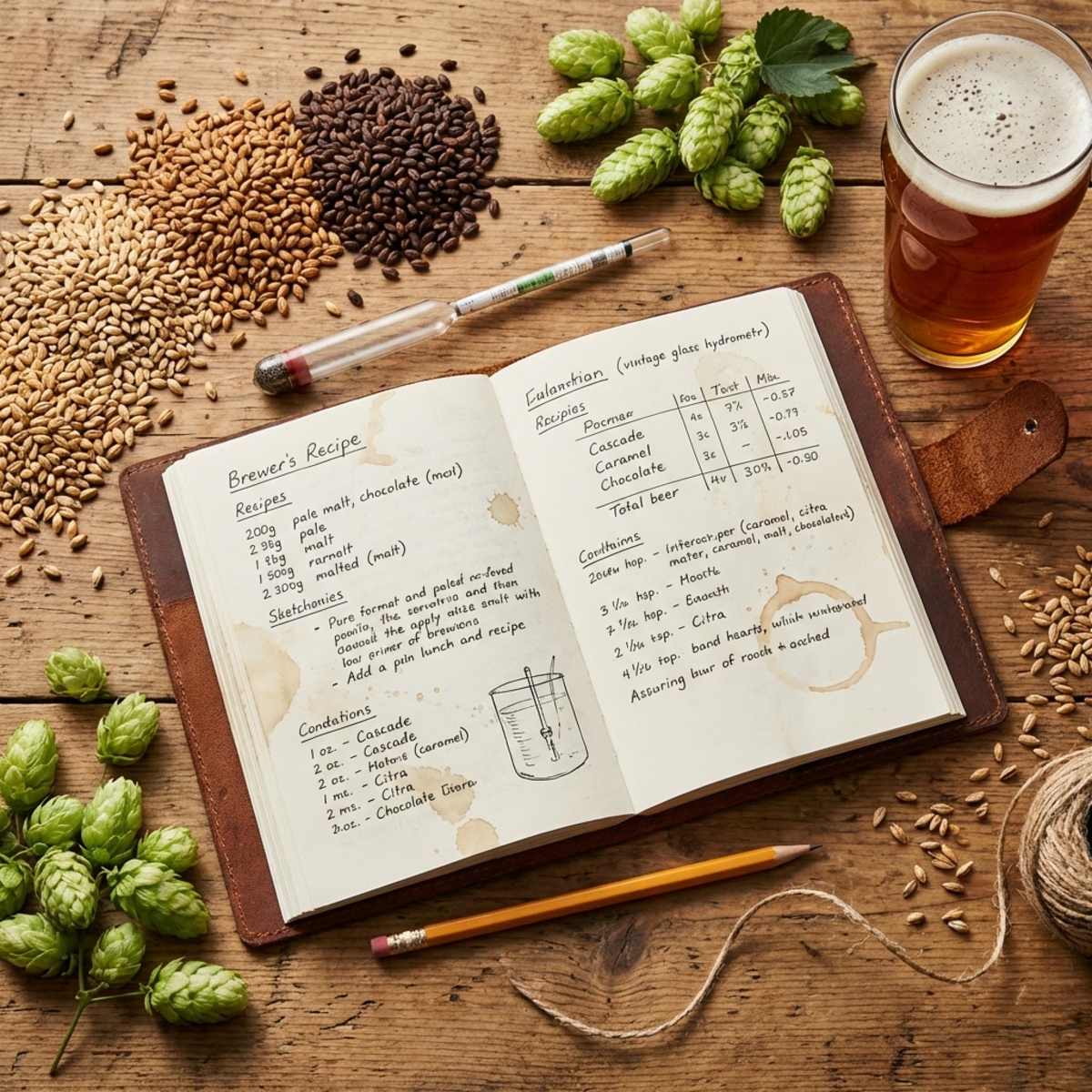
Beer Glossary
Your complete reference for beer and brewing terminology. From grain to glass, understand the language of beer.
A
ABV (Alcohol by Volume): Percentage of alcohol in beer, typically 3-12% for most styles (up to 20%+ for extreme beers).
ABW (Alcohol by Weight): Alcohol content by weight (lower number than ABV; ABV = ABW × 1.25).
Acetaldehyde: Off-flavor resembling green apples or fresh-cut pumpkin, usually from young beer.
Adjunct: Fermentable ingredient other than malted barley (corn, rice, sugar, wheat, oats). Can be pejorative or neutral depending on context.
Aerate/Aeration: Introducing oxygen into wort before fermentation. Essential for yeast health.
Aftertaste: Flavors lingering after swallowing; also called “finish.”
Aging: Storing beer to develop complexity, typically for strong or sour beers.
Airlock: One-way valve allowing CO2 to escape fermenter while preventing contamination.
Ale: Beer fermented with top-fermenting yeast (Saccharomyces cerevisiae) at warmer temperatures (60-75°F), producing fruity esters.
Alpha Acid: Hop compound providing bitterness when boiled. Measured as percentage (AA%).
Altbier: German “old style” ale from Düsseldorf - copper-colored, balanced.
Amber Ale: Medium-colored ale with caramel malt character, balanced hop bitterness.
Attenuation: Degree to which yeast converts sugars to alcohol. High attenuation = drier beer.
Autolysis: Yeast cell death and breakdown, creating meaty/rubbery off-flavors if beer sits on dead yeast too long.
B
Barleywine: Strongest ale style (8-12%+ ABV), rich, complex, age-worthy.
Barrel: Container for aging beer, often oak previously used for spirits (bourbon, wine).
Barrel-Aged: Beer aged in wooden barrels, gaining flavors from wood and previous contents.
Beer Clean: Glassware properly cleaned so foam sticks to sides (lacing) and head forms properly.
Beta Acid: Hop compound contributing to bitterness during aging, antioxidant properties.
Bière de Garde: French farmhouse ale, malty and strong.
Bitter: English pale ale emphasizing hop bitterness; comes in Ordinary, Best, and Extra Special (ESB).
Bitterness: Taste primarily from hops, measured in IBU.
Black IPA: Dark beer with roasted malt and IPA-level hops; also called Cascadian Dark Ale.
Blonde Ale: Light-colored, approachable ale with subtle malt and hops.
Bock: Strong German lager (6.3-7.2% ABV) with rich malt character.
Body: Perceived fullness/thickness of beer in mouth (light, medium, full).
Boil: Heating wort for 60-90 minutes to extract hop bitterness, sterilize, and concentrate.
Bottle-Conditioned: Beer naturally carbonated in bottle by yeast, creates sediment.
Brettanomyces (Brett): Wild yeast creating funky, barnyard, horse blanket aromas. Intentional in some styles, infection in others.
Brew Kettle: Pot for boiling wort.
Brewer’s Yeast: Saccharomyces cerevisiae (ale) or Saccharomyces pastorianus (lager).
Brewhouse: Area/equipment where wort is produced before fermentation.
Bright Beer: Clarified, finished beer ready to serve.
Brix: Measurement of dissolved sugars, mostly used in winemaking but sometimes in brewing.
Brown Ale: Malty ale with nuts, toffee, chocolate flavors; English versions milder, American versions hoppier.
Burton Snatch/Burton Sulfur: Sulfurous aroma from Burton-on-Trent water high in minerals; traditional in some English ales.
C
Candi Sugar: Belgian brewing sugar (often dark) used in strong Belgian ales.
Carboy: Large glass or plastic fermenter (typically 5-6 gallons for homebrewing).
Carbonation: CO2 dissolved in beer creating bubbles and mouthfeel. Measured in volumes (2.0-2.8 typical).
Cask Ale: Unfiltered, unpasteurized beer naturally carbonated in cask, served via hand pump without added CO2. Also called “real ale.”
Cask-Conditioned: Beer that completes fermentation and carbonation in cask.
Chill Haze: Cloudiness from proteins when beer is cold; cosmetic only.
Chlorophenol: Medicinal/Band-Aid off-flavor from chlorine in water reacting with phenols.
Clone: Homebrew recipe attempting to replicate commercial beer.
Cold Crash: Rapidly cooling beer to near-freezing to clarify and settle yeast/proteins.
Conditioning: Maturation period after fermentation allowing flavors to mellow and carbonation to develop.
Coolship: Shallow vessel for cooling wort via ambient air (traditional for lambics).
Craft Beer: Beer from small, independent brewery emphasizing quality, flavor, and traditional methods.
Cream Ale: Light American hybrid often using lager yeast at ale temperatures.
Crusher: Mill for crushing malted grain.
D
Decoction: Traditional mashing method where portion of mash is removed, boiled, and returned to raise temperature.
Dextrin: Unfermentable sugar adding body and mouthfeel.
Diacetyl: Buttery/butterscotch flavor from fermentation. Intentional in some styles, flaw in most.
DMS (Dimethyl Sulfide): Cooked corn/vegetable off-flavor from improper boiling or cooling.
Doppelbock: “Double Bock” - extra-strong German lager (7-10% ABV), rich malty flavor. Names traditionally end in “-ator.”
Dosing: Adding sugar to beer before bottling for carbonation (priming).
Double IPA (DIPA): Higher alcohol (7.5-10%+ ABV), more intensely hopped IPA; also called Imperial IPA.
Dry Hopping: Adding hops during or after fermentation for aroma without bitterness.
Dry-Hopped: Beer with hops added post-fermentation.
Dunkel: German dark lager with chocolate, bread, nut flavors but no roasted bitterness.
Dunkelweizen: Dark wheat beer combining Hefeweizen yeast character with darker malts.
E
Eisbock: German beer made by freezing and removing ice, concentrating alcohol and flavor (9-14% ABV).
Ester: Fruity flavor compound created by yeast during fermentation (banana, apple, pear, tropical fruit).
Extract: Concentrated malt syrup (liquid) or powder (dry) used in extract brewing.
Extract Brewing: Brewing method using malt extract instead of mashing grain. Easier for beginners.
F
Farmhouse Ale: Rustic ale style (Saison, Bière de Garde) traditionally brewed on farms.
Fermentation: Yeast converting sugars to alcohol and CO2.
Fermenter: Vessel where fermentation occurs.
Final Gravity (FG): Specific gravity after fermentation completes, indicates residual sugars.
Fining: Clarifying beer by adding substance that binds particles (gelatin, isinglass, Irish moss).
Firkin: Cask holding 10.8 gallons (one quarter barrel).
Flocculation: Yeast clumping and settling after fermentation. High flocculation = clearer beer.
FWH (First Wort Hopping): Adding hops to hot wort before boiling for smooth bitterness.
G
Gose: German sour wheat beer with coriander and salt.
Grain Bill: Recipe’s list of malts and grains.
Gravely: High alcohol beer creating warming sensation.
Green Beer: Young beer before conditioning completes; often has off-flavors that mature out.
Grist: Crushed malt ready for mashing.
Growler: Refillable beer jug, typically 64 oz (half gallon).
Gueuze: Blend of young and old lambics, champagne-like, tart, complex.
Gusher: Over-carbonated beer that foams excessively when opened.
H
Hazy IPA: See New England IPA.
Head: Foam on top of beer. Quality indicator - should be thick and persistent.
Head Retention: How long foam lasts. Good retention indicates fresh, well-made beer.
Hefeweizen: German wheat beer, unfiltered (“hefe” = yeast), with banana and clove flavors.
Helles: Munich pale lager, malty and slightly sweet. Means “bright/pale” in German.
High Gravity: Beer with high original gravity (strong, lots of fermentable sugars).
Homebrew: Beer brewed at home for personal consumption (legal in US up to 100-200 gallons/year depending on household size).
Hop Bomb: Extremely hoppy beer, usually IPA.
Hop Bursting: Adding large hop additions late in boil for flavor/aroma without excessive bitterness.
Hopping: Adding hops to beer; timing determines bitterness vs. flavor vs. aroma contribution.
Hops: Flowers (cones) of Humulus lupulus plant providing bitterness, flavor, aroma, and preservation.
Hot Break: Protein coagulation during boiling, forming foam.
Hot Side: Brewing process before wort is cooled (mashing, lautering, boiling).
Hydrometer: Tool measuring specific gravity of wort/beer to calculate alcohol content.
I
IBU (International Bittering Units): Measurement of hop bitterness. Light lagers ~10-20, double IPAs 60-100+.
Imperial: Prefix indicating stronger, more intense version (Imperial Stout, Imperial IPA).
Infusion Mash: Single-temperature mash (vs. step mash or decoction).
Inoculate: Adding yeast to wort.
IPA (India Pale Ale): Hop-forward ale style with many variants (American, English, West Coast, New England, Black, etc.).
Irish Moss: Seaweed-derived fining agent added during boil for clarity.
Isomerization: Chemical change converting hop alpha acids to soluble bitter compounds through boiling.
J
Jockey Box: Portable draft system using ice for cooling beer.
K
Keg: Commercial beer container, various sizes (half barrel = 15.5 gallons most common in US).
Kettle Sour: Sour beer made by souring wort with Lactobacillus in kettle before boiling and fermenting with regular yeast.
Kolsch: German hybrid style from Cologne - ale yeast fermented cool, then lagered. Light, crisp, delicate.
Krausen: Thick foam on fermenting beer.
Krausening: Adding actively fermenting wort to finished beer for natural carbonation.
Kriek: Belgian cherry lambic.
L
Lacing: Foam patterns left on glass as you drink. Indicates beer-clean glass and quality beer.
Lactobacillus: Bacteria producing lactic acid (tartness) in sour beers.
Lager: Beer fermented with bottom-fermenting yeast (Saccharomyces pastorianus) at cool temperatures (45-55°F), then cold-conditioned. Typically cleaner, crisper than ales.
Lagering: Cold-conditioning lager beer for weeks/months to mature and clarify.
Lambic: Belgian spontaneously fermented beer using wild yeasts and bacteria. Intensely sour and funky.
Lauter: Separating sweet wort from grain in all-grain brewing.
Lauter Tun: Vessel for lautering.
Light-Struck: Skunky off-flavor from UV exposure (clear/green bottles in sun). Caused by light reacting with hop compounds (3-MBT).
Lovibond: Measurement of malt/beer color. Higher number = darker.
M
Maillard Reaction: Browning reaction between amino acids and sugars during malt kilning and boiling, creating complex flavors.
Maibock: Pale, hoppy spring bock beer.
Malt: Barley (or other grain) that’s been germinated and dried. Creates fermentable sugars.
Malt Extract: Concentrated wort in liquid (LME) or dry (DME) form.
Malting: Process of steeping, germinating, and kilning grain to create enzymes and fermentable sugars.
Malty: Flavor from malt - bread, caramel, toffee, chocolate, depending on roast level.
Marzen: Amber German lager traditionally brewed in March (“Marz”) for Oktoberfest.
Mash: Mixing crushed grain with hot water to convert starches to fermentable sugars.
Mash Tun: Vessel where mashing occurs.
Mashing: All-grain brewing process extracting sugars from grain.
Mead: Honey wine (not beer, but often made by brewers).
Mouthfeel: Tactile sensations - body, carbonation, creaminess, astringency.
Munich Malt: German malt adding malty, bready, slightly sweet flavor.
Must: In brewing context, unfermented fruit addition (borrowed from wine terminology).
N
New England IPA (NEIPA): Hazy, juicy, low-bitterness IPA emphasizing hop aroma/flavor. Also called Hazy IPA.
Nitrogen/Nitro: Using nitrogen gas (vs. CO2) for creamy, cascading head (Guinness-style). Lower carbonation.
Noble Hops: Traditional European hops prized for aroma (Saaz, Hallertau, Tettnang, Spalt).
Non-Alcoholic (NA) Beer: Beer with less than 0.5% ABV.
Nose: Overall aroma of beer.
O
Oatmeal Stout: Stout brewed with oats for silky, smooth mouthfeel.
Octoberfest: See Marzen.
Off-Flavor: Undesirable flavor, usually from flaws in brewing or handling.
OG (Original Gravity): Specific gravity before fermentation, indicates potential alcohol.
Oxidation: Exposure to oxygen causing cardboard, stale, sherry-like flavors. Generally a flaw except in some aged/barrel beers.
P
Pale Ale: Malty ale with noticeable hops. English versions balanced, American versions hoppier.
Pasteurization: Heat treatment killing microorganisms to extend shelf life. Changes flavor slightly.
Pediococcus: Bacteria used in some sour beers, produces lactic acid and sometimes diacetyl.
Phenolic: Spicy, clove-like flavors from yeast (intentional in Hefeweizen) or plastic/Band-Aid off-flavors from chlorine.
Pilsner/Pils: Pale, crisp, hoppy lager originated in Pilsen, Czech Republic. Foundation of most modern lagers.
Pitch/Pitching: Adding yeast to wort.
Plato: Measurement of wort density (degrees Plato), used in Europe.
Porter: Dark ale with chocolate, coffee, caramel flavors. Originally stronger than stout, now similar.
Priming: Adding sugar before bottling to create carbonation.
Primary Fermentation: Initial vigorous fermentation phase (first week).
Protein Rest: Mash temperature step (113-131°F) breaking down proteins.
Q
Quad/Quadrupel: Strongest Belgian abbey ale (10-13% ABV), dark fruit and spice flavors.
R
Rauchbier: German smoked beer, malt dried over beechwood fire.
Real Ale: See Cask Ale.
Refractometer: Optical tool measuring sugar content, faster than hydrometer.
Reinheitsgebot: German Beer Purity Law (1516) limiting ingredients to water, barley, hops (yeast added later when understood).
Residual Sugar: Unfermented sugar remaining in finished beer.
Roasted Barley: Unmalted barley roasted dark for stouts, creates coffee/burnt flavors.
Roggenbier: German rye beer.
Runnings: Wort drained from mash. “First runnings” are strongest/sweetest.
Russian Imperial Stout: Very strong (8-12%+ ABV), rich, dark stout originally brewed for Russian Imperial Court.
S
Saccharification: Converting grain starches to fermentable sugars during mashing.
Saccharomyces: Yeast genus used in brewing (S. cerevisiae for ales, S. pastorianus for lagers).
Saison: Belgian farmhouse ale - fruity, spicy, dry, highly carbonated, refreshing.
Schwarzbier: German black lager - dark color but surprisingly light body with coffee/chocolate.
Secondary Fermentation: Transferring beer off yeast for conditioning (less common in modern brewing).
Session Beer: Lower alcohol beer (under 5% ABV) you can drink multiple of in a “session.”
Single-Hop: Beer showcasing one hop variety.
Skunk: See Light-Struck.
SMaSH: “Single Malt and Single Hop” beer for learning ingredient characteristics.
Sour Beer: Intentionally tart/acidic beer from bacteria (Lactobacillus, Pediococcus) or wild yeast (Brett).
Sparging: Rinsing grain bed with hot water to extract remaining sugars.
Specific Gravity (SG): Density of wort/beer compared to water. 1.000 = water. 1.050 = typical beer OG.
Spent Grain: Grain after mashing, depleted of sugars. Used for animal feed, compost, baking.
SRM (Standard Reference Method): Color measurement scale for beer. 2-4 = pale, 20-30 = brown, 40+ = black.
Starter: Small batch of fermenting wort to grow yeast population before pitching.
Steam Beer: See California Common.
Step Mash: Mashing at multiple temperatures to achieve different enzymatic reactions.
Stout: Dark ale with roasted coffee/chocolate flavors. Many substyles (Dry Irish, Milk, Oatmeal, Imperial).
Strike Water: Initial hot water added to grain for mashing.
Sweet Wort: Sugar-rich liquid extracted from grain before boiling and fermentation.
T
Tannin: Astringent, tea-like compound from grain husks or oak. Mouth-drying sensation.
Terminal Gravity: See Final Gravity.
Terroir: Environmental factors (water, climate, local ingredients) influencing beer character.
Trappist: Beer brewed by or under supervision of Trappist monks at monastery. Only 14 breweries worldwide.
Tripel: Strong (7.5-9.5% ABV), pale Belgian ale with spicy, fruity character.
Trub: Sediment of protein and hop matter after boiling or fermentation.
U
Unfiltered: Beer not filtered, may be hazy and contain yeast sediment. Often more flavorful.
Unpasteurized: Beer not heat-treated, retains more flavor but shorter shelf life.
V
Vorlauf: Recirculating first runnings back through grain bed to clarify wort.
W
Weissbier: See Hefeweizen.
Weizenbock: Strong (6.5-9% ABV) dark wheat beer combining Hefeweizen yeast with bock strength.
West Coast IPA: Clear, bitter, pine/citrus-forward IPA style from California. Contrast to Hazy IPA.
Wheat Beer: Beer with significant wheat malt (30-70%), includes Hefeweizen, Witbier, American Wheat.
Whirlpool: Stirring boiled wort to settle trub in center. Also hop-addition timing (0 min/flameout).
Wild Ale: Beer fermented with wild yeast (Brettanomyces) and/or bacteria.
Witbier: Belgian wheat beer spiced with coriander and orange peel, refreshing and hazy.
Wort: Unfermented beer - sweet liquid before yeast is added.
Wort Chiller: Equipment for rapidly cooling boiled wort (immersion or counterflow).
X
(No common beer terms begin with X)
Y
Yeast: Single-celled organism converting sugar to alcohol and CO2, creating most beer flavors.
Yeast Cake: Sediment of yeast at bottom of fermenter.
Yeast Nutrient: Supplement providing nitrogen and vitamins for healthy fermentation.
Yeast Starter: See Starter.
Z
Zymurgy: Science of fermentation. Also the American Homebrewers Association magazine.
Quick Reference: Abbreviations
- ABV = Alcohol by Volume
- AA = Alpha Acids (hop bitterness)
- APA = American Pale Ale
- BA = Barrel-Aged
- BJCP = Beer Judge Certification Program
- BU:GU = Bitterness Units to Gravity Units (balance ratio)
- DDH = Double Dry-Hopped
- DIPA = Double IPA
- DME = Dry Malt Extract
- DMS = Dimethyl Sulfide
- ESB = Extra Special Bitter
- FG = Final Gravity
- FWH = First Wort Hopping
- IBU = International Bittering Units
- IPA = India Pale Ale
- LME = Liquid Malt Extract
- NEIPA = New England IPA
- OG = Original Gravity
- RIS = Russian Imperial Stout
- SG = Specific Gravity
- SRM = Standard Reference Method (color)
- TDH = Triple Dry-Hopped
The Brewing Process (Quick Reference)
- Mashing: Extracting sugars from grain
- Lautering: Separating wort from grain
- Boiling: Sterilizing, bittering, concentrating
- Cooling: Rapidly cooling to fermentation temp
- Fermentation: Yeast converting sugars to alcohol
- Conditioning: Maturation and carbonation
- Packaging: Bottling or kegging
The Four Ingredients
- Water: Solvent and majority ingredient
- Malt: Provides fermentable sugars, color, flavor
- Hops: Bitterness, flavor, aroma, preservation
- Yeast: Fermentation, creates alcohol and most flavors
Master these terms and you’ll speak fluent “beer.” Bookmark this page as your brewing vocabulary reference!