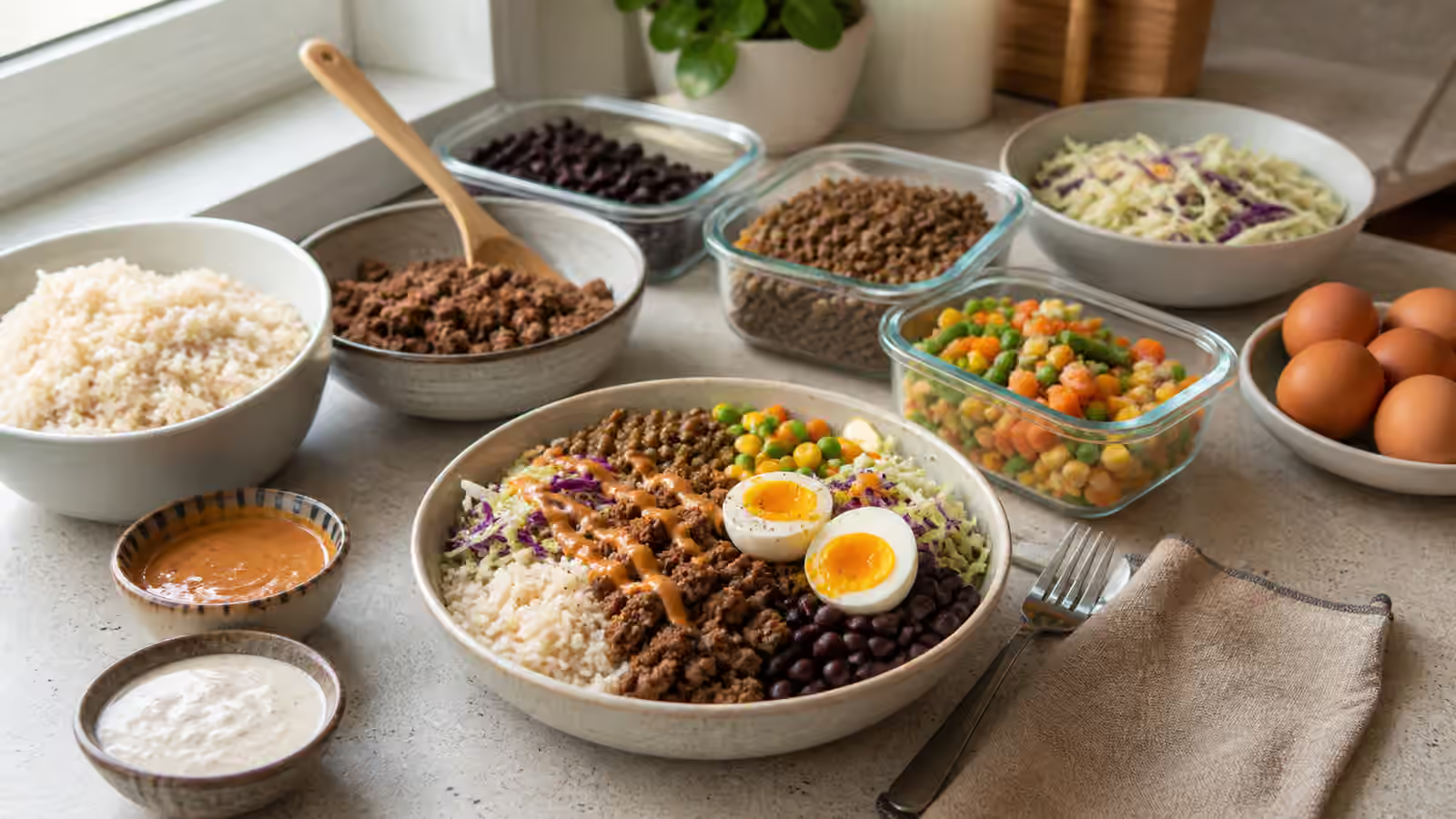
Most people do not fail at simple meals because they cannot cook. They fail because they shop in a way that creates either boredom or waste.
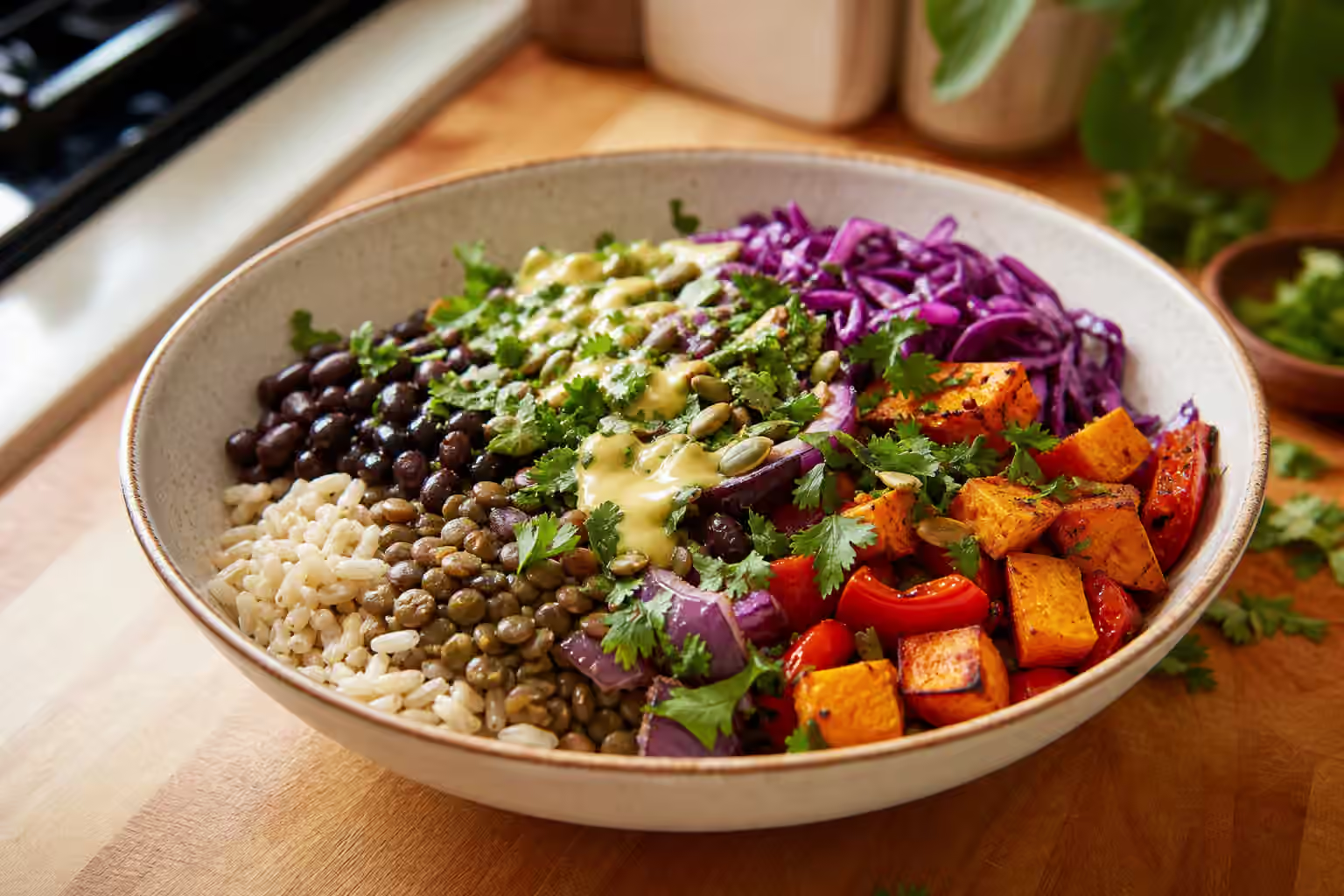
The strongest boy kibble grocery list is not the biggest one. It is the one with overlap. You want ingredients that can become bowls, wraps, breakfast, and emergency dinners without requiring a new personality every night.
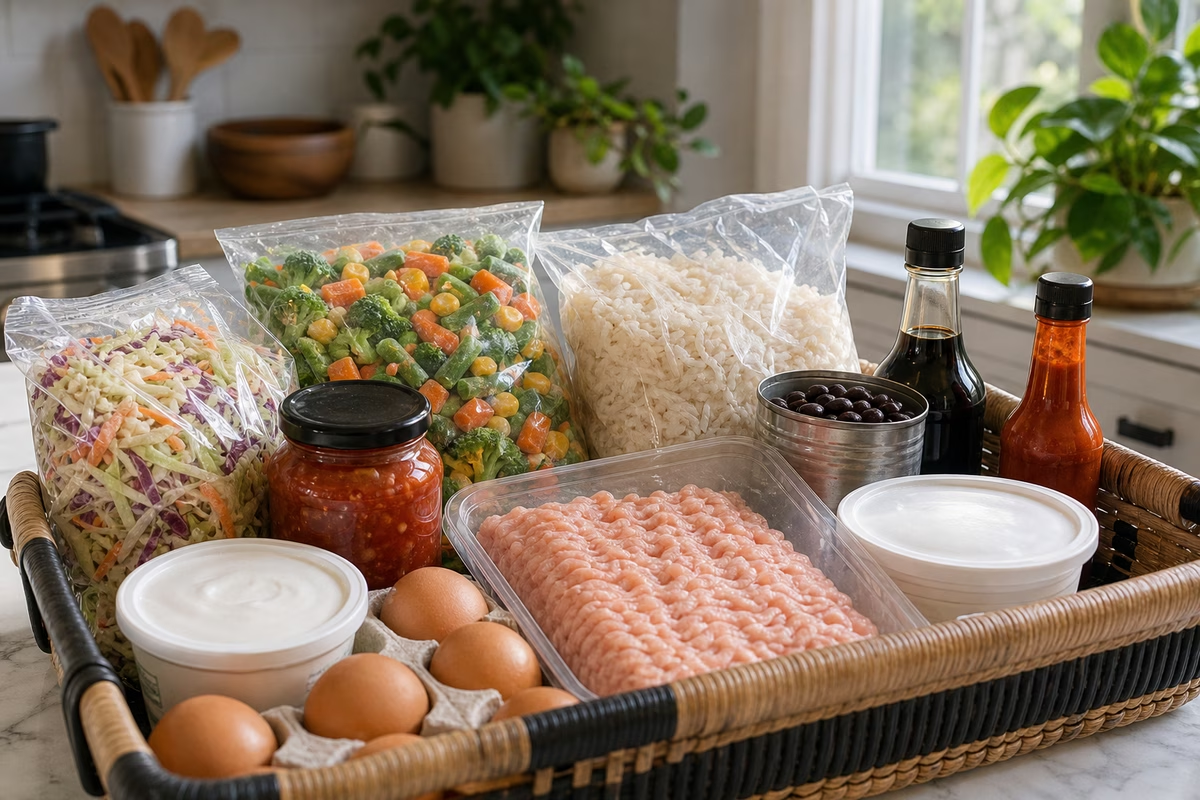
Start with use cases, not ingredients
Before you shop, decide whether you are cooking dinners, lunches, or both. Then decide whether you want meal prep or day-by-day flexibility, and whether the week needs maximum cheapness, maximum convenience, or a balance.
Those answers change what “smart shopping” means.
If you want lunches, choose proteins and vegetables that reheat well. If you want quick dinners, convenience ingredients like rotisserie chicken and microwavable rice may be worth the extra cost. If budget matters most, beans, frozen vegetables, and rice should do more work.
The five categories that matter
1. Protein
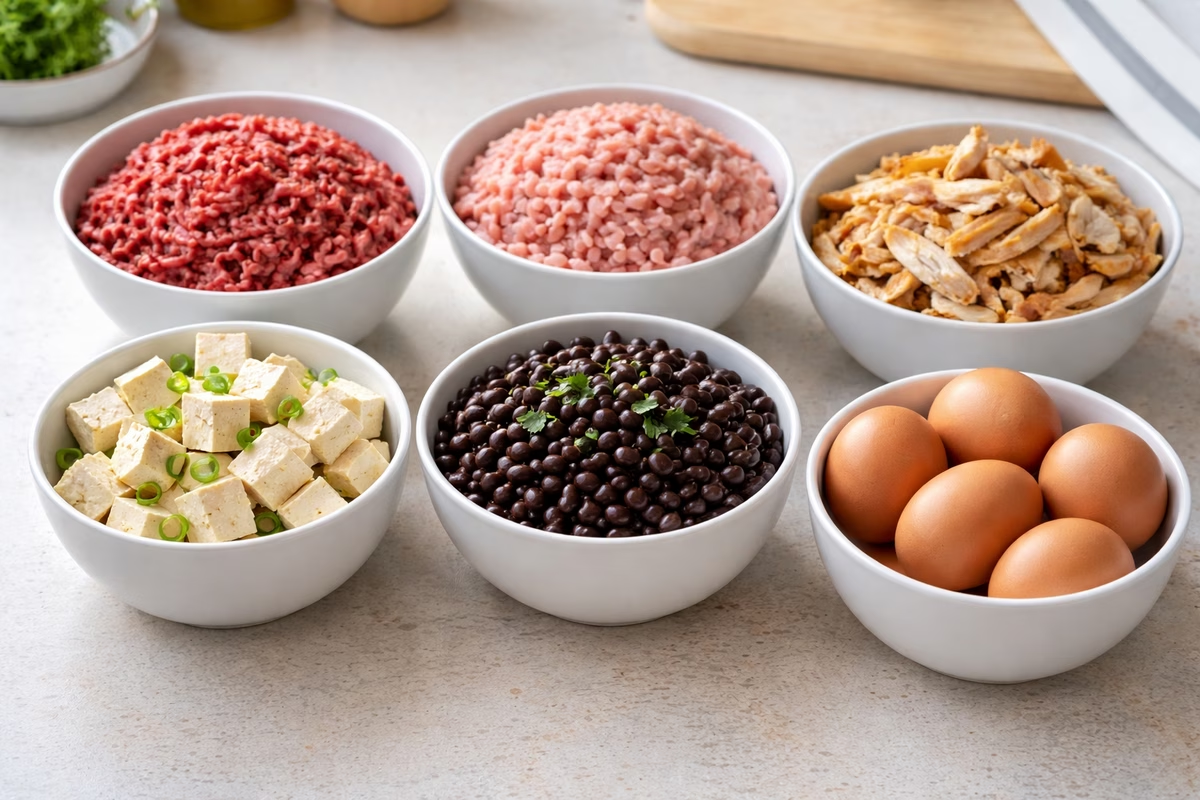
This is the anchor. Ground beef, ground turkey, ground chicken, tofu, beans, eggs, and rotisserie chicken can all work.
Choose by flavor, budget, and reheating quality, not just by habit. For a deeper comparison, read Choosing Protein for Boy Kibble .
2. Starch
The easiest reliable starches are rice, potatoes, tortillas, noodles, and bread.
Rice is the classic default because it is cheap, neutral, and meal-prep friendly. Potatoes are often more satisfying than people expect. Tortillas are useful because they let leftovers become wraps or quesadillas instead of another bowl.
3. Vegetables
Simple meals fail when the vegetable plan is unrealistic.
The best low-effort choices are frozen broccoli, frozen mixed vegetables, frozen peas, bagged slaw, spinach, cucumber, and carrots.
The winning combo is usually one frozen vegetable and one fresh crunchy thing.
4. Sauces
You do not need ten condiments. You need contrast.
Good pairs include salsa with yogurt sauce, soy sauce with chili crisp, teriyaki with hot sauce, or burger sauce with pickles.
Two sauces are enough to make one protein feel like multiple meals.
The spice shelf that does the most work
If your bowls are technically fine but emotionally dead, the problem is often a weak spice shelf rather than a missing ingredient.
Good first buys are garlic powder , smoked paprika , taco seasoning , black pepper, and chili powder.
You do not need a giant spice starter set. A few strong defaults cover most bowls.
5. Backup items
Eggs, canned tuna, canned beans, shredded cheese, and tortillas save the week when the original plan gets old.
Backup items prevent the “I guess I am ordering food” moment.
The best grocery overlap
Great overlap means ground turkey can become taco bowls, soy bowls, wraps, and breakfast bowls; rice can support bowls, tuna meals, and fried rice; slaw can work in taco bowls, wraps, and burger bowls; eggs can cover breakfast bowls and emergency dinners; and tortillas can turn bowl leftovers into something else.
Bad overlap is four sauces doing the same job, vegetables you only like in one exact recipe, proteins that only work one way, or too many fresh ingredients with different spoilage timelines.
Convenience items that are worth paying for
Some grocery shortcuts are genuinely useful: microwavable rice, rotisserie chicken, pre-washed greens or slaw, frozen vegetables, jarred salsa, and bottled teriyaki or stir-fry sauce.
These are not fake cooking. They are tools. Use them when they solve the real bottleneck.
Where to save money
If budget is tight, the biggest wins are buying rice in a larger bag, using beans to stretch meat, relying on frozen vegetables, choosing turkey or chicken when beef prices jump, using eggs as a secondary protein, and buying one strong sauce instead of several mediocre ones.
Boy kibble is popular partly because it can be cheap. Keep that advantage.
A reliable one-person weekly cart
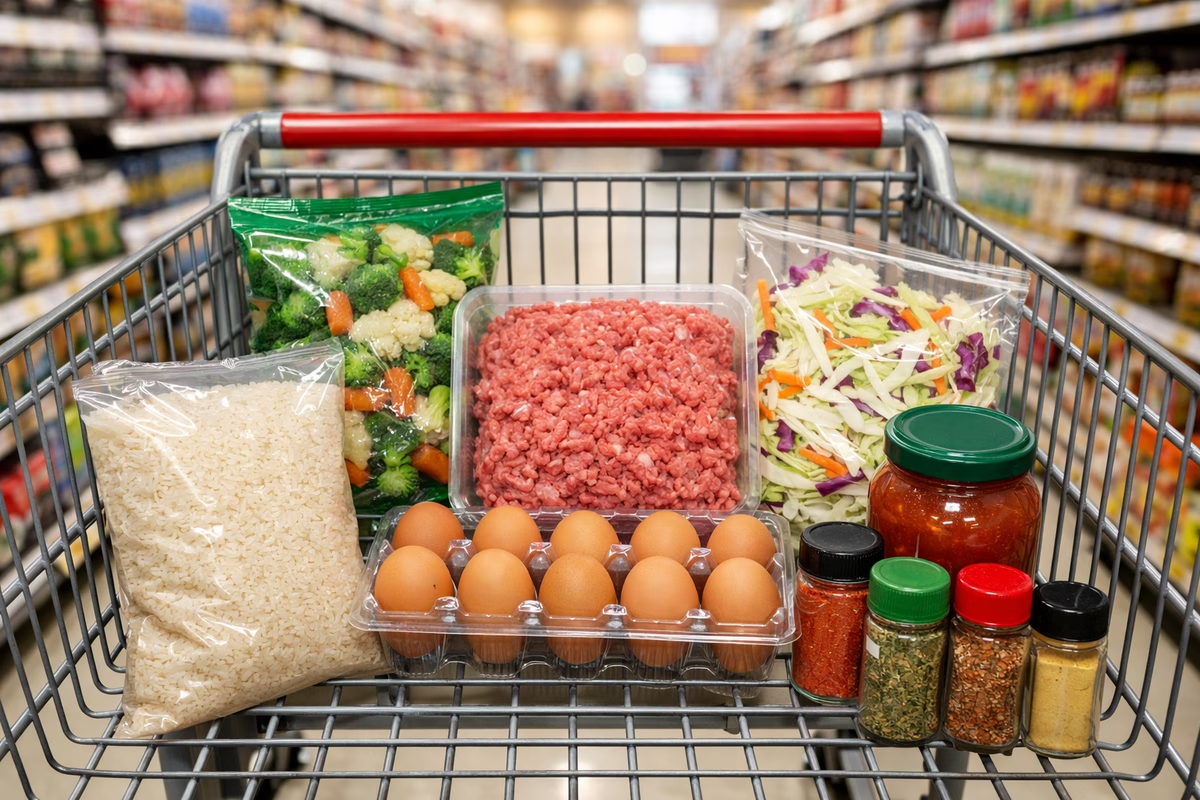
For one person, a reliable weekly cart is 1 to 1.5 pounds of ground meat or tofu, a carton of eggs, rice, tortillas, two bags of frozen vegetables, slaw or greens, cucumber or tomatoes, salsa, one second sauce, beans, and tuna or another backup protein.
That list gives you bowls, wraps, eggs, fried rice, and one or two emergency meals.
A tighter budget cart
The cheapest useful version is rice, eggs, beans, one pound of ground turkey or chicken, frozen mixed vegetables, slaw or carrots, salsa or hot sauce, and tortillas.
This may not be glamorous, but it is highly functional.
A convenience-first cart
If your real problem is time and energy, build around rotisserie chicken, microwavable rice, frozen broccoli, bagged salad or slaw, eggs, salsa, yogurt sauce or bottled teriyaki, and tortillas.
This costs more, but it drastically lowers the barrier to eating at home.
Micronutrients: keep the logic boring
If your real-food intake is narrow for a while, a basic multivitamin/mineral supplement is the most sensible generic search, because it covers several common vitamins and minerals without making a big claim. The boring rule still applies: supplements can help fill gaps, but they are not a replacement for actual fruits, vegetables, legumes, dairy or fortified alternatives, and varied protein foods.
For this site, micronutrients are a backstop, not the main event. Boy kibble gets healthier much faster from adding beans, greens, fruit, and better rotation than from building a complicated supplement stack.
Reading labels without overthinking
For simple-meal groceries, the best label questions are practical. Is the protein lean enough for how you want to eat it? Will the sauce actually go on more than one meal? Is the vegetable easy enough that you will really use it? Are you buying the item because it is useful, or because it sounds like a good version of you?
That last question matters more than people admit.
Common shopping mistakes
Mistake 1: shopping for aspiration
If you never chop cabbage from scratch on weeknights, do not buy a full cabbage because it is the “right” ingredient. Buy slaw mix.
Mistake 2: buying no backup foods
A good grocery list includes one or two emergency options so one bad day does not collapse the whole week.
Mistake 3: too many sauces in one mood
Three spicy red sauces are not variety. Buy contrast instead.
Mistake 4: no texture plan
If the whole list is meat, rice, and frozen vegetables, the meals may be filling but they will not stay appealing. Add one crunchy or acidic thing.
The final check before checkout
Before you leave the store, make sure the cart has a main protein, a backup protein, a main starch, a main vegetable, a reason the bowls will taste different across the week, and something you can eat if you stop wanting another bowl.
If the cart answers those questions, it is probably good.
If you want help turning the groceries into a real routine, read How to Meal Prep Boy Kibble Without Hating It by Wednesday . For flavor, continue with Sauces and Toppings That Save Boy Kibble from Sadness .