How to Buy Cheese Like a Regular (Not a Snob)
A plain guide to buying cheese at a shop.

You can tell a good cheese shop by the conversation at the counter. Wheels and wedges may have unfamiliar labels, but you do not need a script or an apology. Buying cheese is just shopping. The point is to bring home something that makes an ordinary night better.
Cheese can change as it ages, and a cut piece continues to change with handling and storage. A soft-ripened cheese, for example, may be firmer one week and softer later. You do not need a perfect plan. You need a simple direction: a board for people who are hungry, with enough contrast to make each bite interesting.
Give the counter a useful brief
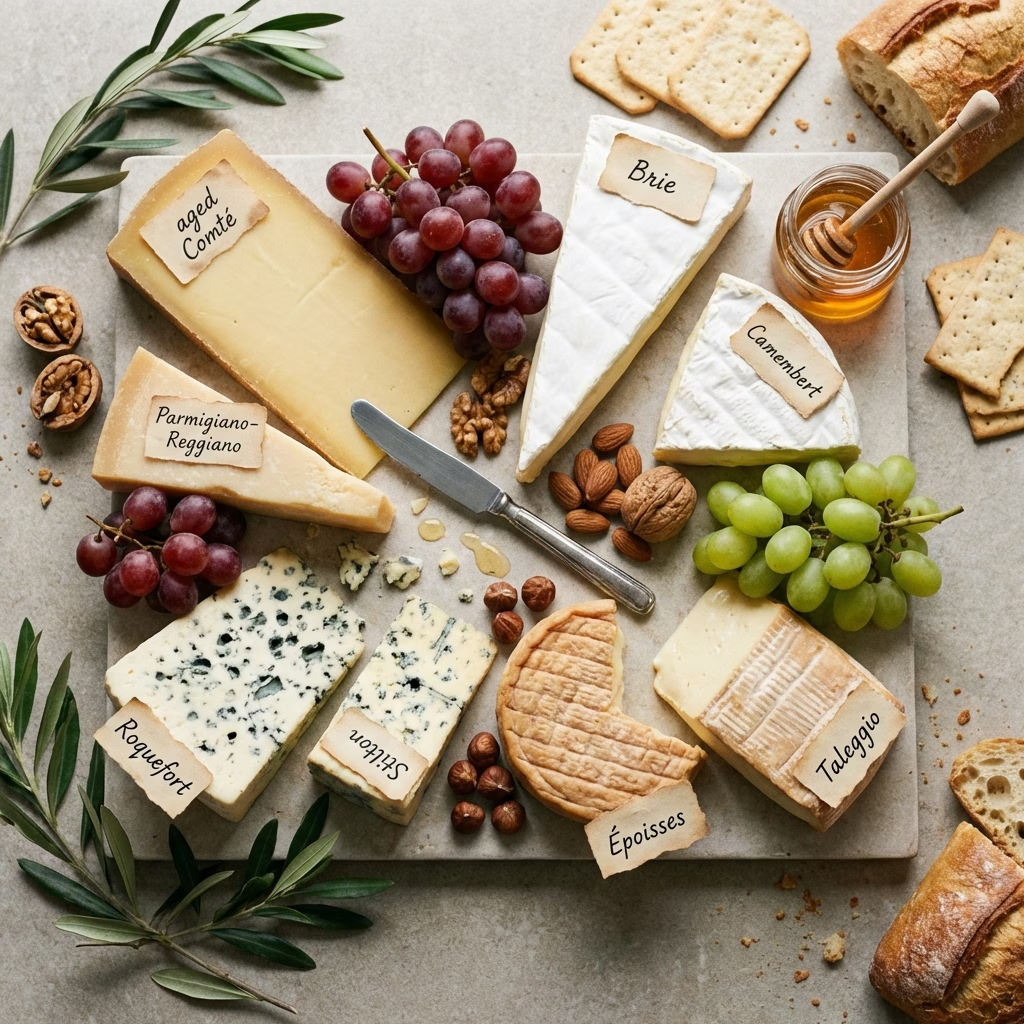
Start with three personalities: one friendly and buttery, one firm and savory, and one bold. That might mean a young creamy cow’s milk cheese, a firm Alpine-style wedge, and a small piece of blue. You do not need those exact types, or even three cheeses. Two contrasting wedges can make a fine board, and an aged cheese can provide the bold note if nobody likes blue.
Try saying: “I want three cheeses for four people, one mild, one medium, and one adventurous. Nothing too funky. I’m serving bread and fruit, and my budget is $25.” Give the actual budget, number of people, and day you plan to serve them. Ask for smaller cuts if available, and check the price per pound or kilogram as well as the price of the piece. The counter can suggest alternatives when a favorite would take up too much of the budget.
Mention dietary needs before the cheese is cut. If someone avoids animal rennet, ask the shop to check the ingredients or producer information; milk type alone does not tell you which coagulant was used. If pasteurized milk matters to your guests, ask to see the label or other reliable product information. The guides to rennet and vegetarian cheese and raw and pasteurized milk explain what to look for.
Taste, ask, and choose a size
If samples are available, taste before deciding. Notice the first impression and the finish: a cheese may start creamy or salty and leave a tangy, nutty, or savory note. Texture matters too. A soft-ripened cheese can be soft at the edge and firmer in the middle; a firm cheese may break into crumbly pieces or slice cleanly. If a cheese makes you want another bite, that is useful information.
Ask “Is this ready to eat tonight?” and “How should I store it until then?” Ripeness is a matter of preference as well as timing, so describe whether you like a soft center or a firmer one. If sampling is unavailable, describe a cheese you already enjoy and buy a small piece to try. You can also use the supermarket cheese case guide when there is no staffed counter.
For a light appetizer, start with roughly 2 ounces (55–60 grams) of cheese per person in total, then adjust for appetite and the other food. For four people that is about 8 ounces (225 grams) across the board: for example, 3 ounces each of creamy and firm cheese and 2 ounces of blue. Ask for approximate cuts; pieces do not need to be exact. If cheese is the main course, buy more. The portion-planning guide offers more ways to adjust.
Get it home and make the board
Take refrigerated cheese home promptly and keep it refrigerated. If the journey will be long or hot, bring an insulated bag with a cold pack. At home, follow the shop’s storage advice and keep the label so you know what you bought. See Cheese Storage for wrapping and handling by style.
For serving, take out only what you expect to eat and give it a little time to lose the refrigerator chill. Around 30 minutes can be a useful starting point; smaller pieces and very soft cheeses may need less. Keep track of the whole time refrigerated cheese spends out, including the trip home and time on the board. The FDA recommends no more than two hours out of refrigeration for foods that require it, or one hour when the air is above 90°F (32°C). Refrigerate promptly within that limit; discard perishable cheese left out longer. Serve small portions and replenish from the fridge if the gathering runs long.
For guests who are pregnant, 65 or older, or have weakened immune systems, choose with extra care. The CDC’s Listeria guidance identifies pasteurized hard cheeses as lower-risk options and advises higher-risk people to avoid unheated queso fresco-type cheeses and cheese made from raw milk. Pasteurization reduces risk, but soft cheese can still be contaminated after the milk is pasteurized.
Put the cheeses down first, spaced so people can cut them without crowding. Add bread and something crisp, then fruit, a handful of nuts, or a little jam. Try a slice of firm cheese with apple, soft cheese on bread, or a small bite of blue with honey. Pairings are invitations, not rules; keep accompaniments on the side so everyone can choose.
Afterward, save the labels or make a note: creamy and mild, nutty and firm, or tangy and a little too strong. That is enough to make the next conversation easier. For a broader map, read Cheese Types and How to Buy Cheese .