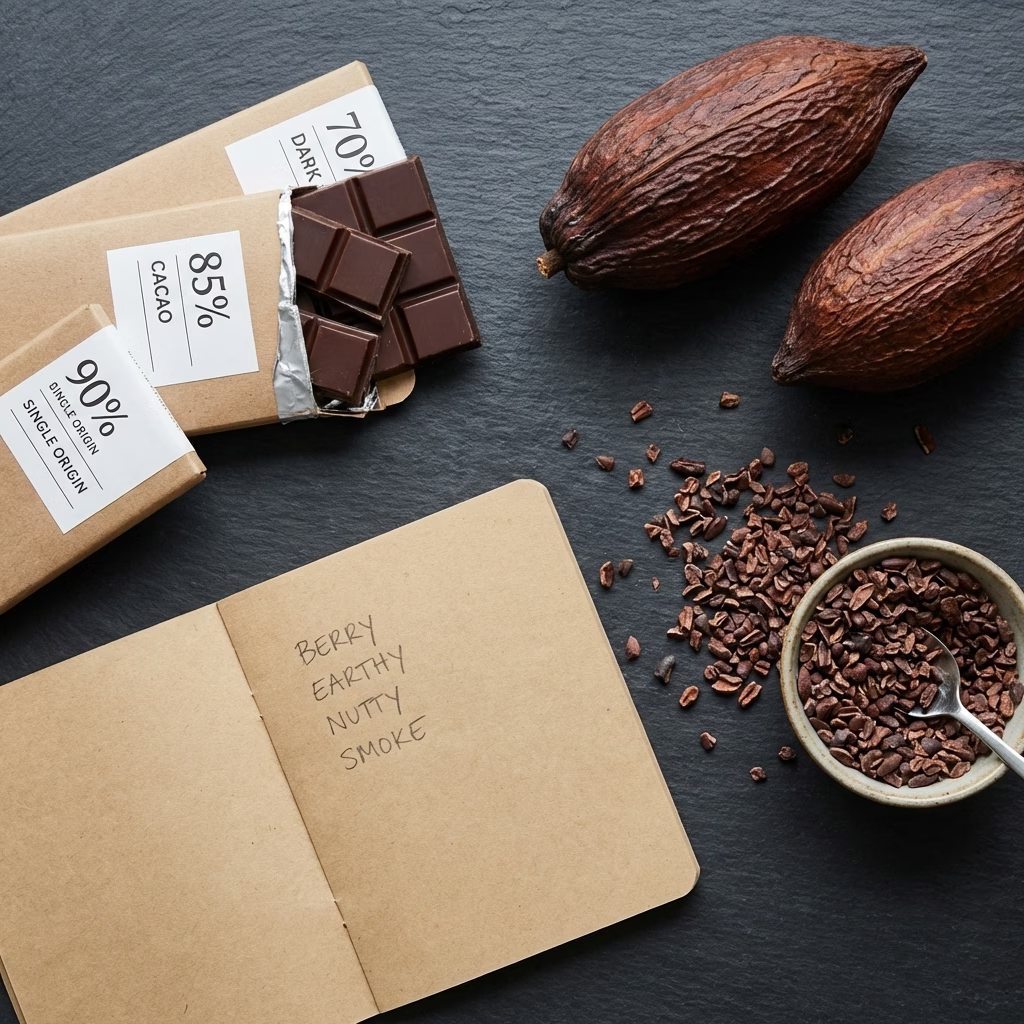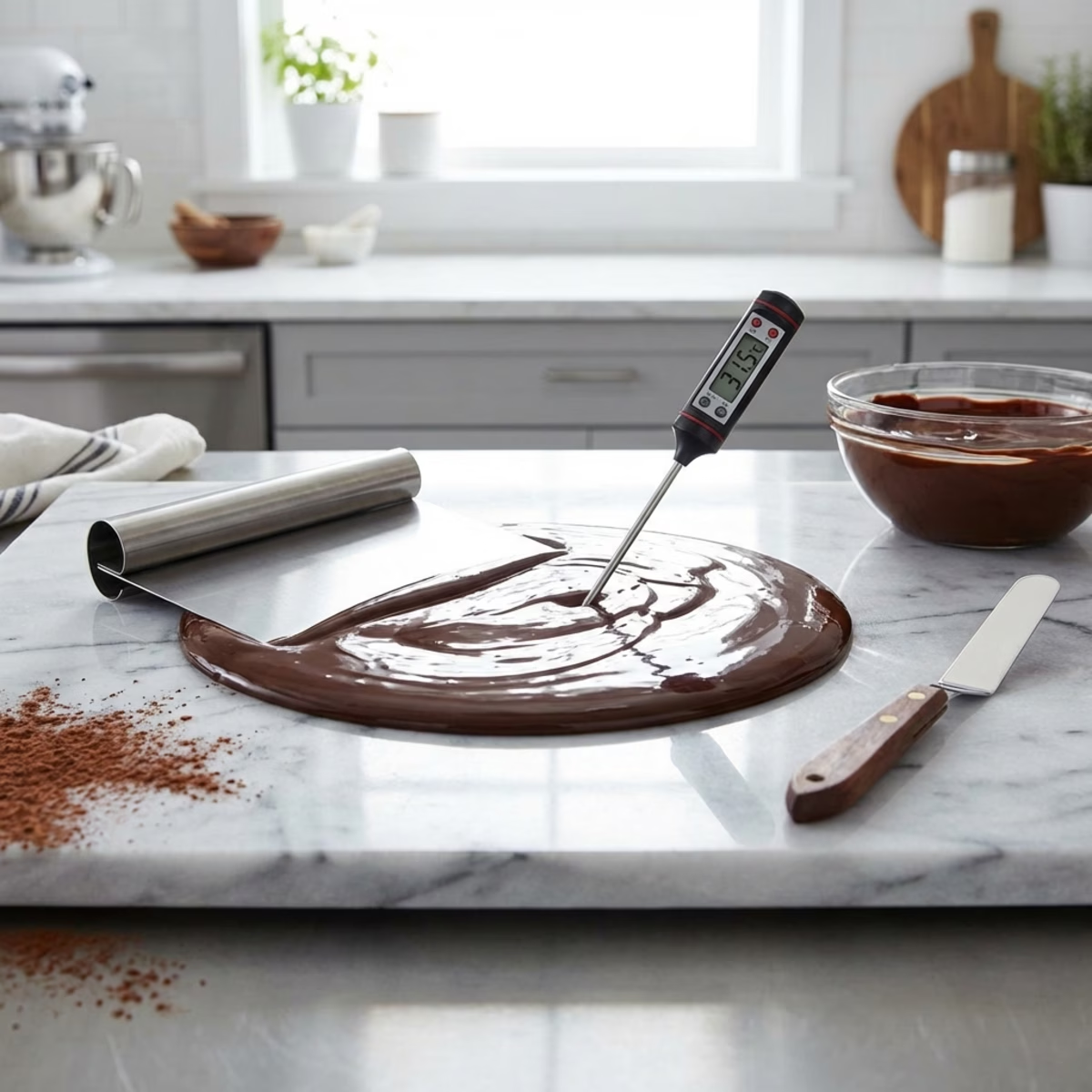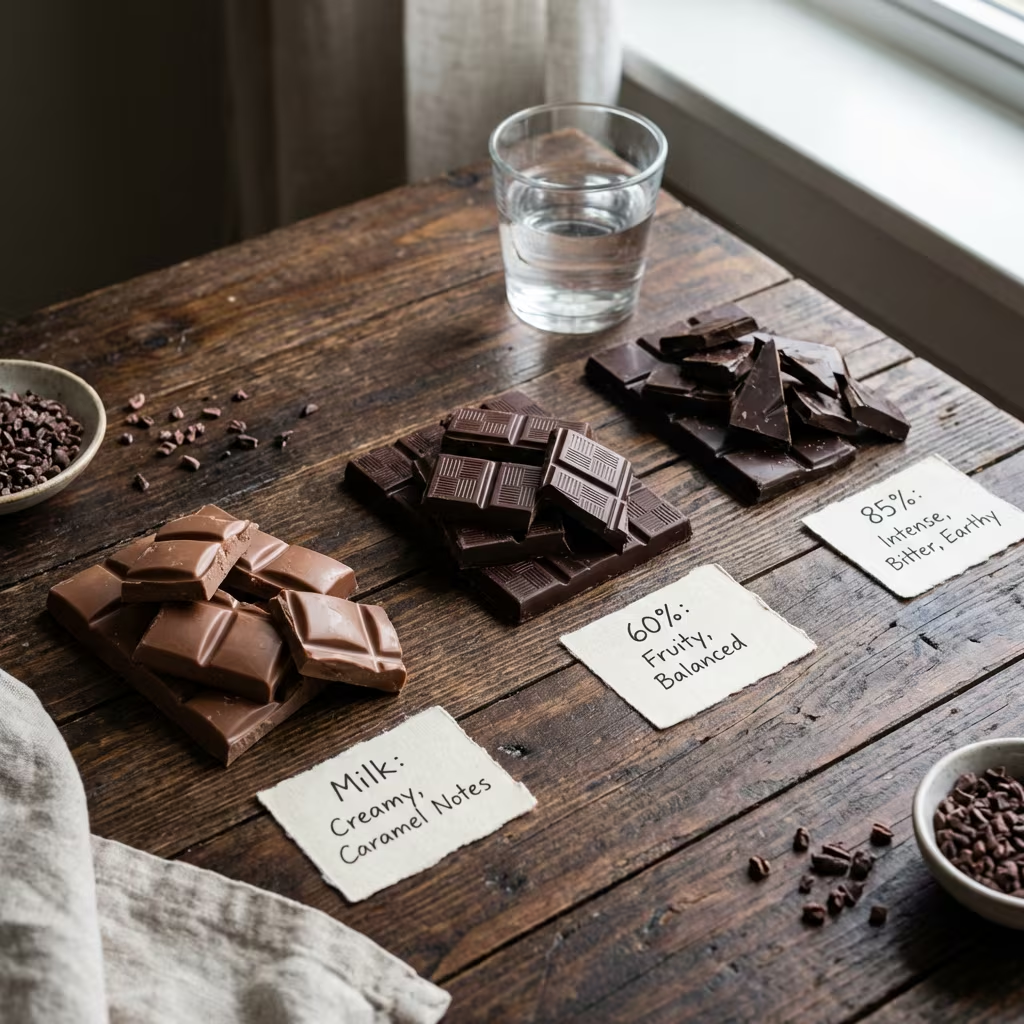
Chocolate gets more enjoyable the moment you stop trying to “rate” it and start learning how it behaves.
Most people meet chocolate in two contexts: candy bars that are designed to be easy, and special-occasion desserts where chocolate is one ingredient among many. Both are valid pleasures, but neither teaches you how chocolate tastes when you slow down and let it speak.
This quickstart is a calm, practical starting point. It gives you a small ritual you can do with any bar, a way to read labels like a flavor map, and a simple approach to choosing your next bar with intention. You don’t need a tasting wheel. You don’t need a trained palate. You need a repeatable process and a few honest questions.
The 5-minute ritual (how to taste chocolate so it actually tastes like something)
Good tasting isn’t about being fancy. It’s about removing the main sources of confusion.
The two biggest sources of confusion with chocolate are temperature and speed. If the chocolate is too cold, it gets quiet and waxy and you’ll misread texture as “quality.” If you chew quickly, you miss aroma and you confuse bitterness, roast, and cocoa intensity into one blur.
1) Set the temperature
Start here because it changes everything.
Chocolate tastes best at cool room temperature. If it’s been in the fridge or your kitchen is cold, give it a few minutes on the counter.
Then break a piece and listen for the snap. A clean snap often signals good temper and a stable crystal structure. A soft bend can mean poor temper, high inclusions (nuts, dried fruit), or a bar built for melt rather than snap.
Snap isn’t a moral scorecard, but it’s a useful clue. Chocolate is a material as much as it is a flavor, and structure affects how flavor is released.
2) Smell first (before melting)
Before you put it in your mouth, smell the surface. This is where you’ll catch the loudest cues: fruit, roast, nut, spice, vanilla, dairy, caramel.
Smell does two things. First, it gives you a preview. Second, it gives you words so you don’t feel lost when you taste.
If you smell “berries,” you’re not inventing. You’re noticing a pattern of aromatics. Chocolate can absolutely carry fruit-like notes depending on origin and fermentation.
3) Let it melt (texture is part of the flavor)
Put a piece on your tongue and let it soften. Try not to chew right away.
Notice texture as it melts. Is it silky or gritty? Does it feel creamy and coating, or does it break down quickly and cleanly? Does it feel dry and dusty, or glossy and smooth?
Texture isn’t just a pleasure cue. It changes how aroma travels. A bar that melts cleanly often releases aroma more evenly. A bar that feels gritty or waxy can mute detail.
4) Pay attention to the finish
The finish is where origin character often shows up.
Some chocolates end with citrus and berry-like brightness. Some finish with caramel and nuts. Some carry deep cocoa, coffee, or tobacco notes that hang on. Some fade quickly and cleanly.
If you want one simple tasting question, use this: What flavor is still there thirty seconds later?
That aftertaste often tells you more than the first impression.
A vocabulary you can actually use (without turning it into homework)
It helps to have a few categories so you’re not searching for words.
When you taste, try describing chocolate with one word from each line:
Brightness: bright / balanced / deep
Texture: silky / creamy / dry / gritty
Flavor family: fruity / nutty / caramel / roasty / floral / spicy
Finish: clean / lingering / drying / juicy
That’s enough. You’re building a sense of “this kind of chocolate tends to do that.”
Read the label like a flavor map
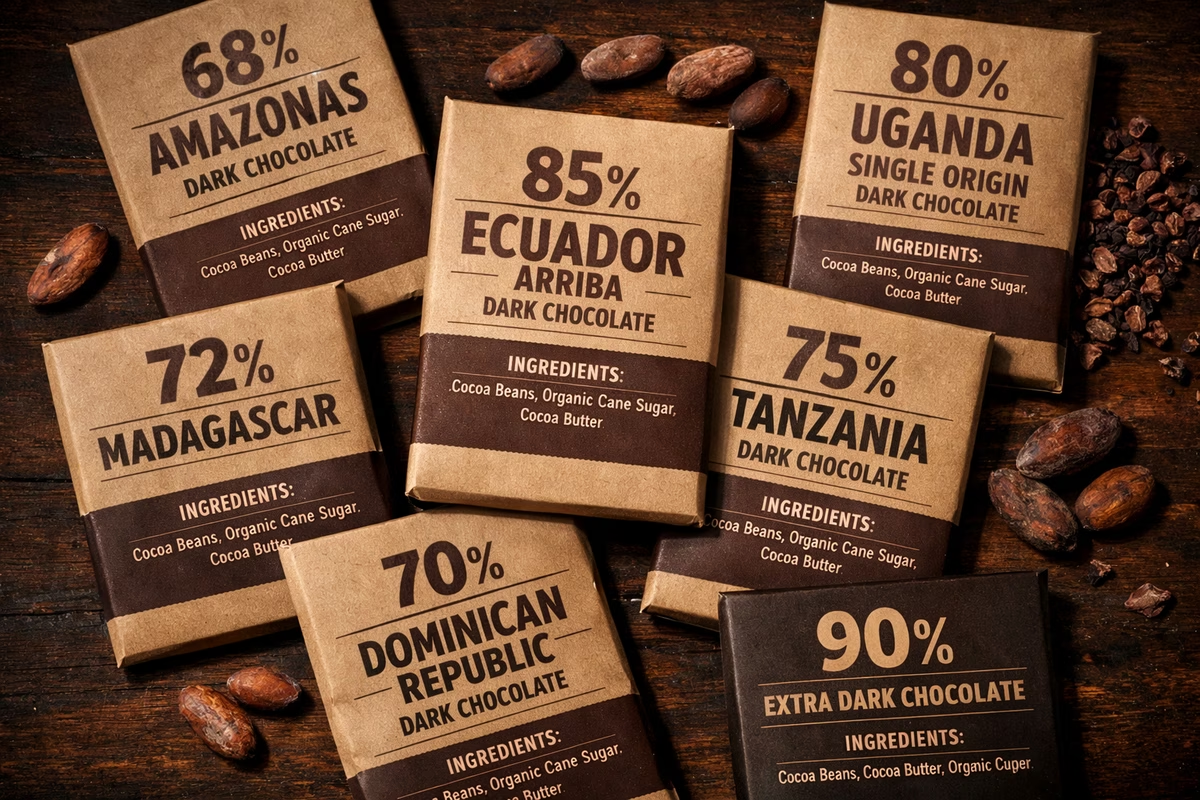
Chocolate packaging is full of poetry. Your job is to find the practical signals hiding underneath.
Percentage: intensity, not quality
Percentage is not a quality stamp. It’s a ratio of cocoa solids (and cocoa butter) to sugar, and it predicts intensity.
Higher percentage usually means less sugar and more cocoa intensity, which can read as more bitter or more “adult.” But that doesn’t mean it’s better. A well-made 60% bar can be more balanced and more aromatic than a poorly made 85% bar.
If you’re new, treat percentage as a dial:
- Lower percentage can highlight caramel and dairy notes.
- Mid-range can show origin nuance while still being friendly.
- Very high percentage can become more about structure, bitterness, and roast.
Ingredients: the honesty section
Ingredient lists matter more than marketing.
For dark chocolate, a simple list like cacao (or cocoa mass), sugar, cocoa butter is common in many well-made bars. For milk chocolate, add milk powder.
Emulsifiers and flavors aren’t automatically bad, but they change texture and aroma. If you’re trying to compare makers or train your palate, simpler ingredient lists make it easier to understand what you’re tasting.
Origin: story and structure
If a bar names an origin (or a specific place within an origin), it’s telling you the maker wants you to notice terroir-like differences.
Origin doesn’t guarantee you’ll like the bar, but it’s an invitation to taste comparatively. If you try two bars of similar percentage from different origins, you’ll often notice differences in brightness, fruitiness, and finish.
If you see “single origin,” treat it as a clue: the maker believes the cocoa itself is interesting enough to stand alone.
Maker style: roast and intention
Two makers can buy cocoa from the same place and still produce very different bars. Roast level, conching time, and recipe choices shape flavor.
If a bar tastes aggressively roasty, that’s often a style choice (or a cost choice) rather than a pure expression of origin. If a bar tastes unusually floral or fruit-forward, the maker may be preserving delicate aromatics.
Choose your next bar (one reliable rule)
If you want one reliable way to choose your next bar, choose for contrast.
Most people get stuck because they keep buying tiny variations of the same idea. Contrast teaches your palate faster than repetition.
Build a three-bar flight one time:
Pick one bar that reads bright and fruity.
Pick one that leans nutty or caramel.
Pick one that’s deeper and roasty.
Taste them side by side (even across two evenings) and write three short notes for each: one aroma, one texture word, one finish word.
Your preferences will become obvious. Some people discover they love bright, acid-like fruit notes. Others realize they prefer deep cocoa and roast. Many people find they like different styles for different moods.
Common traps (and how to avoid them)
Trap: assuming “bitter” means “dark” and “dark” means “good”
Bitterness can come from many sources: cocoa itself, roast level, cocoa percentage, and even texture. Don’t chase bitterness as a proxy for seriousness.
Instead, chase balance. A bar can be intense without being harsh.
Trap: tasting chocolate straight from the fridge
Cold chocolate can feel waxy and mute aroma. You’ll misjudge it.
If you store chocolate cool, let it come to temperature before tasting.
Trap: confusing vanilla with “chocolate flavor”
Vanilla can make chocolate feel smoother and more familiar. That’s not bad, but it can also cover origin nuance.
If you’re trying to learn, taste a bar without added vanilla at least once so you know what cocoa itself is doing.
Trap: expecting every bar to taste like dessert
Some bars are designed to be comforting; others are designed to be expressive. If you expect “dessert chocolate,” a bright, fruity single-origin bar can taste surprising at first.
The solution is not to force yourself to like something. The solution is to categorize it correctly: “This is expressive and bright,” or “This is deep and roasty.” Once you name the style, you can decide when it fits your mood.
Storage basics (so your next bar stays good)
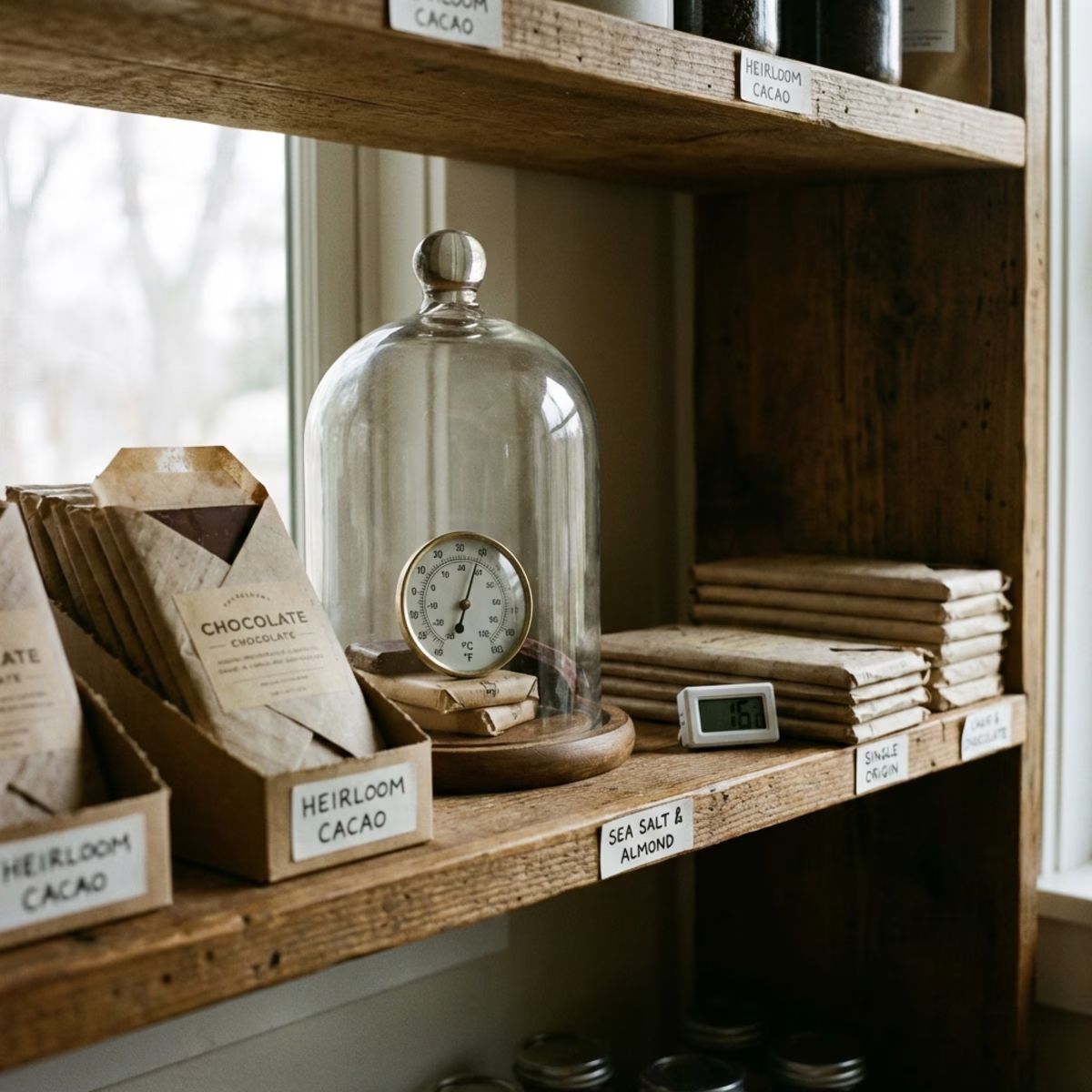
Chocolate is happiest in a cool, dry, stable environment away from strong odors.
Heat and temperature swings are the enemy because they can cause bloom and dull aroma. Moisture can create texture issues. Strong odors can be absorbed.
If you must refrigerate, wrap chocolate well and let it return to room temperature before unwrapping, so condensation doesn’t form on the surface.
A tiny practice that makes you much better
If you want to build real intuition quickly, do this once:
Taste one bar slowly using the ritual above.
The next day, taste it again with a different beverage nearby (water, coffee, or tea). Notice how the beverage changes your perception of sweetness, bitterness, and aroma.
This teaches you that tasting isn’t only about the chocolate; it’s also about contrast and context.
Pairing and buying cues (small choices that make a big difference)
Once you can taste and describe chocolate, the next step is choosing bars that are likely to reward your attention.
One easy cue is what you plan to eat or drink around it. Chocolate can be surprisingly sensitive to context. Black coffee can make a moderately dark bar taste sharper and more bitter. Tea can highlight floral notes. A glass of milk can make roast and cocoa feel rounder and soften edges. If you’re tasting to learn, start with water nearby so you can reset, then experiment with one pairing at a time.
Food pairings work best when you choose a relationship on purpose. Bright, fruity chocolates often pair well with berries, citrus zest, or yogurt because the acidity aligns. Nutty or caramel-leaning bars pair naturally with nuts, shortbread, and browned butter flavors. Deep, roasty bars can handle espresso, dark bread, or salt—especially flaky salt that makes sweetness feel clearer.
When you’re buying, try to avoid “mystery purchases” that give you no information to learn from. A bar that tells you the percentage and ingredients (and ideally an origin) gives you something to compare next time. Even if you end up not loving it, you’ll understand why.
If you want the safest on-ramp, aim for a bar that is described as balanced and has a straightforward ingredient list, then use contrast to explore outward. Your goal isn’t to find a single “best” chocolate; it’s to learn what kinds of chocolate you want for different moods.
Next steps
When you’re ready, continue with the Chocolate Tasting guide for a deeper method, and use the Chocolate games as short drills for recall and technique.