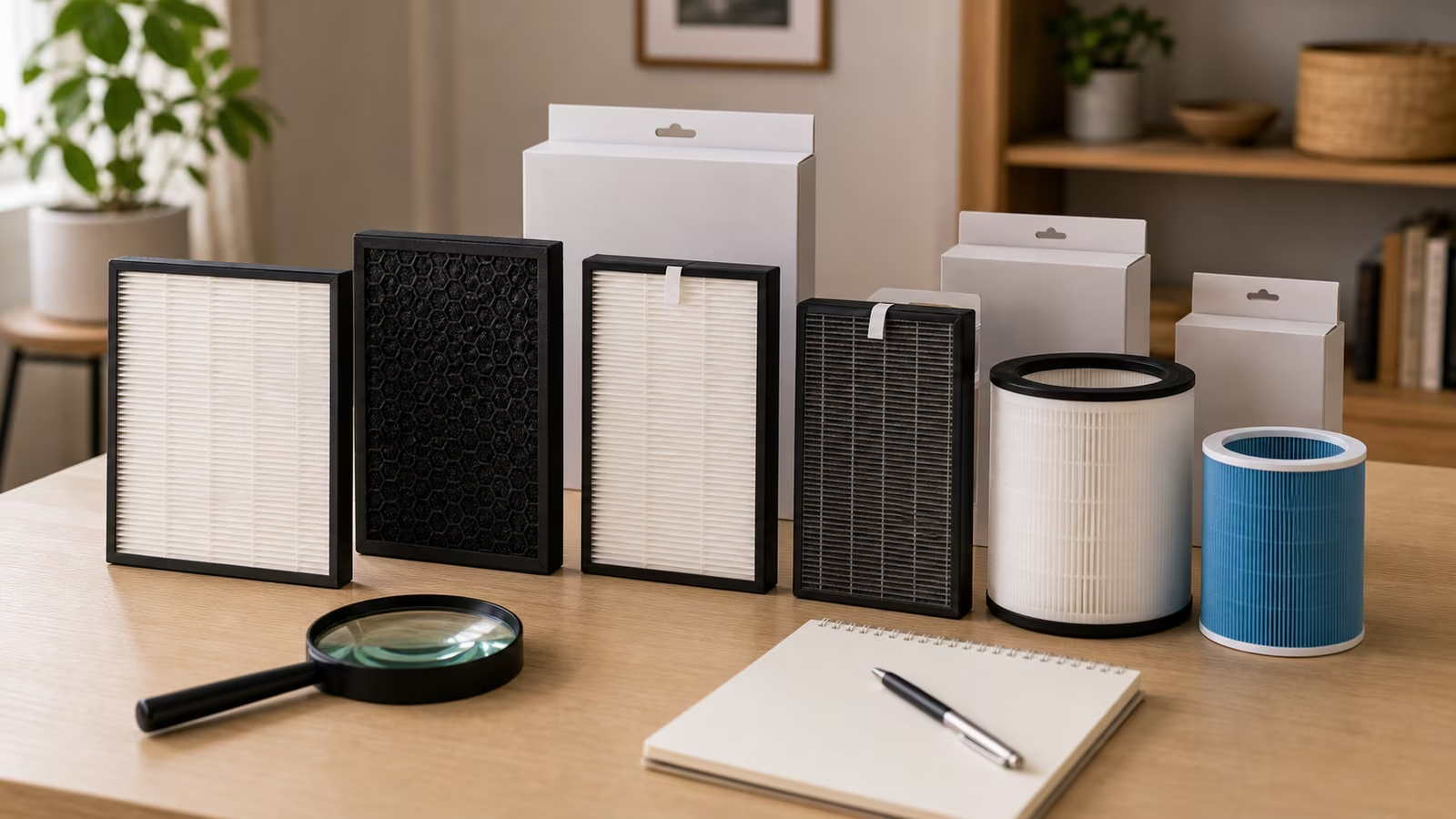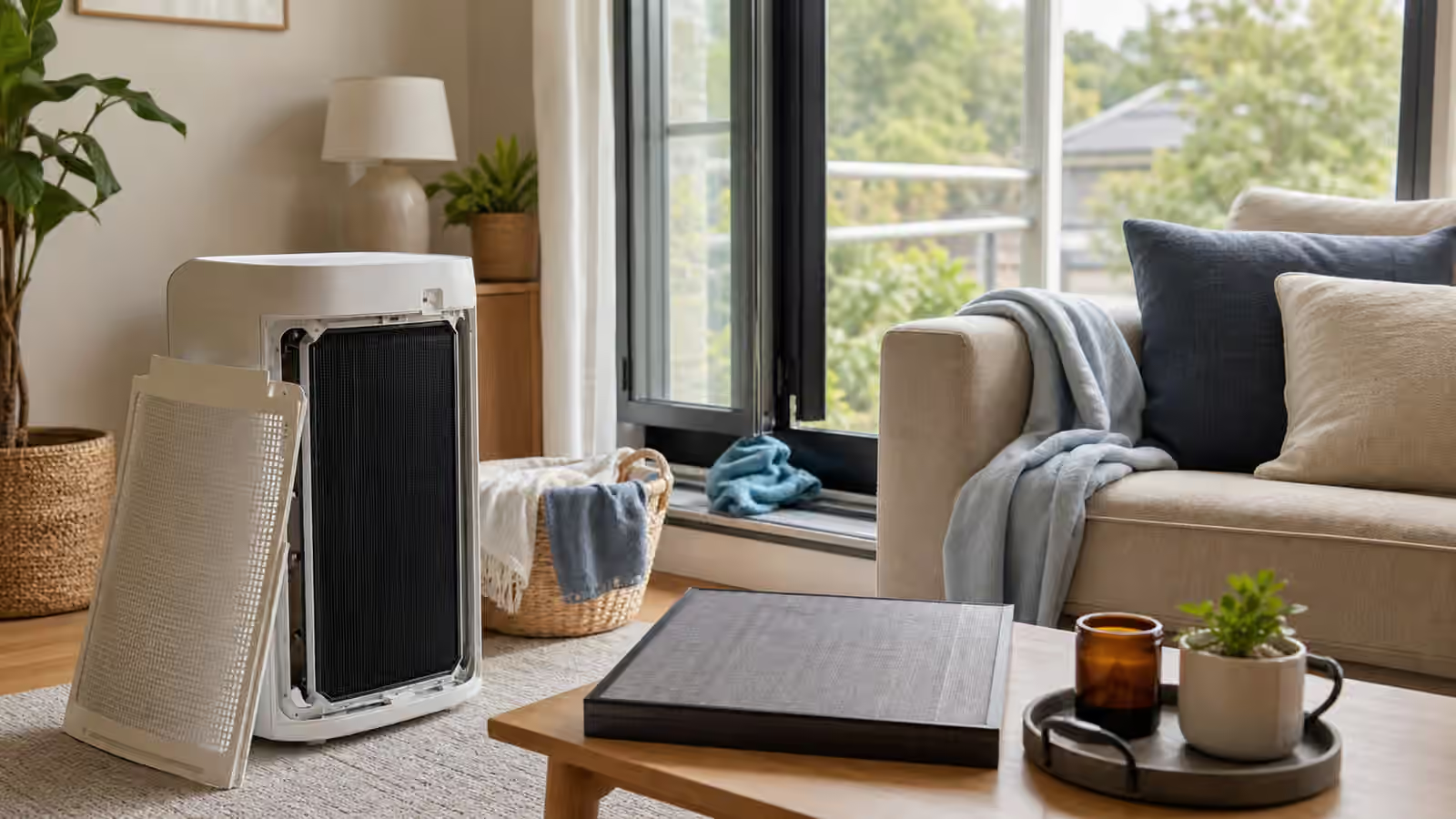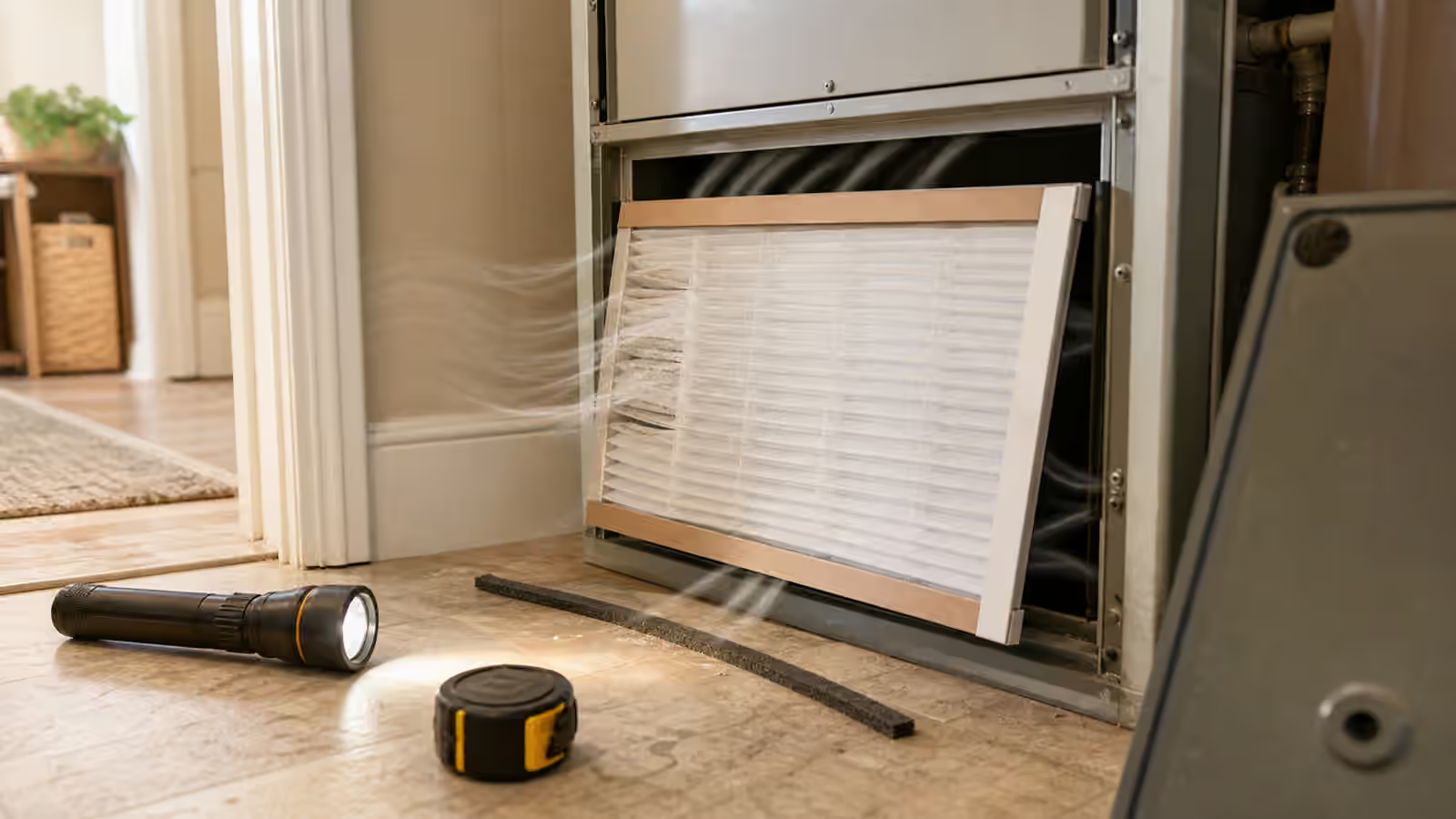
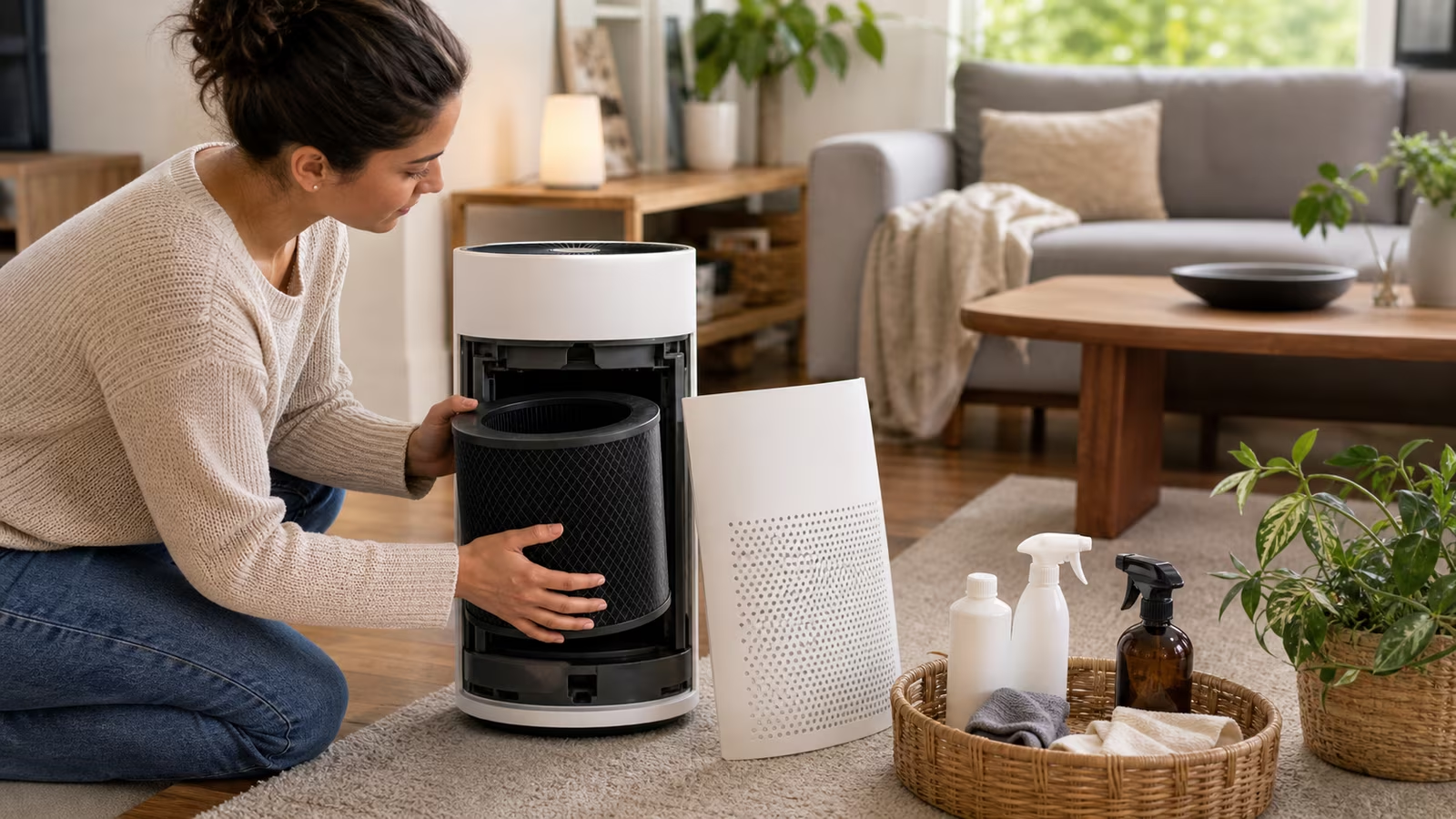
Activated carbon is the part of an air purifier that people misunderstand most. The pleated white media that catches dust and smoke particles is one thing; the loose black granules, the impregnated pellets, or the thin carbon-coated mat behind it are something else entirely. Carbon does not strain gases out of the air the way a fine mesh strains particles. It adsorbs them, meaning individual molecules stick to the enormous internal surface area of the carbon until that surface fills up. Understanding that single difference tells you almost everything about when carbon earns its place and when it is decoration on a spec sheet.
Particles Versus Gases
The odors and irritants in a home split into two families that behave in opposite ways. Smoke, dust, pollen, dander, and frying grease travel as tiny solid or liquid particles, and a well-fitted particle filter removes them mechanically. Cooking gases, fumes from a fresh coat of paint, the sweetness of a scented candle, off-gassing from new furniture, solvent smells from a hobby, and the ammonia edge of a litter box are gases and vapors made of individual molecules far too small for a particle filter to touch. A purifier can run all day, pull the visible haze out of a kitchen, and still leave the room smelling of last night’s fish, because the smell is a gas and the filter was built for particles.
That is where carbon comes in, and also where its limits begin. Carbon has a finite appetite. Every gram holds only so many molecules before its pores are saturated, and once full, it stops adsorbing and can even release what it captured back into a warm, humid room. A thin carbon layer might refresh a small closet for a few weeks. A serious ongoing source, like a room that always smells of solvents, will exhaust a light carbon filter quickly and leave you replacing media on a schedule that never quite keeps up.
Why Source Control Still Leads
Because carbon is consumable and its capacity is modest, the honest hierarchy still puts source reduction ahead of filtration for gases and odors. It is almost always cheaper, quieter, and more durable to stop a smell at its origin than to keep feeding a filter that fights it. The cleaning-product bin that off-gasses solvent vapors can be sealed or moved to a ventilated garage. The candles and incense can burn less often. New furniture and fresh paint can be aired out near an open window during their worst weeks rather than trapped in a closed room. A gas cooktop deserves a range hood that actually vents outdoors, because no carbon filter competes with combustion byproducts at the burner. When the source genuinely leaves the room, the air problem often shrinks to something carbon can finish rather than something it must carry alone.
The order matters in a very practical way. If you buy a large carbon purifier first and skip the source work, you commit yourself to a recurring media cost forever. If you handle the source first, whatever carbon you then run lasts far longer, because it only has to mop up the residual rather than the flood. That is the difference between a filter that quietly helps and a filter that becomes an expensive treadmill.
Reading a Carbon Filter Honestly
When you do shop for carbon, the amount is what counts, and it is the number marketing tends to hide. A few ounces of carbon dust sprayed onto a fiber mat is not the same as a pound or more of granular or pelletized carbon in a deep bed. Thin coatings look identical on a product page and behave completely differently in a room; the deeper bed simply has more surface area and lasts longer against a steady source. Contact time matters too, which is one reason a purifier running fast through a shallow carbon layer removes less odor per pass than the same air moving slowly through a thick one. If a listing brags about “activated carbon” without ever saying how much, treat the vagueness as the answer.
Placement decides whether any of this reaches your nose. A carbon stage only works on air that passes through it, so a unit tucked into a corner behind furniture treats a slow trickle while the smell drifts freely everywhere else. Getting the machine into the actual path between the odor source and where people sit is half the battle, and it is worth planning rather than guessing. The Purifier Placement Planner gives you a simple structured way to think through where the unit belongs relative to the source, the seating, and the room’s airflow, so the carbon meets the gas instead of the wall. Pair that with the reality check in our look at HEPA filter marketing , which explains why the particle side of the same filter gets oversold in similar language.
What Carbon Will Not Do
Some jobs are simply outside carbon’s reach, and pretending otherwise is where homes get into trouble. Carbon is not a carbon monoxide control; the gas is odorless and dangerous, and only a dedicated alarm belongs in that role. Carbon does not fix a moisture problem, so a musty basement smell is a signal to investigate water, humidity, and cold surfaces rather than to bury the odor under a filter and a plug-in scent. Carbon does not neutralize a chemical spill, a sewer gas backup, a gas leak, or the aftermath of fire damage, all of which call for ventilation, shutoff, or professional help rather than a household appliance. And no carbon filter should ever be paired with an ozone-generating “air cleaner” that claims to destroy odors, because ozone is itself an irritant that regulators have warned against for indoor use.
It also helps to stop trusting smell as your only gauge. Fragrance can mask a source while adding its own load of compounds, so a room that smells clean is not automatically clean. If you want a signal you can act on, a modest air monitor watched for trends beats a scented candle, though even a monitor shows patterns rather than proof that a room is safe. Our guide to a sensible filter replacement calendar is worth keeping alongside this one, since carbon’s saturation is exactly the kind of invisible expiry a calendar is built to catch.
A Realistic Carbon Setup
A grounded approach looks unglamorous. Find and reduce the biggest ongoing gas source first, whether that is stored chemicals, an over-used candle habit, a venting problem at the stove, or furniture still off-gassing. Ventilate with clean outdoor air during the hours you can, so fresh air dilutes what remains. Then let a genuine carbon bed, sized with enough media and placed in the airflow, handle the residual odor rather than the whole burden. Write down when you installed the carbon so you notice when it fades, because a saturated bed fails quietly and gives no warning beyond the smell creeping back.
If you keep that order, carbon becomes a useful, honest tool: a finisher for the odors and vapors that source control and ventilation could not fully erase. Ask it to be the whole solution and it disappoints; ask it to close the last gap and it often delivers.
Clean Air Society is practical education, not medical advice, diagnosis, remediation, or a guarantee that a room is safe. When the situation involves carbon monoxide, a suspected gas leak, extensive mold, a chemical spill, or building damage, step out of the household frame and use alarms, ventilation, and qualified professionals instead of an odor filter.