The number on the front of an air purifier box, the one that says it covers some impressive square footage, is doing marketing work, not engineering work. That coverage figure is usually calculated at the machine’s loudest setting and against a bare minimum of cleaning, the kind of once-through pass you would never actually rely on for smoke or allergens. Sizing a purifier well means ignoring the headline and working from two honest quantities instead: how big your room really is, and how many times per hour you want the machine to clean its full volume of air. Get those two right and the box claim becomes irrelevant.
Room Volume, Not Floor Area
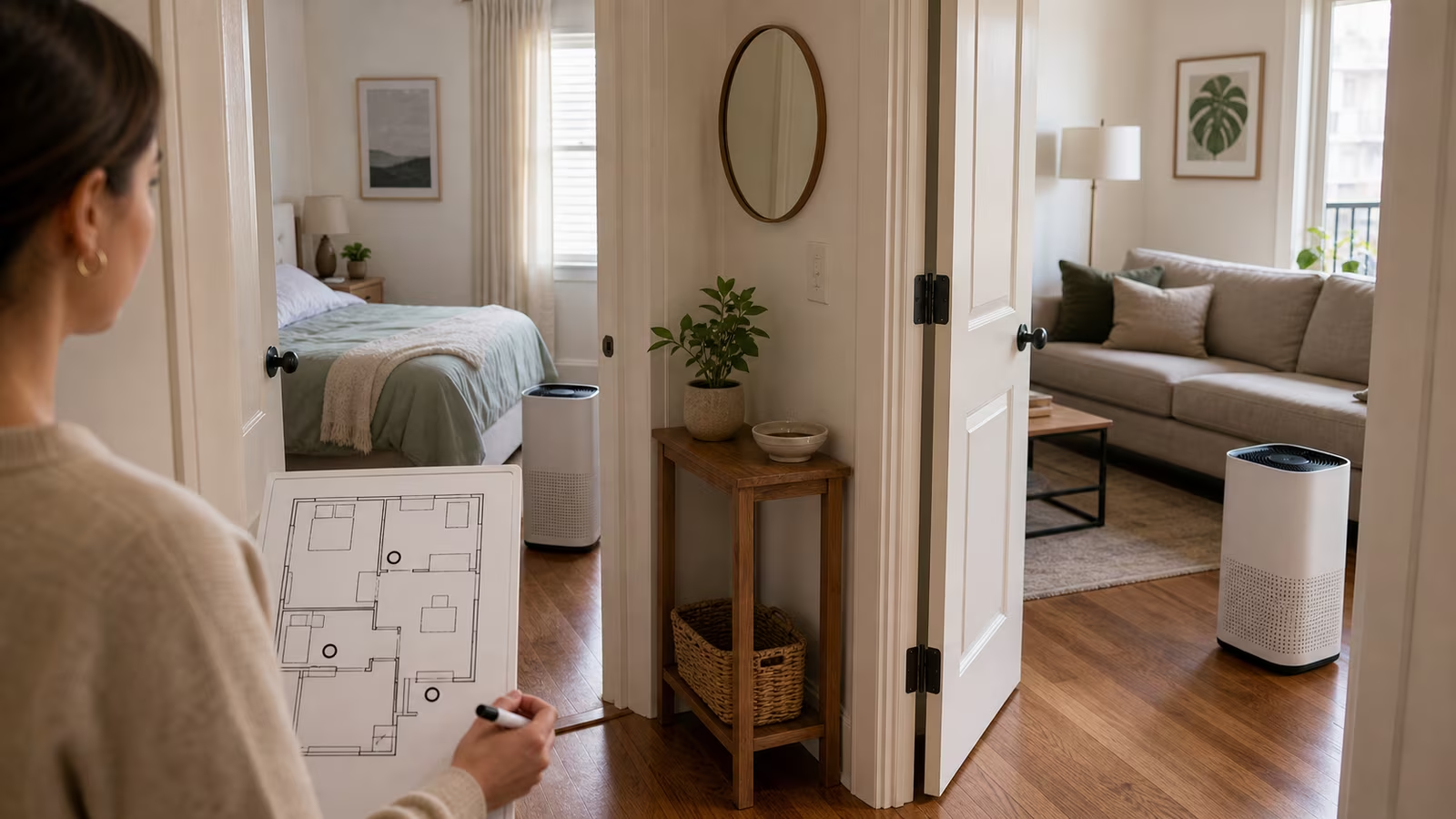
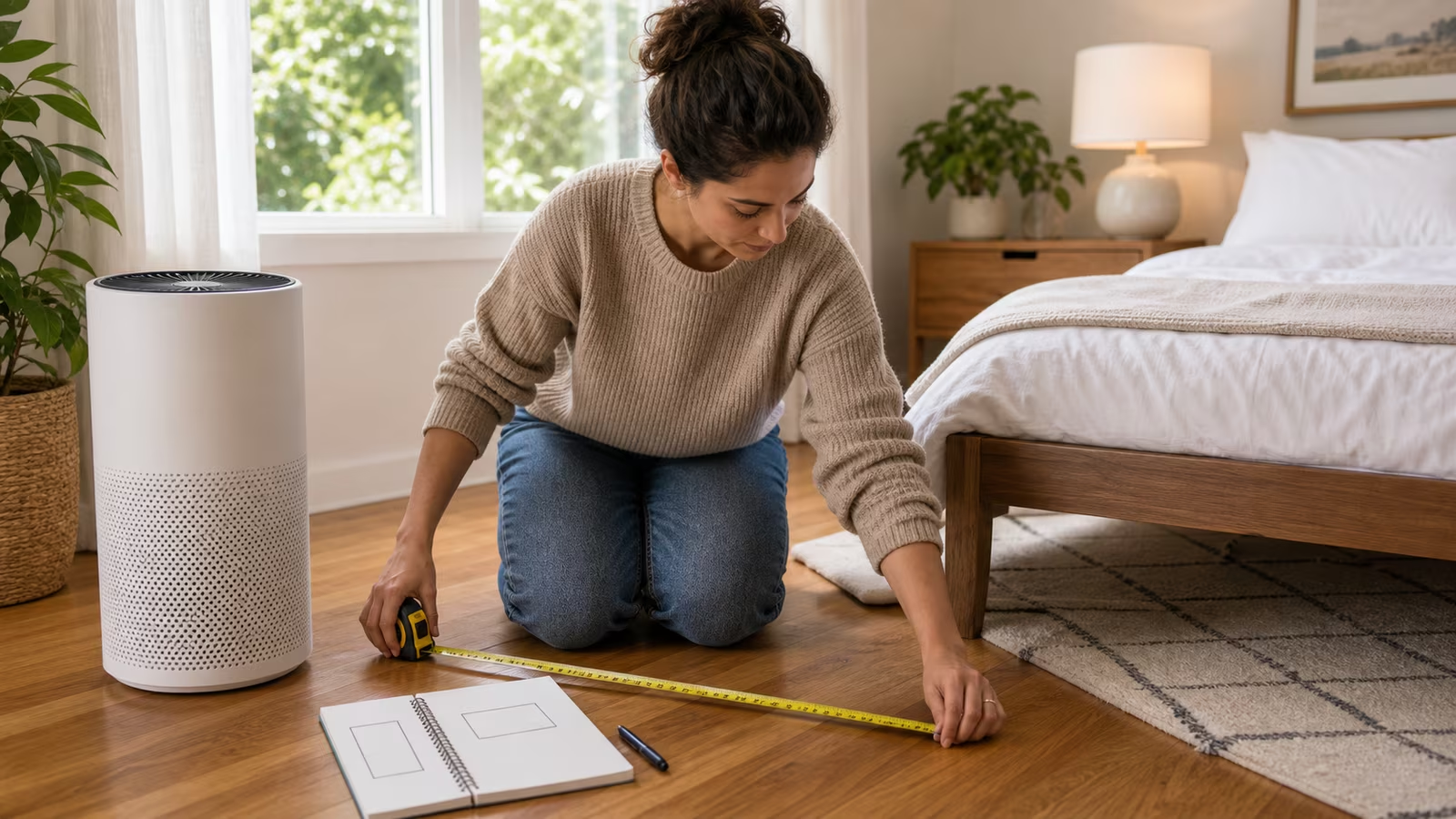
Coverage in square feet quietly assumes a standard ceiling, and that assumption breaks the moment your room is unusual. Air is a volume, so what a purifier actually has to clean is length times width times height. A living room with a vaulted ceiling holds far more air than its footprint suggests, and a purifier chosen on floor area alone will underperform in it. So the first move is a tape measure, not a shopping cart. Measure the two floor dimensions and the ceiling height, multiply them together, and you have the cubic volume the machine is really up against. A quick sketch of the space, marking the door, the windows, and where people actually sit, helps you see whether one central unit can serve the room or whether furniture and walls will carve it into pockets the airflow never reaches.
Renters and anyone in an older home should pay attention to ceiling height especially, because tall rooms and converted spaces routinely defeat purifiers that looked more than adequate on paper.
CADR and Air Changes Per Hour
The specification that actually predicts cleaning is CADR, the clean air delivery rate, expressed as a volume of genuinely filtered air the unit produces per unit of time. Manufacturers usually publish separate CADR figures for smoke, dust, and pollen, and the smoke number is the one to size against because smoke particles are the smallest and hardest of the three to capture. A higher smoke CADR means more filtered air delivered, full stop.
You turn CADR into a decision by asking how many air changes per hour you want, meaning how many times the machine cleans a volume equal to your whole room every hour. Casual dust control might be satisfied with a few changes an hour. Living with allergies, pets, or the possibility of wildfire smoke pushes you toward four or five air changes per hour or more, because a heavier and more persistent particle load needs the room’s air scrubbed more often to stay ahead of it. The arithmetic is simple in spirit: a bigger room, or a demand for more frequent changes, requires more CADR. The Air Purifier Sizing Calculator does this math for you, taking your measured volume and your target air changes and telling you the smoke CADR to shop for, so you are matching a real number to a real room instead of trusting a coverage claim.
Size Up, Because Quiet Beats Loud
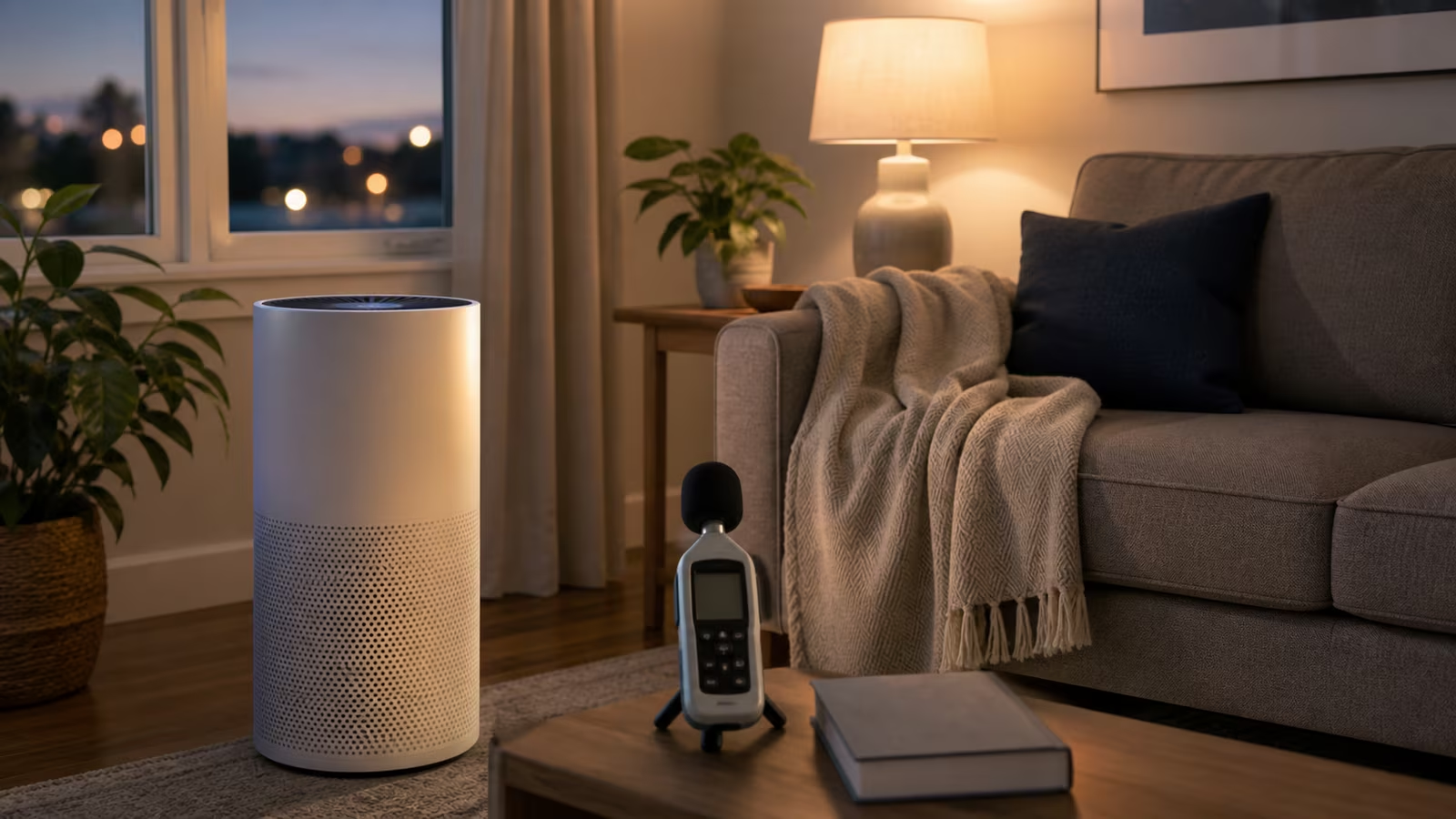
Here is the counterintuitive part: it is almost always better to buy a purifier rated for a larger room than yours. That headroom is not about wringing out extra cleaning at full blast. It is about being able to run the machine on a lower, quieter setting and still hit your target air changes. A unit sized exactly to the room only meets its rating on high, where it is loud enough that people turn it down or off, and a purifier that gets switched off cleans nothing. An oversized unit reaches the same clean-air delivery at a medium or low speed you can comfortably ignore. Since the whole point is a machine that runs continuously in the background, buying capacity you can use quietly is buying compliance with your own good intentions. Our guide to purifier speeds, noise, and runtime goes deeper on why the tolerable setting is the one that matters.
What Sizing Cannot Fix
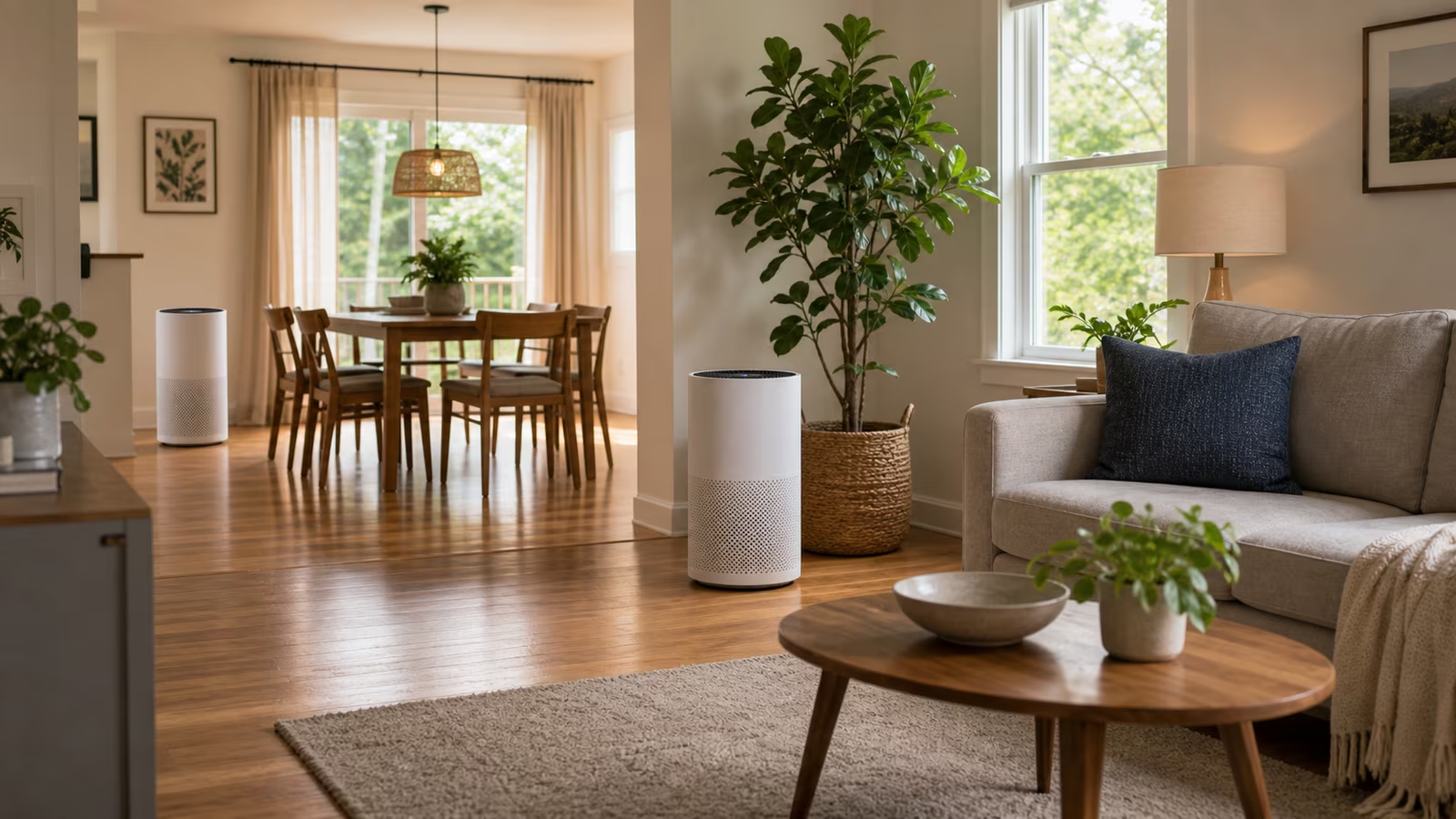
A correctly sized purifier is still only a filtration tool, and filtration sits below source control and ventilation in the order that actually improves a room. No CADR figure compensates for a burner that vents indoors or a kitchen with no working exhaust; the range hood and kitchen exhaust guide covers the source that a living-room purifier should never be asked to chase. A purifier also cleans nothing it cannot reach, so a beautifully sized unit stuffed behind a sofa serves a trickle of air while the rest of the room drifts by; where you place it is a separate problem worth solving with where to put an air purifier . And sizing has nothing to say about gases, moisture, or carbon monoxide, which belong to carbon media, dehumidification, and dedicated alarms respectively rather than to a particle CADR.
It is also worth being honest that the sealing of the room bounds everything. Air changes per hour assume the purifier is working on a reasonably enclosed volume. A wide-open doorway to the rest of the house effectively enlarges the room the machine is fighting, which is why sizing for a bedroom with the door closed is a very different calculation from sizing for a bedroom that stays open to a hall. Decide how the room is actually used before you settle on a number.
A Sensible Sizing Routine
Put it together and the routine is short. Measure the room in three dimensions and compute its volume. Decide, honestly, what you are fighting, and pick a target of a few air changes per hour for light dust or four to five and up for allergens, pets, or smoke. Convert that into a smoke CADR with the calculator, then shop for a unit rated somewhat above it so you can run it quietly. Confirm the filters are replaceable and affordable, because a purifier whose refills feel punishing is a purifier that ends up unplugged. Then place it in the open path of the room rather than in a corner, and let it run.
That process produces a machine matched to your actual space, quiet enough to live with, and powerful enough to keep up with your real particle load, which is the entire goal. The coverage sticker on the box never told you any of that.
Clean Air Society is practical education, not medical advice, diagnosis, or a guarantee that a room is safe. A well-sized purifier is a genuine help against particles, but it does not replace source control, ventilation with clean outdoor air, a carbon monoxide alarm, or professional attention when the problem is combustion, mold, chemicals, or building issues rather than ordinary household dust and smoke.