Open floor plans are wonderful to live in and stubborn to keep clean, because the same missing walls that make the space feel generous also let particles travel freely from one end to the other. When the kitchen, dining area, and living room share a single volume of air, there is no door to contain a burst of cooking smoke, no boundary to trap it near its source, and no small room where a modest purifier can quietly dominate. The mistake most people make is dropping one bedroom-sized unit into this expanse and expecting it to cope. It cannot, and understanding why points to the two approaches that actually work.
One Volume, Many Sources
Start by seeing the space honestly: it is one large volume of air, and it usually contains more particle sources than any single room in the house. The kitchen throws off cooking smoke and frying grease. The living area collects dander, dust from upholstery, and whatever tracks in from the entry. The dining zone sits in the drift between them. Because there are no interior doors, a source in one corner does not stay in that corner; it spreads across the whole footprint, thinning as it goes but reaching everywhere. That is the core challenge. You are not cleaning a room, you are cleaning a small hall’s worth of air with several things dirtying it at once.
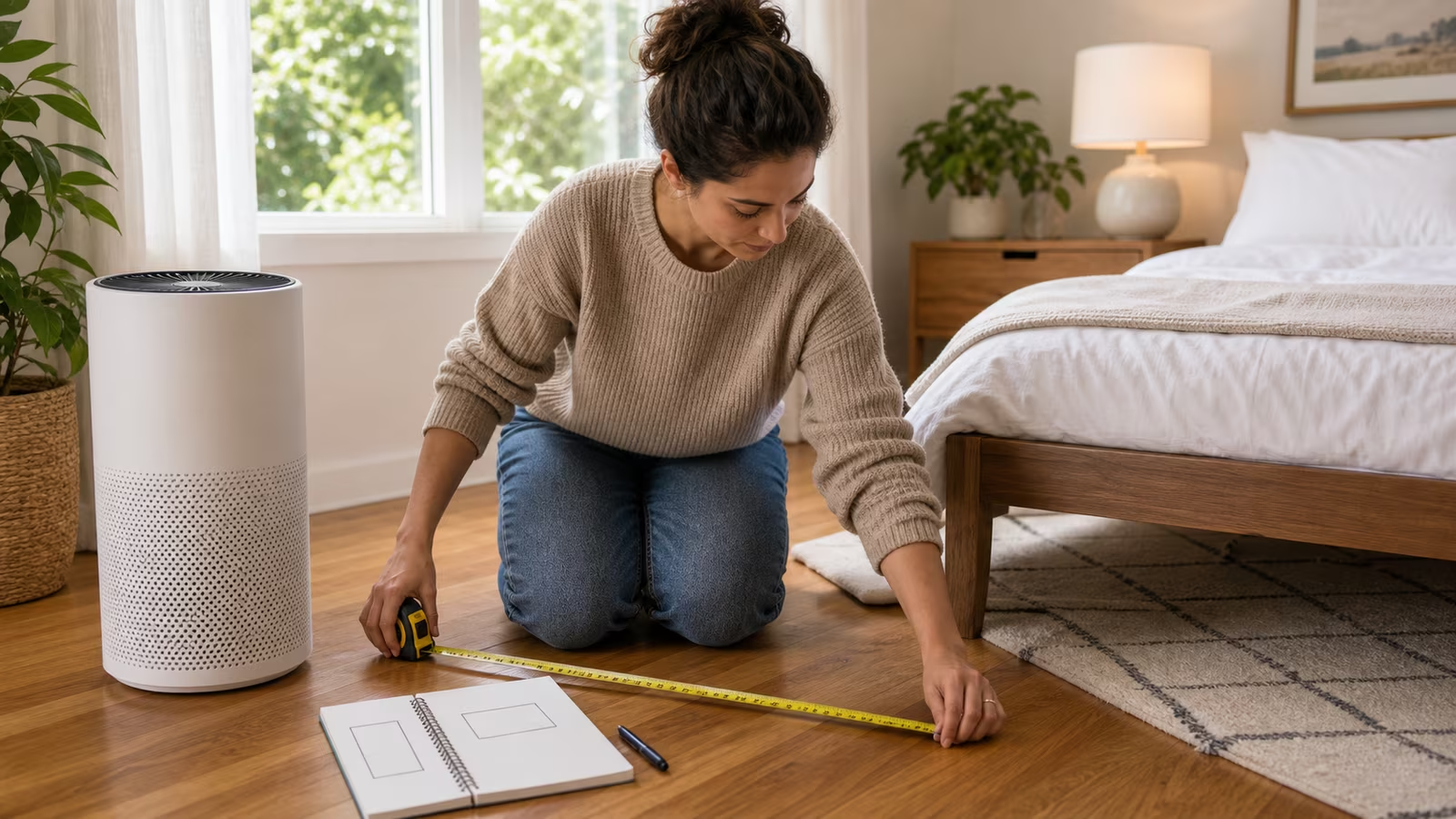
The first practical step is a tape measure and a rough sketch. Measure the full length, width, and ceiling height of the connected area, because open plans often carry taller ceilings that inflate the true air volume well beyond what the floor area suggests. Mark the kitchen, the seating, the dining table, the main windows, and the range hood on your sketch. Seeing the whole thing on paper makes the scale obvious in a way that standing in the room does not, and it usually settles the question of one unit versus several before you have spent a dollar.
Do the Volume Math First
Because the volume is large, the sizing math is what keeps expectations realistic. A purifier’s cleaning capacity is its clean air delivery rate, and matching that to a big open volume at a useful number of air changes per hour typically demands far more capacity than one mid-range unit provides. Run the numbers before you shop rather than after you are disappointed; the Air Purifier Sizing Calculator will take your measured open-plan volume and your target air changes and tell you the total clean air delivery you actually need, which is the honest starting point for deciding how to divide the job. Our companion guide on reading PM2.5 and AQI for indoor decisions helps you judge how hard the space is really being pushed on a given day.
That total capacity can be met two ways, and the right choice depends on how you live in the space.
Two Strategies: One Big Unit or Zoned Units
The first strategy treats the open plan as the single volume it physically is and meets the whole requirement with one high-capacity purifier, or one large unit supported by circulation. This can work when the layout is genuinely open, without alcoves or partial walls that block airflow, and when a large machine can sit somewhere central to the drift. Its appeal is simplicity: one filter to track, one machine to run. Its weakness is that a single unit, however powerful, still cleans fastest near itself and slowest at the far edges, so a distant reading nook may lag the rest of the room.
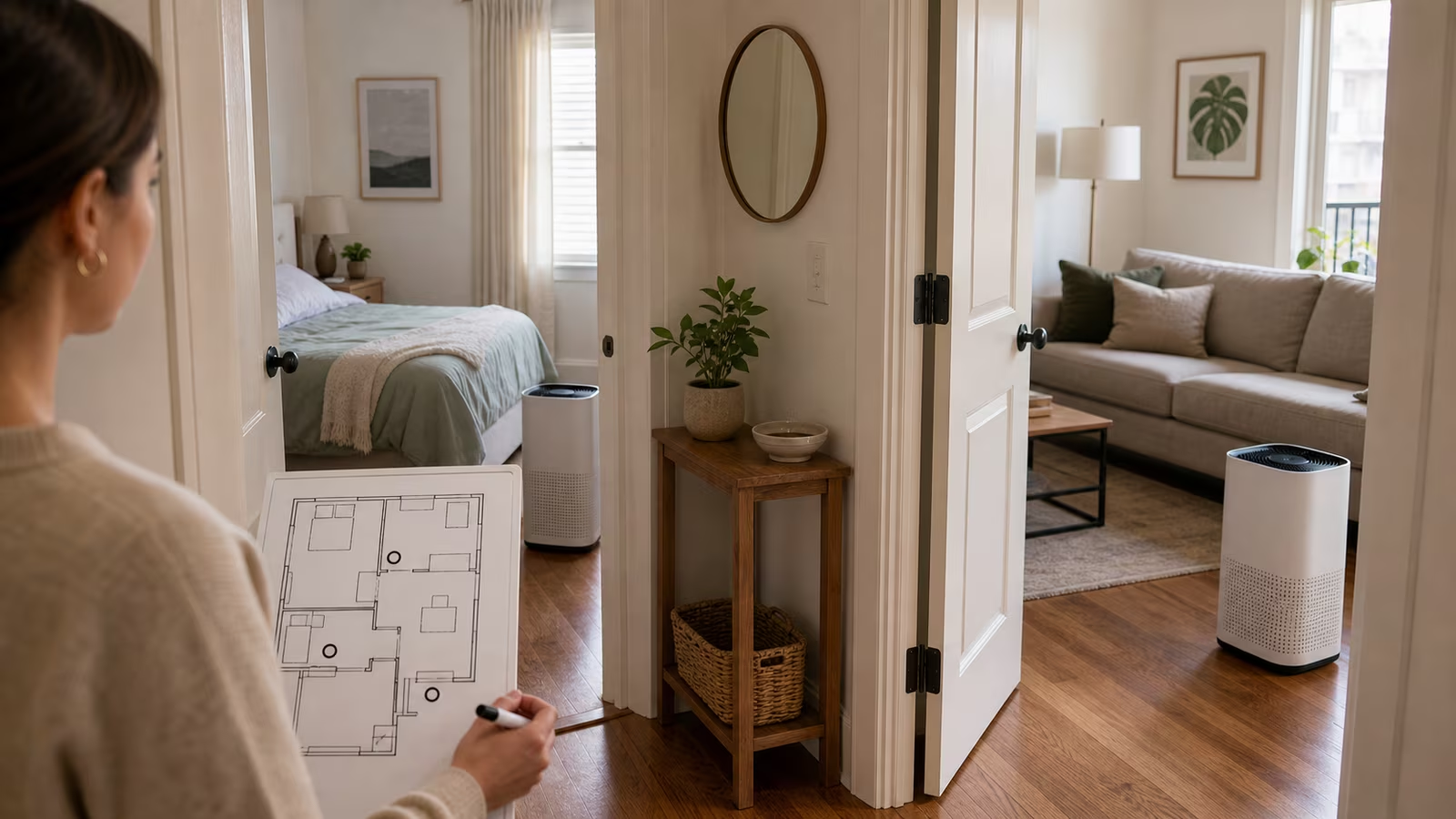
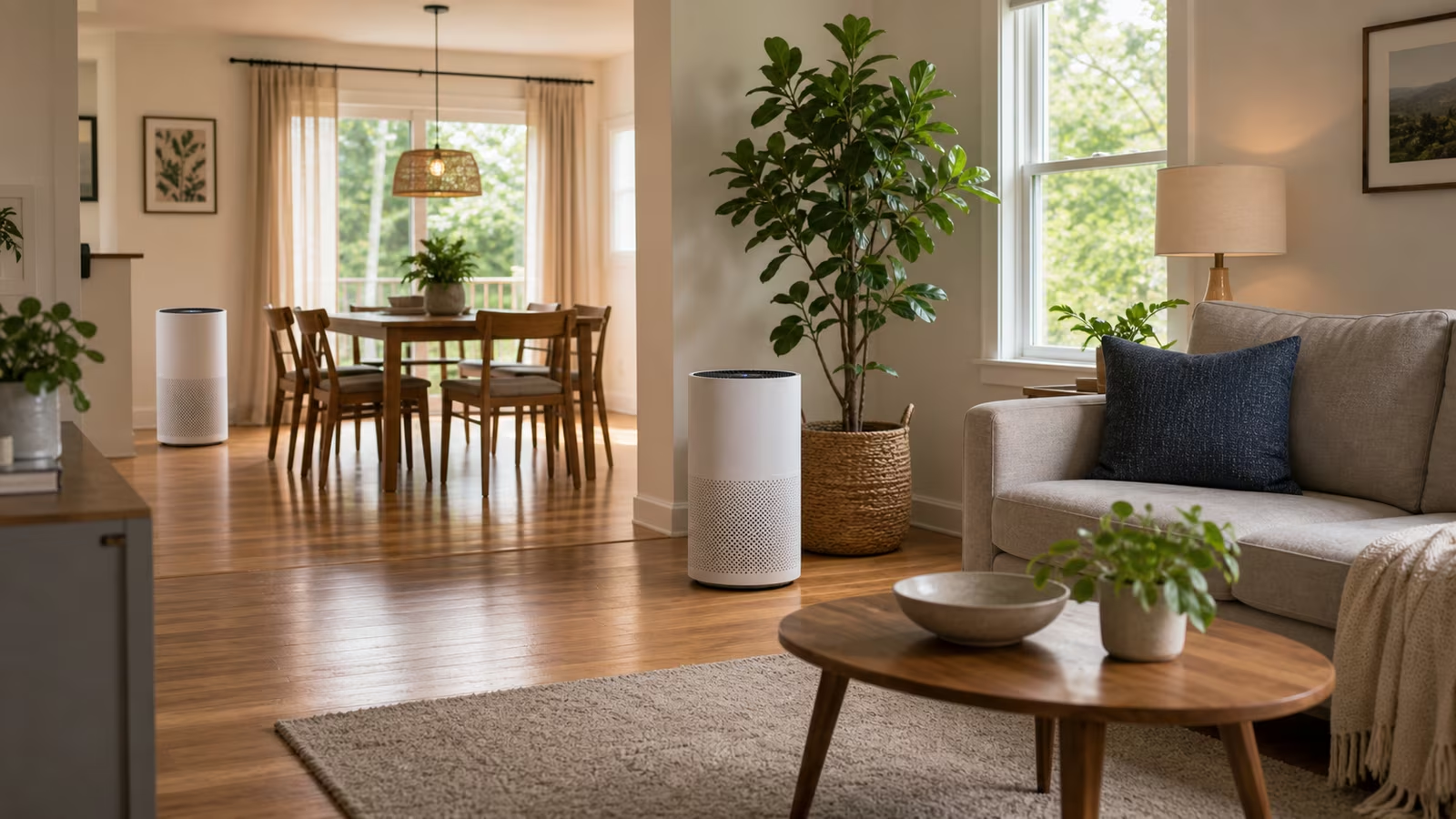
The second strategy, and often the better one, is to create zones. Instead of one machine fighting the entire volume, you place a right-sized purifier in each area where people actually spend time and where sources cluster, one near the living-room seating and another positioned to catch the kitchen’s output, for example. Zoning matches the cleaning to how the space is used, gives each occupied area its own responsive unit, and shortens the distance particles travel before a filter catches them. It also means a cooking event gets attacked near the kitchen before it disperses across the sofa and dining chairs. The combined capacity of the zoned units should still add up to the total the volume math called for; you are dividing the same requirement into pieces placed where they do the most good. Because you are now maintaining several machines, our guides to multi-room clean air strategy and seasonal clean air maintenance are worth keeping alongside this one.
The Kitchen Is a Source, Not a Filtration Job
The single most important move in an open plan is refusing to make the living-room purifier chase the kitchen. Cooking is the dominant particle source in most open layouts, and the right tool for it is capture at the source: a range hood that vents outdoors, running while you cook and for a few minutes after. A hood that actually exhausts to the outside removes cooking smoke and grease before they ever spread into the shared volume, which spares every purifier in the space an enormous workload. Filtration downstream is cleanup; source capture at the stove is prevention, and prevention wins. If your hood only recirculates or vents poorly, improving that does more for the whole open plan than another purifier ever will.
Ventilation with clean outdoor air belongs in the plan too. On days when the outdoor air is genuinely good, opening the space up flushes the whole volume in a way no filter matches. On days when outdoor air is poor, from smoke or pollen, you keep it closed and lean on the filtration you sized. Knowing which day you are having is exactly what the PM2.5 and AQI guidance is for.
Setting Expectations and Keeping the Boundary
An open plan will never behave like a small sealed bedroom, and that is fine. The goal is a large shared space kept reasonably clean by capacity matched to its true volume, placed where people and sources are, with cooking captured at the stove and outdoor air used when it helps. Expect the far corners to trail the busy center slightly, expect cooking to be the event you plan around, and expect to maintain more than one filter. Those are the ordinary terms of cleaning a big connected volume, not signs that something is wrong.
Clean Air Society is practical education, not medical advice, diagnosis, or a guarantee that a room is safe. Purifiers and range hoods help with particles in an open plan; they do not replace a carbon monoxide alarm, moisture control, or professional attention when the real issue is combustion, mold, chemicals, or building conditions. When those appear, step out of the household frame and use the right alarms and qualified help.