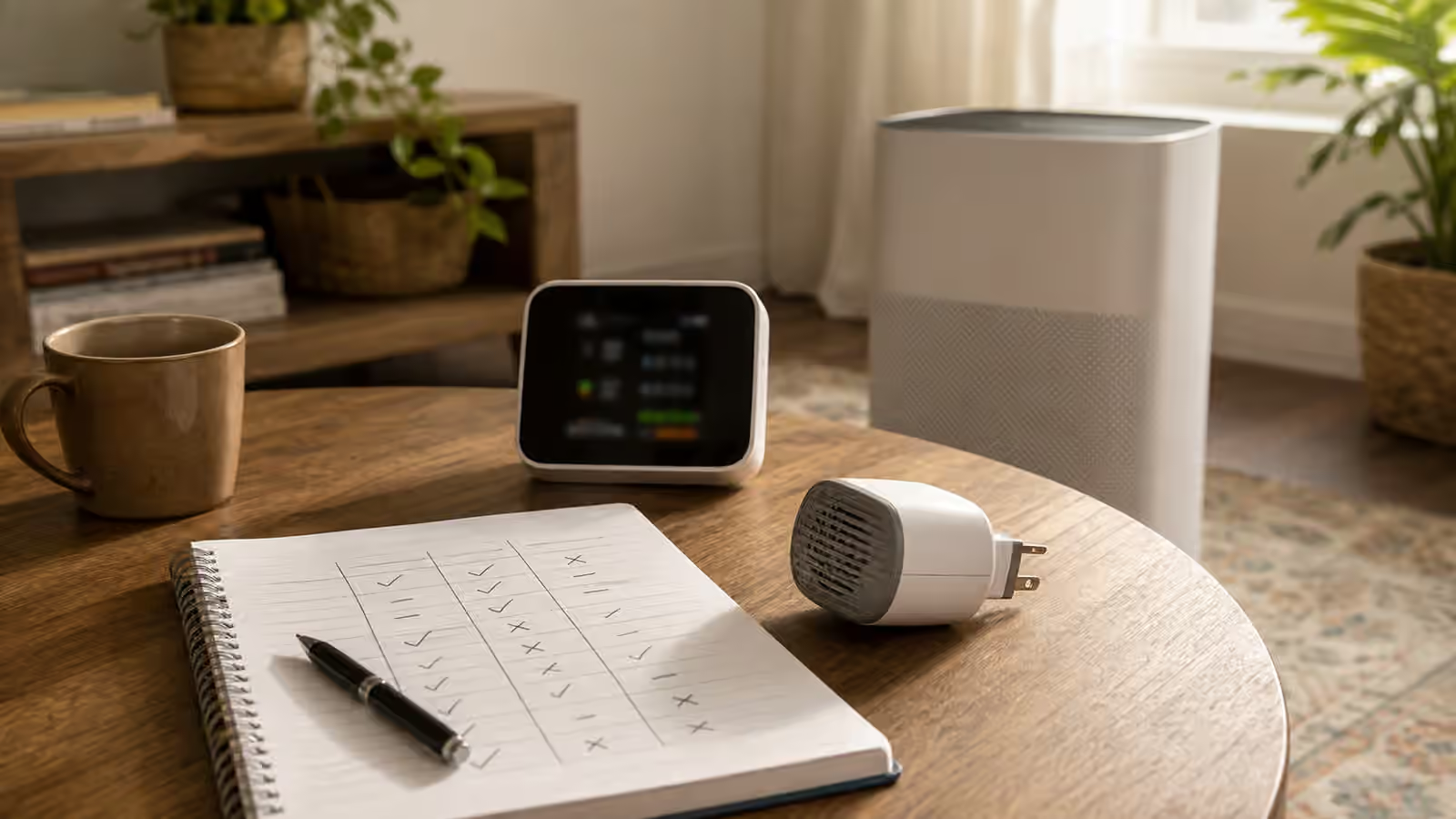
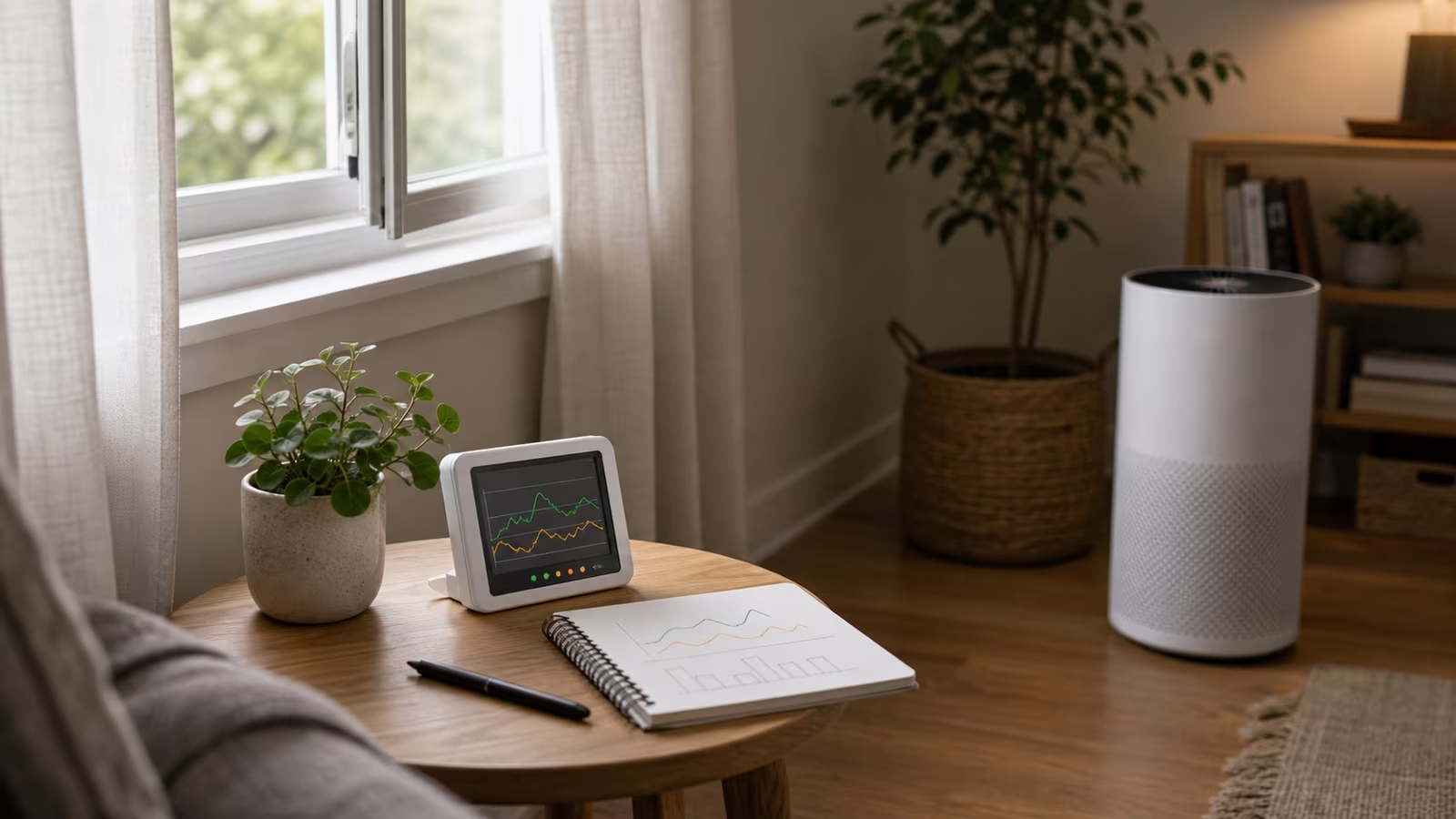
A home air quality monitor is at its best when it changes what you do and at its worst when it becomes a scoreboard you check anxiously and act on never. The little screen cycling through numbers for particles, carbon dioxide, humidity, and a vague “VOC” reading looks authoritative, but a consumer sensor is not a laboratory instrument. It is a rough, useful gauge whose real value lies in the direction its numbers move over time, not in the exact figure at any given second. Learning which readings to believe, how far to believe them, and what action each one should trigger is what separates a monitor that helps from one that only supplies fresh worry.
Trends Over Absolute Numbers
The single most important habit is to read a home monitor for change rather than precision. Low-cost sensors drift, they are calibrated loosely at the factory, and two units side by side will often disagree on the exact value while agreeing perfectly on the story: the number climbed when you started frying, fell when you opened a window, and settled once the purifier caught up. That story is the trustworthy part. Whether the peak read one figure or a somewhat different one matters far less than the fact that it rose, and by roughly how much, and how quickly it recovered. So watch your own baseline. Learn what your rooms read on a calm, ventilated day, and pay attention when a reading departs from that normal rather than to whether it crosses some absolute line printed in a manual. A monitor that teaches you your home’s patterns has earned its place; a monitor you treat as a certified verdict will mislead you.
Comparing your indoor trend against a public outdoor index sharpens this further. When you want to know whether opening the windows will help or hurt, your indoor particle trend and the official outdoor reading together tell you more than either alone, which is exactly the logic our guide to PM2.5, AQI, and indoor decisions walks through.
What Each Sensor Is Actually Good At
Not all readings on a combo monitor deserve equal confidence, and knowing the difference keeps you from overreacting to the weakest ones. The particle reading, usually labelled PM2.5, is generally the most useful on consumer devices; it responds visibly and quickly to cooking, smoke, candles, and vacuuming, which makes it excellent for catching events and confirming that a purifier is keeping up. The carbon dioxide reading, if the unit uses a genuine dedicated CO2 sensor rather than an estimate, is a reliable and honest proxy for how stale the air is and how well a room is ventilated, because CO2 rises as people breathe in an under-ventilated space. The humidity reading is straightforward and worth trusting for tracking dampness. The “VOC” or “air quality” index, by contrast, is usually the softest number on the device; it lumps many gases into one relative figure that jumps around and is easy to misread, so treat it as a loose hint that something changed rather than a measurement of any specific hazard.
The point of sorting the sensors this way is to match each to an action. A rising particle number says filter or stop the source. A rising CO2 number says ventilate, bring in fresh air. A high humidity number says dry the room and find the moisture. A jumpy VOC index says look around for a new source, not panic. When you decide the response in advance, the monitor becomes a prompt for behavior instead of a source of dread.
Turn Readings Into Ventilation Decisions
Carbon dioxide deserves a special mention because it is the reading people most often own and least often use well. A CO2 monitor does not detect a poison; it measures how much of the air in a room has already been breathed, which is a good stand-in for whether stale indoor air is building up faster than fresh air is replacing it. Watch it climb through a closed, occupied room over an evening and you have a concrete, visible reason to crack a window or run a fan, and watch it fall afterward and you have confirmation the ventilation worked. That closed loop, reading to action to confirmation, is what a monitor is for. The Ventilation and CO2 Helper turns a CO2 trend into a concrete ventilation decision, helping you translate a rising number into how much fresh air a room actually needs rather than leaving you to guess. In a large connected space the same logic scales up, which is why our guide to air purifiers for open floor plans pairs naturally with monitor data.
The Readings a Combo Monitor Will Not Cover
Here is the boundary that matters most, and it is a safety boundary rather than a quibble. A general indoor air quality monitor is not a life-safety alarm, and it must never be trusted as one. Carbon monoxide is odorless and acutely dangerous, and it requires a dedicated, listed carbon monoxide alarm, not a line item on a lifestyle monitor’s screen. Radon is likewise its own measurement with its own testing, invisible to a particle-and-CO2 gadget. Do not let a reassuring “good” score on a combo device stand in for either of these; the combo monitor simply is not looking for them. Our guide to carbon monoxide and radon monitor boundaries exists precisely because these hazards sit outside what a general monitor can see, and conflating the two is a genuine risk rather than a technicality.
It also helps to remember what a monitor cannot promise. A screen full of pleasant numbers does not prove a room is safe; it reports the handful of things its sensors track, on a rough scale, at the sensor’s location, which may not match the air you breathe across the room. Placement changes readings, a monitor beside the stove tells a different story than one across the room, and a device in direct sun or airflow can mislead. Use several readings together and over time, not one glance.
A Sane Way to Live With a Monitor
Put a monitor somewhere in the living space at breathing height, away from the immediate blast of the stove or a draft, and leave it alone long enough to learn your home’s ordinary rhythm. Then use it deliberately: let the particle trend tell you when to filter or stop a source, let CO2 tell you when to ventilate, let humidity tell you when to dry a room, and let the VOC index merely nudge you to investigate. Keep a dedicated carbon monoxide alarm regardless of what any combo device shows, and test for radon separately. A monitor used this way quietly improves your habits. A monitor used as an anxious verdict machine mostly improves your stress.
Clean Air Society is practical education, not medical advice, diagnosis, or a guarantee that a room is safe. A home monitor is a trend tool, not a certification. When the concern is carbon monoxide, radon, mold, chemicals, or a building problem, rely on the proper dedicated alarms, professional testing, and official guidance rather than a general air quality screen.