
A bathroom produces more water per square foot than any other room in a home, and it produces it in bursts. A single hot shower can release a surprising volume of moisture into the air in a few minutes, and that moisture has to go somewhere. If it leaves quickly, the room dries and stays sound. If it lingers, it condenses on the coldest surfaces it can find, the window, the wall behind the towel bar, the ceiling above the shower, the grout, and it keeps those surfaces damp long enough for mildew to take hold. Almost every bathroom air complaint, from the persistent musty note to the spots creeping along the ceiling, traces back to that one question: does the steam leave faster than it condenses?
That framing is freeing, because it means the fix is rarely an air purifier. Bathroom air quality is a moisture-timing problem. The tools are an exhaust fan that actually pulls, a habit of drying surfaces, and a little patience letting the room air out before you close it up and walk away.
Prove the Fan Actually Moves Air
The most common surprise is that a bathroom fan runs, makes noise, and moves almost nothing. A fan is only useful if it exhausts humid air out of the building, and plenty of fans fail that test. Some vent into an attic or a wall cavity instead of outdoors, which simply relocates the moisture problem to a place you cannot see. Others are choked with lint and dust on the grille and the blade, or connected to a long, kinked flex duct that strangles the airflow. A cheap way to check whether the fan is pulling at all is to hold a single square of toilet paper up to the grille while it runs; if the fan cannot hold the paper against the cover, it is not moving meaningful air, and no runtime schedule will save it.
If the fan does pull, the next question is duration. Steam does not clear the instant the water stops. Running the fan for a stretch after the shower, roughly ten to twenty minutes, is what actually carries the humidity out, and a simple timer switch or humidity-sensing switch removes the need to remember. Running it during the shower and shutting it off as you step out is the pattern that leaves a room damp, because you turned off the pump right when the air was wettest.
Help the Surfaces Dry, Not Just the Air
Moving air out is half the job; the other half is not leaving standing water on cold surfaces to feed condensation. A quick pass with a squeegee on the glass and tile after a shower removes a real fraction of the water before it can evaporate and re-condense elsewhere. Wet towels and bath mats are their own slow-release humidifiers, so hanging them spread out to dry, or moving them out of the room, keeps them from quietly re-wetting the air all day. Leaving the shower door or curtain open afterward lets the enclosure dry instead of staying a sealed, dripping box.
The door to the rest of the house matters too. A bathroom that vents its steam into a bedroom or hallway just moves the moisture next door, which is exactly the kind of overnight dampness the overnight bedroom ventilation guide tries to avoid. Cracking a window when the outdoor air is dry enough can help clear a room quickly, but on a humid day an open window brings moisture in rather than letting it out, so the window is a sometimes-tool, not a default.
Measure Instead of Guessing
Because moisture is invisible until it has already done damage, a small humidity gauge is the single most useful purchase for this room. Watching how high the humidity spikes after a shower and how long it takes to fall back gives you a real read on whether your fan and habits are keeping up. If the number climbs and stubbornly refuses to come back down, the room is holding water it cannot shed. When those readings and observations start to pile up without a clear picture, the Humidity and Musty-Smell Triage tool organizes them into a short worksheet so you can tell a general humidity problem from a specific wet-surface or hidden-leak problem. Consistently high readings that no ventilation seems to fix are a hint that water is coming from somewhere other than the shower, a slow leak behind a wall or under a fixture, which is a plumbing question rather than an airflow one.
When Filtration Enters, and When It Does Not
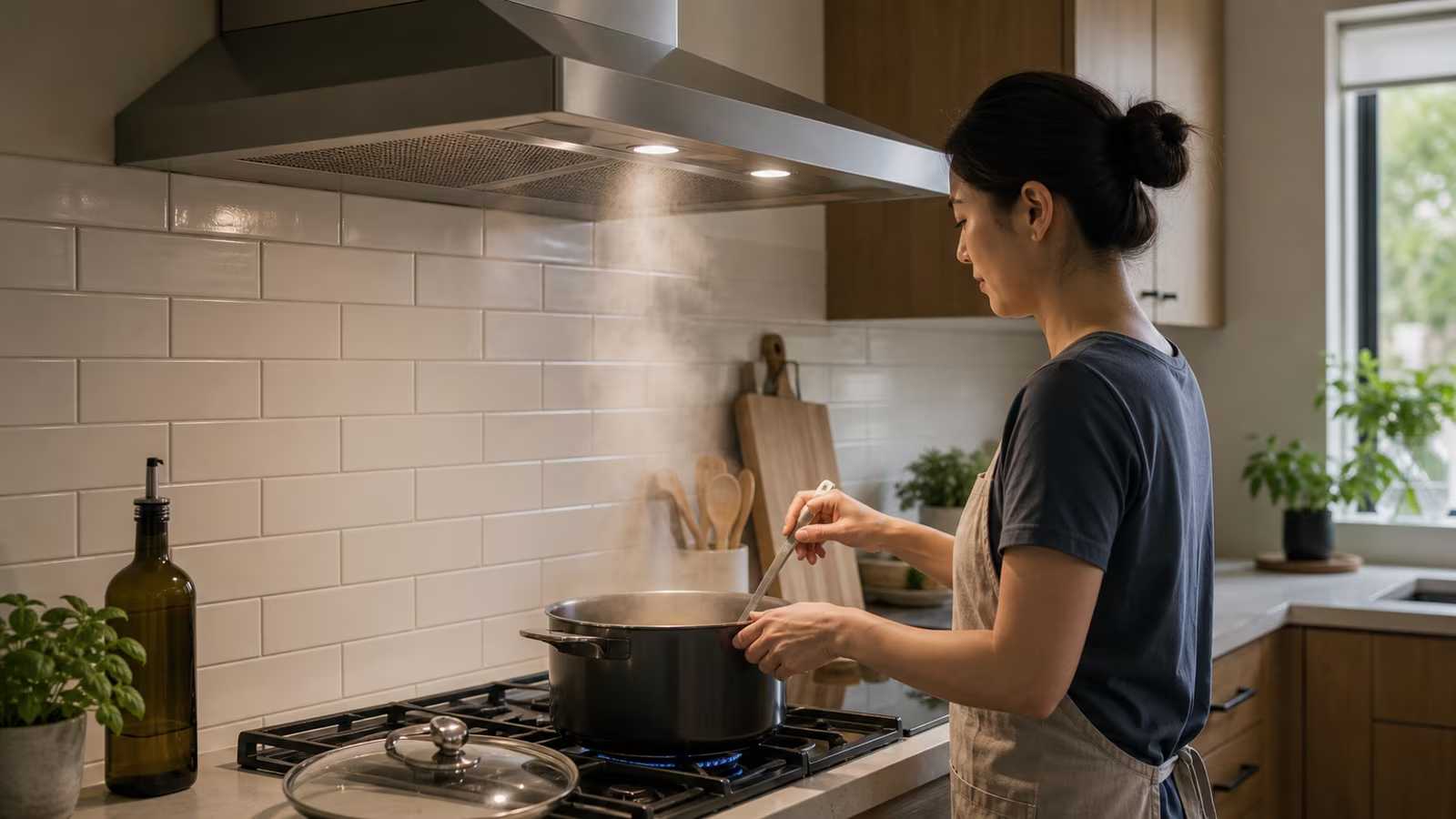
It is worth being clear that a portable air purifier does very little for a bathroom’s core problem. Particle filters do not remove humidity, and running one in a steamy room does not dry it out. Where an air cleaner earns its keep is in the rooms a bathroom feeds into, and even there it is sized to the space it actually serves, which is the reasoning behind matching purifier capacity to room size . Chasing a musty bathroom smell with fragrance or a filter treats the symptom while the dampness keeps working underneath. The same moisture-first discipline shows up in the kitchen, where the range hood has to actually vent outdoors to be worth running; a fan that recirculates does not remove what it is supposed to remove.
Build the routine so it survives a rushed morning. A fan you have confirmed vents outdoors, a timer or humidity switch so it runs long enough on its own, a squeegee within reach, towels that get spread to dry, and a humidity gauge you glance at will keep a bathroom sound far more reliably than any device you plug in afterward. Clean the fan cover and blade on a schedule, because a fan buried in lint slowly becomes decoration.
Clean Air Society is practical home education, not medical advice, diagnosis, or remediation, and it cannot promise that a given room is safe. Ordinary ventilation and drying habits prevent most bathroom moisture trouble, but they are not a substitute for a repair. If you find mold spreading across more than a small isolated patch, discover a hidden leak or ongoing water damage, or if a fuel-burning appliance vents anywhere near the space, step out of the DIY lane and bring in a qualified professional rather than trying to ventilate your way past a building problem.