A closed bedroom is one of the few spaces where you spend a third of your life breathing the same enclosed volume of air with the door shut. Over a night, two sleeping adults, or a person and a pet, steadily add carbon dioxide, warmth, and moisture to a room that may not be exchanging much air with the rest of the house. None of that is dangerous in an ordinary bedroom, but it is why a room that felt fine at bedtime can feel stuffy, warm, and faintly stale by morning. The stuffiness people notice is largely rising carbon dioxide and humidity from their own breathing, in a space that has effectively been sealed for eight hours.
The goal overnight is modest and specific: let a little fresh air keep reaching the room without wrecking the things that make sleep possible, which are quiet, comfortable temperature, and, for many people, a closed or nearly closed door. Those constraints are the whole puzzle. Ventilation that ignores noise, drafts, or privacy will simply get switched off at two in the morning, which helps no one.
Why a Sealed Bedroom Goes Stale
A bedroom does not need dramatic pollution to feel bad by morning; it just needs to be a small, well-sealed box holding breathing occupants. Carbon dioxide is the usual marker. It is not toxic at the levels a bedroom reaches, but it rises steadily behind a closed door and tracks closely with how stuffy a room feels, which makes it a useful proxy for whether fresh air is getting in. Modern homes are often built tighter than older ones, so a closed bedroom in a newer or well-weatherized house can trap that buildup more completely than people expect. Moisture rides along with it, and in a cool room that moisture can show up as condensation on a cold window by dawn.
The reason this matters is that the fix is about creating a small, steady path for air exchange, not about running a machine. A purifier recirculating the same air does nothing for carbon dioxide, because it filters particles out of air that never leaves the room; it does not bring in anything new. Understanding that distinction saves a lot of money, and the companion guide on carbon dioxide monitors and home ventilation goes deeper on why a rising number means “let air in,” not “filter harder.”
The Door Is Your Easiest Lever
The simplest overnight change is the door. A bedroom door left open, or cracked a few inches, connects the room to the much larger air volume of the house and usually keeps stuffiness from building at all. For households where an open door is fine, that alone often solves the problem. Where privacy, a partner’s schedule, pets, or noise make an open door impractical, even a small gap or a transfer path helps more than a fully sealed door does. If a closed door is non-negotiable, then the room needs another way to exchange air, whether a cracked window when conditions allow or the home’s mechanical ventilation doing the work.
When the Window Helps and When It Hurts
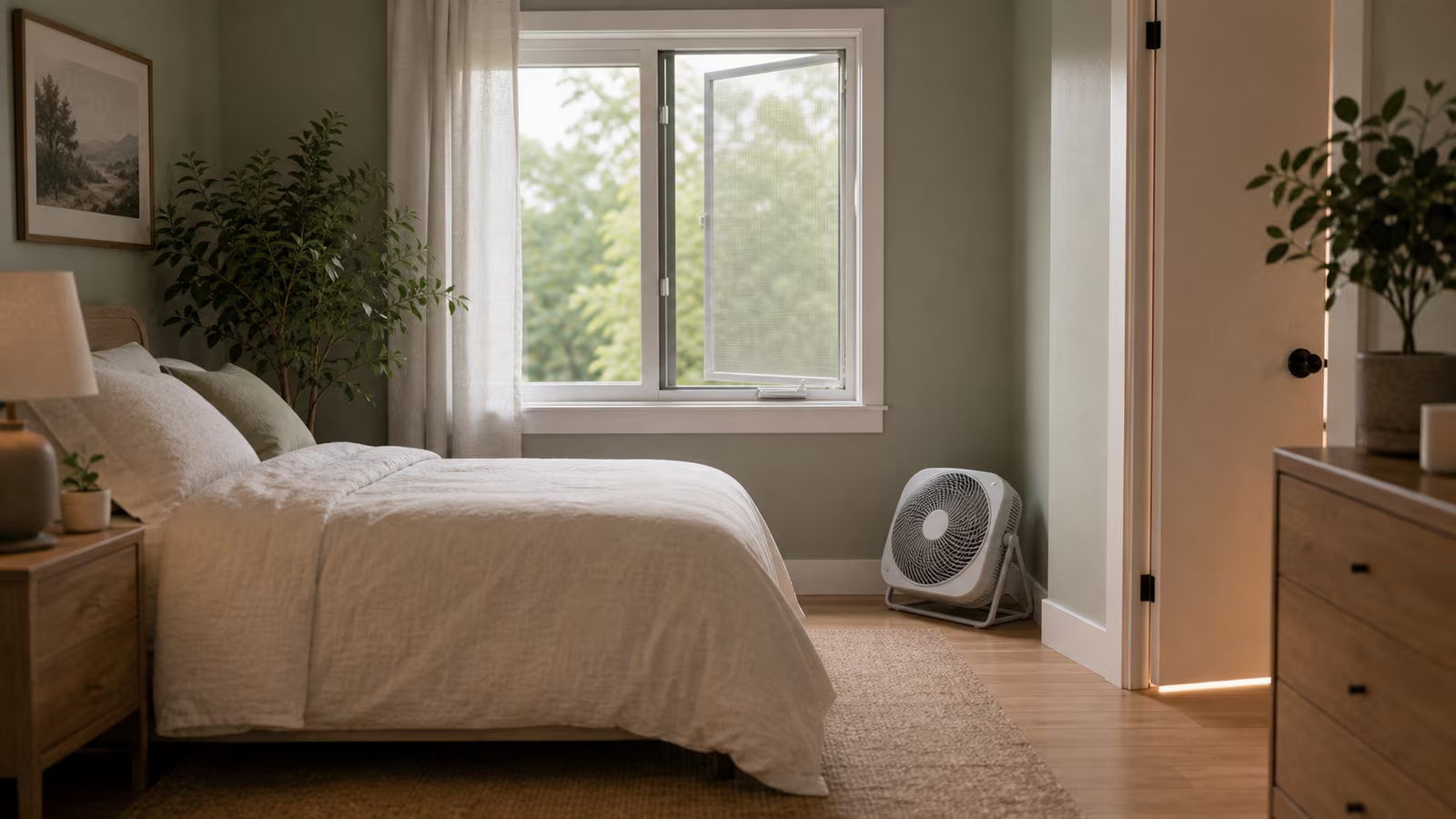
A cracked window is the classic overnight fix, and it works beautifully when the outdoor air is clean, quiet, and a comfortable temperature. It stops working, or turns counterproductive, under exactly the conditions that are easy to forget at bedtime. During a wildfire smoke event or high pollen night, an open window pulls the problem indoors, and the smoke-day indoor plan logic of sealing up and filtering applies instead. On a humid night, an open window can raise indoor moisture rather than clearing it. Near a busy road, it trades stale air for traffic pollution and noise. The honest rule is that a window helps only when what is outside is genuinely better than what is inside, so the window is a conditional tool you reach for on good-air nights and skip on bad ones.
Sizing the Air Exchange Without Guessing
Because stuffiness is invisible until you feel it, a little measurement goes a long way. A small carbon dioxide monitor on the dresser shows how high the room climbs by morning and how quickly a cracked door or window brings it back down, which turns a vague “the room feels stuffy” into something you can actually adjust. When you want to reason about how much fresh air a given room and its occupants need, and which lever, door, window, or system fan, gets you there, the Ventilation and CO2 Helper turns those inputs into a short worksheet so you are not just guessing at how far to crack the window. Enter conservative numbers and treat the result as a starting point you refine over a few nights rather than a verdict.
Fit Filtration Around Sleep, Not Against It
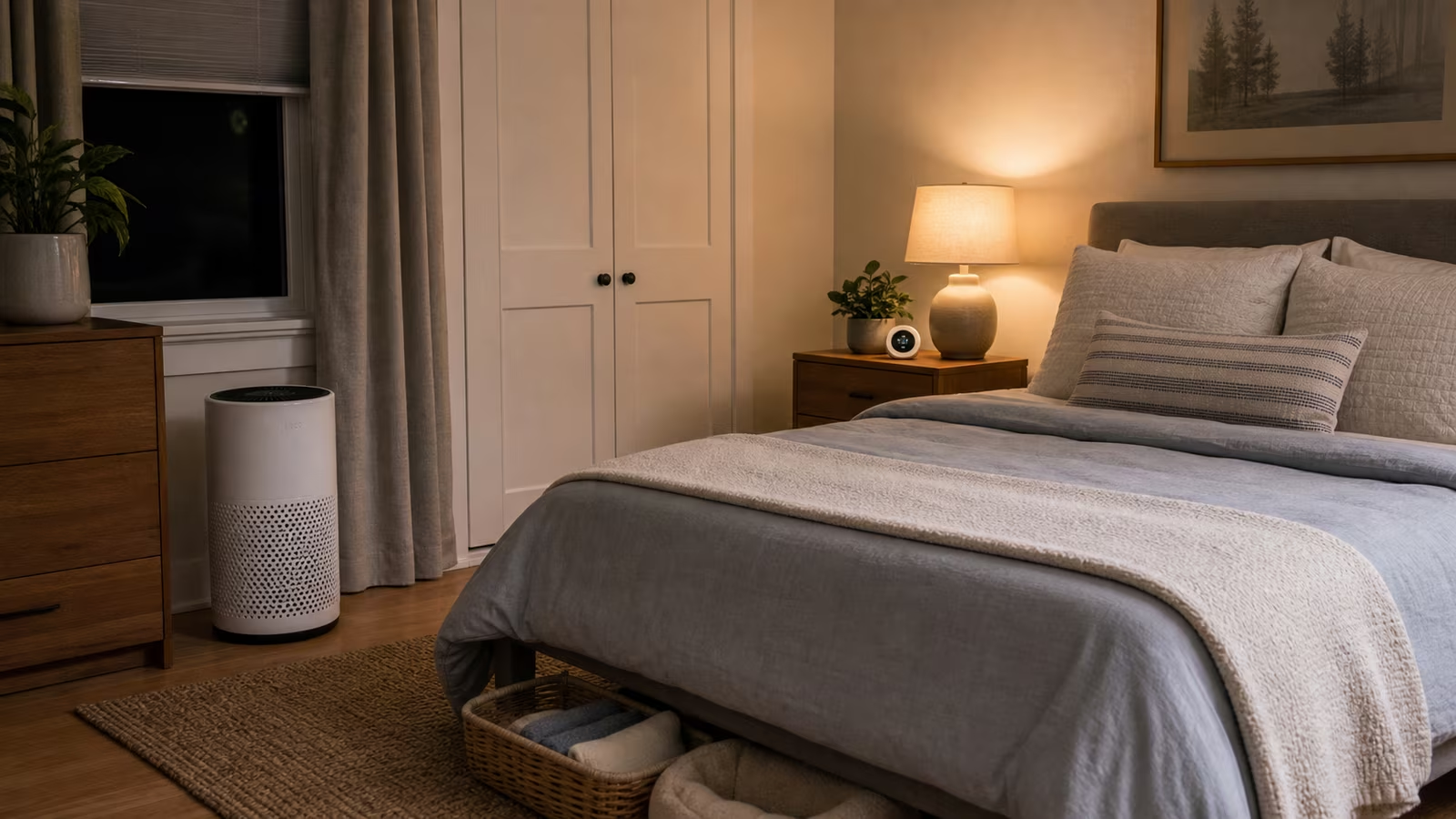
A room air cleaner still belongs in a bedroom, but for a different job than ventilation. It reduces particles, dust, dander, and settled pollen stirred up as you move, which is genuinely useful for many sleepers. The trick is choosing and placing it so it survives the night. A unit sized for the room can run on a low, quiet setting rather than a loud burst, and a quiet unit that runs all night beats a powerful one switched off for noise. Position it so it circulates air through the room without blowing a cold draft directly across the bed, and keep its intake clear rather than shoved behind a nightstand. None of this replaces air exchange; a filter and a cracked door do two different jobs, and a comfortable bedroom usually wants both.
Build the overnight routine so it holds up when you are tired. A door habit you will actually keep, a window you open only on good-air nights, a quiet purifier that runs without waking anyone, and a glance at a carbon dioxide reading in the morning form a system that keeps a bedroom fresh without turning sleep into a monitoring project. Wash bedding on a rhythm and keep an eye on the window for condensation as the seasons turn, since a cold pane that sweats each morning is telling you the room is holding more moisture than it is shedding.
Clean Air Society is practical home education, not medical advice, diagnosis, or remediation, and it cannot promise that a given room is safe. Ordinary ventilation habits keep a bedroom comfortable, but they are not a treatment for how anyone sleeps or feels. If a room shows persistent condensation and mold, if anyone in the household has serious or worsening overnight symptoms, or if a fuel-burning appliance is nearby, step out of the DIY lane and bring in a qualified professional, and make sure a working carbon monoxide alarm covers the sleeping area regardless of anything else you do.