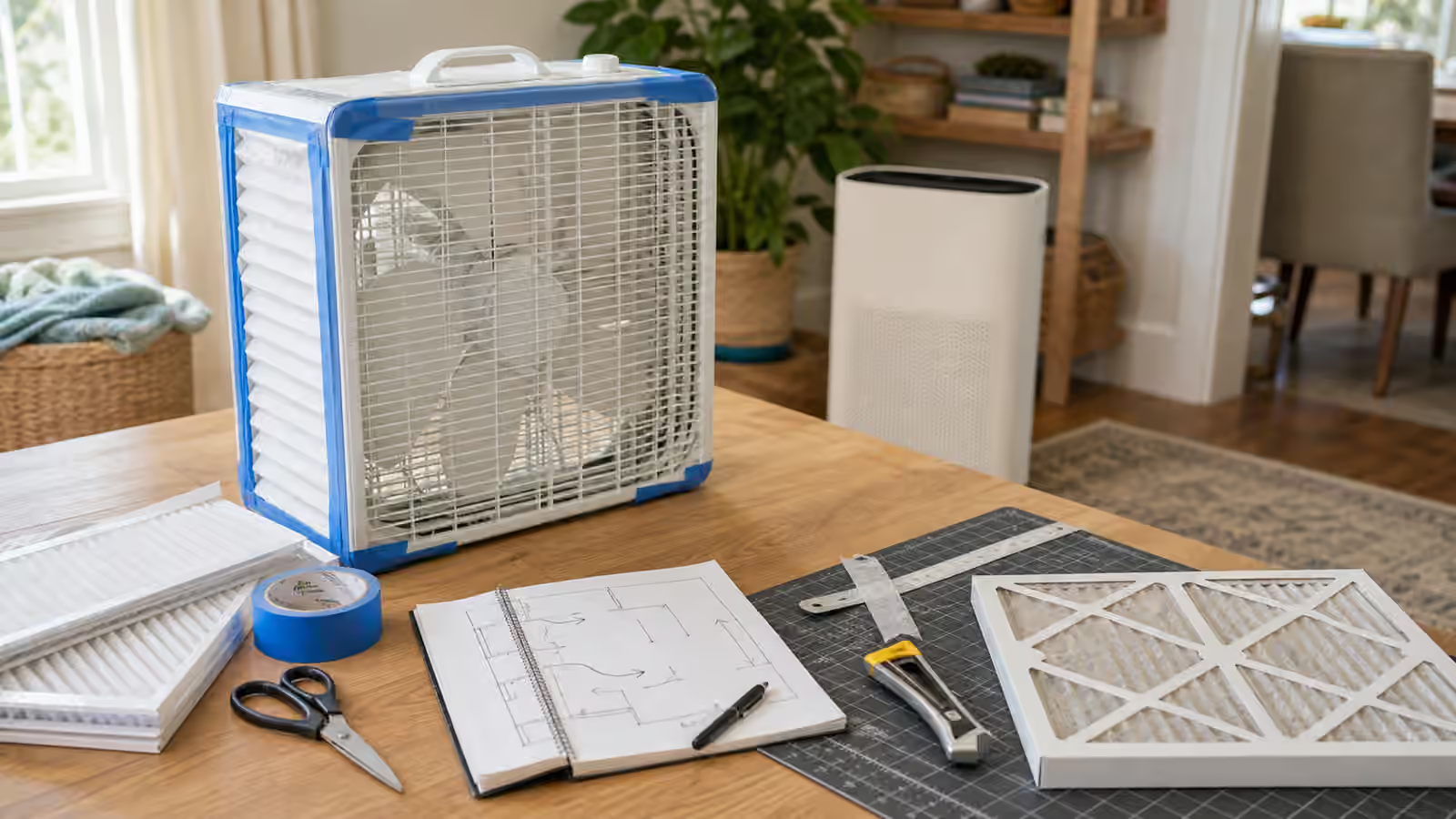
The box fan filter earned its reputation honestly. During bad wildfire smoke seasons, when store shelves emptied of purifiers and prices climbed, people discovered that a common box fan with a furnace filter taped to it could measurably lower fine particles in a room for the cost of a filter or two. It is cheap, it is understandable, and you can see exactly how it works: the fan pulls air, the filter catches particles, the cleaner air comes out the other side. That transparency is its real virtue. The risk is that transparency gets mistaken for magic, and a household starts treating a taped-together fan as a permanent, all-purpose clean-air appliance. It is not. It is a particle tool with clear limits, best understood as a temporary boost to filtration capacity rather than a solution to whatever the air problem happens to be.
Understanding what it is good at, and what it cannot touch, is more important than any construction detail. The best build in the world is useless against the problems a filter fan was never designed to solve, and knowing the difference is the whole point of this guide.
Name the Job Before You Build
A filter fan does exactly one thing well: it reduces airborne particles in the room it sits in. That makes it genuinely helpful in a few specific situations. The clearest is a smoke-day clean room, where you close up a space, cut indoor sources, and run filtration to hold fine-particle levels down while the outdoor air is bad. Another is a project room after the dust-making has stopped, where you have swept up the heavy debris and want to clear the fine dust still hanging in the air. A third is simply a room that needs more particle-filtering capacity than it currently has while a proper purifier is unavailable.
Outside those particle-focused jobs, the honest answer is that the fan does not help. It does nothing for carbon monoxide, radon, or a gas leak. It will not clear solvent fumes or dry a damp room. And critically, it cannot keep up with a source that is still running: candles, incense, a smoking cooktop, or an active sanding job will simply out-produce it. Filtration always sits downstream of source control, which is why the reflex to reach for a fan should come after you have stopped or removed whatever is putting particles into the air in the first place.
Build It Stable, Not Fancy
The construction is deliberately simple, and Clean Air Society keeps it grounded rather than elaborate. Use a fan in good working condition, attach one or more pleated filters to the intake side so air is pulled through the media before it reaches the blades, and orient the filter so the airflow arrow on its frame points toward the fan. A better seal, whether a taped edge or a simple cardboard shroud, increases how much air actually passes through the filter instead of sneaking around the gaps, and multiple filters arranged to increase surface area let the fan move more air against less resistance. The goal is a stable device that quietly moves air through clean media, not a craft project.
Filter choice is a real tradeoff rather than a “higher number is better” contest. A denser, higher-rated filter catches smaller particles but adds resistance, and past a point that resistance chokes the airflow so much that the whole assembly moves less clean air overall. A loose or low-quality filter does the opposite, moving lots of air while catching little. Basic electrical caution matters too: keep cords out of walkways, do not run a strained or overheating fan, and if the fan buzzes, vibrates, smells hot, or behaves oddly with the filter attached, unplug it and reassess rather than pushing through.
Placement and Runtime Decide the Result
Where you put the fan changes how much it actually accomplishes. A build jammed behind a couch or aimed into a curtain mostly recirculates one small pocket of air, while a unit with clearance around its intake and an outflow that mixes into the occupied part of the room cleans the space you are actually in. Keep it away from the very sources you are trying to avoid; a litter box, an ashy cleanup, or an open solvent container should not become the fan’s permanent neighbor, because a filter parked next to a source just processes that source’s output forever.
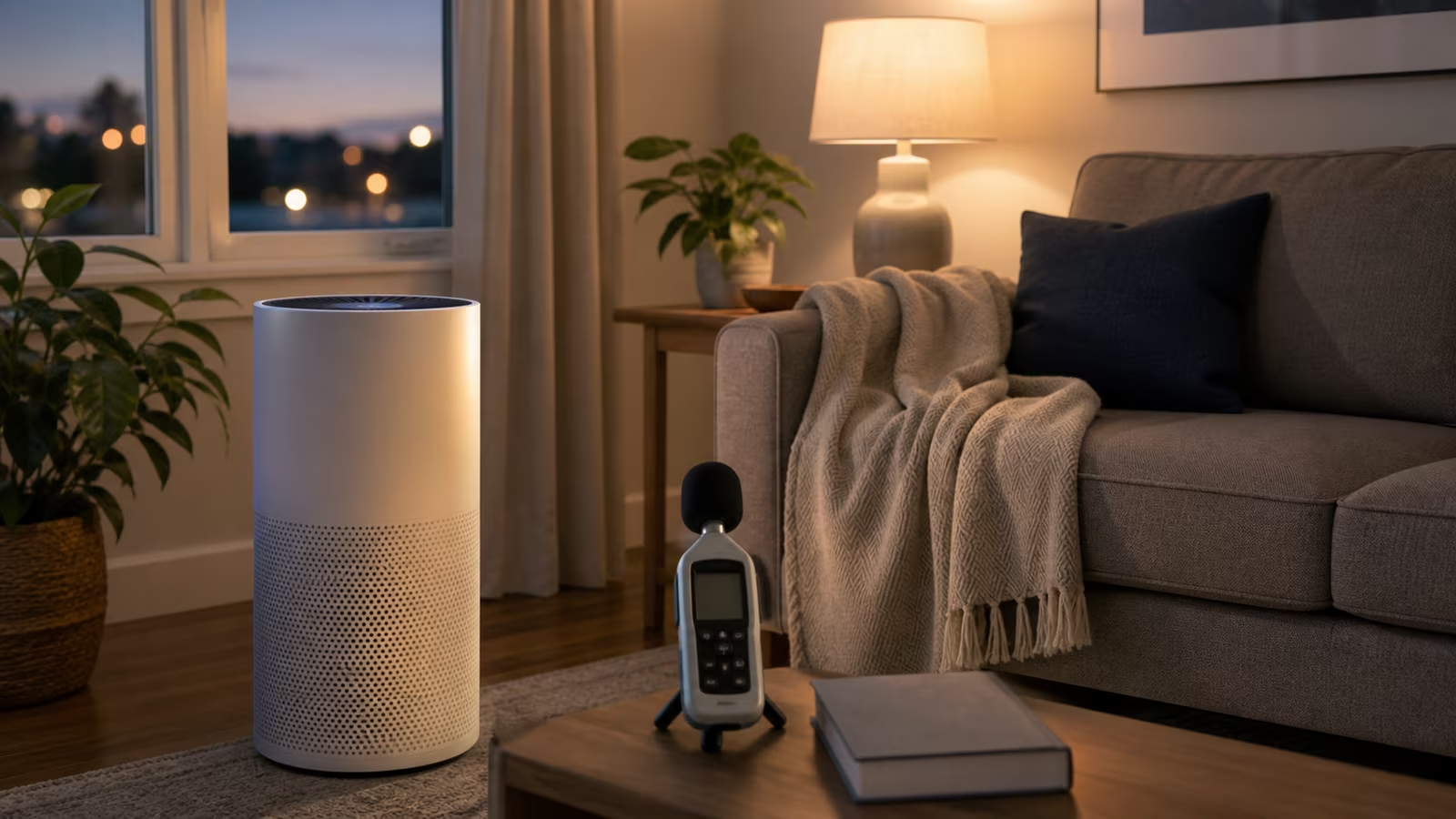
Runtime is the quiet constraint that decides everything, because a filter fan only works while it runs. A box fan on high is loud, and a loud device gets switched off, especially at night, which is why a lower, quieter setting that runs for hours usually beats a roaring burst that lasts ten minutes. On smoke days, start the room early, before the air inside feels bad, so filtration is ahead of the problem rather than chasing it. The device that stays on is the device that helps, and a homemade build that is too awkward or noisy to leave running loses to a smaller, quieter purifier every time.
Keep the Boundary Honest, Then Maintain It
The strongest limit is worth repeating plainly: a particle filter handles particles and nothing else. It is not a substitute for a carbon monoxide alarm, for radon testing, for maintaining fuel-burning equipment, or for following official guidance during a serious smoke event. It will not remediate mold, stop a leak, or reliably clear odors and gases, since meaningful gas and odor removal takes far more activated carbon than a pleated furnace filter contains. If your reasoning ever reaches “I will build a strong enough fan to make this air safe,” that is the signal to step back to the source, the ventilation, and, when the situation is serious, a professional.
Maintenance keeps the build from quietly becoming useless. Filters load with dust and smoke and lose airflow, tape loosens, and fans age, so check the filter face, cord, and seal before each use and replace the filter when it is dirty, damaged, damp, or no longer seated well. A filter that worked hard through a smoke season is not a fresh spare months later; note the date somewhere rather than trusting memory. When you want to know whether a temporary build is even enough for the space, the Air Purifier Sizing Calculator helps you keep the room’s actual volume in view and compare it against real filtration capacity, which is often the moment a household realizes it has outgrown improvisation. If you keep rebuilding the same emergency fan every season, that is a sign to invest in a right-sized purifier, better sealing, and a standing plan instead, which the guides on matching a purifier to room size and where to place it can help you think through, alongside a proper smoke-day indoor plan .
Clean Air Society is practical home education, not medical advice, diagnosis, or remediation, and it cannot promise that any room is safe. A filter fan is a useful, honest particle tool within its limits and a liability when it is trusted past them. If there is any sign of a combustion, gas, radon, or serious mold problem, treat that as a job for alarms, testing, and qualified help rather than a fan and a roll of tape.