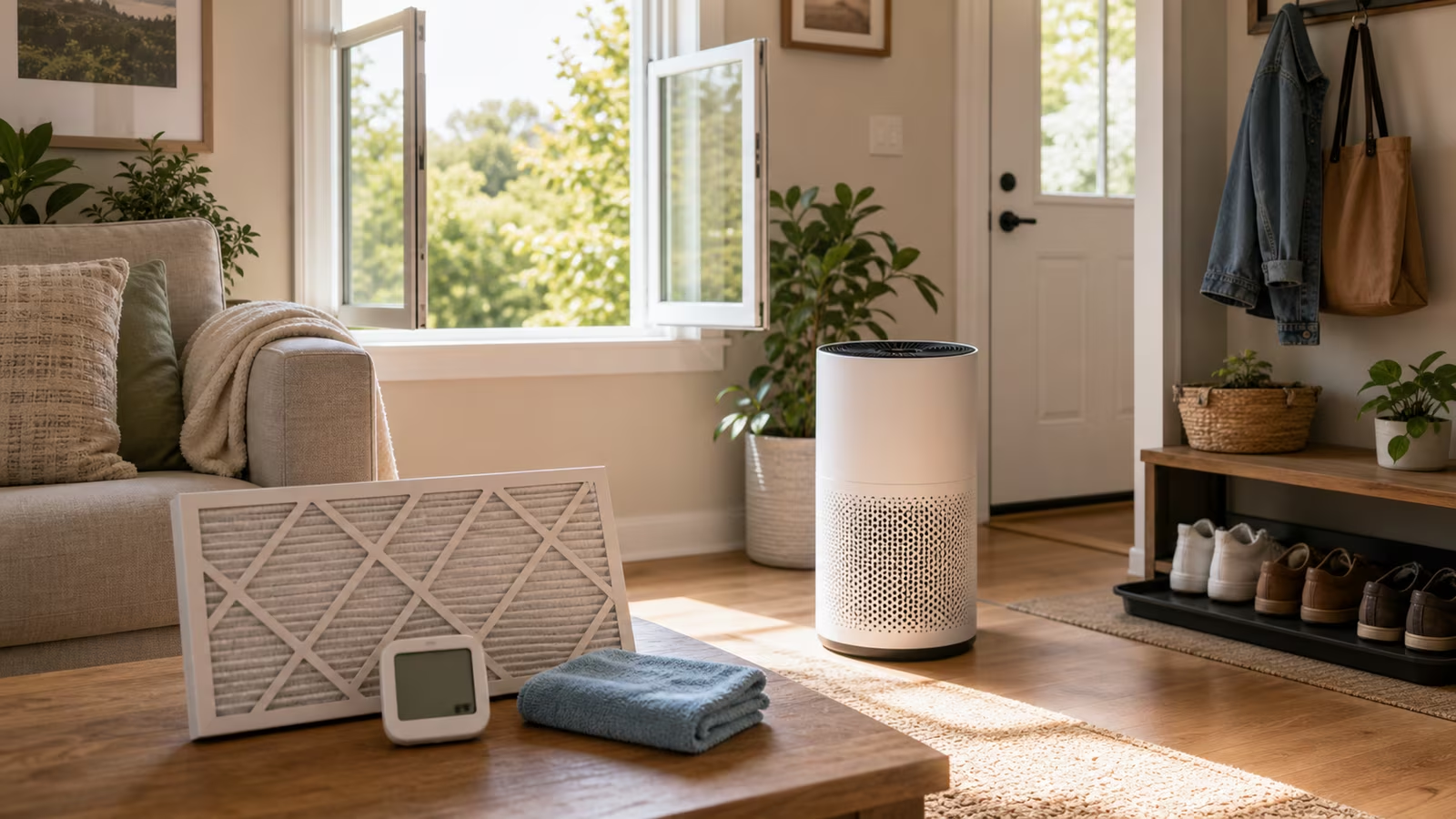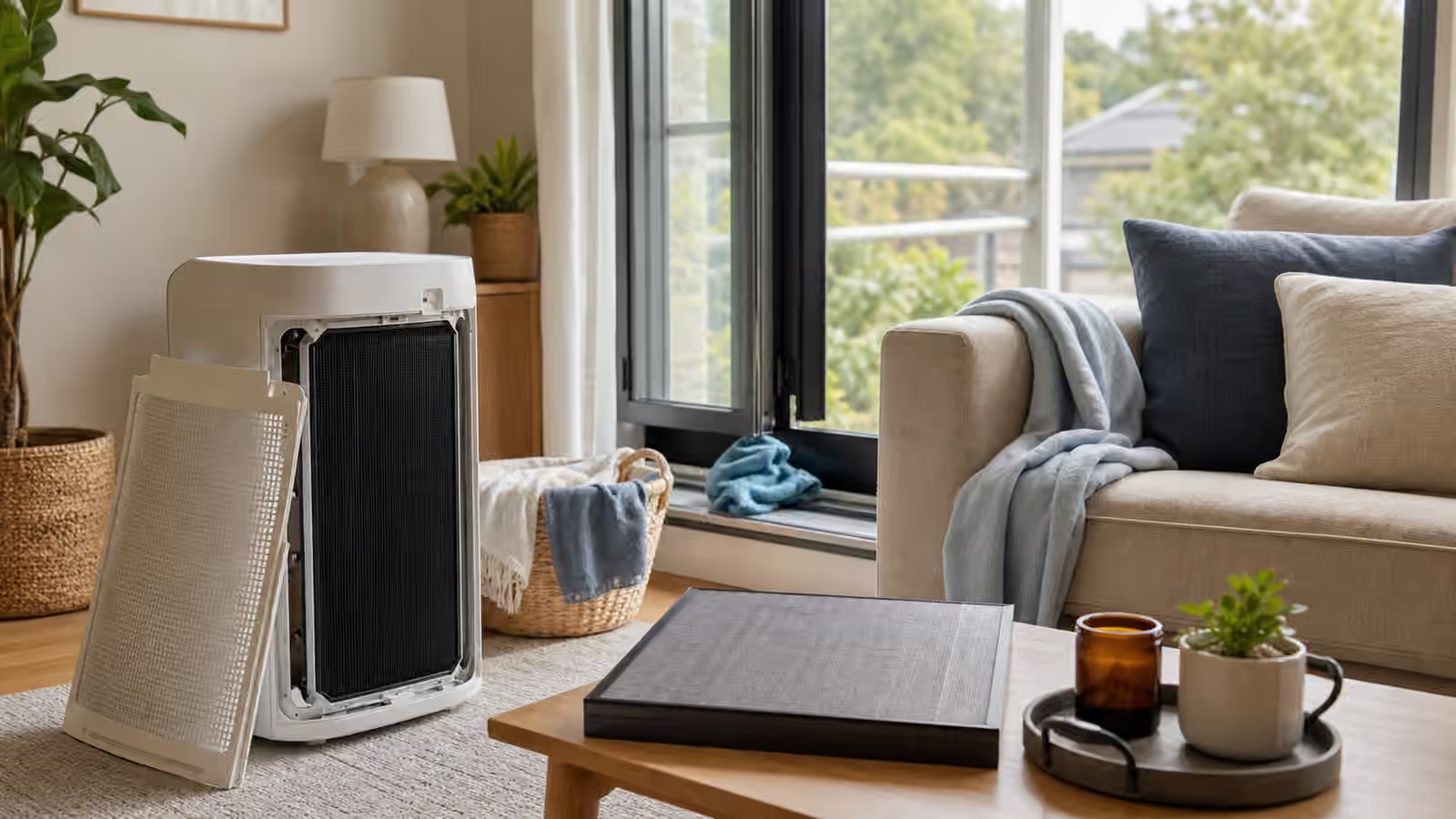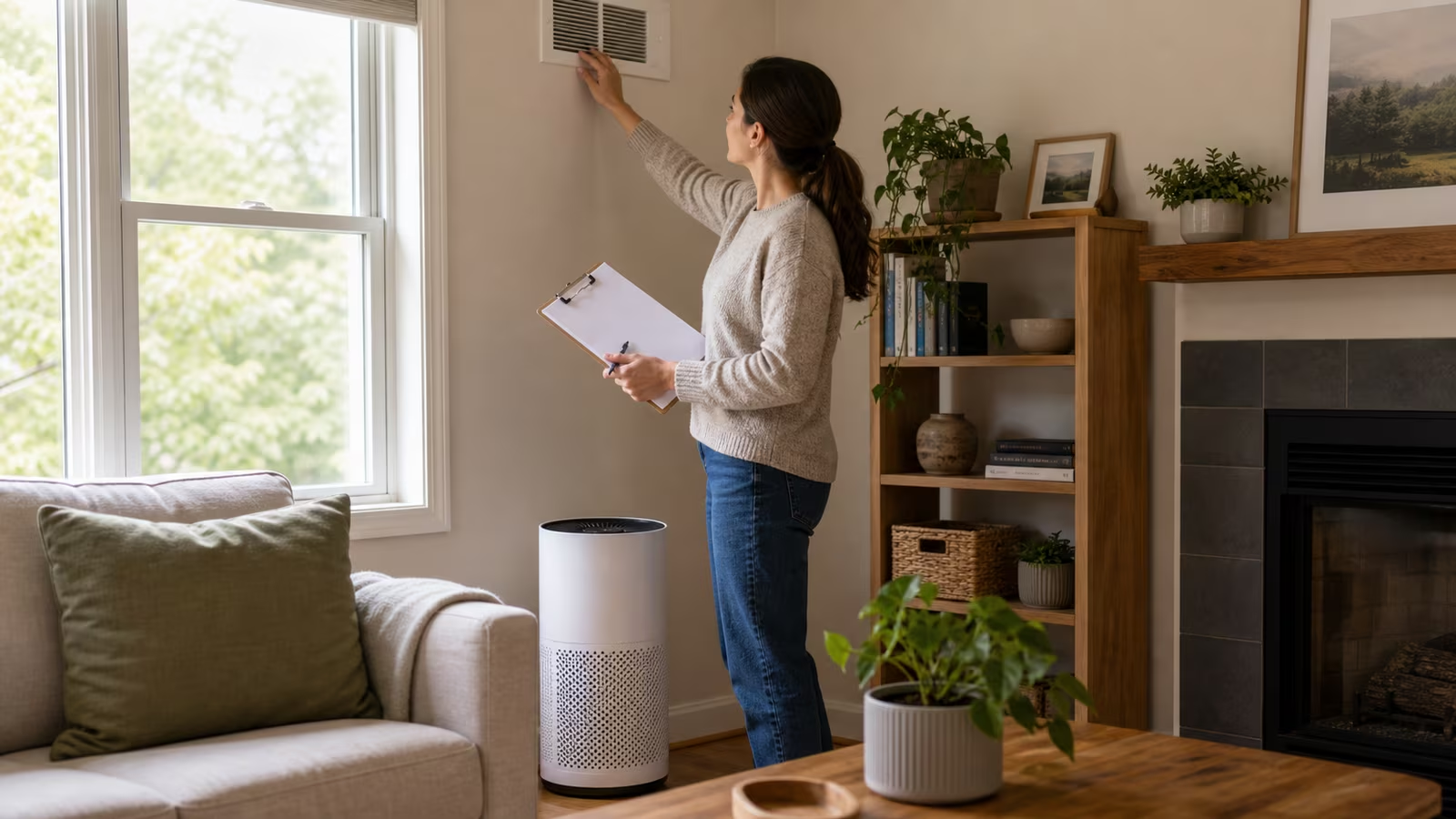
A complaint about a room almost never arrives as a diagnosis. It arrives as a feeling: this bedroom smells closed-up by morning, the study makes your eyes tired, the nursery seems dustier than the rest of the house. The walkthrough exists to convert that feeling into something you can see, because a room you can observe is a room you can change. The habit worth building is to inspect before you shop. A store will happily sell you a device for a problem you have not located yet, and a device aimed at the wrong cause becomes an expensive way to keep the real source running.
Treat the room as a small system with five moving parts: what enters it, what is generated inside it, what settles on its surfaces, what stays damp, and how its air actually moves when people are living in it. Almost every stubborn room problem is a combination of two or three of those, not a single dramatic culprit. The walkthrough is simply a route that visits each part in a sensible order so you stop guessing and start noticing.
Start In The Doorway
Before you touch anything, stand where the door opens and look at the whole room as air, not as furniture. Where would fresh air come in? Where does stale air have to squeeze out? Trace an imaginary path from the window or supply vent, across the space where people sit or sleep, toward the return grille, the door gap, or the exhaust fan. That first sweep usually reveals the geometry of the problem. The purifier is tucked into a corner behind a chair where nothing passes through it. The one openable window faces a busy street. The supply vent is aimed straight into a bookshelf. Air, like water, follows the easiest path, and the doorway view shows you what that path is.
Then walk in and give the room ninety seconds of quiet attention. Notice the first breath: is it stuffy, sweetish, chemical, damp, or simply flat and unmoving? Note the time of day and whether the door has been shut for hours, because a room that only smells bad after a closed night is telling you about ventilation, while a room that smells bad the moment you clean it is telling you about a product.
A Rough Sketch Beats A Perfect Memory
Pull out a scrap of paper and draw the room from above. It does not need to be neat. Mark the door, the windows, the supply vent and return grille, any exhaust fan, the bed or desk or sofa, rugs, the pet’s spot, storage, and wherever a purifier currently sits. The value of the sketch is that it forces you to place things in relation to each other, and relationships are where problems hide. A humidity gauge reading means little until you notice the damp bin it sits beside is pressed against a cold exterior wall. A purifier’s rating means little until you see it is blowing into a curtain.
Keep a flashlight, a tape measure, and, if moisture is any part of the story, an inexpensive humidity gauge on hand. Measure the room so you know its real volume rather than the number on a box that promises to clean a space twice its size. If you want that turned into a concrete next step, the Purifier Placement Planner takes your sketch and dimensions and helps you reason about where a unit would actually do work, but feed it honest numbers and write down anything you are unsure of instead of forcing a confident guess.
Follow The Source, Then The Air, Then The Water
Visit sources first because nothing downstream can outrun an active one. Look for the ordinary generators: cooking carried in from a nearby kitchen, candles or incense, aerosol sprays, a litter box, damp cardboard, a scented plug-in, a heavily shedding pet bed. Some sources you can simply stop, some you can move to another room, some need their own exhaust, and some need a cleaning rhythm rather than a purchase. If the source keeps running, filtration turns into a treadmill you pay for monthly.
Next, test whether air genuinely exchanges or merely stirs. A ceiling fan can mix a stale room without removing anything from it. An open window helps only when the outdoor air is cleaner and drier than what you are replacing, which is not true during a smoke event, a high-pollen morning, or a humid afternoon. A bathroom or kitchen exhaust fan helps only if it vents outside and runs long enough to matter. A central HVAC filter cleans only while the system fan is moving air through a filter that actually seals in its slot.
Finally, look for water. Run the flashlight along the base of exterior walls, behind furniture, under windows, and around any bin or basket that lives on the floor. Musty smells, condensation, and persistently damp fabric are moisture problems wearing an odor costume, and the honest pattern is that mold control starts with moisture control. Not every musty note is a crisis, but every musty note deserves a look at where the water is coming from before you spray anything over it.
Let Each Change Leave A Mark
The point of the walkthrough is to end with one action, not ten. Maybe it is moving the purifier out from behind the sofa into the airflow. Maybe it is replacing an overloaded filter, running the bath fan an extra twenty minutes, keeping the window shut on smoke days, washing the pet blanket weekly, or drying a load of laundry somewhere it will not dampen the bedroom. Change one thing and give it a few days. If you rearrange everything at once, an improvement tells you nothing, because you will never know which move earned it.
A room that feels genuinely better almost always got there through boring, repeatable habits rather than a single gadget: fewer active sources, less settled dust, humidity kept out of the damp zone, and either filtration or ventilation that the household will actually keep using. The walkthrough is what tells you which of those to invest your attention in first. You can run the same route in any room, and the Clean Air Society Quickstart and Source Control Before Air Purifiers both extend it; on a smoke day, Make One Clean Room for Smoke Days narrows it to a single space.
Where The Walkthrough Ends
A walkthrough is a way of seeing, not a warranty. It is practical education, not medical advice, and it cannot promise that a room is safe. Some findings mean you stop inspecting and call for help: a carbon monoxide alarm, a fuel-burning appliance acting up, water damage with extensive visible mold, sewage, a chemical spill, or serious symptoms in the people using the room. In those cases the right next steps are documentation, isolating the space when it is safe to do so, the correct alarms or official tests, and a qualified professional. For everything more ordinary, the doorway, the sketch, and the flashlight will take you a long way.