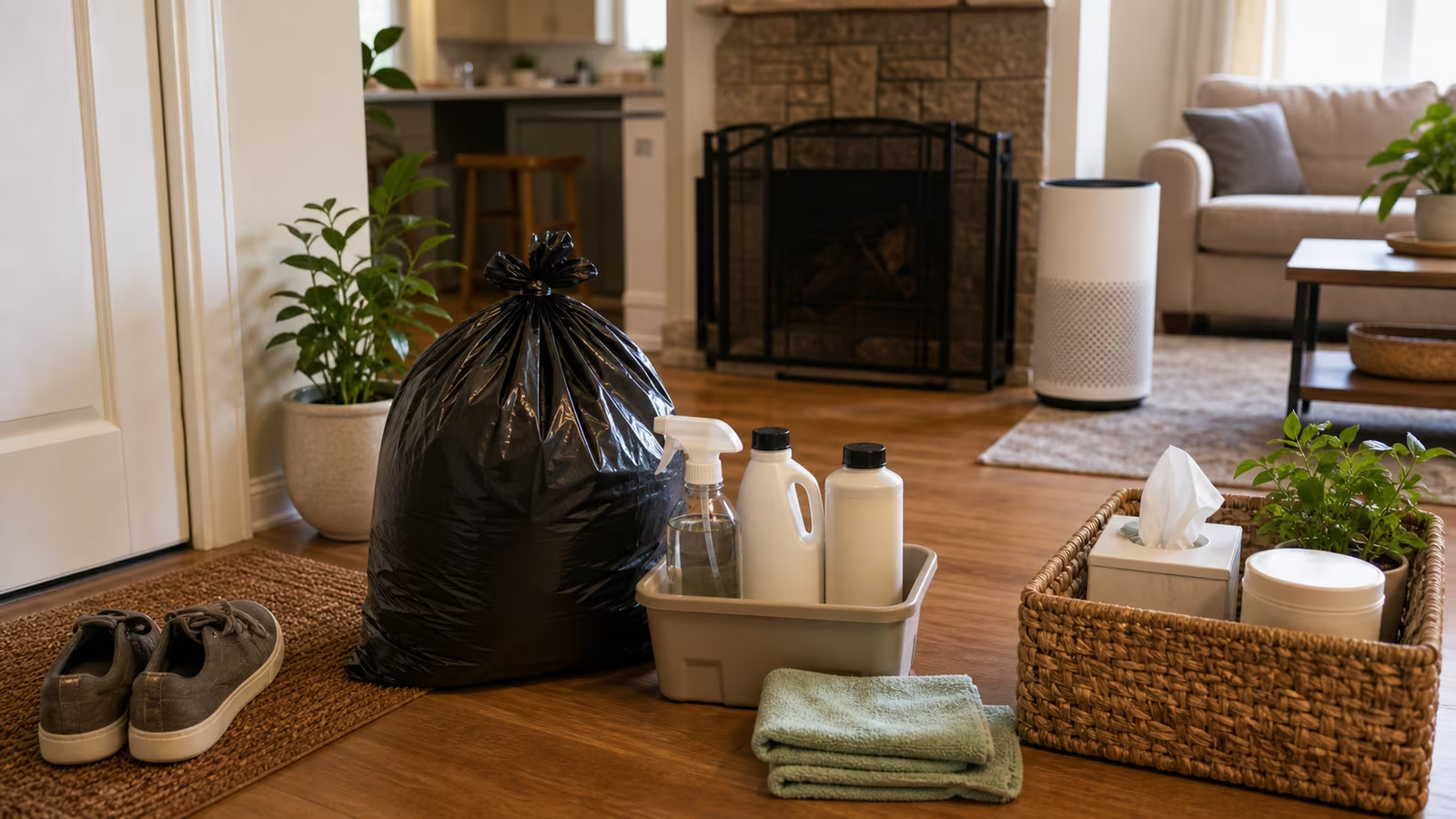
Most people arrive at indoor air with a symptom and a search bar. The house feels dusty, or stale, or faintly smoky, or muggy, or just irritating, and the instinct is to type the problem into a store and let the highest-rated box decide what happens next. This quickstart asks you to spend twenty unhurried minutes before that purchase, because the first clean-air moves are almost always free, and they determine whether any gear you eventually buy is aimed at the real cause or merely at a symptom.
The mental model that keeps you out of trouble is an order of operations, not a shopping list. Reduce the source. Bring in clean outdoor air when the outdoor air is actually better. Filter what remains. Control moisture. Then maintain the whole thing so it does not quietly decay. Each step has a condition attached. A purifier helps with particles only when it is sized for the room and placed in the airflow. A filter helps only when air is pushed through it. Ventilation helps only when the incoming air is cleaner and drier than the air it replaces. Moisture work helps only when you have dealt with where the water is coming from. Skip the conditions and you get the appearance of action without the result.
First, Make The Home Observable
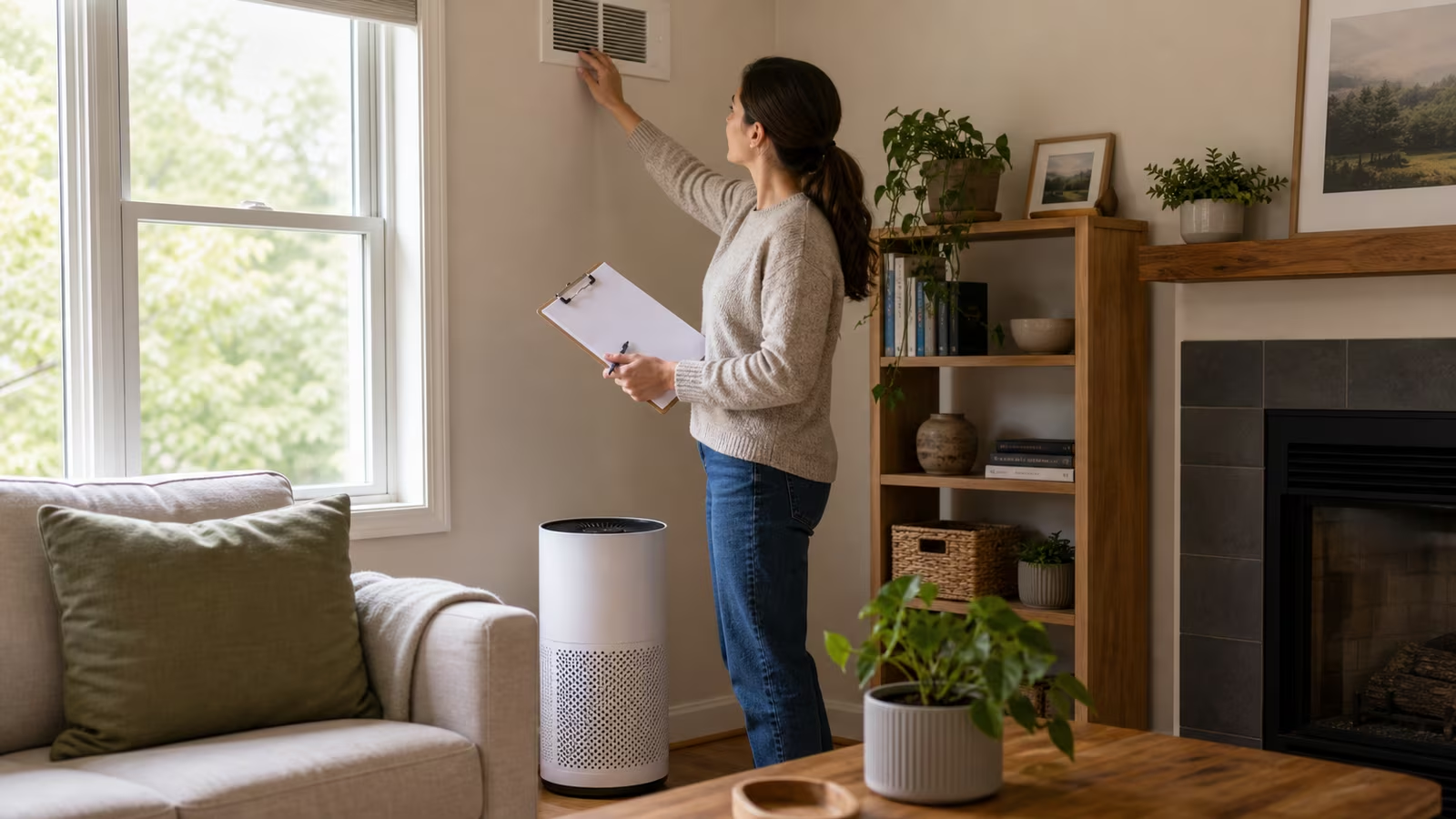
The reason a house feels like a mystery is that its air is invisible and its causes are boring. You cannot fix what you have not located, so the opening move is to look rather than to buy. Walk the rooms you actually live in and ask a short set of questions in each: what is entering this room, what is being generated inside it, what is settling on the surfaces, what is staying damp, and where does the air go when the door is closed. Carry a flashlight, a tape measure, and a cheap humidity gauge if dampness is any part of the complaint.
Sketch the worst room from above and mark the door, the windows, the vents, the exhaust fan, the furniture where people spend time, the rugs, the pet area, and wherever a purifier sits now. A crude drawing does more than a careful memory because it exposes relationships. It shows you that the purifier is stranded behind the couch, that the return grille is blocked by a bookshelf, that the one window you rely on opens toward a parking lot, or that a storage bin against a cold wall is the real reason a corner smells damp.
Rank The Causes Before You Rank The Products
Sources come first because everything downstream is a response to them. Cooking particles, incense, aerosol sprays, a plug-in fragrance, litter dust, damp cardboard, a shedding pet bed, and open cleaning chemicals are not background facts of life; they are things you can often stop, move, exhaust, or clean on a schedule. A home with the source still running is a home paying monthly for filters that never get ahead.
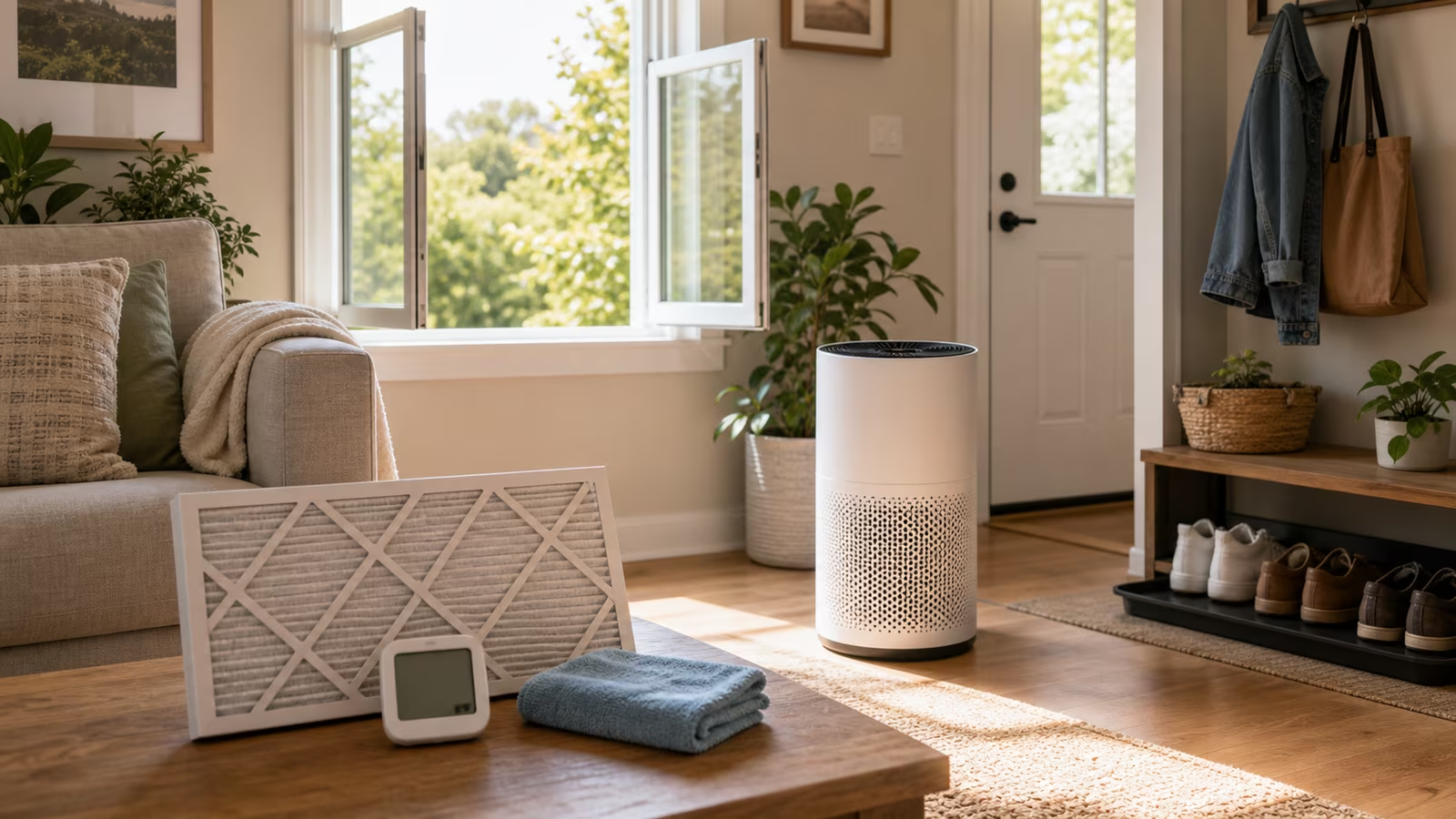
Airflow comes second, and the key distinction is between stirring air and exchanging it. A fan moves stale air around a room without removing anything. A window is a real improvement only when the outside air is genuinely cleaner and not carrying smoke, pollen, traffic exhaust, or humidity that makes the room worse, which is why checking the local outdoor reading matters before you throw the sash open. An exhaust fan earns its keep only when it vents outdoors and runs long enough, and a central HVAC filter works only while the fan is running and the filter seals in its frame.
Moisture comes third and quietly causes more odor complaints than anything else. Damp materials, condensation on cold surfaces, and musty smells are not solved by fragrance; the durable rule is that controlling mold means controlling moisture. That does not turn every musty note into an emergency. It means you look for the water, the cold surface, or the wet storage before you ask a machine to cover the smell.
Turn The Look Into One Next Step
Once you have looked, you want a single action rather than a full renovation. If you would like the decision structured, the Air Purifier Sizing Calculator helps you match a unit to the real volume of the room you sketched instead of to the optimistic number on a box, and it rewards conservative, honest inputs. But the tool sizes a purifier; it does not diagnose a house, so use it after the walk, not instead of it.
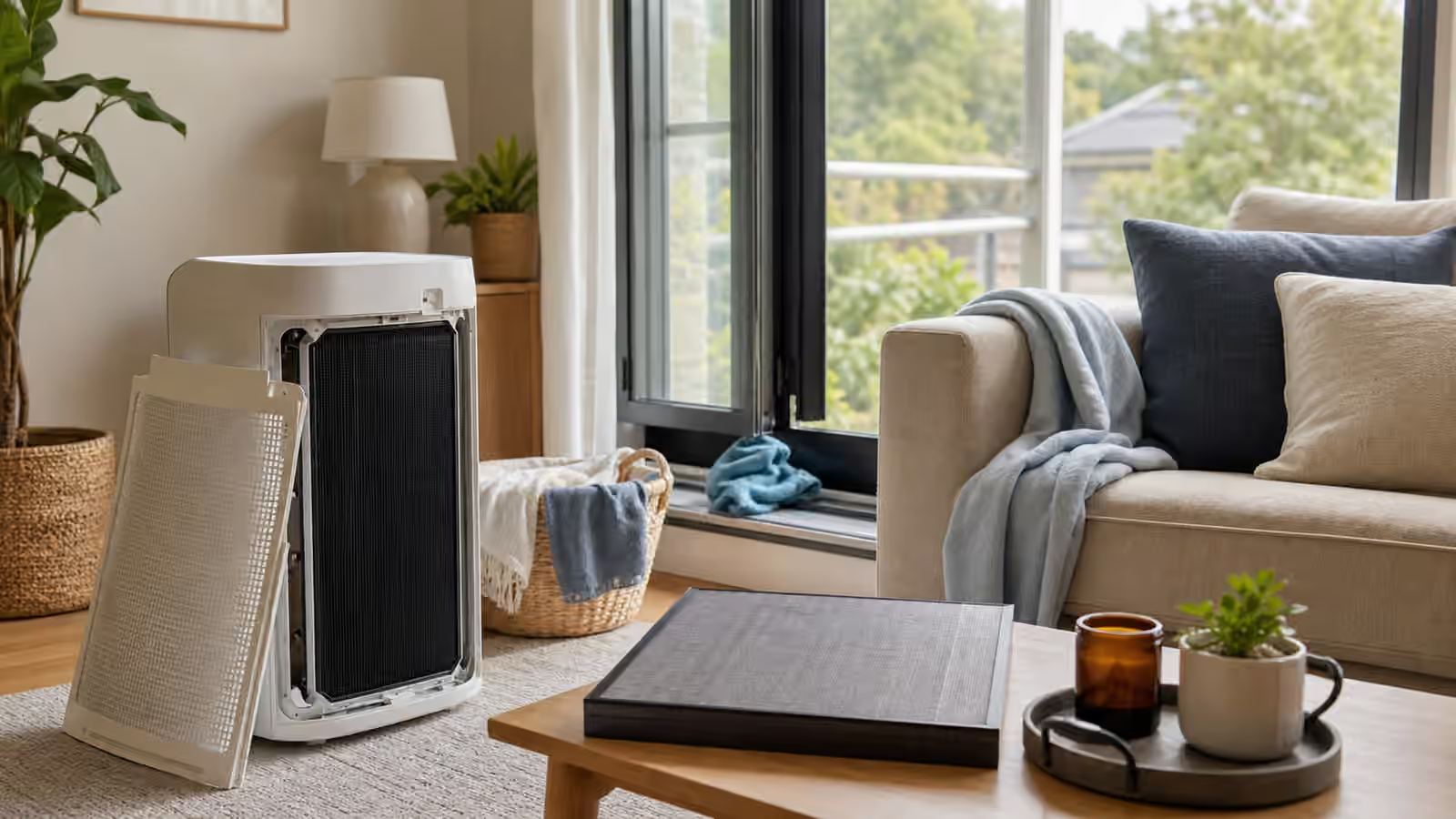
The right first action is usually humble. Move the purifier into the airflow. Replace the overloaded filter and write the date on it. Run the bathroom fan longer after showers. Keep the windows shut when the outdoor air is bad and open them when it is good. Wash the pet blanket weekly. Whatever it is, do one thing and let it stand for a few days so the result means something. Change everything on the same afternoon and you lose the ability to learn what actually helped.
A good beginner setup, once you have looked, is unglamorous on purpose: remove the easiest source, create one clean path for air, filter particles in the room where people spend the most time, and write down a maintenance rhythm so the improvement does not evaporate in two weeks. Washable textiles, a clear intake path, a filter date on the calendar, a humidity target that stays out of the damp zone, and a plan for bad-air days will outperform a shelf of gadgets that nobody keeps running.
Keep The Categories Straight
A lot of wasted money comes from blurring different problems into one. Particles, gases and odors, humidity, mold, pollen, carbon dioxide, and carbon monoxide are separate issues with separate tools. A particle filter does nothing for a gas leak. A carbon dioxide reading is a ventilation clue, not a full air-quality score, and it says nothing about carbon monoxide, which needs its own alarm. Activated carbon can help with some odors when there is enough of it, but it is not a universal sponge. When you keep the question narrow, the right response usually becomes obvious.
The Honest Boundary
This quickstart is practical education, not medical advice, and it cannot guarantee that a room is safe. Its job is to get you looking before you are buying, and to keep your first moves cheap and reversible. Some situations, though, are not do-it-yourself territory: a sounding carbon monoxide alarm, a misbehaving fuel-burning appliance, water damage with extensive visible mold, sewage, a chemical spill, or serious symptoms in the people living there. In those cases, stop tinkering, document what you see, isolate the space when it is safe, rely on the proper alarms or official tests, and bring in a qualified professional. For the ordinary stuff, the walk, the sketch, and one patient change at a time will carry you further than any single device. From here, The Clean-Air Walkthrough for Any Room deepens the inspection habit and Source Control Before Air Purifiers explains why the order matters.