When wildfire smoke or a heavy inversion settles over a region, the honest arithmetic is discouraging for a whole house. Most homes are too large, too leaky, and too full of doors and vents to hold clean air everywhere at once, and trying to purify every cubic foot usually ends with an underpowered machine losing to a constant supply of infiltrating smoke. The clean room flips the problem. Instead of defending the whole house, you pick one room, make it tight, and put your filtration where it can actually win. It is the same strategy public agencies recommend for smoke events, and it works because a small managed space is a fight you can size correctly.
The room does not need to be sealed like a lab. It needs to be closable, comfortable enough for people to stay in for hours, and small enough that a portable air cleaner can turn the air over several times an hour. A bedroom is often ideal because people already sleep there, it has a door, and it is easy to keep other sources out of it. The goal for the day is simple: fewer particles getting in, and a filter running steadily on the particles that do.
Choosing The Room
Pick the room people will genuinely use, not the theoretically best one. A clean room in the basement that nobody wants to sit in will sit empty while everyone congregates in the smoky kitchen. Favor a space with few openings to the outside, no direct door to an attached garage, and no need to run a range or a fireplace inside it. Interior bedrooms and dens tend to leak less than rooms with large windows or exterior doors. If you have several candidates, the smaller and more enclosed one usually lets your air cleaner reach and hold a lower particle level.
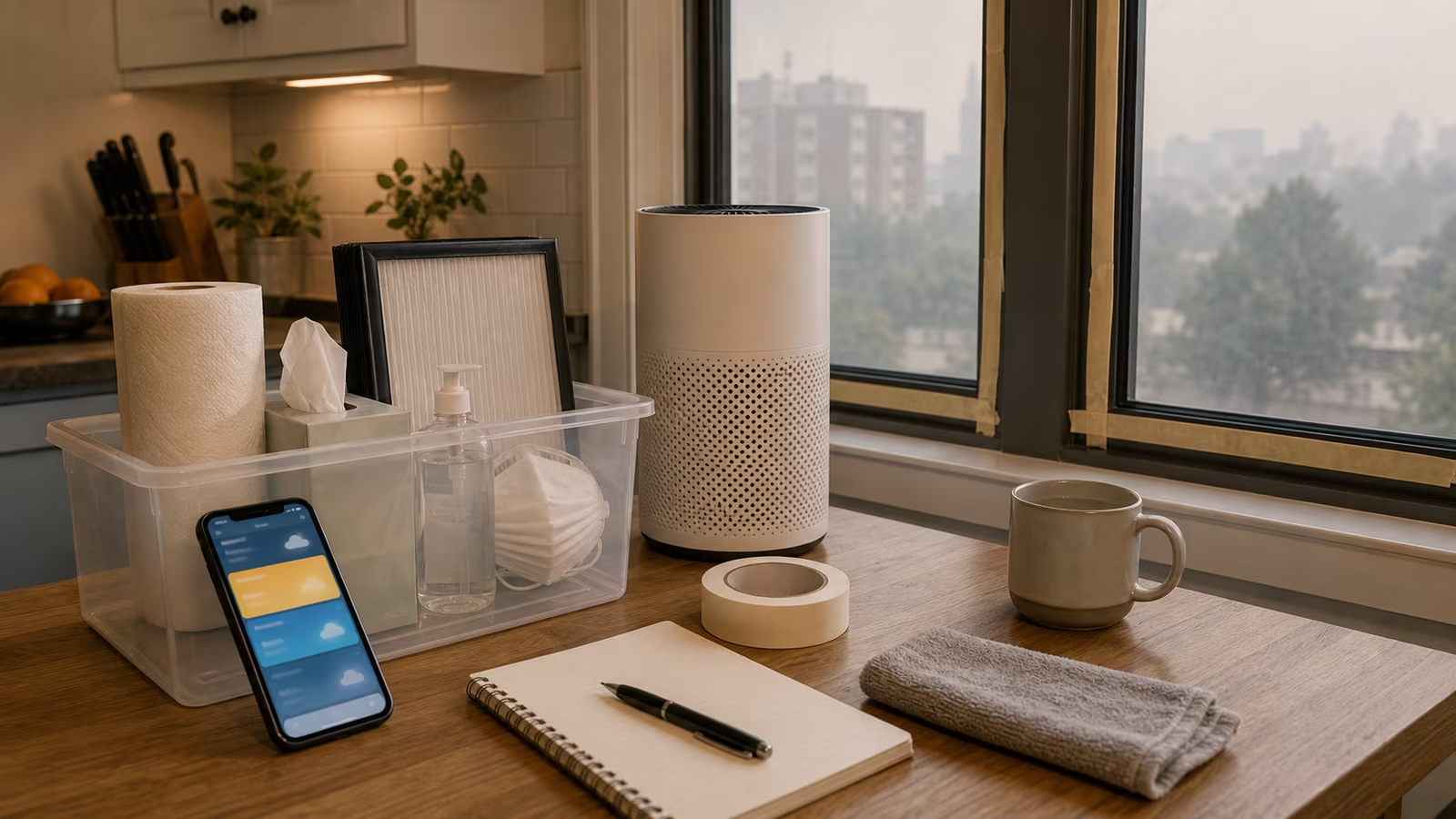
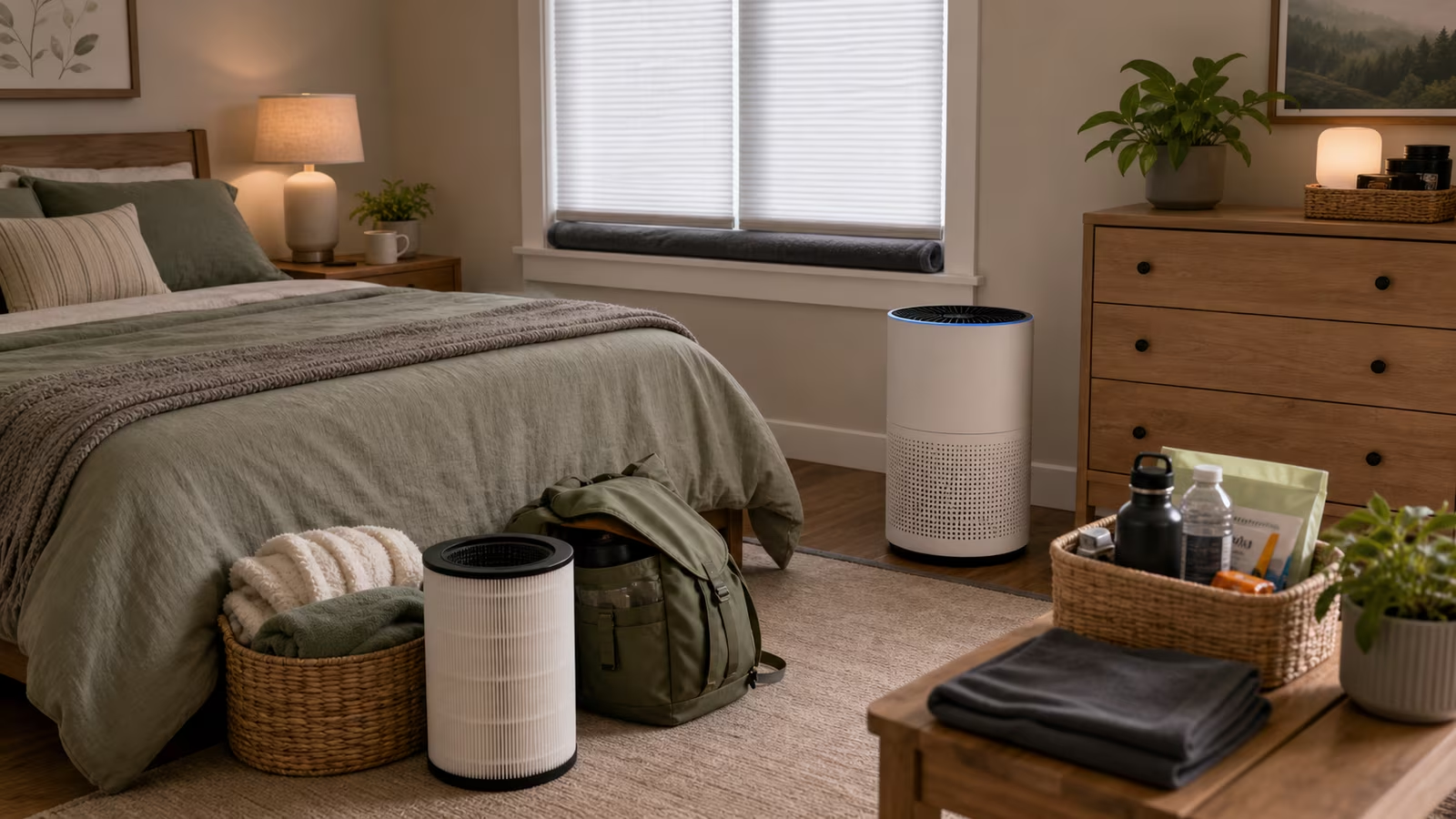
Once chosen, close it up. Shut the windows and keep them shut for the duration; on a smoke day the outdoor air is exactly what you are trying to exclude, so the usual advice to open a window is reversed. Close the door and reduce the gap under it with a rolled towel if the draft is strong. Pull curtains or shades, which also helps keep the room cool. If your home has central air with a good filter, running the system fan can help the whole house, but the clean room is your insurance for the space that matters most.
Sizing And Running The Air Cleaner
A portable air cleaner protects a clean room only if it can move enough air for the room’s size. The number to care about is clean-air delivery for particles relative to the room’s volume; you want enough turnover that the machine keeps up with what leaks in, which generally means running it on a higher setting than you would for ordinary days. If the unit is too small for the room, it will run constantly and still lose, so it is better to have a right-sized cleaner in a smaller room than an overmatched one in a large open space. The Air Purifier Sizing Calculator helps you match a unit to the actual room you have chosen; feed it the real dimensions and be conservative, because smoke days are when optimistic sizing shows its cost.
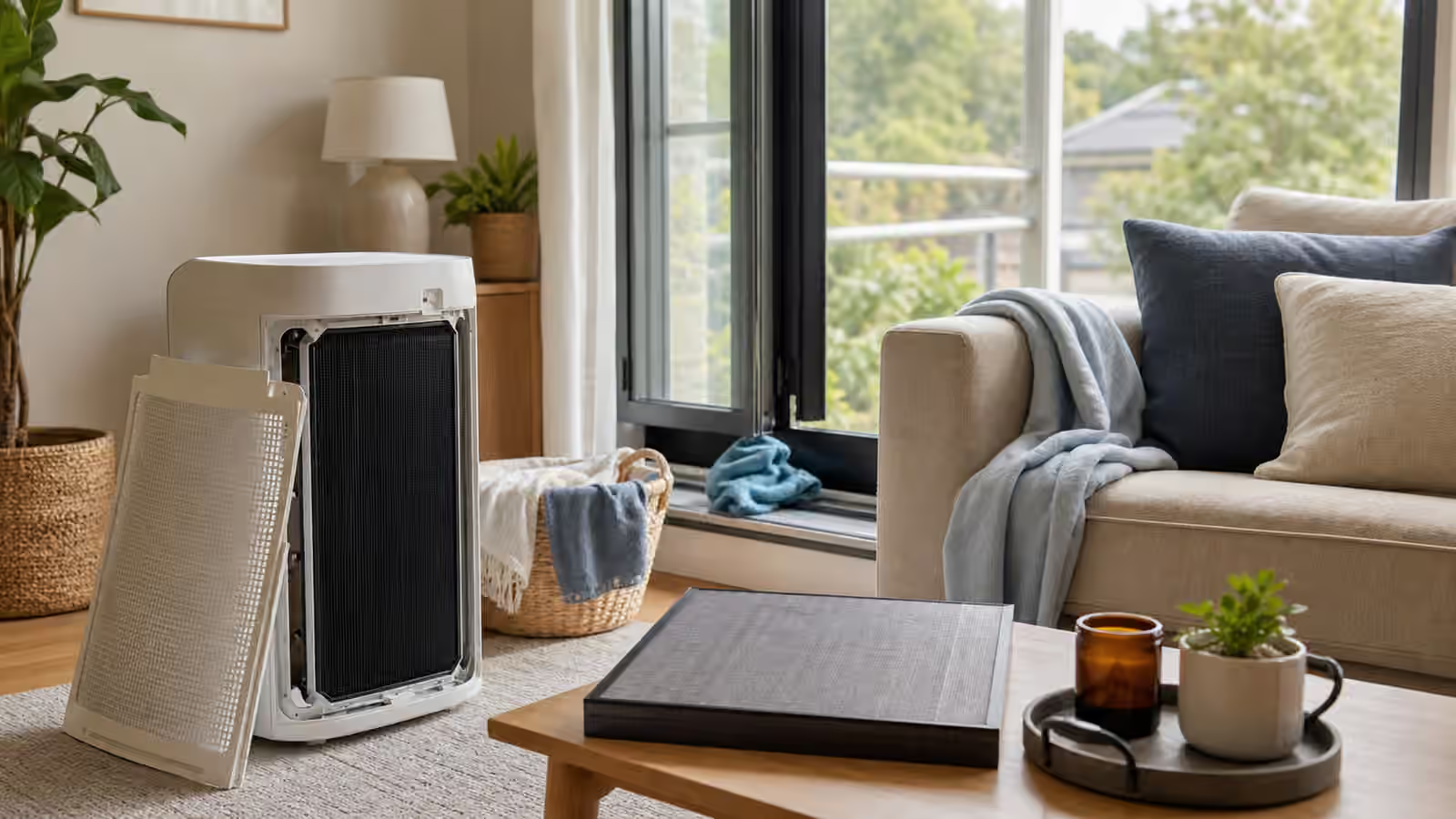
Place the cleaner where its intake and outflow are not blocked by furniture or aimed straight into a wall, and keep it running the whole event rather than switching it off when the air briefly feels better. Have a spare filter on hand if you can, because thick smoke loads a filter far faster than everyday dust, and a clogged filter quietly stops helping. If you are building a low-cost option, a well-made box-fan-and-filter cleaner can add capacity, and Box Fan Filter Air Cleaner Boundaries covers where those help and where they do not.
Keeping Sources Out Of The Clean Room
A clean room fails fastest when people bring the smoke problem inside with them. This is not the room to fry food, light a candle, burn incense, or run a gas appliance, because indoor combustion adds exactly the fine particles you are filtering against. Vacuuming stirs settled dust, so save it for after the event. Cooking is better done elsewhere with the kitchen exhaust venting outdoors, and then let people return to the clean room rather than carrying cooking smoke back with them. Keep the door closed as much as the household can manage; every long opening trades a lot of clean air for hallway air.
Comfort keeps people in the room, and staying in the room is the whole point, so stock it for a long sit: water, something to do, chargers, and a way to keep the temperature bearable without opening a window. If it is hot, a window air conditioner set to recirculate rather than draw in outside air, or central cooling with a good filter, lets you stay closed up without overheating.
When The Smoke Clears
The urge to fling the windows open the moment the sky looks better is strong, but check the actual outdoor reading first, because smoke often lingers after it stops looking dramatic and can surge again with the wind. When the outdoor air is genuinely better than indoors, a burst of ventilation flushes the accumulated indoor staleness quickly. After a heavy event, After a Smoke Day: Home Reset walks through wiping surfaces, changing loaded filters, and airing out, this clean room fits inside the wider Smoke Day Indoor Plan , and Secondhand Smoke in an Apartment helps when the smoke is a neighbor’s rather than the sky’s.
The Boundary On A Smoke Day
A clean room reduces exposure; it is practical education, not medical advice, and it cannot guarantee that a room is safe or protect everyone equally. People with heart or lung conditions, older adults, young children, and anyone who is pregnant can be affected at lower levels than others, and local public health agencies issue guidance for exactly these events, so follow it. If anyone develops trouble breathing, chest pain, confusion, or other serious symptoms, that is a medical situation, not an air-cleaner problem. A carbon monoxide alarm is still non-negotiable, especially if you are running generators or combustion equipment during outages that sometimes accompany fire season, and it does a job no smoke filter can. The clean room is your best everyday tool for a bad-air day, but knowing when to leave for cleaner air, or when to call for help, matters just as much as the filter.