There is a particular irony in cleaning: the act meant to make a room healthier can, done carelessly, leave the air worse than before you started. Strong sprays, scented products, and the reflex to mix whatever is under the sink can fill a small kitchen or bathroom with volatile organic compounds and, in the worst case, with genuinely hazardous gases. The goal here is not to frighten anyone away from cleaning. It is the opposite: to clean thoroughly while treating the cleaning itself as a source you manage, so the room ends up with less grime and no lingering chemical haze.
Volatile organic compounds, or VOCs, are simply carbon-based chemicals that evaporate readily at room temperature, which is why you can smell a cleaner from across the room. Many household products release them: solvent cleaners, aerosol sprays, air fresheners, some disinfectants, polishes, and anything marketed on the strength of its fragrance. The dose and the ventilation are what matter. A quick wipe with a mild product in an airy room is a very different exposure from scrubbing a windowless bathroom with an aerosol and the door shut. Most of the fix is about timing, quantity, and airflow rather than about buying a special device.
Read The Label, And Never Improvise Mixtures
The single most important safety habit has nothing to do with air quality gadgets: do not mix cleaning products. Combining bleach with ammonia, or bleach with acidic cleaners such as some toilet-bowl or lime-scale removers, can produce genuinely dangerous gases in ordinary home quantities. The bathroom is where this happens most, because people reach for a second product when the first one seems not to be working. Use one product at a time, rinse between them, and follow the label’s directions on dilution and contact time. The label is not marketing fine print here; it is the instructions written by the people who know what the chemistry does.
Dilution deserves its own mention because more is rarely better. A concentrate used at full strength does not clean twice as well; it evaporates twice as much into the air and leaves residue you then have to rinse. Mixing to the recommended ratio uses less product, costs less, and puts less into the room. If a product’s whole appeal is how powerfully it smells, treat that scent as an ingredient you are inhaling, not as evidence of cleanliness.
Ventilate While You Work, Not After
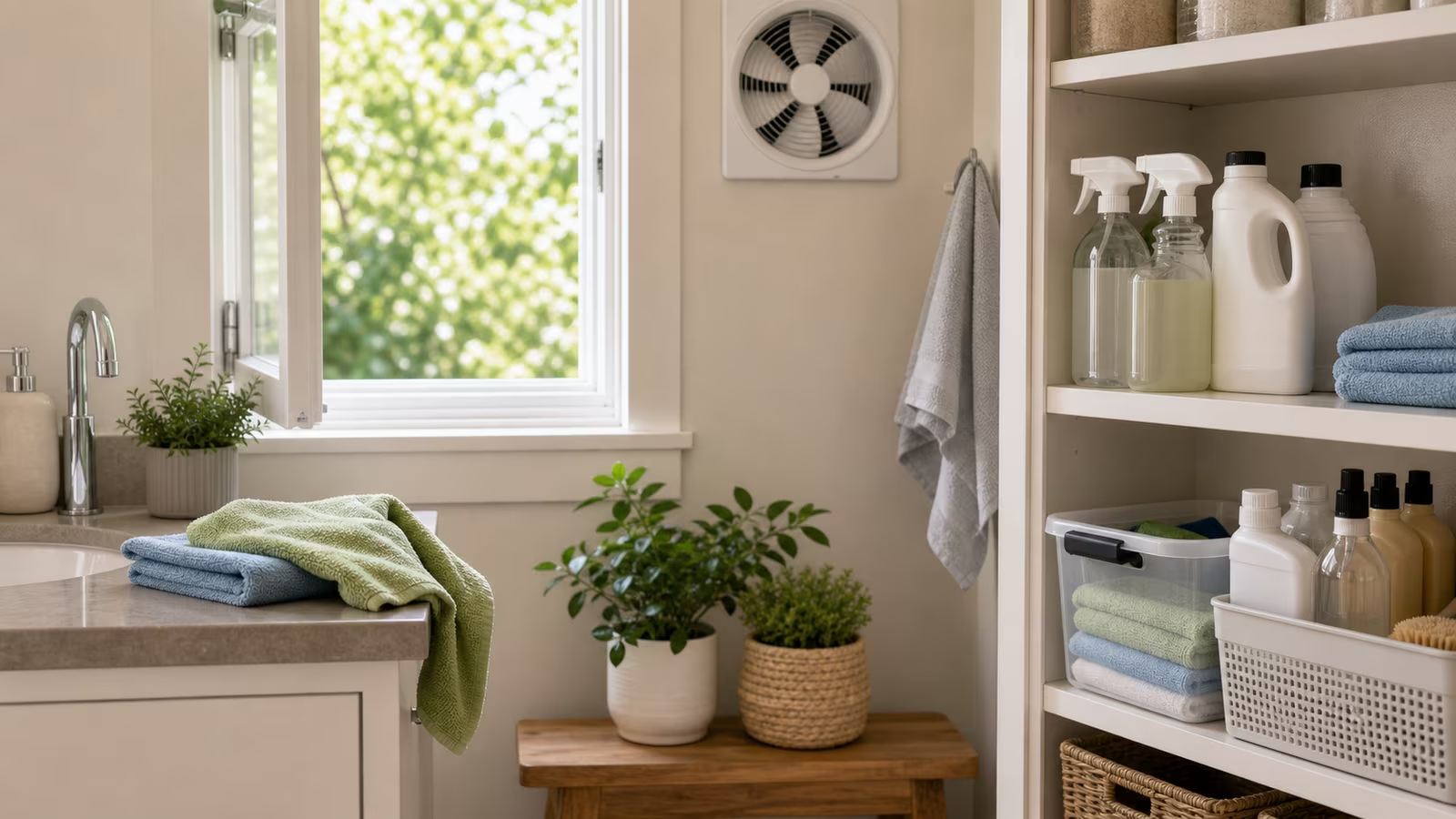
The most reliable way to keep cleaning-day VOCs from hanging around is to move them outside while you generate them. Open a window if the outdoor air is acceptable, run the bathroom or kitchen exhaust fan the whole time and for a stretch afterward, and create a little cross-breeze so the fumes have somewhere to go. Ventilation during the task is far more effective than trying to clear a saturated room afterward, because you never let the concentration build in the first place. If you want to reason about whether a room actually exchanges enough air for the job, the Ventilation and CO2 Helper gives you a structured way to think about turnover in the space you are cleaning.
Sequence helps too. Do the strongest-smelling jobs when you can leave the room ventilating and step away, rather than the moment before guests arrive or before you go to sleep in that room. Save the windowless powder room for a time when you can run its fan and leave the door open afterward. Wet-mopping with a mild solution and letting the floor dry with the fan running clears far faster than sealing the room up to “let it work.”
Cleaner Habits That Simply Add Less
A quiet way to lower the whole problem is to reach for products that add less to the air in the first place. Plain approaches handle a surprising amount of household cleaning: warm water with a mild soap for general surfaces, and microfiber cloths that lift dust and grime mechanically rather than requiring a strong solvent to dissolve it. A damp microfiber cloth captures fine dust instead of scattering it, which is genuinely useful for the same particle problems covered in Dust Control That Works . Reserving the heavy-duty products for the few jobs that truly need them means most of your cleaning adds almost nothing to the air.
Fragrance is worth singling out. Air fresheners, plug-ins, scented sprays, and heavily perfumed products do not remove a source; they add a new one, and they can mask the very smell that would otherwise tell you a real problem still exists. If a room keeps needing to be freshened, that is a signal to find the underlying source rather than to keep layering scent over it. The same logic applies to candles and incense, which Candles, Incense, and Fragrance in the Air treats in more depth.
Store It Closed, Store It Sensibly
Products keep releasing VOCs between uses if their caps are loose or their bottles are damaged, so a cabinet full of half-closed sprays can be a slow, steady background source. Keep containers tightly closed, wipe up spills, and store cleaners away from living and sleeping areas where possible, ideally in a ventilated utility space rather than under a bedroom or in a stuffy closet. Do not decant products into unlabeled bottles, both because it makes accidental mixing more likely and because the original label carries the safety guidance. Buying only what you will actually use keeps that background load small; a tidy, closed cabinet is itself a form of source control, in the same spirit as Closets, Storage Bins, and Musty Air .
The Boundary Worth Keeping
This is practical education about cleaning habits and ventilation, not medical advice, and it does not guarantee that any room is safe. It also cannot replace a specific product’s own hazard warnings, which should always win when they conflict with a general rule of thumb. If a mixture is ever made by accident and produces a strong irritating gas, leave the area, get fresh air, and follow the product’s emergency guidance or contact poison control; a chemical exposure is not something to push through. Larger jobs such as renovation solvents, paint stripping, or industrial products belong to their own precautions, and heavy or persistent chemical odors, a suspected gas leak, or serious symptoms are reasons to stop and get qualified help rather than to open one more window. Cleaned well and ventilated honestly, though, a room can end up both genuinely clean and easy to breathe in, which is the entire point.