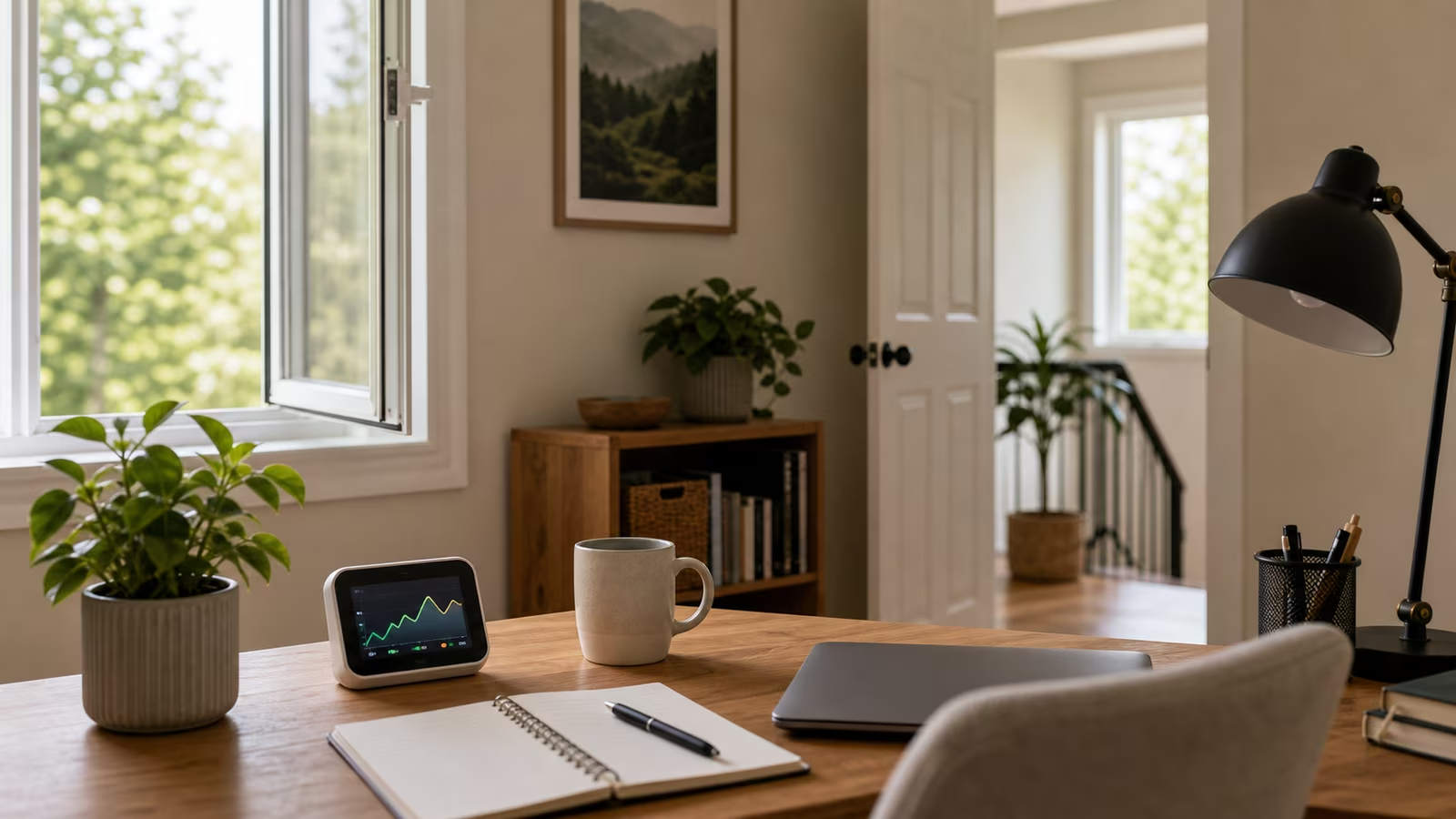
People reach for a carbon dioxide monitor because they want a single number for a feeling that is otherwise hard to pin down: the sense that a room has gone stuffy, that the study feels heavy by mid-afternoon, that the bedroom is close by morning. A CO2 monitor can genuinely help with that, but only if you understand what it is measuring and, just as important, what it is not. Used well, it is one of the most useful cheap instruments in a home. Used as a verdict on how clean or safe the air is, it will mislead you, because carbon dioxide is a proxy for one thing—ventilation around people—and not a score for everything in the air.
The physics is friendly and worth holding onto. People exhale carbon dioxide continuously, so indoors it rises when occupants add it faster than fresh air dilutes it. Outdoor air sits at a fairly steady low background level. When a room’s reading climbs well above that background, it usually means the air people are breathing is being refreshed slowly relative to how many people are in it. When it stays close to outdoor levels, ventilation is keeping up. That is the entire trick: the monitor is really a crowd-and-airflow gauge, and its value comes from watching it change rather than from any single headline figure.
What CO2 Does And Does Not Tell You
Because carbon dioxide tracks occupancy and fresh-air supply, a rising number is a reliable hint that a room could use more ventilation while people are in it. What the number cannot do is stand in for air quality as a whole. It says nothing about the fine particles from cooking or a candle, nothing about the VOCs off a fresh coat of paint, nothing about pollen, humidity, or mold. Above all, it is not a carbon monoxide reading. Carbon dioxide and carbon monoxide are different gases with different meanings, and a CO2 monitor will not warn you about the deadly one. Every home that burns fuel for heat, cooking, or hot water still needs dedicated carbon monoxide alarms, and no ventilation gadget changes that.
There is a second, quieter limitation. On its own, a moderately elevated carbon dioxide reading in a home is a comfort-and-freshness signal, not evidence of harm. It is best read as “open something up” rather than as “this room is dangerous.” The honest framing is that CO2 is a ventilation proxy around people, and treating it as a full indoor-air-quality grade is where people go wrong.
Placing And Reading The Monitor
Where you put the sensor determines whether its numbers mean anything. Keep it in the breathing zone of the room people actually use, roughly at seated or standing head height, but away from the traps that produce false readings. Set directly in front of a face, it reads your breath rather than the room. Next to an open window or a supply vent, it reads incoming outdoor air and tells you the room is wonderfully ventilated even when the far corner is stale. Sitting on the kitchen counter beside a running gas burner, it may climb for reasons that have nothing to do with the room’s general airflow. Give it a stable spot away from direct drafts, faces, and combustion, and let it settle.
Then read trends, not instants. The useful questions are about direction and timing. Does the number climb through the evening as the family gathers and the doors stay shut, and does it fall when someone cracks a window or the ventilation kicks on? Does the bedroom drift upward overnight behind a closed door? Watching the curve over hours teaches you your home’s real ventilation behavior far better than screenshotting a single high value. If you want that turned into a concrete plan, the Ventilation and CO2 Helper gives you a structured way to connect what the monitor shows to what to change, using conservative inputs where you are unsure.
Turning A Number Into Ventilation
The point of watching the trend is to act on it, and the actions are the ordinary levers of ventilation. When the reading climbs and the outdoor air is acceptable, opening a window or a couple of windows on different sides of the space brings the number down quickly; this is the everyday version of the advice in Ventilation Basics for Stale Rooms . Running a bathroom or kitchen exhaust fan pulls stale indoor air out and draws replacement air in. If you have central HVAC, running the system fan and, where available, opening a fresh-air intake helps mix and dilute. In a bedroom, the overnight climb behind a closed door is exactly the situation Bedroom Ventilation Overnight addresses, whether that means a cracked window, a door left ajar, or a quiet fresh-air path.
There is one important caveat that keeps ventilation honest: fresh air is only an improvement when the outdoor air is genuinely better. On a smoke day or during a high-pollen morning, throwing the windows open to lower a carbon dioxide number would trade a mild stuffiness for a real particle load. On those days, filtration and a more closed-up strategy make more sense than raw ventilation, and the CO2 reading takes a back seat to the outdoor conditions.
Buy For The Job, And Keep The Boundary
If you buy a monitor, buy it to answer a question you will act on: is this room ventilated enough while we are using it? A reliable sensor placed well and read over time is worth more than a device with a busy display full of numbers you never translate into a decision. Do not let a single instrument tempt you into thinking it grades the whole atmosphere; keep the categories separate, and remember that a particle problem, a moisture problem, and a combustion risk each need their own tool.
This is practical education about ventilation, not medical advice, and a carbon dioxide monitor cannot guarantee that a room is safe. It is a helpful clue about fresh air around people and nothing more. Fuel-burning appliances still require carbon monoxide alarms; a suspected gas problem, a fuel appliance behaving strangely, or serious symptoms in the people using a room are reasons to stop reading a display and get qualified help. When moisture is the real story behind a stuffy feeling, the bathroom and shower guidance in Bathroom Exhaust and Shower Moisture is the better companion. Kept in its lane, though, a CO2 monitor is a small, honest window onto how well your home is breathing.