Most indoor air sources sit quietly in a corner: a rug that sheds dust, a cabinet of cleaning sprays, a damp closet. A fireplace or wood stove is different in kind, because it is deliberate combustion happening inside or directly connected to the space where people breathe. That changes the whole conversation. Smoke, fine soot, ash dust, chimney draft, fuel storage, and the carbon monoxide alarm on the wall all belong in one picture. A hearth can be a genuine pleasure and a real part of a home, but the goal here is to keep its byproducts on the fire side of a clear boundary instead of letting soot and smoke smell settle in as ordinary living-room air.
Before going further, one boundary has to be stated plainly: this is a household air guide, not a substitute for installation codes, chimney inspection, the appliance manufacturer’s instructions, local fire rules, or carbon monoxide safety guidance. It covers the ordinary air decisions around a hearth. It does not replace the professional who makes sure the appliance and its venting are sound in the first place.
The Chimney Is Supposed To Win
A properly working fireplace or stove relies on draft, the upward pull that should carry combustion gases out through the flue. When that draft is healthy, smoke leaves the way it is meant to. When it falters, smoke spills into the room, and that spillage is the single most important thing to notice. A cold flue at startup, a partly blocked chimney, a house held under negative pressure by other fans, or simply lighting a fire the wrong way can all cause the flue to lose its pull. If you see smoke rolling back over the lip of the firebox, or smell it drifting into the room during a fire, the correct response is not to reach for a scented candle. It is to stop, ventilate if it is safe to do so, and find out why the smoke is not going up the chimney. A hearth that repeatedly pushes smoke inward is telling you something about the building’s pressure or the flue’s condition, and that is a maintenance question, not a cleaning one.
Alarms Are Not Air Monitors
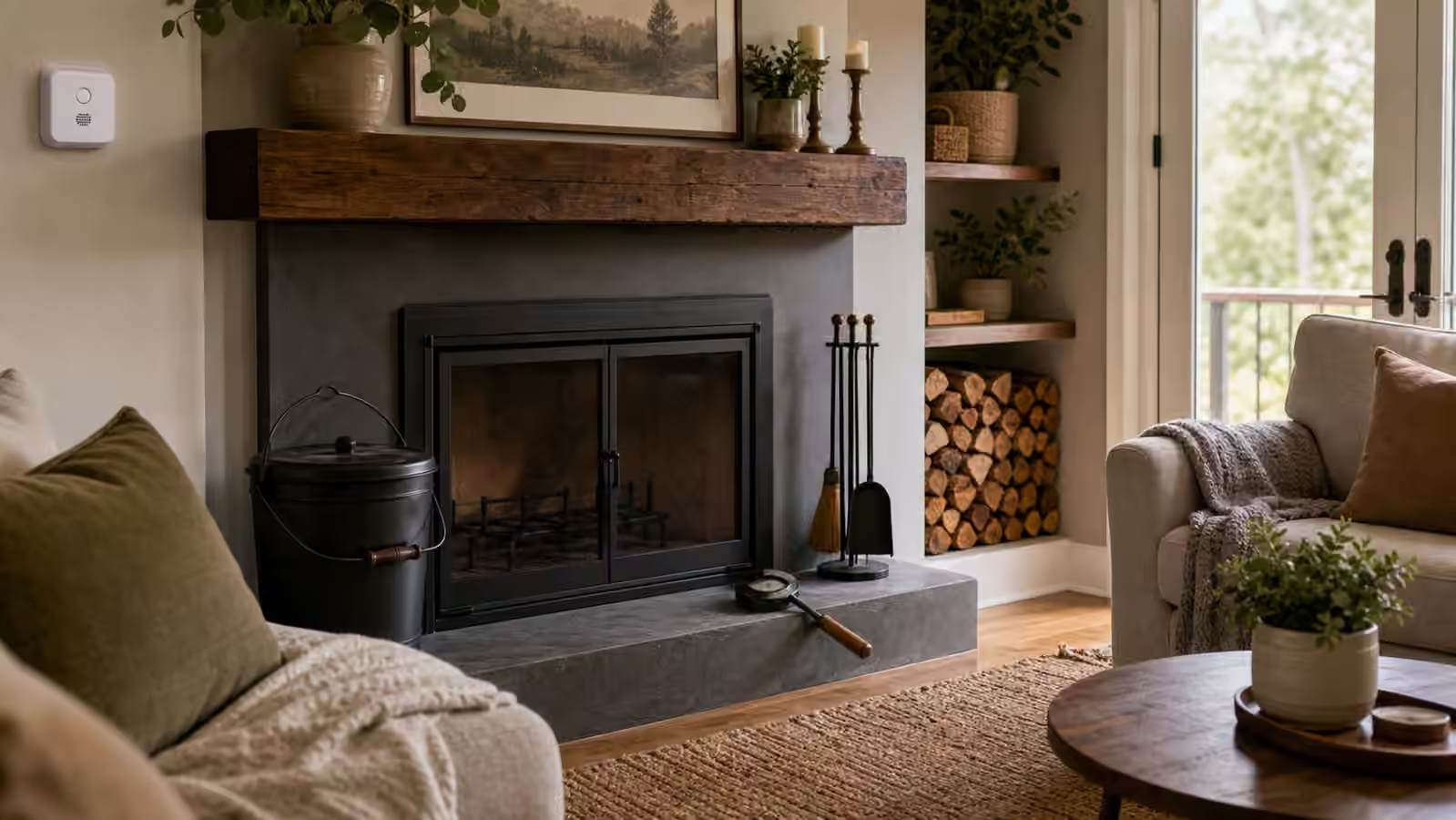
A carbon monoxide alarm is not optional decor in a home with any combustion appliance, and it is also not the same thing as an air quality monitor. Carbon monoxide is colorless and odorless, so no amount of watching the air or trusting your nose substitutes for a working alarm placed according to its instructions. Just as importantly, the glowing number on a consumer air monitor or a purifier’s display does not measure carbon monoxide and must never be treated as a safety device. The guide to carbon monoxide, radon, and monitor boundaries explains why those displays sit in a different category from life-safety alarms. If an alarm sounds, if anyone feels unwell around the appliance, or if a fuel-burner seems to be backdrafting, the clean-air project is over for the moment: follow emergency guidance and get outside to fresh air.
Ash Is A Source, Not Just A Mess
Cold ash looks inert, but it is a reservoir of extremely fine particles that become airborne at the slightest disturbance. Scooping it in a hurry, using a leaky bucket, reaching for an ordinary vacuum that blows the finest dust straight through its bag, or leaving the ash pan open where a door draft can reach it will loft soot across the whole room. Treat ash handling as slow, contained work: wait until the fire is fully out and the ash is genuinely cold, move it into a covered metal container kept for that purpose, and clean the hearth with methods meant for fine soot rather than a quick sweep that just stirs it up. This is where a hearth connects to the wider logic of source control before air purifiers : the source is not only the flames but the residue, the tools, and the cleaning method around them. And the residue should never be masked. Scented sprays, candles, and incense meant to signal a clean room simply add their own particles and compounds on top of the soot that is still there.
Firewood Brings The Outdoors In
A stack of firewood carries bark, grit, insects, moisture, and outdoor odor, and where you keep it changes the room. A small amount by the hearth is convenient, but a large indoor pile becomes a standing dust and moisture reservoir, especially if it is stored against a return grille, a supply vent, a cold exterior wall, or upholstered furniture. Wood that smells musty, feels damp, or sheds debris every time it is moved is working against your air rather than with it. Fuel condition also feeds back into smoke: wet or poorly seasoned wood tends to smolder and smoke more, and a smoky fire leaves residue that lingers long after the flames die down. The specifics vary by appliance and fuel, so follow the relevant instructions rather than folklore, but the indoor-air principle holds steady: make less smoke, send combustion byproducts out the intended path, and keep the fuel from becoming room dust.
Filtration And Carbon Play A Narrow Part
A portable air cleaner sized for the room can help mop up the fine particles that escape during ordinary hearth activity, and placing it where room air can actually reach it makes a real difference after a bit of ash dust or a puff of startup smoke. What it cannot do is grant permission. A purifier is not a reason to run a smoky appliance, burn painted or treated scraps, ignore an alarm, or skip a chimney sweep. Odor is a separate matter again. Activated carbon can reduce some smoke smell when there is genuinely enough media and enough contact time, but as the guide to activated carbon for odors and gases makes clear, fireplace odors tempt people into buying far more deodorizing product than a thin carbon layer can deliver. Carbon may soften leftovers; it does not fix a draft fault, dry out wet wood, or excuse careless ash handling.
The House Fights For The Same Air
A hearth does not operate in isolation from the rest of the home’s ventilation. A kitchen range hood, a bathroom exhaust fan, a clothes dryer, or a central HVAC blower all move air, and in a fairly tight house a strong exhaust running while a fire is getting started can pull the pressure down enough to reverse a weak flue and draw smoke back inside. Because this crosses into safety, resist tidy universal rules and instead watch your own house: note which fans are running when smoke misbehaves, and bring in a qualified person when the pattern is anything other than ordinary. The same record-keeping discipline used for outdoor smoke helps here. Even though the smoke-day plan builder is framed around wildfire days, the habit it encourages, closing off avoidable sources, running appropriate filtration, adding no new particles, and logging what changed, maps neatly onto a hearth session: jot down the weather, which fans were on, how the fire started, any smoke smell, the ash cleanup, and the alarm status.
Keep The Hearth From Becoming The Room
A good boundary is partly physical and partly habit. Keep the screen or glass doors in the position the appliance calls for, store tools and the covered ash container so their dust stays near the hearth rather than beside the sofa or a return grille, clean soot with methods suited to it, and keep indoor wood storage modest. Replace vague complaints of a smoky smell with a short, specific note: when the smell appeared, which fan was running, what was burning, whether the damper and vent path were set correctly, and what changed afterward. That small record turns a recurring nuisance into a solvable pattern.
The boundary is also a stopping rule, and this guide is practical education rather than medical advice or a guarantee that any room is safe. If smoke keeps entering the living space, if an alarm activates, if the chimney or appliance condition is unknown, if there has been fire damage, or if anyone feels ill around its use, this is no longer a simple clean-air routine. Handle the safety issue first, with the right professional and the right alarm or test, and let a cleaner room follow from combustion going where it belongs.