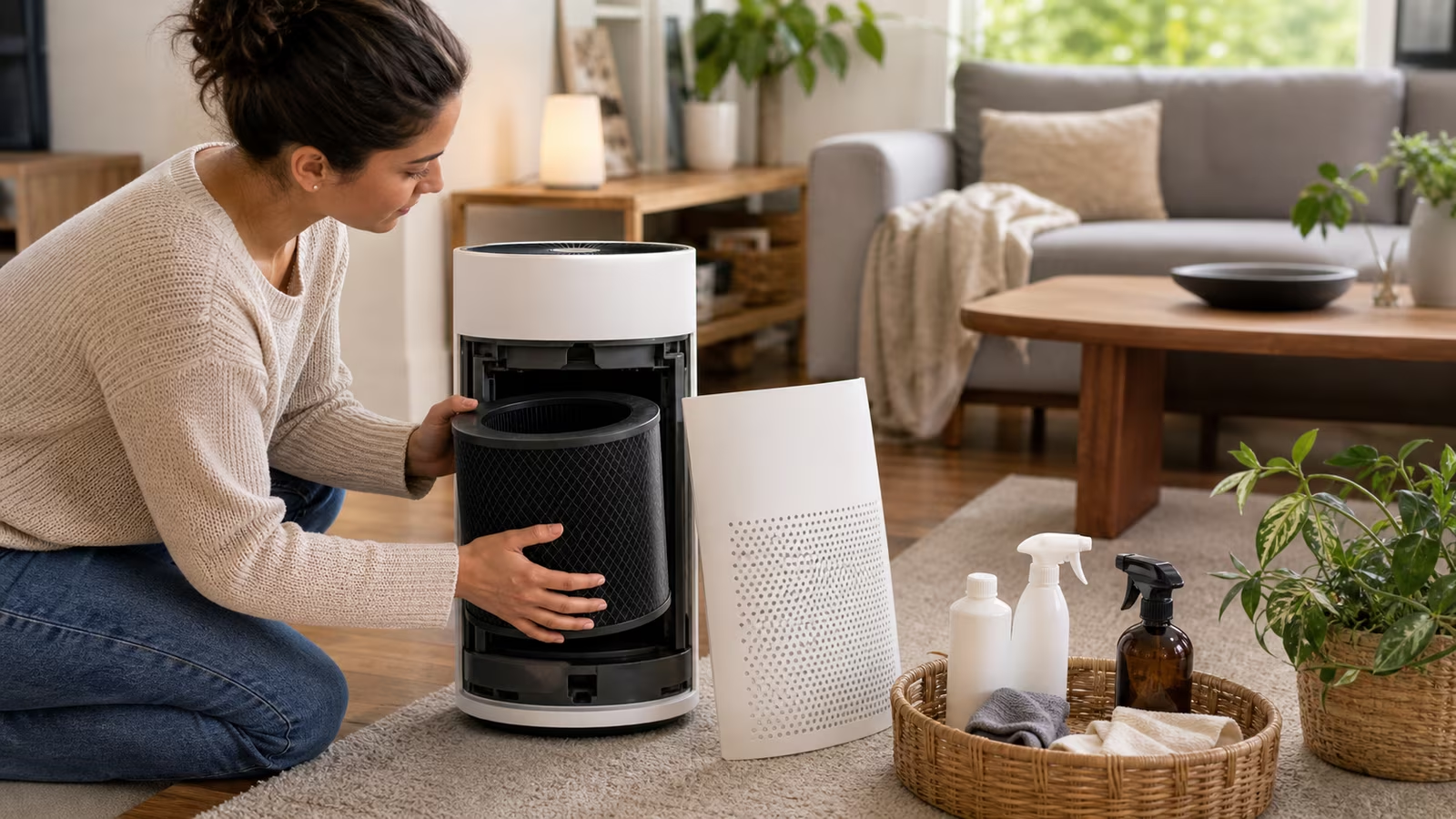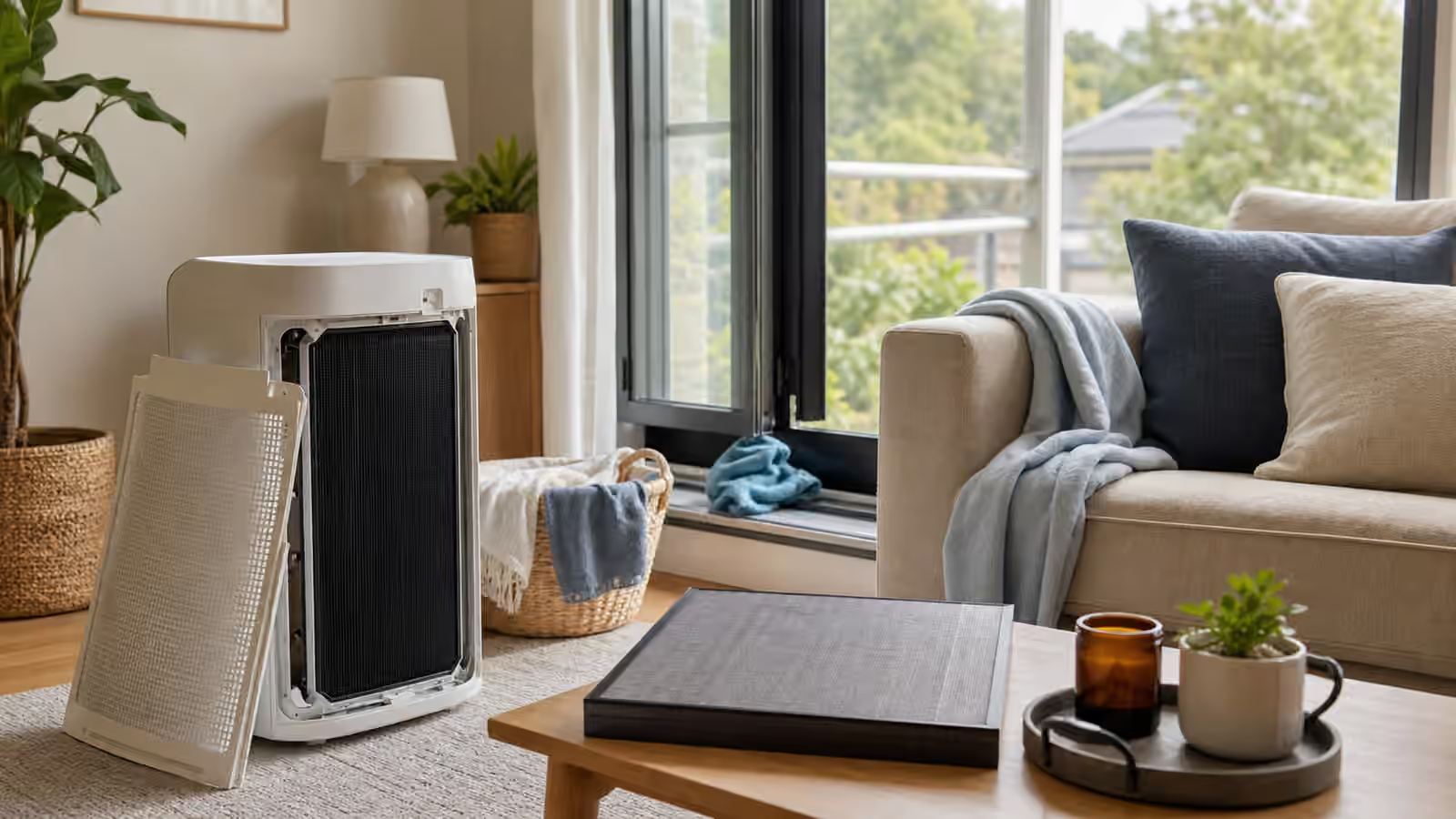
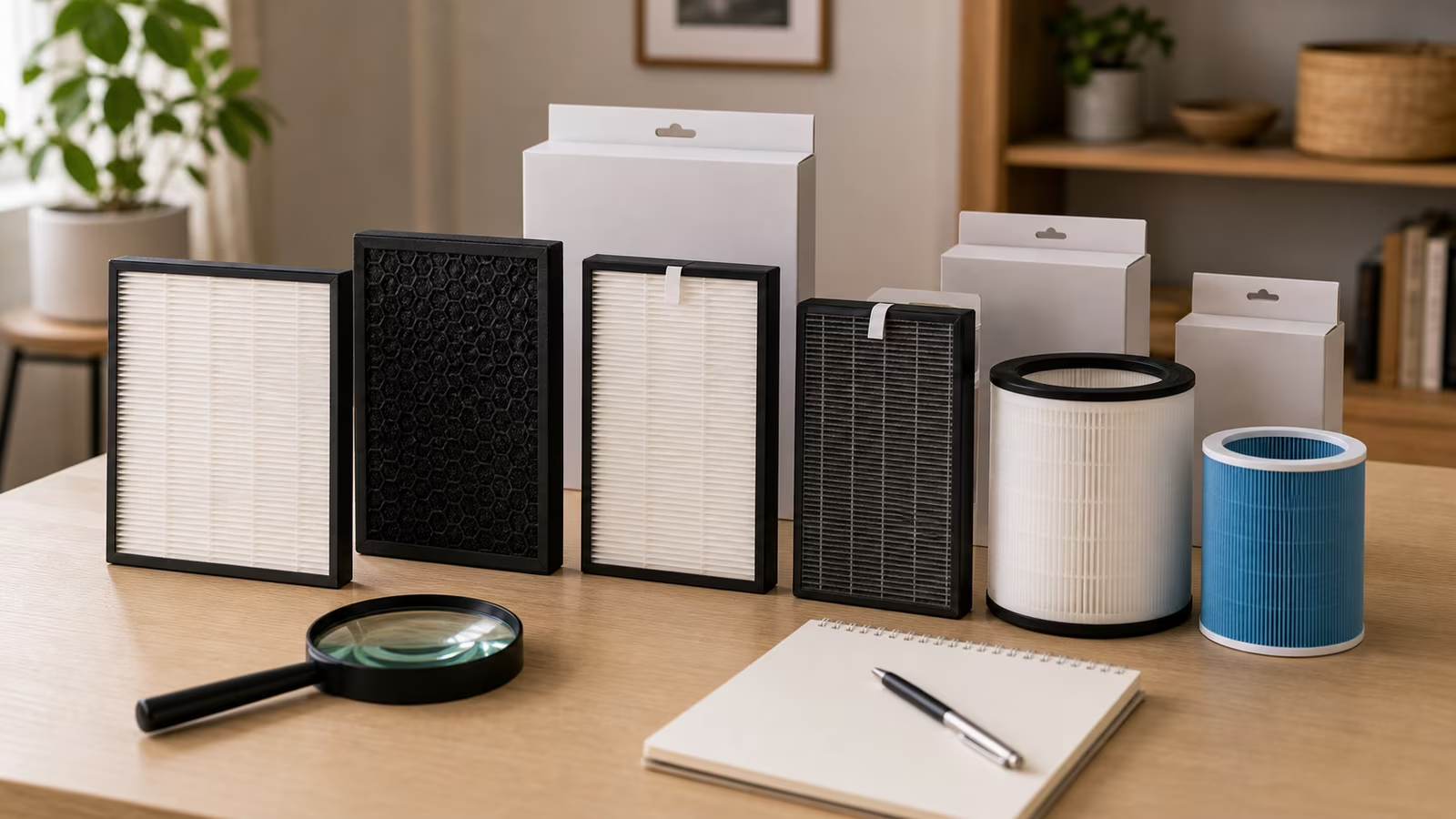
Walk down the air-purifier aisle, online or in a store, and nearly every box shouts a version of the same promise: medical-grade, hospital-grade, ninety-nine point nine seven percent, true HEPA, captures ninety-nine point nine percent of particles. The words are engineered to make one product feel dramatically safer than the one beside it, when in practice most of them are describing the same basic thing in more or less flattering language. Learning to read these claims is not about becoming cynical; it is about knowing which words are defined and meaningful, which are decorative, and which few numbers actually predict whether a unit will clear the air in your particular room.
What HEPA Actually Means
HEPA is a filter performance standard, not a brand and not a material. To meet it, filter media has to trap a very high percentage of particles at the size that is hardest to catch, and that particular size is the key to a common misunderstanding. People assume a filter struggles most with the tiniest particles, but the physics work out so that the toughest ones to capture sit in a middle range, and both larger and smaller particles are actually caught more readily. So a genuine HEPA filter is not letting the small stuff sail through; it is rated at its worst-case size and performs at least that well across the rest. The phrase “true HEPA” exists mainly because “HEPA-type,” “HEPA-style,” and “ninety-nine percent HEPA-like” filters crowded the market, media that resemble HEPA but were not tested to the full standard. “True HEPA” is a marketing correction to that confusion rather than a grade above HEPA. When a label promises a percentage without naming the standard or the particle size it was measured at, treat that number as advertising until proven otherwise.
Efficiency Is Only Half The Story
Here is the part the percentage on the box quietly omits: a filter’s efficiency describes only the air that passes through it, and says nothing about how much air the machine actually moves. A ninety-nine point nine seven percent filter bolted onto a weak, slow fan will clean a small trickle of air beautifully and leave most of the room untouched. Efficiency without airflow is like a superb net you barely dip in the water. This is exactly why HEPA alone cannot tell you whether a purifier suits your space, and why the two words together, high efficiency and high airflow, matter more than either alone.
The number that combines them is CADR, the clean air delivery rate, which reflects both the filter’s efficiency and the volume of air the unit pushes at a given speed. Reported CADR figures come from the standardized testing run by AHAM, which is why an AHAM-verified rating is more trustworthy than an unqualified “cleans up to X square feet” claim invented for the label. A room-size claim is easy to inflate because it can quietly assume the machine runs on its loudest setting, in an empty room, with no source active. CADR is harder to fudge. When you compare two units, compare their verified CADR for the particle type you care about, then check whether the size claim was built on a speed you would actually tolerate living with.
Size It To The Room, Then The Speed
Matching a purifier to a space is where honest numbers pay off and vague ones fail. A unit rated for a huge area on its top speed may be nearly useless on the quiet setting you will actually leave running overnight, so the real question is whether it clears your room’s volume enough times per hour at a speed you can live with. The air purifier sizing calculator is built to turn that into a small worksheet rather than a guess: enter your room’s dimensions and a realistic runtime, and use conservative values where you are unsure rather than forcing an optimistic answer. Sizing connects directly to how the machine sounds and runs, which the guide to air purifier speeds, noise, and runtime covers in depth. A slightly larger unit run gently and continuously often beats a smaller one blasting on high that gets switched off because nobody can sleep or hold a conversation next to it. The best filter is the one that is actually running when the room is occupied.
Particles Are Not Gases
The most consequential thing a HEPA claim leaves out is what it does not do. HEPA media is designed for particles, the solid and liquid bits of dust, pollen, smoke, and dander suspended in the air. It does essentially nothing for gases and odors, which are individual molecules far smaller than any particle a fiber net can strain. That job belongs to activated carbon, a completely different material that adsorbs certain gases onto its surface. Marketing blurs this constantly, implying a HEPA unit will handle cooking smells, paint fumes, or a musty odor when the particle filter has no mechanism for gases at all. If odors and volatile compounds are your concern, look for genuine carbon and, more importantly, for enough of it, because a token dusting of carbon on a thin mesh does little; the guide to activated carbon for odors and gases explains how much media a real odor job needs. Keeping these categories separate protects you from buying a particle machine to solve a gas problem, or the reverse.
Watch For Words That Should Worry You
Some claims are not merely puffery but a signal to slow down. Be wary of any device that markets “ionizers,” “ozone,” “activated oxygen,” “plasma,” or “no filters to replace ever” as a selling point, because a subset of these technologies work by generating ozone, a lung irritant you do not want produced in your living space. A legitimate mechanical purifier cleans air by pulling it through media and needs its filters replaced; a machine that promises to sanitize the air with no consumable filter is describing a different, and sometimes riskier, mechanism. The California Air Resources Board maintains a certification program specifically to cap ozone emissions from air cleaners, which is why a CARB-certified label is worth looking for and an unfamiliar “sanitizing” claim is worth questioning. When a product’s pitch leans on destroying or transforming pollutants rather than simply filtering them out, read the fine print before you read the price.
The Same Logic Runs Through Your HVAC
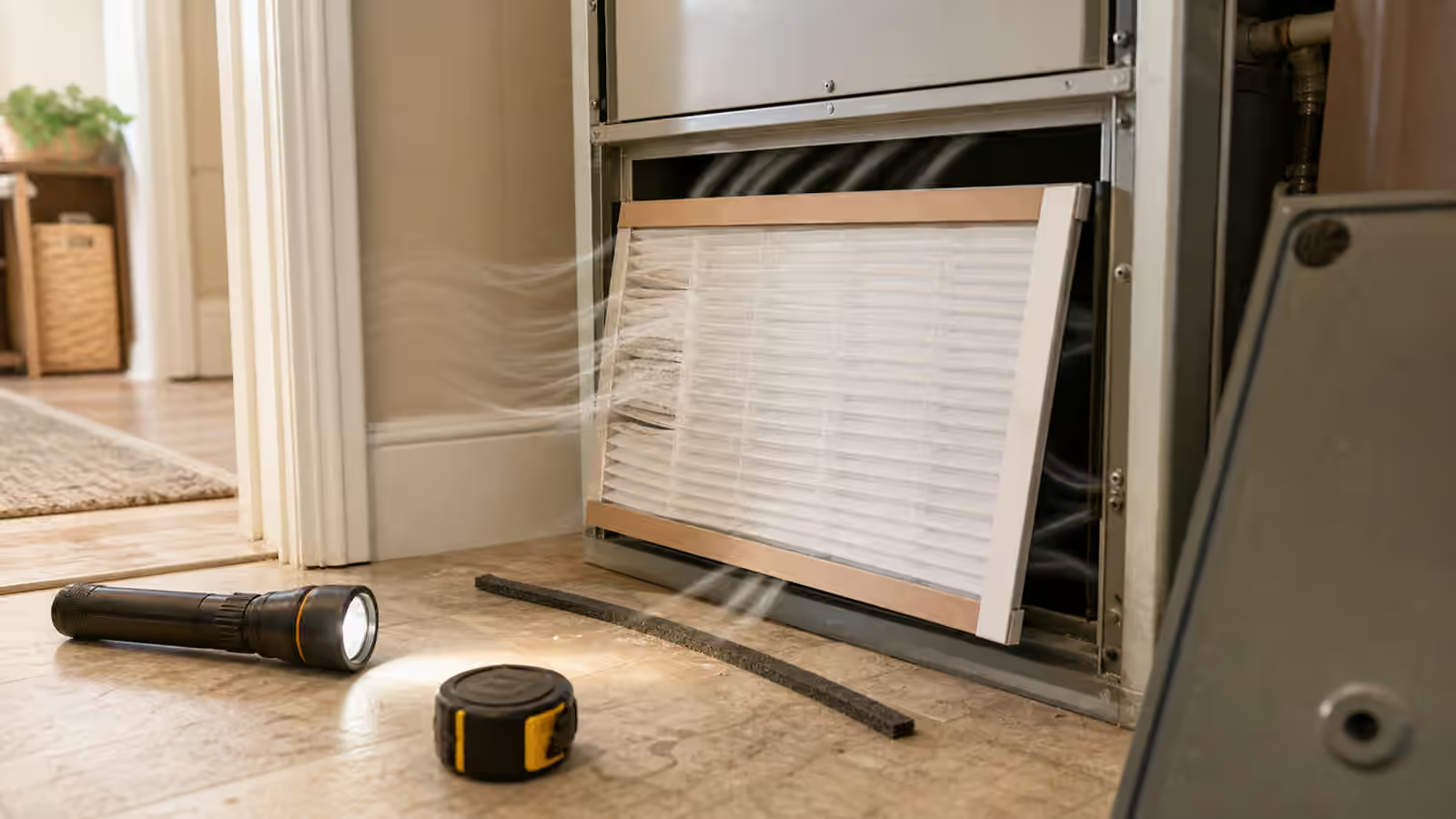
The habit of reading past the label carries straight over to whole-home filtration. Where portable purifiers advertise HEPA, furnace and air-handler filters advertise MERV, a rating scale for how well the media captures particles across sizes. A higher MERV filter is not automatically better for your system, because denser media adds airflow resistance that some blowers were never designed to overcome, which can reduce total airflow and, ironically, the amount of air actually cleaned. The guide to HVAC filters and MERV for beginners walks through choosing a rating your system can handle. The through-line is identical to the purifier story: a high efficiency number only helps if enough air still moves through the filter and the filter genuinely fits its slot, and no rating on any package substitutes for those physical realities.
Read The Claim, Then Read The Room
None of this means marketing language is worthless; it means you translate it. A percentage becomes meaningful once you know the standard behind it. A HEPA claim becomes useful once you pair it with a verified CADR and a speed you will tolerate. A carbon claim becomes real once you check how much carbon is present. An “ozone-free” or certified label is worth more than a “medical-grade” slogan with nothing defined behind it. Above all, keep the pollutant categories straight, because the fastest way to waste money is to buy a device for the wrong problem.
This is practical education, not medical advice, and no filter or rating, however high, guarantees that a room is safe or will resolve allergy or asthma symptoms, which are questions for a clinician rather than a spec sheet. A purifier is also never a substitute for a carbon monoxide alarm or for addressing a source directly. When you meet visible mold, water damage, a fuel-burning appliance behaving oddly, chemical exposure, or symptoms that track with a space, the answer is not a better-labeled filter but investigation, the right alarm or professional test, and qualified help. Within those limits, reading filter marketing well is one of the more empowering clean-air skills you can build: it turns a wall of confident percentages back into a short list of the few facts that actually decide whether your air gets cleaner.