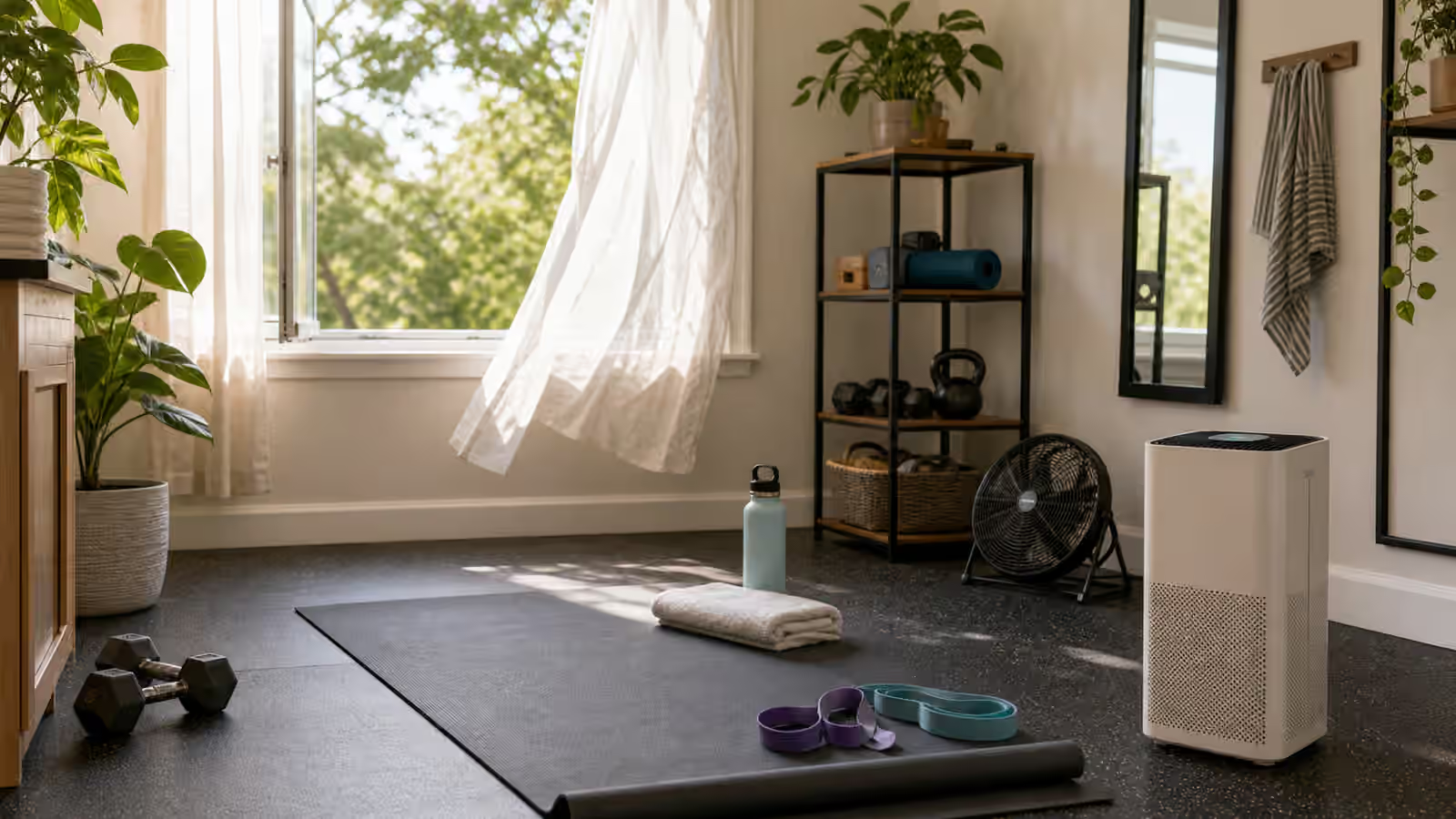
Exercise changes a room faster than almost anything else you do at home. In the span of a workout you raise your breathing rate, throw off heat, add moisture through sweat and hard breathing, and drop down to the floor where the dust actually lives. A corner that felt perfectly neutral while you answered email can feel close and heavy twenty minutes into a session. The clean-air task for a home gym is not to sterilize the space; it is to help a small room shed the heat, moisture, and stirred-up dust that exercise reliably produces.
Exercise Is Room Air Under Load
The useful way to think about a workout space is that you are briefly asking a lot of it. Your body at rest and your body mid-burpee put very different demands on the same air. Breathing harder raises carbon dioxide faster, working muscles dump heat, and sweat adds humidity that has to go somewhere. A closed door in a spare room or a basement corner traps all three, which is why an otherwise fine space can turn stale specifically during exercise and feel normal again an hour later. Recognizing that the problem is load, not filth, points you toward the right fixes: help the room exchange air and shed moisture, rather than scrubbing surfaces that were never the issue.
Move Air For Comfort, Exchange Air To Reset
A fan pointed at your mat is one of the great small pleasures of a home workout, and it does a real job, because evaporative cooling makes hard effort more bearable. What it does not do is bring in any new air; it stirs the same warm, humid box. The ceiling fans and room air mixing guide is worth reading precisely because workout spaces are where people most often confuse the two. Keep the fan for comfort, but plan a separate way to actually exchange the air: crack a window before and after when outdoor air is good, leave the door open between sets, or air the room out once you finish. If the space feels heavy every single session, the ventilation and CO2 helper can turn that recurring stuffiness into a concrete decision about door and window timing rather than a vague complaint.
Mats And Foam Are Sources, Not Furniture
Mats, foam rollers, blocks, and rubber flooring have a smell for a reason, and it is worth treating them as active sources rather than background objects. New rubber and foam off-gas most strongly when they are fresh, so let new gear air out somewhere ventilated before it becomes a permanent fixture of a small closed room. Older gear tends to smell because sweat soaked in and never fully dried. Wipe mats with a cleaner suited to the material and, just as importantly, let them dry completely before rolling or stacking them, because a mat rolled up damp becomes a slow, musty problem. If cleaning makes the smell worse, the culprit may be the product itself; the cleaning products, VOCs, and fresh air guide helps keep the cleanup from becoming the new source.
You Are Down Where The Dust Is
Floor work puts your face inches from the exact place a room’s dust settles. Stretching, planks, and mat exercises have you breathing right at the reservoir that standing height hides. That changes how you should think about cleaning a workout area: a plush rug that makes the corner cozy also stores dust, dander, and old debris that your movement kicks loose, while a washable mat on a hard floor is far easier to keep genuinely clean. Timing matters too, because vacuuming right before you drop down to exercise can put fine dust into the air you are about to breathe hard. It is better to clean with enough lead time for particles to settle, then unroll a clean mat that has not been sitting on the dusty floor between sessions.
Sweat, Towels, And Laundry Belong To The Room
The damp towel you toss aside and the workout clothes piling in the corner are not a separate laundry matter once the door is closed; they are part of the room’s air until they dry and leave. A wet towel in a hamper will make a small room smell like the last session, and a drying rack of gym clothes adds humidity to a space that is already warm and moist from the workout itself. The simplest habit is to carry damp textiles out of the workout corner when you finish rather than letting them dry in place. If the space doubles as a drying zone, you are stacking two moisture loads in one room, and it will feel it.
Filter When Particles Are The Problem
A purifier earns its place when the issue is genuinely particles: dust lifted from the floor, pollen tracked in on clothes, pet dander on the mat, or smoke that entered earlier. Size it for the room, keep the intake and outlet clear of mats and towels, and run it at a speed you can tolerate long enough to matter rather than blasting it on high for five dramatic minutes; the air purifier speeds, noise, and runtime guide covers that tradeoff. What a filter will not do is dry a wet towel, cool the room, remove the moisture load, or replace ventilation in an occupied closed space. Match the tool to the symptom: heat and stuffiness want air exchange, odor wants source control, and particles want the filter.
Mind The Room You Chose
Where the gym lives changes the risks. A basement may start damp with air that drifts upstairs; a garage-edge space may sit near vehicle exhaust, fuel, or chemicals that deserve real caution, not a fan and a scented spray. The honest rule is to never exercise in a space that smells of fuel, exhaust, solvent, or sewage, and never use fragrance to make a questionable room feel workout-ready. This is practical clean-air education, not medical advice, and no routine can promise a room is safe; for suspected carbon monoxide, persistent mold, or a chemical or building-safety issue, stop and bring in alarms, testing, or a professional. Kept in its lane, the workout-air job is small and repeatable: shed the heat and moisture, keep the floor reservoirs low, dry the gear, and reset the room after each session so exercise stops leaving a stale corner behind.