Wanting cleaner air around a baby or a young child is one of the most common reasons people start paying attention to indoor air at all, and it is also where marketing pressure is heaviest. A nursery is an emotional room, so it attracts products that promise protection, immunity, and calm in a single plug-in. The honest version is quieter and more reassuring: a child’s room responds to the same ordinary moves as any other room, done a little more conservatively, with a little more attention to what sits close to a sleeping child and what language you let yourself believe. Nothing in a nursery treats a medical condition, and no device removes every risk from a room, but thoughtful source control, sensible filtration, steady humidity, and careful product storage genuinely make a child’s air calmer to breathe.
Start With What Enters and What Is Made in the Room
Before adding anything, notice what already shapes the air. Children’s rooms tend to accumulate soft goods that hold and release dust: plush toys, rugs, curtains, upholstered chairs for night feedings, and stacks of laundry. They also often sit near the sources parents worry about most, such as an attached garage wall, a kitchen down a short hallway, a street-facing window, or a bathroom that stays damp. The room does not need a gadget to reveal this. A slow walk with the lights on, a look at where dust settles first, and a note of which window faces traffic or which wall backs onto a damp space tells you more than most sensors will in the first week.
Reducing sources is gentler and more permanent than filtering them forever. Washing plush toys and bedding on a schedule the household can actually keep, choosing a washable rug over wall-to-wall carpet where possible, keeping the door closed during heavy cooking or cleaning elsewhere in the home, and avoiding scented plug-ins, sprays, and heavily perfumed laundry products in the child’s space all lower the load before a filter ever runs. Fragrance is worth singling out, because a nursery is exactly the room where people reach for a pleasant smell, and a pleasant smell is not clean air; it is added compounds layered on top of whatever was already there.
Filtration and Placement Around a Crib
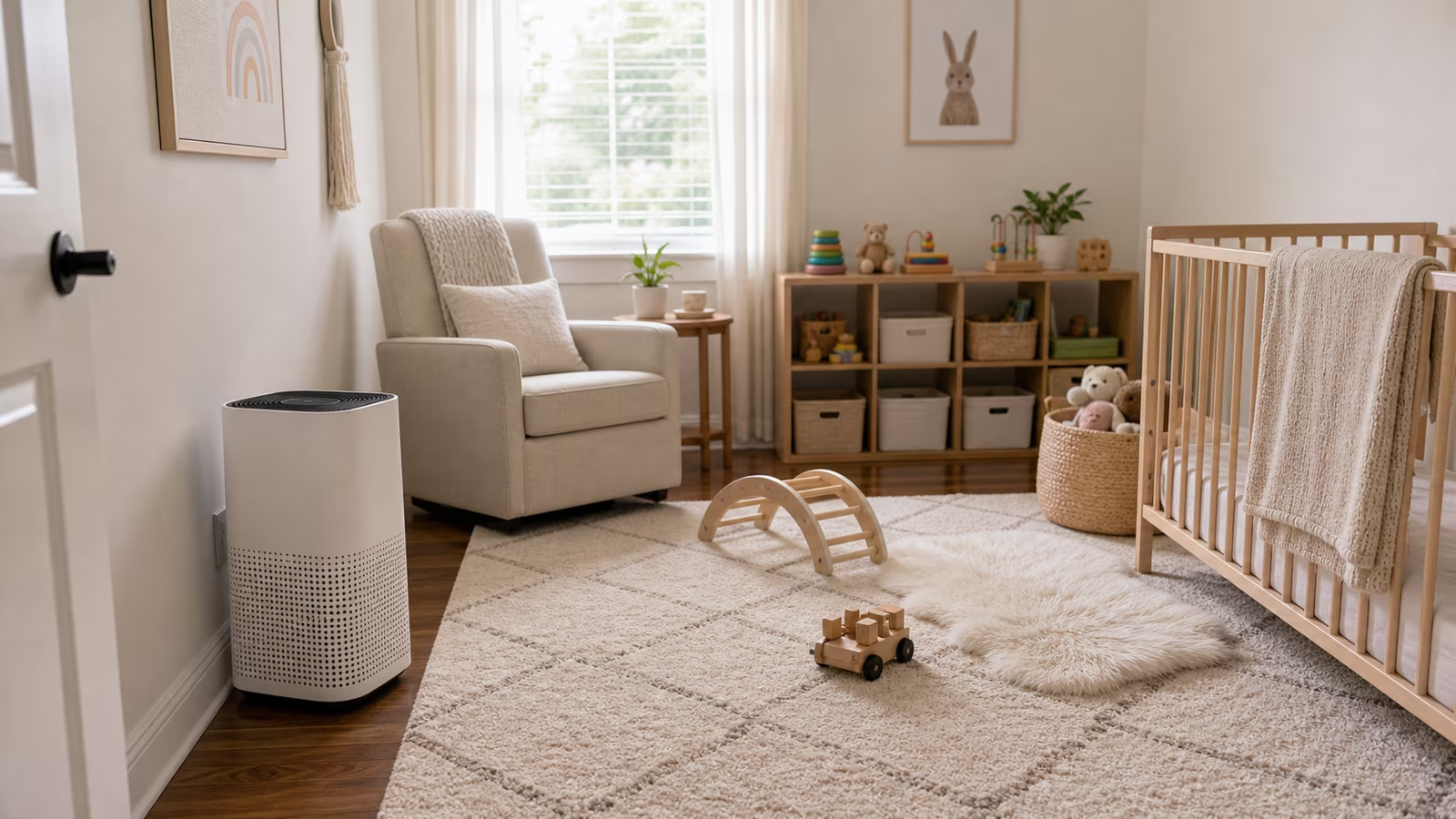
A portable air cleaner can meaningfully reduce airborne particles from pollen, wildfire smoke, and household dust, which makes it a reasonable addition to a child’s room during pollen season or a smoke event. The two things that matter most are size and placement. An underpowered unit in a large room or one buried behind furniture does little, while a right-sized unit with clear intake space and a noise level low enough to run through the night does real work. The air purifier sizing calculator helps translate the room’s dimensions into a target clean-air delivery rate so you are not guessing from an advertised room number that assumes ideal conditions.
Placement in a nursery has an extra consideration: keep the unit and its cord well away from the crib and out of a curious child’s reach, with the airflow not blowing directly onto a sleeping baby. Choose a model without an ozone-producing ionizer mode, since occupied-room ozone is exactly what you do not want near a child, and a plain mechanical filter is both safer and easier to judge. Run it steadily rather than in bursts, because particle levels rebound quickly once the fan stops. For sleep specifically, a purifier’s steady low hum can double as gentle background sound, but choose the level for clean air first and comfort second, as our guide on a cleaner bedroom for sleep discusses.
Humidity, Humidifiers, and the Damp Trap
Parents are often told to add a humidifier for a stuffy or coughing child, and moderate humidity can make dry winter air more comfortable. The risk is overshooting into dampness, because a room kept too humid grows the mold and dust mites that cause more problems than the dryness ever did. A cheap hygrometer is the most useful few dollars in the room; it lets you aim for a comfortable middle range rather than guessing. Cool-mist humidifiers avoid the burn risk of warm steam near children, but every humidifier needs regular emptying, drying, and cleaning, because a neglected tank becomes a device that sprays microbial growth into the exact air you were trying to improve. If a humidifier is fighting a room that is already damp or musty, the answer is not more mist but finding the moisture source.
The Consumer Product Safety Commission publishes guidance on humidifiers and nursery devices worth checking, and the broader point is to treat humidity as a range to hold rather than a direction to push. When the season changes, glance at the gauge and adjust, because a setting that felt right in January can leave the room clammy by spring.
Safer Storage of the Products Nearby
Clean-air thinking in a child’s space extends to what is stored there and used there. Cleaning sprays, diaper pail deodorizers, nail products, paints, and strongly scented lotions all release compounds into a small enclosed room, and a nursery’s closed door concentrates them. Keeping cleaning products in a latched cabinet elsewhere, ventilating during and after any painting or strong-smelling task well before the child returns, and letting new furniture or foam mattresses air out in a ventilated space before installing them all reduce the invisible chemical load. This overlaps with a renter’s constraints, so the renter-friendly clean-air setup guide is a useful companion when you cannot modify the room itself, and the closed-door home office guide covers the related dynamics of a small room used for long stretches with the door shut.
Keeping the Language Honest
The reason to stay conservative with claims is not caution for its own sake; it is that overpromising leads to worse decisions. A device sold as protecting a child from illness can tempt a household to skip the boring, effective habits, or to keep a source running because a gadget is supposedly handling it. Cleaner air can lower the particles and irritants a child breathes, and many families notice a calmer room, but it does not diagnose symptoms, treat a medical condition, or make a space risk-free. If a child has a diagnosed respiratory condition or persistent symptoms, that is a conversation for a pediatrician, and the room setup supports care rather than replacing it. The American Lung Association’s family air resources are a level-headed reference.
Boundary and Sources
This is practical education, not medical advice. Keep the everyday habits going and know when the room is beyond them: visible extensive mold, a persistent damp problem you cannot trace, a suspected carbon monoxide or combustion issue, sewage, or building damage all call for documentation and qualified help rather than another appliance. Install and test carbon monoxide alarms where fuel-burning equipment exists, and follow local public health guidance during smoke, mold, chemical, radon, or building-safety situations. Federal and health-organization resources, including the EPA’s indoor air quality pages and the CPSC’s product safety information, are the right references when a nursery question grows past ordinary housekeeping.