Some clean-air problems begin at a gap thin enough to ignore on an ordinary day. A window sash that never quite meets the frame, a door that leaves a bright line of daylight at the threshold, a cable pass-through under a desk, or an apartment entry that quietly pulls hallway air inward can each become the path that explains a room’s dust, its pollen film, its faint smoke odor, or its stale edge. The goal is not to panic over every draft, because a home is supposed to breathe a little. The goal is to know which openings matter on the days when the outdoor air is smoky, the pollen count is high, a neighbor is cooking heavily, or the shared hallway smells of cleaning products.
A Leak Is a Path, Not a Source
Clean-air work usually starts with source control, but a leak is unusual because it is a path rather than an object you can throw away. You cannot switch off the wildfire smoke outside, move the busy road away from the window, or reroute the hallway air in your building. What you can do is make the path visible and decide, day by day, whether it is currently helping or hurting. That reframing matters, because the same window that is a welcome source of fresh air on a mild clear evening becomes a pollutant doorway on a smoky afternoon. The opening did not change; the air on the other side did.
A careful pass around the room almost always shows the problem is not spread evenly. It tends to concentrate at one window, one door, one closet wall backing onto an unconditioned space, or one return grille. Finding that concentration is most of the work, because it tells you where a small, reversible fix will pay off and where you would just be caulking at random.
Read the Room Edge Before You Seal Anything
Begin at the perimeter rather than the center of the room. Stand beside each window and exterior door and look for the tells: dust trails streaking away from a crack, a line of daylight under a sweep, brittle old foam, a warped or painted-shut sash, or curtains that stir when the heating and cooling fan kicks on. Your hand can feel a draft, but a tissue or a strip of light paper held near the gap shows the direction far more clearly, and direction is what you actually need. Air pushing in from outdoors calls for different habits than air being drawn out of the room while replacement air sneaks in from a garage, a crawl space, or a hallway you would rather not breathe from.
This directional detail is why leaky rooms confuse people. Opening a window is healthy ventilation when the outdoor air is acceptable and the room has gone stale; the identical opening is a liability when outdoor smoke, pollen, traffic particles, or humid air are worse than what is already inside. The broader judgment of when to ventilate and when to close up belongs to the ventilation basics for stale rooms guide. The narrower job here is simply knowing what is slipping in during the hours you assumed the room was sealed.
Keep the First Fixes Reversible
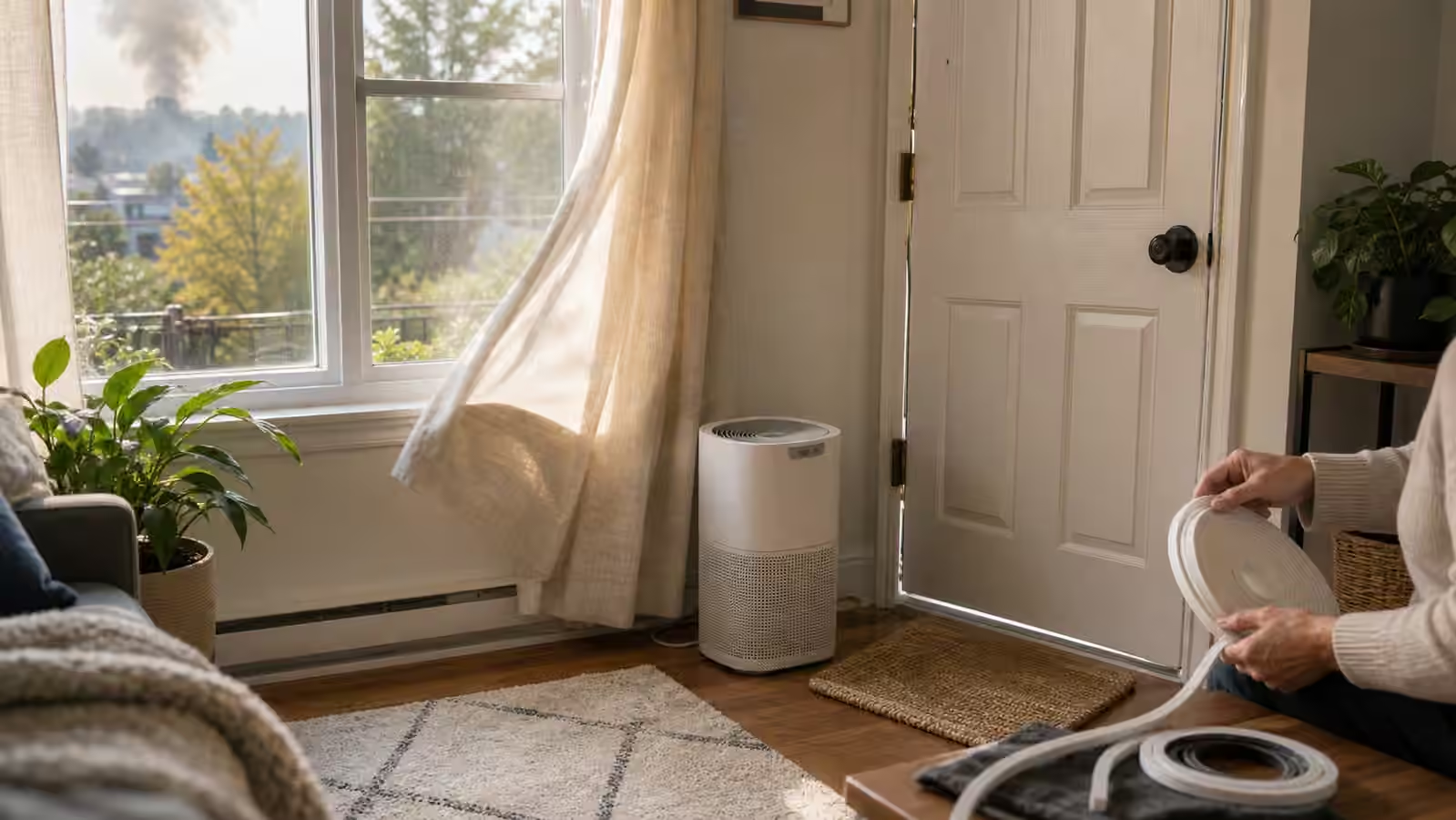
Most households, and nearly all renters, should start with work that can be undone cleanly. A removable door sweep, compressible weatherstripping, a fabric draft stopper along a sill or threshold, a washable entry mat, and a careful reset of a loose window lock can cut the obvious entry paths without turning the room into a permanent renovation. Because renters live under exactly these constraints, this topic pairs naturally with the renter-friendly clean-air setup . And if a window is rotted, painted shut, cracked, or part of a genuine building issue, the right move is to document its condition and involve the owner or a qualified repair person rather than improvising a permanent seal over a structural problem.
There is also a real reason not to chase airtightness by guesswork. Homes with fuel-burning appliances need combustion air, exhaust fans need makeup air to work properly, and some buildings rely on designed ventilation paths that are not obvious to the eye. Blindly stuffing every gap can create backdrafting or pressure problems that are worse than a little pollen. So handle the obvious comfort and particle paths first, then pause and observe. After each change, notice whether the room smells different, whether a new line of dust appears somewhere, whether doors are suddenly harder to close, or whether an exhaust fan starts behaving oddly, because those are the signs you have shifted the home’s pressure balance and should reconsider.
Smoke, Pollen, and Hallway Events
A gap that is harmless in mild weather can dominate during a short outdoor event, and each type of event behaves differently. On a smoke day, the strongest strategy is to pick one room, close it up, filter the air continuously, and avoid indoor particle sources, so a leak near that clean room forces the purifier to work against a constant inflow; the smoke-day indoor plan covers that event in full. Pollen behaves as a settling problem rather than a haze: it rides in, lands, and becomes a surface reservoir, so a leaky window beside a bed can quietly reset a clean bedroom every day through the sill, the curtains, and the floor, and a better seal plus a habit of wiping the sill often helps more than cleaning the whole home harder. Hallway air in an apartment is its own case, where a shared corridor pushes cooking, smoke, or cleaning odors under the door, and a threshold mat plus a shoes-off habit connects this topic to entryway dirt, shoes, and outdoor particles .
Place Filtration Near the Real Path
An air purifier cannot seal a crack, but where you put it decides how well it copes with one. If outdoor particles come in near a particular window, the unit should not be stranded behind furniture across the room; it needs clear intake space and enough fan speed to keep up. If hallway air seeps under an apartment door, a purifier near that entry can catch particles before they mix through the sleeping or sitting area. The general rules live in the where to put an air purifier guide, and the purifier placement planner turns a vague room into a simple layout decision by weighing where the air enters against where people actually spend time. Do not, though, jam the intake straight against the gap; a machine breathing into a curtain or a wall underperforms. Leave open space around it, keep cords clear of walkways, and avoid aiming the outflow so it drags dirty air across the whole room before it reaches the filter.
Know the Boundary
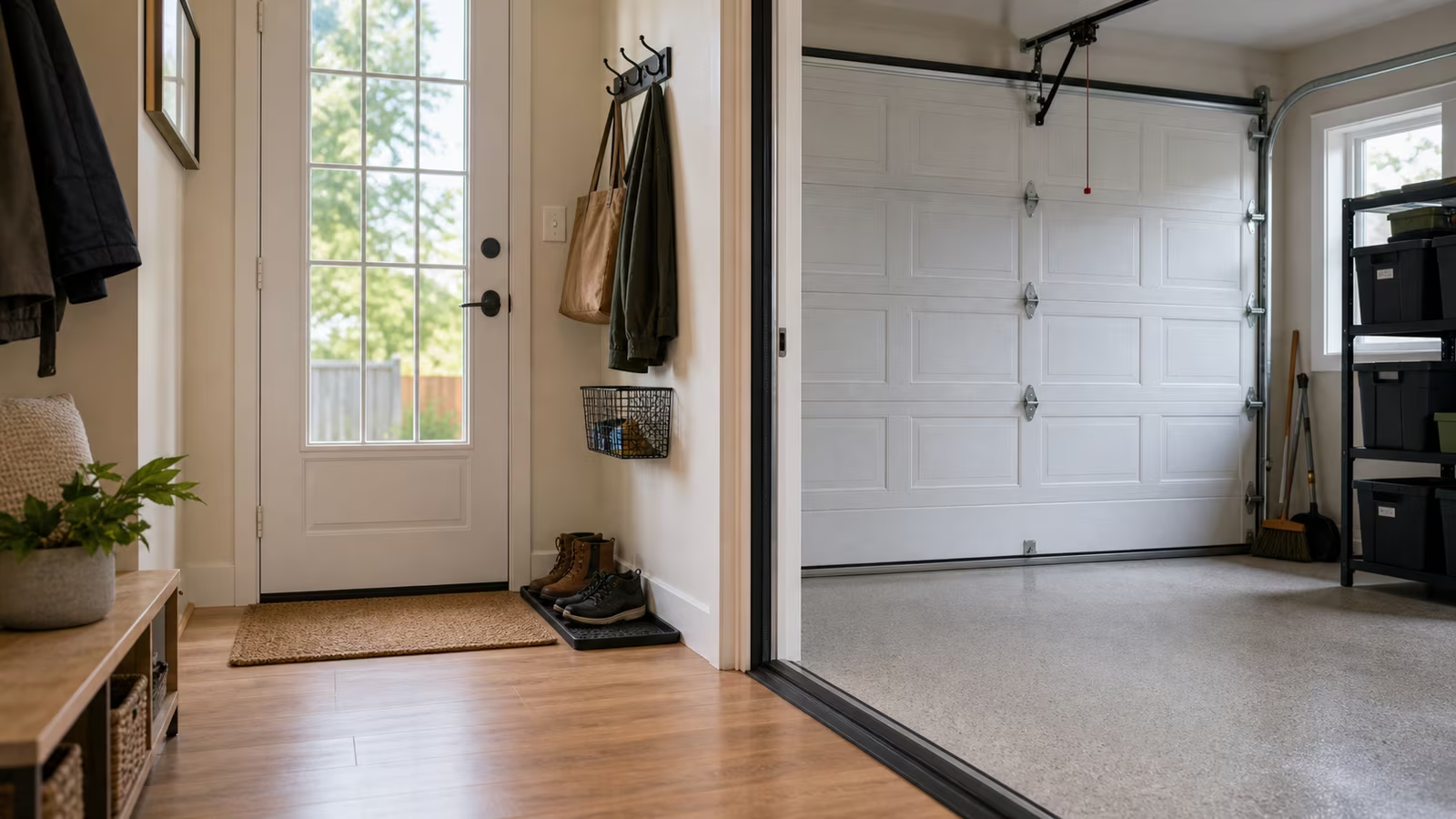
Some leaks are simple housekeeping and some are building problems, and telling them apart is the important judgment. A missing door sweep, tired foam, or a dusty window track is fair game for careful DIY. A persistent chemical smell from a shared corridor, smoke crossing between units, water-damaged framing around a window, a combustion or exhaust concern, or a garage-to-living-space pressure issue deserves documentation and help from whoever is responsible for the building. This is practical education, not a promise that a room is risk-free, and air sealing never substitutes for carbon monoxide alarms, radon testing where relevant, or professional repair of combustion appliances and structural damage. The quiet habit that helps most is a seasonal edge check: the windows before pollen season, the doors before smoke season, the basement or garage connection before heating season, and the purifier’s placement whenever a room starts feeling dirty again. A leaky room stops being mysterious the moment you know where its air is coming from. Federal resources like the EPA’s indoor air guidance, its wildfire smoke pages, and the AirNow index are the right places to check when outdoor conditions or the stakes rise.