Mold is the clean-air topic where knowing when to stop matters as much as knowing what to do. A little surface mildew on a window sill or a shower grout line is ordinary household territory that most people can clean and prevent. A wall that stays damp, a ceiling stain that keeps returning, or a musty smell with no visible cause is a different situation, one where scrubbing the surface treats the symptom while the water source keeps the problem alive. The single most useful idea in this whole subject is that mold is a moisture story first and a cleaning story second. An air cleaner, a scented spray, or a fresh coat of paint over the spot does not touch the water that let the mold grow, and until the water is handled, the mold has every reason to come back.
Find the Water Before You Touch the Mold
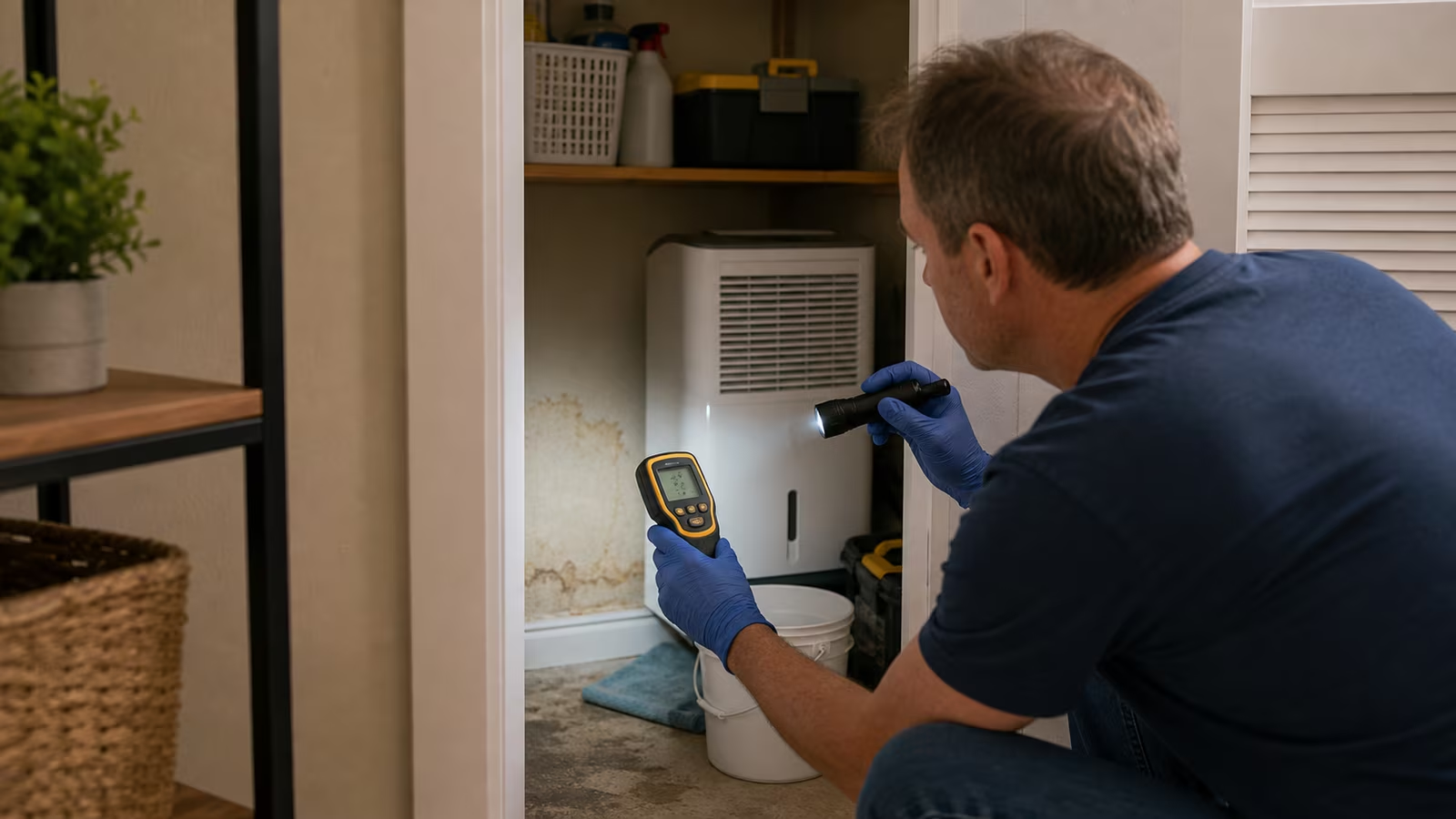
Because moisture is the driver, the first move is to trace where the water is coming from rather than to start wiping. Water reaches a surface in a limited number of ways, and each points to a different fix. It can arrive as a leak from a pipe, roof, window, or appliance; as condensation where warm humid air meets a cold surface like a closet wall, a window, or an uninsulated corner; as ground moisture wicking into a basement; or as everyday humidity from showers, cooking, and drying laundry that the room never sheds. Telling these apart changes everything. Condensation on a cold wall behind a dresser calls for airflow, insulation, or lower humidity, while a spreading stain that grows after rain points to an intrusion that needs repair. A cheap hygrometer helps here, because a room that consistently reads damp is telling you the conditions favor mold no matter how often you clean.
This is also the moment to look with a flashlight into the places mold prefers and people rarely check: behind furniture on exterior walls, under sinks, around window frames, along the base of cold closets, and near any past water event. What you find, and whether it keeps coming back after you dry it, tells you which side of the DIY boundary you are on.
Small Jobs Households Can Usually Handle
Federal mold guidance draws a practical line based roughly on the size of the affected area, and for small patches on hard, non-porous surfaces most people can do the work themselves with reasonable care. That means fixing the moisture source first, then cleaning the visible mold from surfaces that can actually be cleaned, and drying the area thoroughly so it stays dry afterward. Hard surfaces like tile, glass, sealed metal, and finished countertops can often be cleaned and kept. Porous materials that have absorbed moisture and growth, such as soaked drywall, ceiling tiles, carpet, or upholstery, usually cannot be fully cleaned and are often better removed, which is one of the ways a job quietly grows beyond a quick wipe.
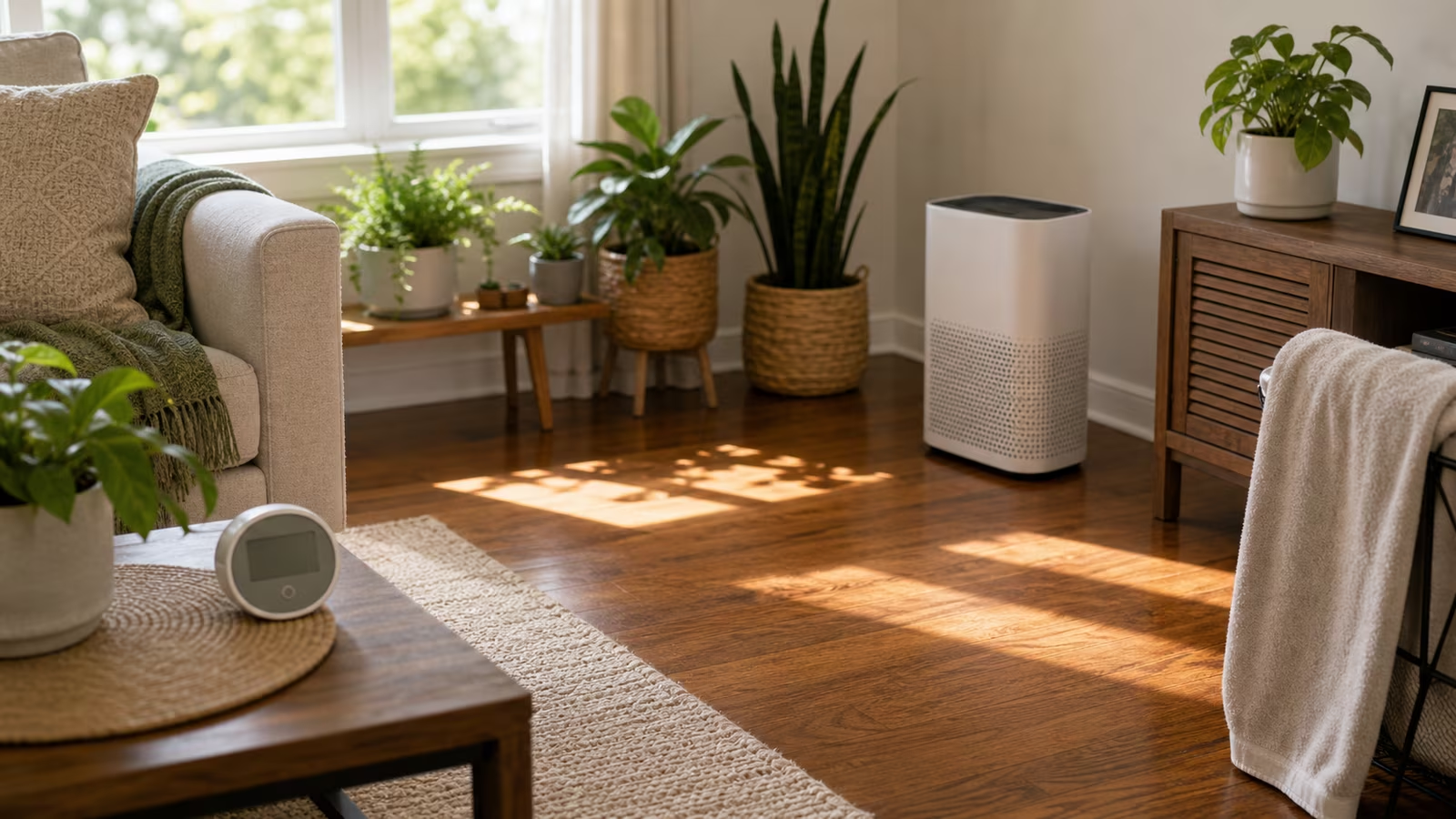
Even a small job deserves basic care so you do not spread the problem. Working gently rather than aggressively disturbing a colony, keeping the area contained, protecting your hands and airway, and bagging removed material rather than carrying it dripping through the home all reduce the chance of scattering spores into rooms that were fine. Running a portable air cleaner in the space can help capture particles stirred up during cleaning, but it is a supporting tool, not the cure, and it does nothing about the underlying water.
Using Humidity and the Triage Tool
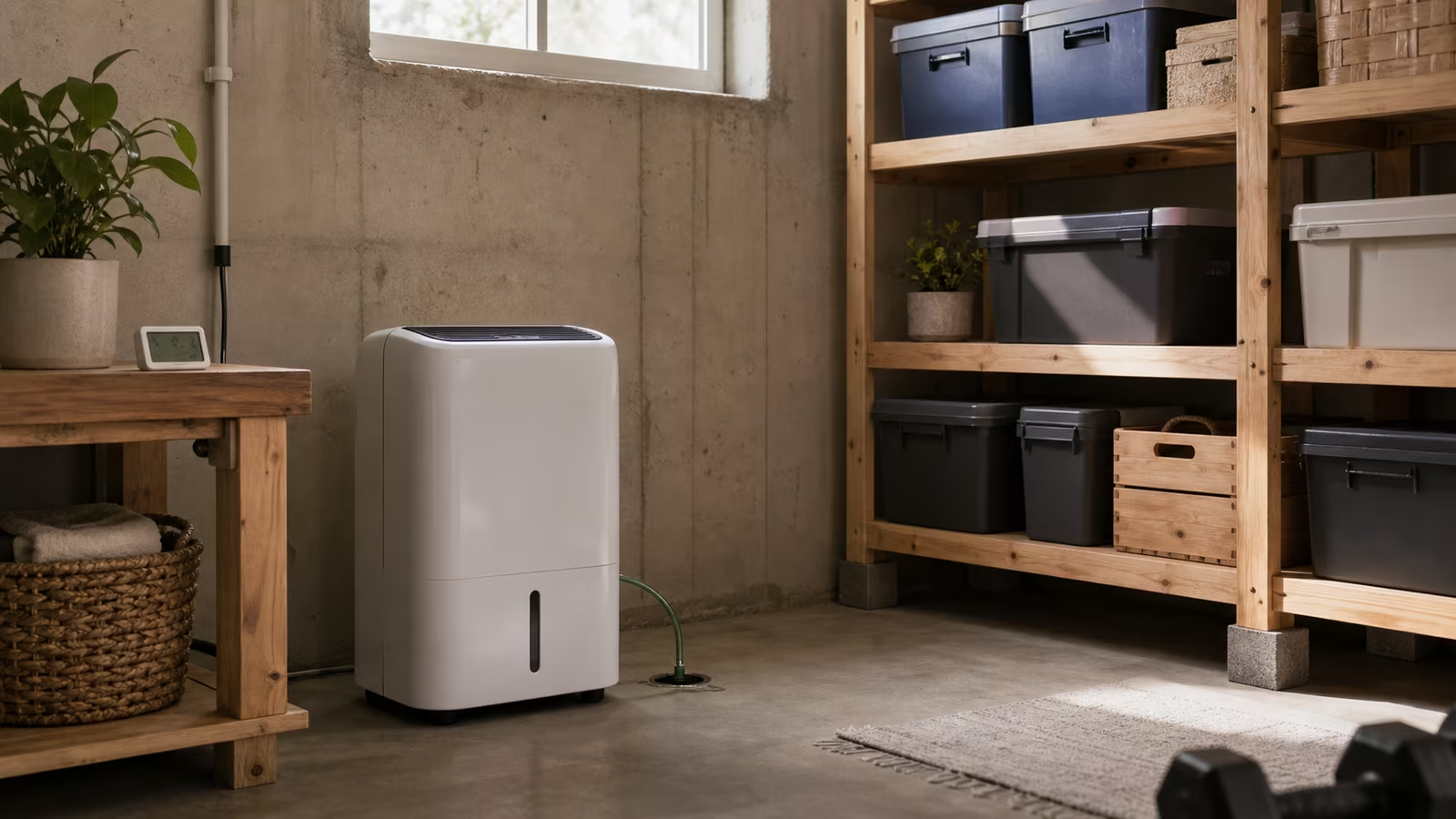
Much of everyday mold prevention is really humidity management, so it helps to think in terms of holding the indoor moisture in a comfortable middle range rather than letting rooms swing damp. Ventilating moisture-heavy activities, running bathroom and kitchen exhaust long enough, drying spills and wet materials within a day or two, and using a dehumidifier in a persistently damp basement all keep conditions unfriendly to growth. When a room smells musty but you cannot immediately see why, the humidity and musty-smell triage tool gives you a structured way to record what you actually observe: the humidity reading, whether the smell tracks with weather or a recent leak, which surfaces feel damp, and whether it clears with ventilation. Enter conditions as they are rather than as you wish them to be, because a room that smells fine with the window open but musty again by morning is handing you a real clue about a moisture source that has not been solved.
Two related guides deepen this. The musty-smell triage guide walks through chasing an odor to its source, and because stale, under-ventilated rooms often overlap with damp ones, the ventilation basics for stale rooms guide covers moving air through a space that feels closed. A monitor can show trends, but as the CO2 monitors and home ventilation guide notes, no single reading proves a room is fine; it points you toward the next thing to check.
When to Stop and Call for Help
The honest boundary is the heart of this topic, and crossing it is not a failure. Stop the DIY approach and bring in a qualified professional when the moldy area is large, when it involves porous building materials that are soaked and cannot simply be cleaned, when it keeps returning after you have cleaned and dried it because the water source is hidden or structural, or when it follows serious water damage like a flood, a sewage backup, or contaminated water. Growth inside a heating and cooling system, mold spreading behind walls, or an odor with no findable source are all signals that the problem is bigger than a household cleanup. Air cleaners do not fix any of these; they only manage some airborne particles while the real work goes undone.
Health concerns change the calculation too. If people in the home have persistent respiratory symptoms, known sensitivities, or weakened immune systems, that is a reason to be more cautious about disturbing mold and to involve professionals and a clinician sooner. This guide is practical education, not medical advice, and it does not diagnose symptoms or promise that clearing mold resolves any particular health issue. What it offers is a clear line: handle the small, dry-it-out, clean-a-hard-surface jobs with care, and hand off the large, wet, recurring, or health-sensitive ones to people equipped for them.
Boundary and Sources
Treat this as education rather than a promise that a room is risk-free. Beyond mold, escalate immediately for carbon monoxide risk, fuel-burning equipment problems, chemical spills, sewage, fire damage, or building damage, where the right moves are documentation, isolation when it is safe to do so, working alarms and official testing where relevant, and qualified help. The EPA’s mold pages, which describe cleanup and the point at which a job exceeds household DIY, its broader indoor air quality guidance on moisture control, and plain-language resources from the American Lung Association are the references to lean on when a damp problem grows past ordinary housekeeping or local conditions change.