Most homes have more problem rooms than purifiers. There is the bedroom that never quite airs out, the home office that fills with stuffiness by mid-afternoon, the living room where the dog sheds and the cooking drifts in, and a budget that stretches to one decent unit, maybe two. The instinct is to buy a big machine and hope it covers the whole floor, or to buy several cheap ones and scatter them. Neither is a strategy. A multi-room plan is really an exercise in ranking: deciding, honestly, which air is worth cleaning first and letting the rest wait its turn.
Rank Rooms By Hours, Not By Discomfort
The room that bothers you most is not always the room worth prioritizing. What matters more is how many hours a day someone spends breathing its air. A bedroom wins almost every ranking because you spend seven or eight continuous hours in it with the door shut, which is exactly when a small, quiet unit can drive particle levels down and keep them there. A home office is often second for the same reason: long, stationary hours in one enclosed space. A hallway that smells odd but nobody lingers in ranks far lower, however much it nags at you.
So the first move is to list the rooms and, beside each, write down roughly how long a person occupies it, how strong the sources are inside it, whether the people using it are especially sensitive, and whether its door actually closes. A room with heavy sources but a permanently open door leaks into everything around it and is hard to treat in isolation; a room with modest sources but a door you can shut is a place where one purifier does real, contained work. That ranking, not the marketing on any box, is what decides where the first unit goes.
A Sketch Beats A Spec Sheet
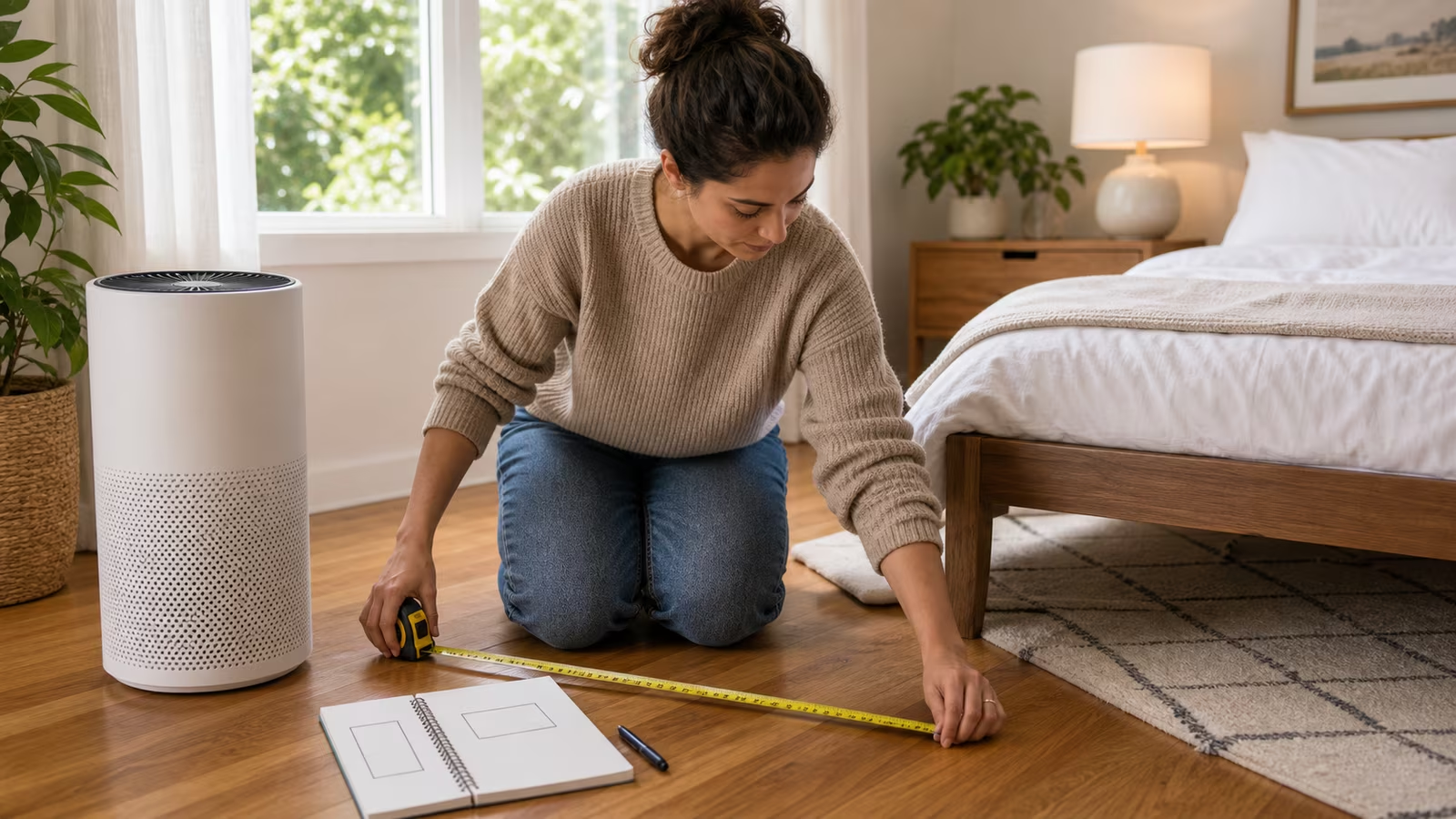
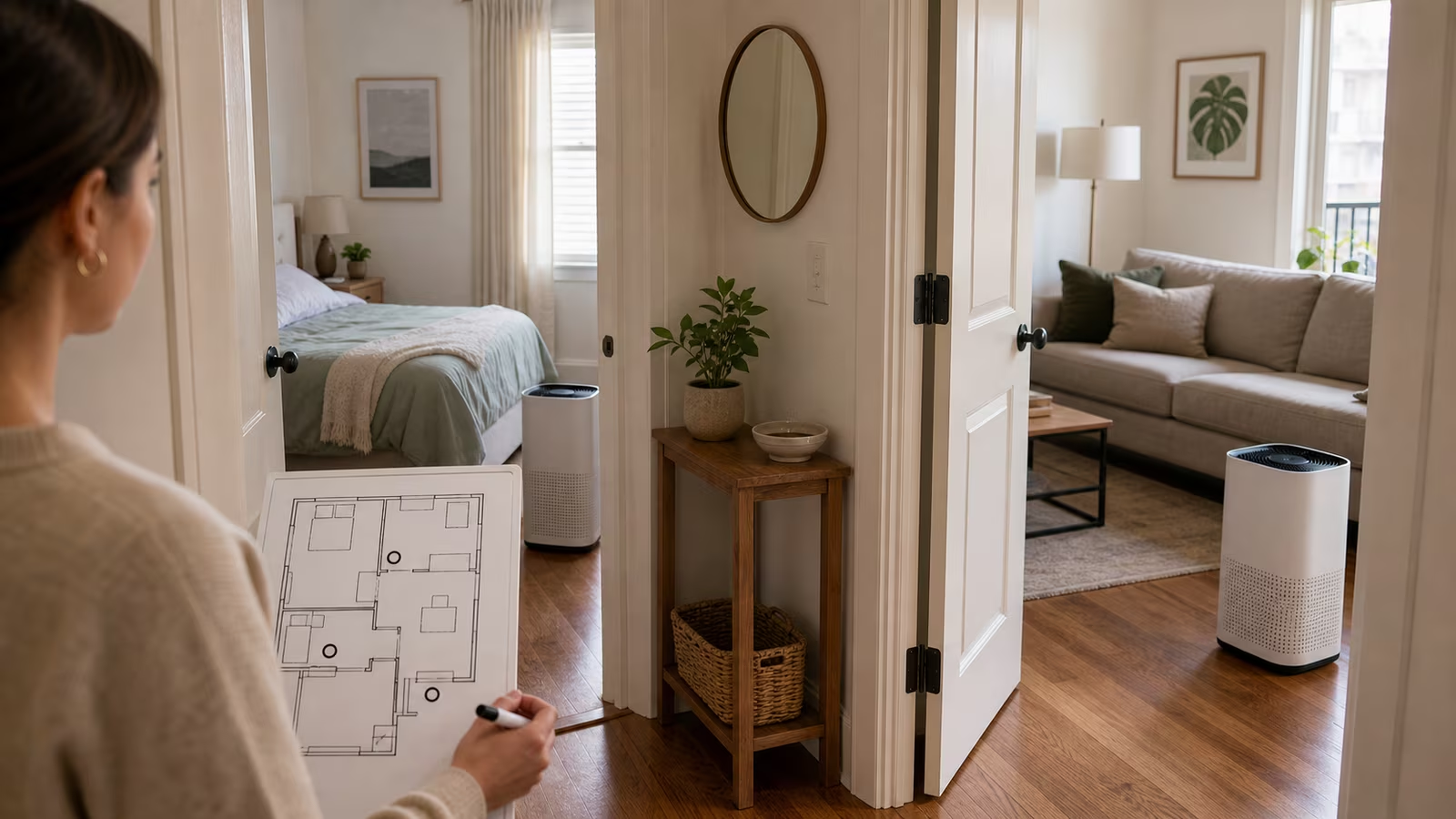
Before spending anything, draw each candidate room on the back of an envelope. Mark the door, the window, the supply vent and return grille if there is central air, any exhaust fan, and where the bed, desk, or sofa actually sit. Then mark where you would put a purifier. This crude drawing exposes the problems a spec sheet never will: the only free outlet is behind an armchair that would blast the clean air straight into upholstery, the window you would open for fresh air faces a busy street, or the return grille is buried behind a bookcase so the central filter barely breathes.
Measure the rooms while you are at it, because a purifier’s rated coverage is tied to floor area and ceiling height, and a unit sized for a snug bedroom will crawl in a double-height living room. This is where the air purifier sizing calculator earns its place in the plan. Feed it the real dimensions of your top-ranked room rather than the whole apartment, and it tells you the clean-air delivery rate you actually need there. Do that for the two or three rooms at the top of your list and the budget question usually answers itself: one right-sized unit for the bedroom often beats two undersized ones spread thin.
One Unit That Moves Versus Two That Stay
A portable purifier’s great advantage is that it can follow the people. If the household is in the living room all evening and the bedroom all night, a single capable unit wheeled between the two can cover both far better than two weak units nailed to their corners. The catch is that a purifier only works while it is running, and a machine you have to remember to relocate is a machine you will eventually leave in the wrong room. Moving a unit works for predictable daily rhythms; it fails for rooms used at the same time by different people.
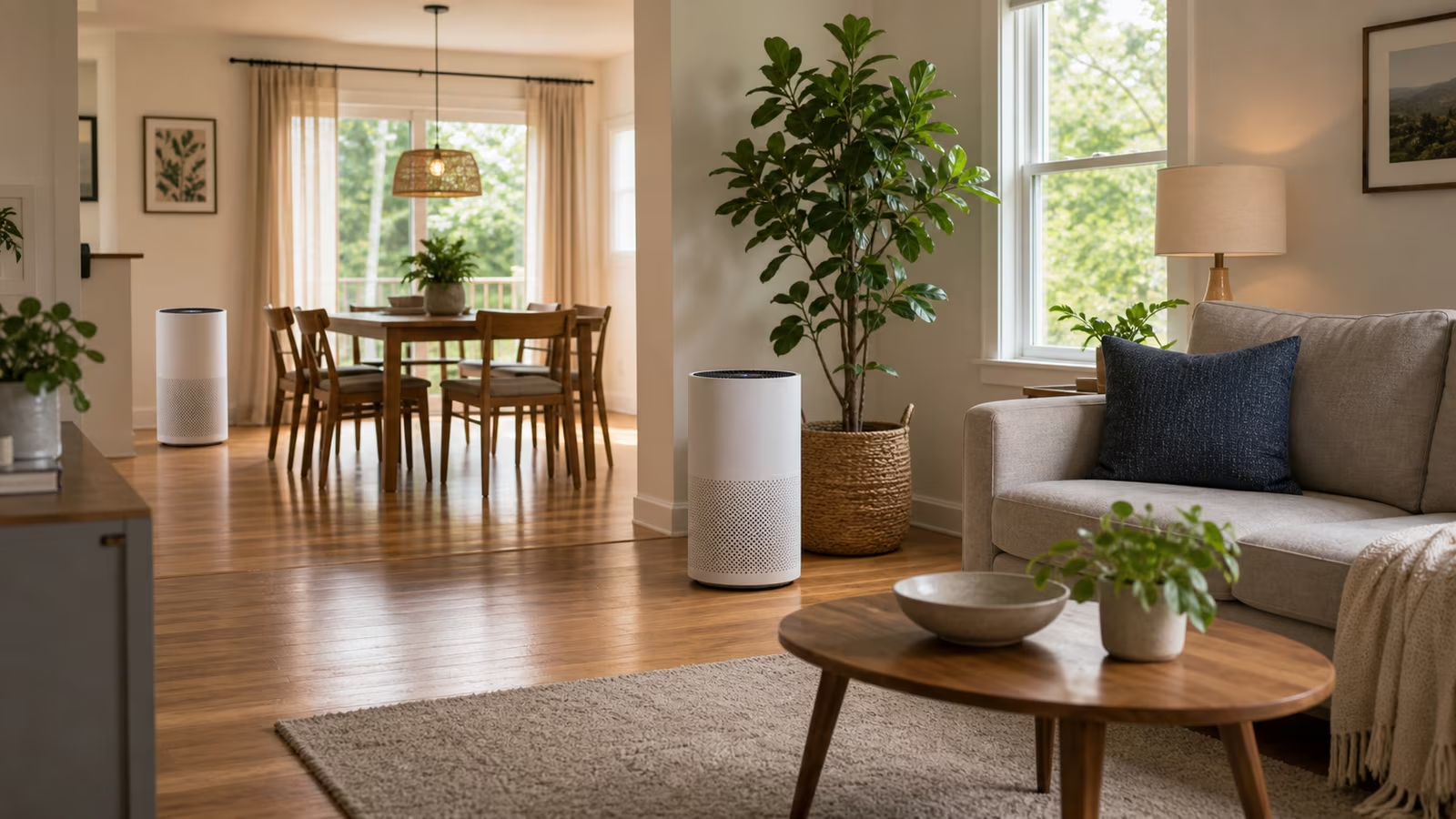
That trade-off is what decides between the roaming single unit and the fixed pair. If one person is home and moves through the house in a routine, buy one good unit and move it deliberately. If two rooms are occupied simultaneously every night, the second unit is not a luxury; it is the only way to clean both. The related guide on air purifiers in an open floor plan is worth reading before you assume a single machine can cover a kitchen, dining area, and living room that share one continuous volume of air, because open plans defeat the roaming strategy entirely.
Filtration Is The Last Step, Not The First
It is easy to make a multi-room plan entirely about purifiers and forget that filtration sits near the end of the sequence. In the top-ranked room, look first at the sources you can simply remove or relocate: the litter box that could live elsewhere, the shoes tracked across the bedroom, the scented plug-in adding compounds while masking others. Then consider the air path, because on a mild day an open window or a well-vented exhaust fan clears a room faster and cheaper than any filter, provided the outdoor air is genuinely better than what you are replacing. Only after sources and airflow have done their work does a purifier become the tool that catches what remains.
This ordering also keeps whole-home systems in perspective. If the house has central heating and cooling, a snug, appropriately rated filter in a system whose fan runs regularly can quietly help several rooms at once, which sometimes reshuffles the whole ranking. The routine that keeps any of this working belongs in the guide on seasonal clean-air maintenance : a filter left in place past its life becomes an expensive way to restrict airflow, and a purifier whose replacement cartridge feels too pricey tends to end up switched off.
Match The Machine To Sensitive Rooms
Rooms used by someone with allergies or asthma often climb the ranking, and it is worth being careful about the language here. A well-placed purifier in the right room can lower the airborne particle load a person is exposed to, and less exposure is a reasonable, honest goal. It does not cure allergies and it does not treat anyone; the aim is a cleaner room, not a medical outcome. The companion guide on allergy-friendly cleaning without medical claims holds the same line: reduce the triggers you can reach, keep the claims modest, and let a doctor handle anything that is actually about health.
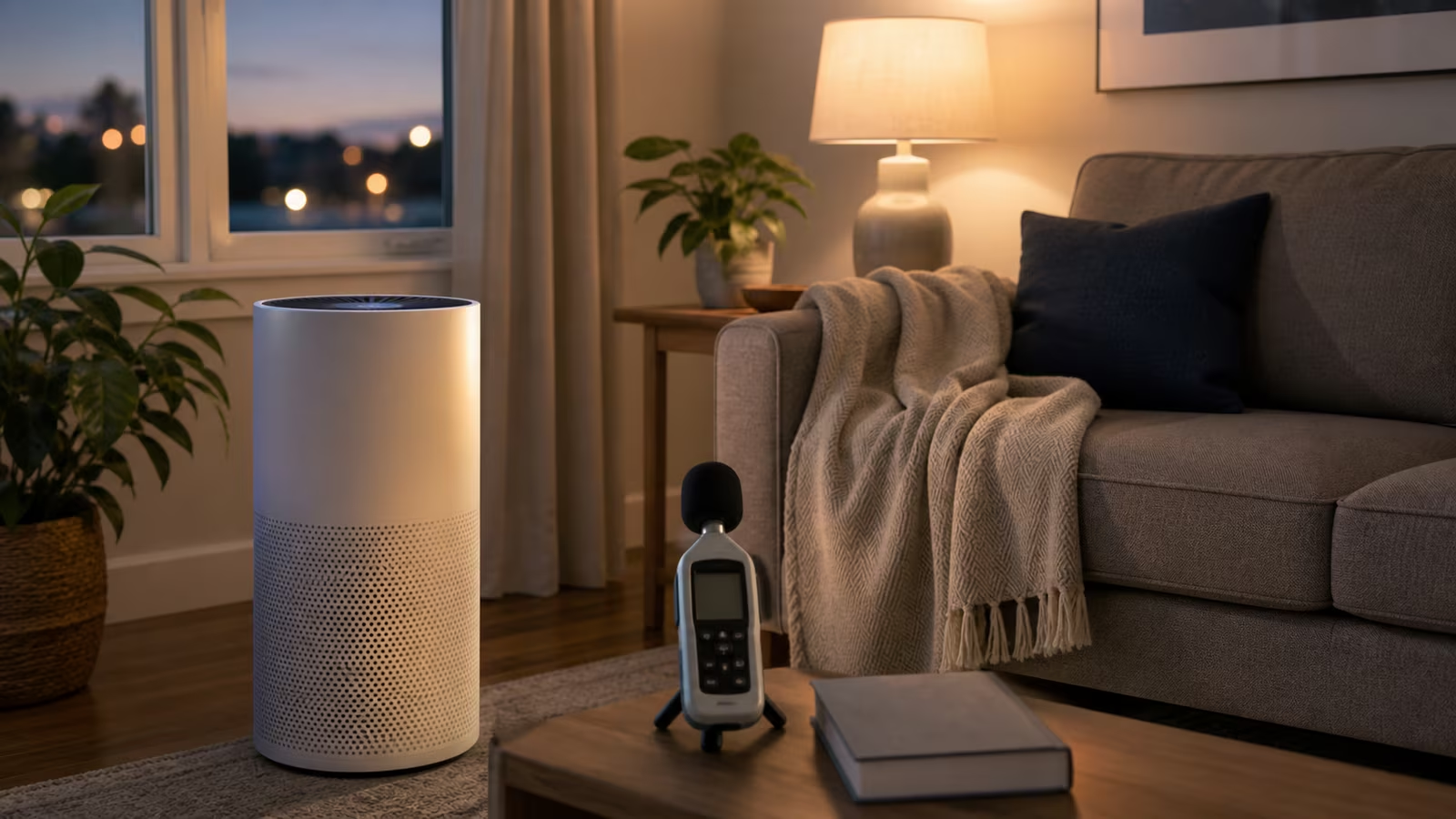
Practically, that means the sensitive person’s bedroom is usually the room to equip first and best, with a quiet unit sized a little generously so it can run on a low, unobtrusive speed through the night. A purifier that is too loud gets turned down or off, which is the most common way good intentions produce no benefit at all.
Prove Each Change Before The Next
The discipline that makes a limited budget go furthest is changing one thing at a time. Move the purifier out from behind the chair, or right-size the bedroom unit, or start closing the office door in the afternoon, and then live with that single change long enough to notice whether the room feels different. If you rearrange everything on the same weekend, you will have no idea which move mattered and no basis for spending the next dollar well. A multi-room plan improves fastest when every change leaves evidence you can read.
Where To Stop
This guide is practical education, not medical advice, and no arrangement of purifiers can guarantee a room is safe to breathe. A purifier display is not a carbon monoxide alarm, a particle filter does not fix a leak, and a cheerful air-quality number does not diagnose anything. If a room points toward carbon monoxide, a fuel-burning appliance behaving badly, extensive mold, a chemical smell you cannot place, radon, or a building-safety problem, the right response is not a bigger machine but documentation, working alarms, official testing where relevant, and qualified help. Within those limits, a home with a clear ranking, a few right-sized machines, and a habit of changing one thing at a time will breathe noticeably better than a home full of gadgets bought in a panic.