The title of this guide is a deliberate promise: you can take pet dander seriously without deciding the animal is the problem. Dander is not dirt and it is not a sign of a neglected pet. It is a normal, continuous shedding of tiny skin flakes that every furred or feathered animal produces, and because the particles are light and sticky, they settle into fabric and drift back into the air with every cushion you sit on. The goal here is not a fur-free, sterile house; it is a home where the particle load is lower in the places that matter most, achieved through washing, placement, and filtration rather than guilt or a doomed campaign against the animal itself.
Reservoirs, Not A Cloud
It helps to picture dander correctly. Only a small fraction of it is floating in the air at any moment; the rest has settled into what are best thought of as reservoirs, the soft surfaces that collect and hold it. The dog bed, the favorite armchair, the rug the cat sleeps on, the throw blanket, and the bedding all act as sponges that soak up dander and then release it back into the air whenever they are disturbed. A purifier running against a room full of loaded reservoirs is bailing while the tap is open.
This reframing is what keeps the approach kind and effective at the same time. You are not trying to stop the animal from producing dander, which is impossible, and you are not trying to filter an invisible cloud, which is inefficient. You are trying to shrink the reservoirs: fewer of them, more of them washable, and the ones that remain cleaned on a rhythm. Once the surfaces hold less, the air has less to pick back up, and the filtration you do run has a fair fight instead of an endless one.
Washable Beats Heroic Cleaning
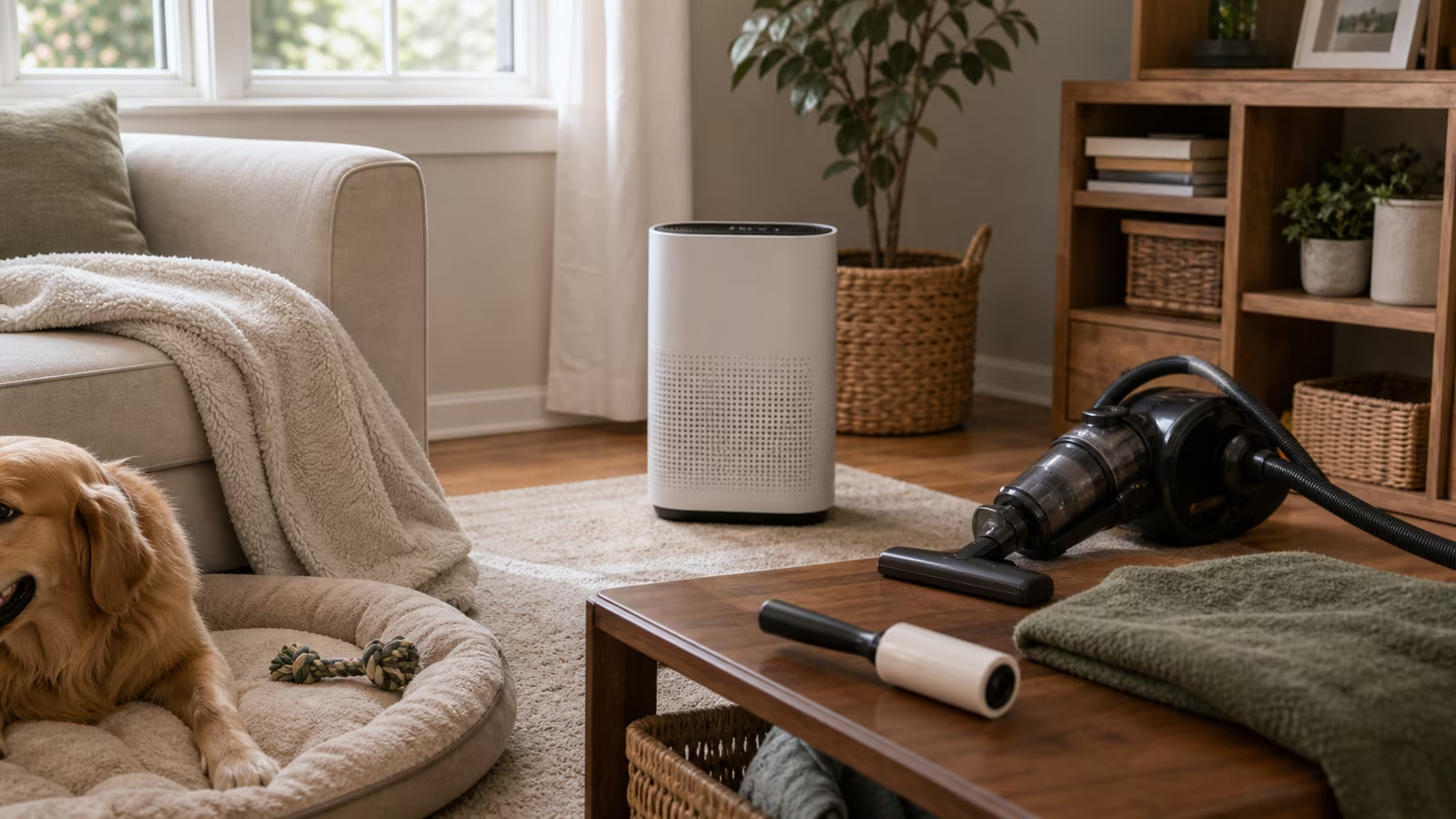
The single most useful habit is making the pet’s favorite spots washable and then actually washing them. A pet bed with a removable, machine-washable cover that goes through the laundry on a regular schedule removes far more dander from the home than any amount of occasional deep-cleaning, because it empties the biggest reservoir on a predictable cycle. The same logic applies to a washable throw draped over the sofa cushion the dog always chooses, or a mat under the cat’s perch: you are giving the dander a launderable place to land instead of letting it sink into upholstery you can never fully clean.
Around those washable zones, the rest of the routine is ordinary and forgiving. Vacuuming picks up settled dander from floors and rugs, provided the vacuum captures fine particles rather than blowing them back out, and doing it when you can then let the room settle keeps the disturbed particles from simply relocating. Brushing the pet regularly, ideally somewhere easy to clean, moves loose hair and dander out of the home on your terms rather than onto the couch. None of this is heroic; it is a set of small, repeatable moves that keep the reservoirs from filling faster than you empty them. The related guide on cat litter dust in small bathrooms covers the one pet source that is genuinely a dust rather than a dander problem and is worth reading alongside this if a litter box is in the mix.
Filter The Rooms Where You Both Actually Live
Filtration is real help for dander because the particles are within the range a good filter captures, but it only helps in the room where it runs, so placement decides everything. The rooms worth prioritizing are the ones where people and pets spend the most shared, stationary hours: usually the bedroom, if the pet sleeps there or nearby, and the main living room. A capable, appropriately sized purifier with clear space around its intake, left running rather than switched on in bursts, steadily lowers the airborne fraction in that specific room.
Getting the placement right is where the purifier placement planner is genuinely useful, because the most common failure is not the machine but its position: tucked behind a sofa, wedged in a corner, or aimed straight into a curtain where it recirculates its own output. The planner helps you think through where the unit should sit relative to the door, the pet’s favorite spot, and the seating so the clean air actually reaches the people. If dander in the bedroom is the main reason sleep feels congested, that room is the one to equip first and best, with a unit quiet enough to leave on through the night, since a purifier that gets switched off for noise does nothing at all.
Guard The Rooms You Want To Keep Lower
Reducing dander everywhere is unrealistic, but keeping it out of one or two rooms is very achievable, and it is often where the biggest comfort gain lives. A common, kind arrangement is to keep the pet out of the primary bedroom, so that one space stays a lower-dander refuge without banishing the animal from the home or the family. It is a boundary about a room, not a rejection of the pet, and it tends to matter most for the person whose sleep or breathing is most affected.
Language matters when a household member has allergies or asthma, so it is worth being precise. Lowering the dander in a bedroom can reduce the exposure a sensitive person gets, and less exposure is a reasonable, honest goal, but it does not cure allergies and it does not treat anyone. The companion guide on the pollen-season indoor routine keeps the same discipline for the outdoor particles that stack on top of dander in spring and fall, and it is worth pairing with this one, since a sensitive person often reacts to the combination rather than to pets alone. Keeping indoor humidity in a comfortable middle range helps too, without overpromising, and the guide to the humidity sweet spot covers why very dry or very damp air both make a room feel worse.
This guide is practical education, not medical advice, and no cleaning routine or purifier can guarantee a room is safe or symptom-free. If someone in the home is genuinely struggling to breathe, reacting severely, or losing sleep to congestion, that is a conversation for a doctor, who can weigh the whole picture rather than just the air. What a good dander routine can honestly offer is a home with smaller reservoirs, cleaner shared rooms, and a lower particle load in the spaces that matter, all of it accomplished without ever having to blame the animal for being an animal.