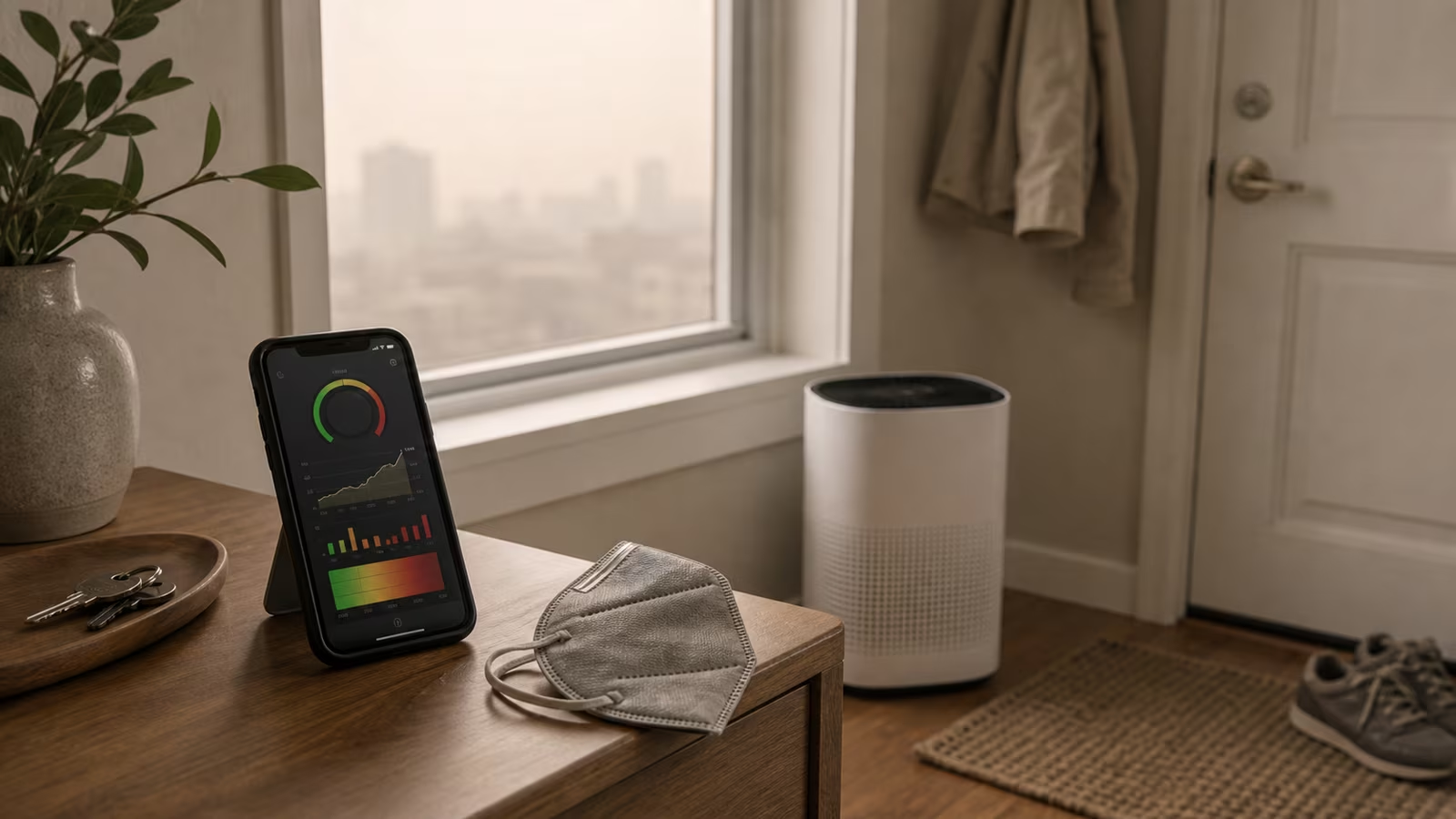
A practical plan begins with a small translation problem. An outdoor number, whether it is an AQI value on a phone app or a PM2.5 reading in micrograms per cubic meter, has to become a decision you make inside four walls. Those numbers are genuinely useful, but they describe the air over a region or at a distant monitoring station, not the air in your living room. Indoors the same particles behave differently. Some are held out by closed windows and a running filter. Some slip in through gaps and the ventilation system anyway. And some never came from outside at all, because frying, candles, a dusty vacuum, or a shaken-out rug can push indoor fine particles well above the outdoor figure on an otherwise clean day.
What The Number Actually Tells You
PM2.5 refers to particles roughly two and a half micrometers across or smaller, fine enough to stay suspended for a long time and to travel deep into the lungs. AQI is a scaled index built partly from those particle measurements, colored and bucketed so a glance tells you whether outdoor conditions are ordinary, elevated, or clearly bad. The most honest way to use either is as a trend and a timing signal. A reading that is climbing through the afternoon of a wildfire-smoke episode means something different from the same reading falling as a front clears the sky. You are not trying to hit a perfect indoor value. You are trying to decide, today, whether the outdoor air is an ally you want inside or a load you want to keep out.
That framing matters because the instinct on a bad-air day is often backwards. People sometimes throw the windows open for “fresh air” during heavy smoke, which imports exactly the particles the AQI is warning about. Other times they seal a home tight on a mild day while a candle and a gas burner quietly raise indoor PM2.5 with no outdoor cause at all. The number outside cannot tell you which case you are in. Only pairing it with what is happening inside the room can.
When Outdoor Air Is Bad
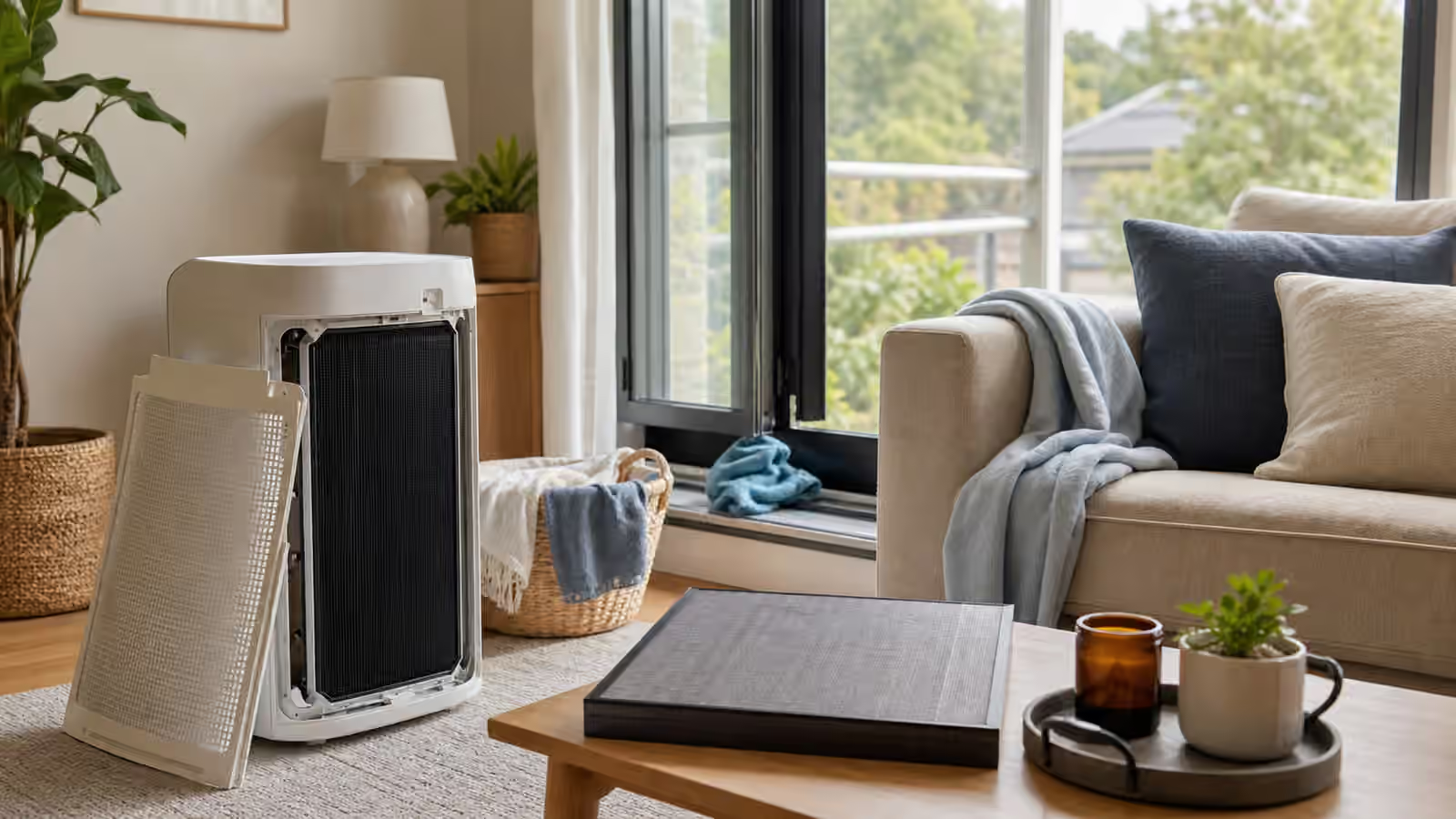
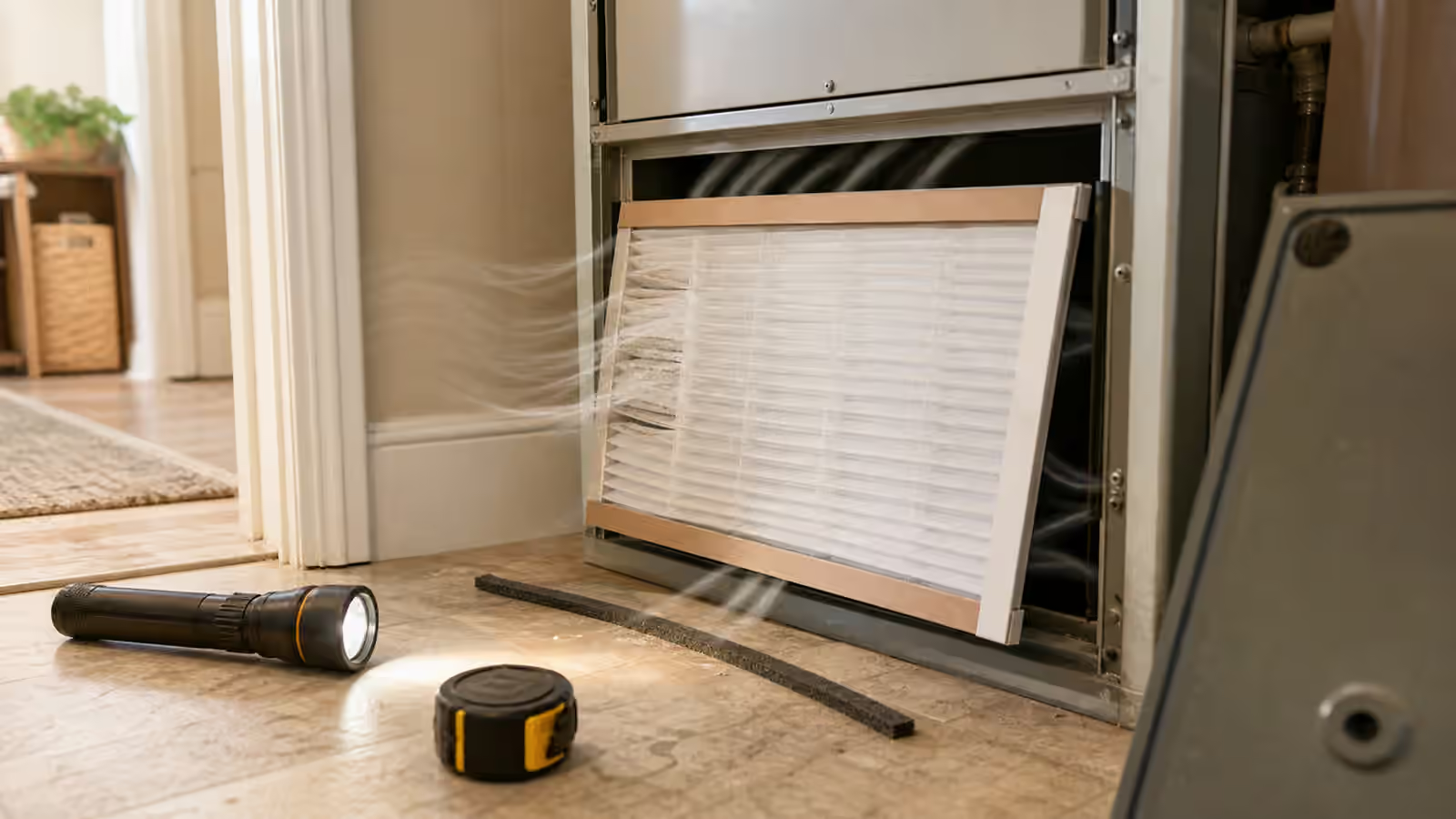
When the outdoor reading is elevated and rising, the useful sequence is to keep the particles out and clean what is already inside. Close windows and outward-facing doors. If a central system pulls in outside air or has an economizer mode, this is the time to switch to recirculation and let a good filter do repeated passes. Run a portable air cleaner in the room where people actually spend the hours, sized for that space, and postpone the indoor activities that add their own particles. Searing, toasting, frying, burning incense, and vacuuming with a leaky machine all add to the load precisely when you can least afford it. A short delay on those tasks is often the cheapest improvement available.
If you have a monitor, watch how the indoor reading responds once the room is closed and filtering. A slow, steady decline is what you want to see. If the indoor number tracks the outdoor number closely, air is leaking in faster than the filter can clean it, which points to a draftier envelope or an undersized cleaner. The companion guide on what to trust in air quality monitors is worth reading here, because low-cost sensors are excellent at showing direction and timing and much weaker at reporting an exact, calibrated value.
When Outdoor Air Is The Fix
The opposite case is just as common and easier to forget. When the outdoor reading is low and the indoor air feels stale, warm, or smells of cooking, the outdoor air is the resource. Opening a window, running a bathroom or range exhaust, or letting the system bring in fresh air will dilute indoor particles and gases faster than any filter can, because ventilation removes the polluted air rather than cleaning the same air over and over. The rule of thumb worth internalizing is simple: filter when outdoor air is worse than indoor air, ventilate when it is better, and check the number before you assume which one is true.
Deciding Room By Room
A whole home rarely needs one blanket answer. A kitchen mid-fry, a closed bedroom overnight, and an open living area each have their own particle story, and a single purifier cannot cover all of them well. This is where a plan beats a gadget. The Smoke-Day Plan Builder turns the outdoor reading and your rooms into a short worksheet: which room becomes the cleaner room, which windows stay shut, which activities wait, and when to reopen. Feed it conservative values, and where you are unsure about a room’s size or a filter’s age, write the uncertainty down rather than inventing a confident figure. For homes with several connected spaces, the open-floor-plan purifier guide and the multi-room clean-air strategy explain how one clean room and staged filtration usually beat scattering underpowered units around the house.
Common Ways The Number Misleads
The first trap is treating AQI as a verdict on your specific room. It is a regional signal; your indoor reality depends on your windows, your filter, and what you are doing inside. The second is chasing a single perfect value and toggling the purifier off the moment the app turns green, which ignores the lag between outdoor change and indoor recovery. The third is forgetting that PM2.5 is only one pollutant. A clean particle reading says nothing about carbon monoxide, radon, or the gases from a fresh coat of paint, and a particle filter does nothing for a combustion hazard. Keep the categories separate and let each one trigger its own response.
A monitor that is calm should not talk you out of an alarm. A particle sensor cannot replace a carbon monoxide alarm, and neither one proves a room is free of every risk. Use the reading to time your ventilation and filtration, not to declare the air problem closed.
Building The Habit
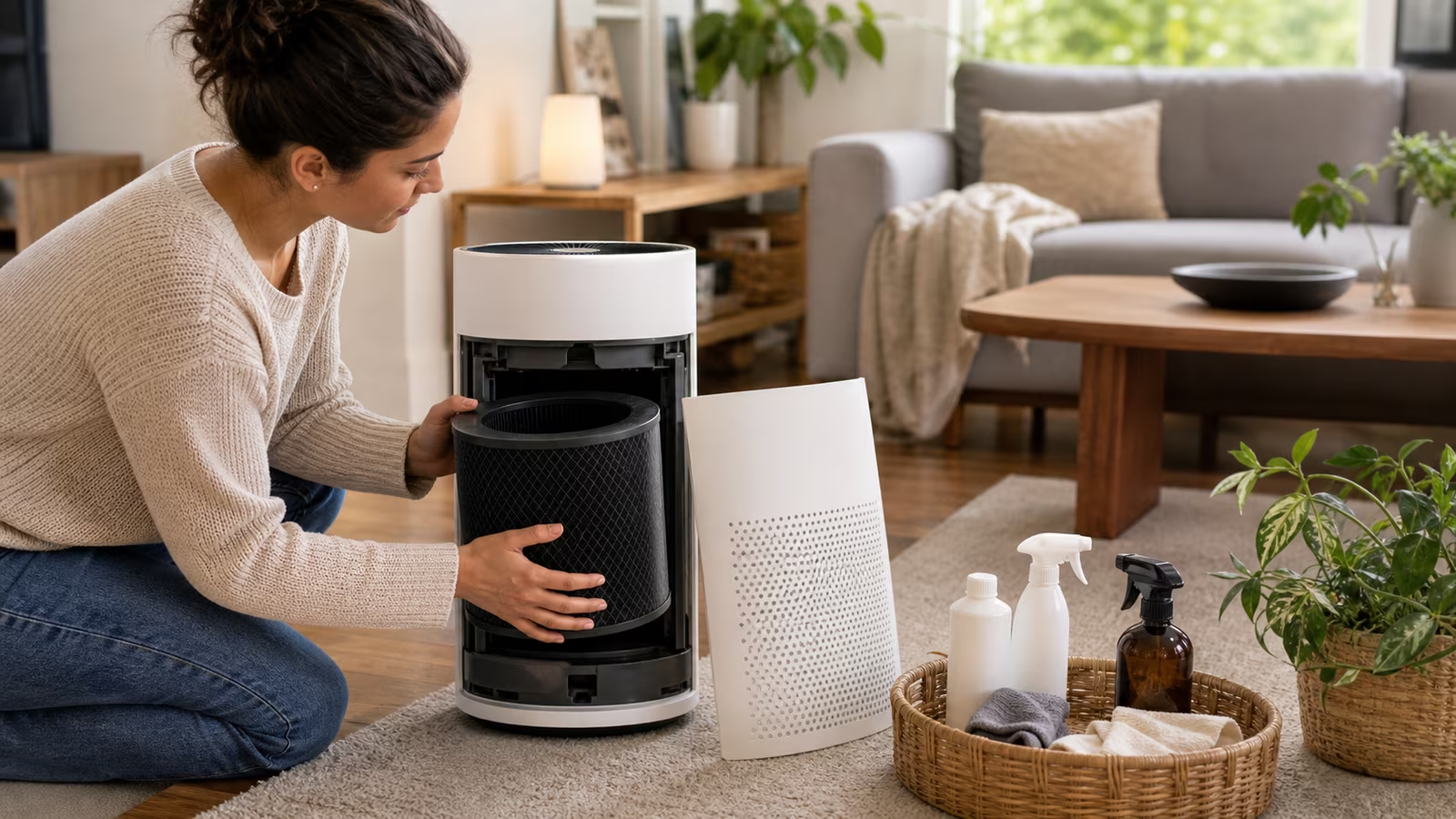
The durable version of this is boring by design. Check the outdoor reading when you wake and again if the weather shifts. On elevated days, close up and filter the main occupied room, and hold off on smoky indoor tasks. On clean days, open up and flush the house, especially after cooking. Keep a fresh filter on hand and note its install date somewhere you will see it, because the best plan fails quietly when the filter is loaded and the fan is turned down for noise. Small, repeatable moves tuned to the day’s number will do more than any one-time purchase.
The boundary matters as much as the routine. This is practical education, not medical advice, and following it does not make a room safe on its own. Particle readings do not cover carbon monoxide, radon, mold, or chemical spills, and a purifier is not a substitute for the alarms and professionals those hazards require. When the situation involves fuel-burning equipment, suspected carbon monoxide, extensive mold, or building damage, document what you see, ventilate or leave as appropriate, and bring in qualified help and official local guidance rather than reading further into an app.