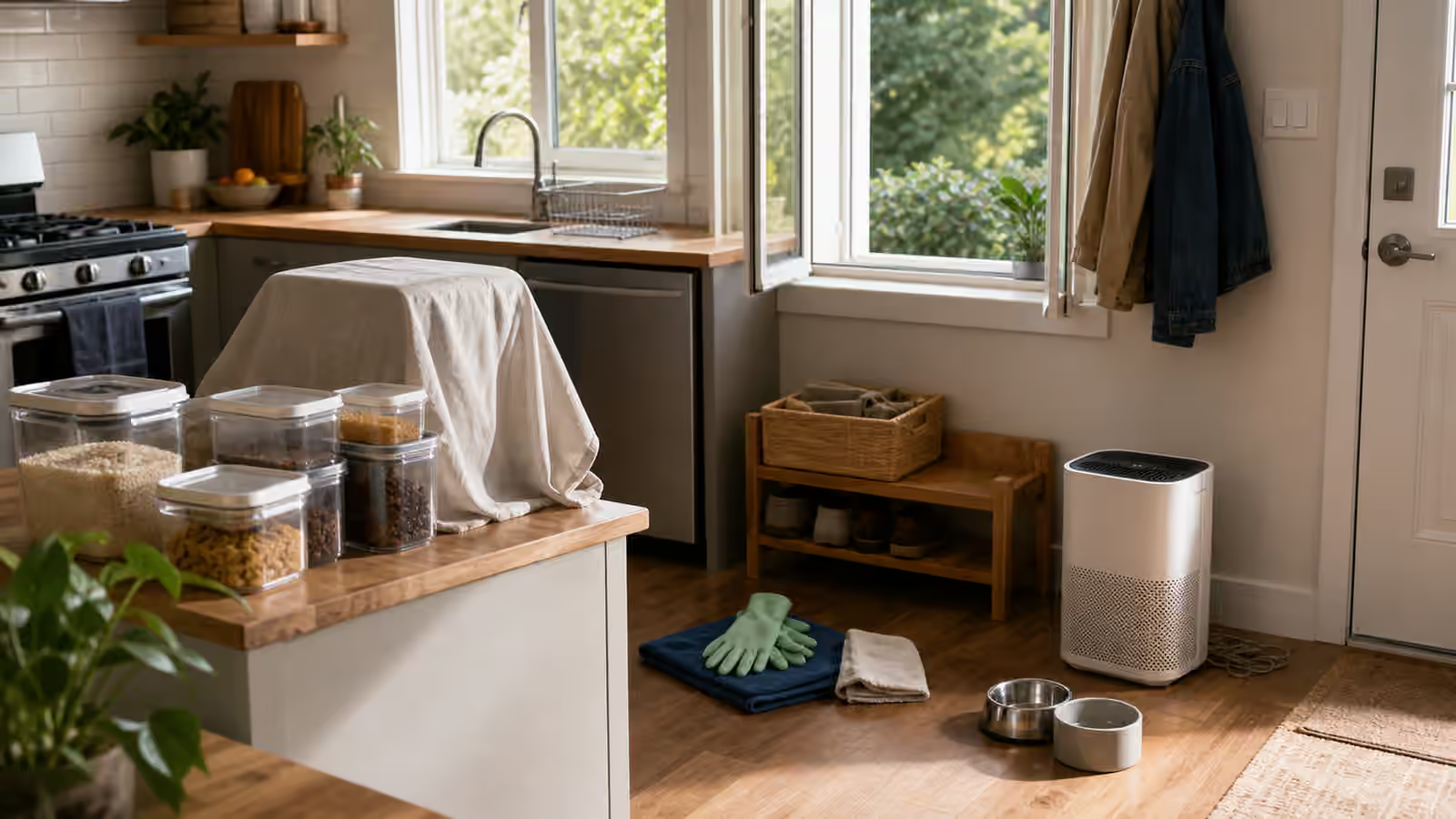
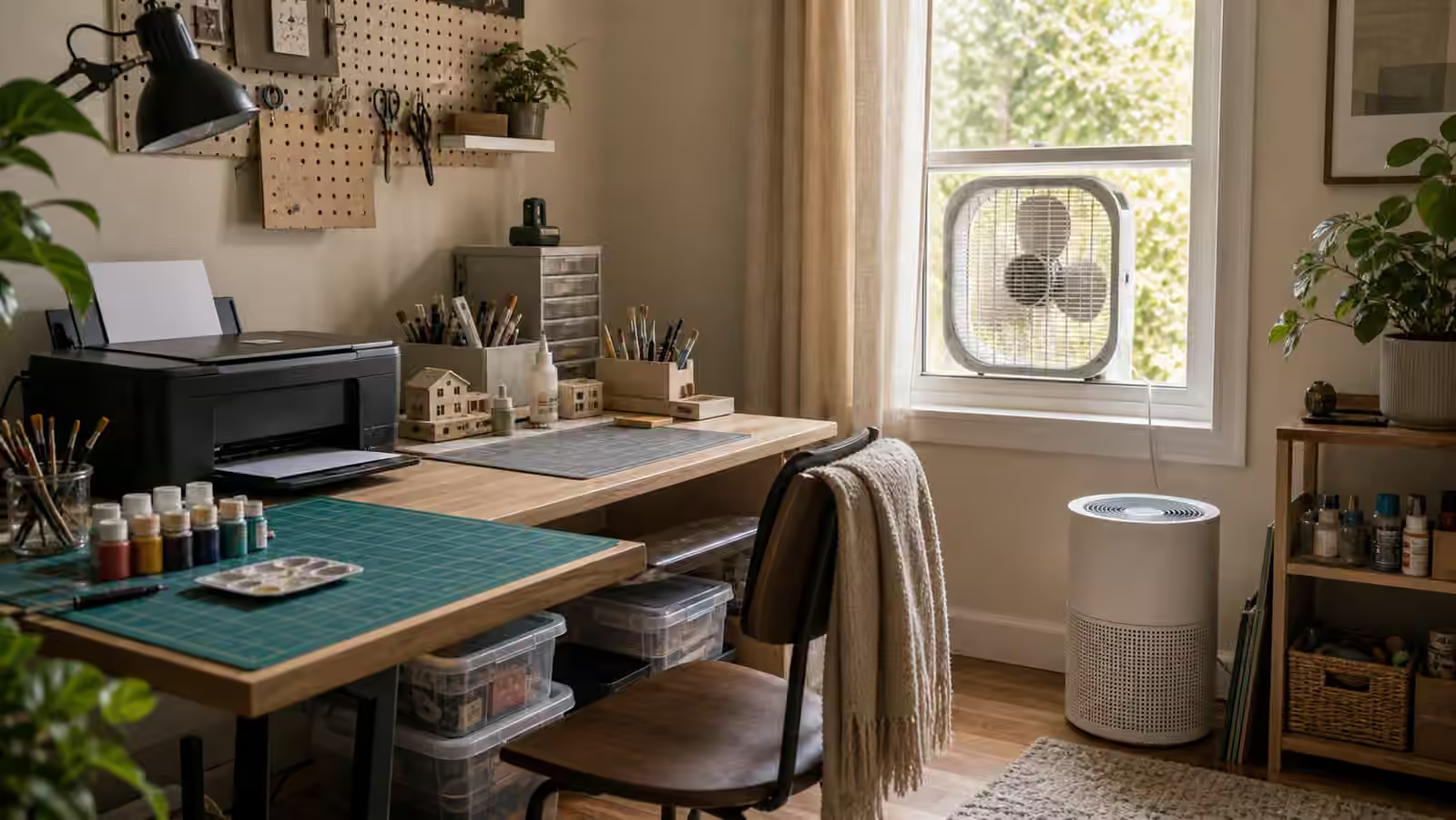
A hobby room is a hard space to give one air rule to, because the pollution changes with whatever you happen to be making. On Monday it is a quiet corner with a laser printer. On Saturday it is filled with the smell of spray adhesive, a haze of sanding dust, the sharp note of a solvent, or the warm plastic odor of a 3D printer that has been running for six hours. The room is often small, kept closed so the mess and noise stay contained, and packed with supplies that off-gas quietly even when nothing is in progress. That variety is the whole challenge: a plan that fits printing does not fit spray-painting, and the honest starting move is to treat each session by what it actually releases rather than reaching for the same purifier every time.
Name What The Project Releases
Before you think about any device, ask what this particular activity puts into the air, because the answer determines everything else. Cutting fabric and paper throws off lint and fine dust that drift and settle. Sanding wood, filing resin, or working clay produces fine particles, some of which the material’s safety sheet treats seriously. Glues, solvents, spray paints, and permanent markers give off vapors that a particle filter does nothing for. A laser printer sheds a bit of fine particulate and a faint odor during long runs, while a 3D printer emits both ultrafine particles and material-specific fumes that vary a lot between filament types. These are genuinely different problems. Dust settles and needs capture and cleaning; vapors need dilution and exhaust; and a few materials simply do not belong in a closed living space at all. The label is not decoration here. When a product specifies ventilation, a respirator, curing time, or outdoor use, that instruction outranks anything a home air guide can offer.
This source-first thinking is the same discipline covered in Cleaning Products, VOCs, and Fresh Air and, at a larger scale, Paint, Renovation Dust, and New Furniture . The hobby-room version is smaller but follows the same logic: cap containers between uses, store volatile products in sealed bins rather than open on a shelf, never mix products casually, and carry the source out of the room when the session ends.
Timing Is A Control You Already Own
A lot of hobby-air trouble disappears with better sequencing, which costs nothing. Do the dusty, sanding, cutting work before you clean the room, not after you have brought in fresh fabric or finished pieces you do not want coated. Save the higher-odor jobs for when the outdoor air is decent and you can genuinely ventilate. Let paint, glue, and resin cure somewhere away from where you sleep or work, if the material allows it. And resist stacking several source-heavy tasks into one session in a room with weak airflow, since the loads add up faster than the room can clear them.
Printers reward timing too. A big print run in a closed home office can leave a faint odor and some particulate hanging in the exact room you are about to sit in for the afternoon. Moving the printer away from where you breathe, cracking the door after the job, or scheduling long runs before a break often does more than buying anything. Because a closed hobby office also tends to go stale and build up carbon dioxide over a long session, the Home Office Air for Closed-Door Work guide is a natural companion when the same room serves double duty.
Ventilate With A Real Path
A window fan only helps if it creates a sensible route for air. For an odor-heavy task, exhausting air outward near the source pulls fumes away from your face; a fan blowing inward can instead push them across the bench and through your supplies. The catch is that outdoor air is not always the ally you want, since it may be smoky, pollen-heavy, damp, or too cold, so ventilation is a judgment call rather than a default. The Ventilation and CO2 Helper can structure that decision, weighing room size against how much air you are moving, though it cannot judge a specific craft material for you. The better question to keep asking is simple: where does air enter this room, where does it leave, and is the source sitting on that path or off to the side where fumes pool.
Keep Dust From Becoming A Reservoir
Hobby rooms are all flat surfaces, and flat surfaces hold dust: shelves, cutting mats, the tops of printers, bins, pegboards, and every fabric in the room. The problem is that this settled dust does not stay put. Dry sweeping lofts it back into the air, and a vacuum with a leaky filter blows the finest particles straight out the exhaust. Damp-wiping the bench after dusty work, choosing mats you can wash, keeping supplies in closed bins, and laundering fabric scraps and covers on a rhythm all keep the room from quietly re-releasing last week’s mess. Some dusts warrant more than ordinary care. Fine sanding dust, clay dust, certain pigments, and specialty powders should be handled to the material’s own guidance, and if a task throws visible clouds, strong fumes, or heat, that is your signal to move it out of the casual hobby room into a garage, shop, or outdoor space.
Filtration As A Backstop, Not A License
A portable air cleaner earns its place when particles are part of the mix and it is sized to the room and placed with a clear intake. It should not sit buried in the clutter, where filters clog fast and cords become a trip hazard, and it does its best work with some runtime after a dusty task so it can catch what is still suspended. Just be clear about what it cannot do: a standard particle filter does nothing for solvent or glue vapors. Activated carbon can absorb some of those odors when there is enough media, but as Activated Carbon for Odors and Gases explains, it is a limited sponge, not a cure-all, and it is no substitute for actually ventilating a fume-producing job. Central HVAC filtration is usually a quiet background helper here rather than the main control, and in a closed room that the system barely serves, it may see very little of what the bench produces.
Make The Room Easy To Reset
A good hobby room is not sterile, it is resettable. Caps go back before cleanup starts. Finished pieces move to a curing spot that matches the material. The bench gets a wipe before supplies are put away, and the printer area gets cleared when paper dust builds up. Keep a short note on any material that always leaves a lingering smell, because that recurring annoyance is data telling you to change the product, the ventilation, or the location.
The stopping rule is the most important line. If a product calls for outdoor use, strong ventilation, a respirator, or special handling, do not talk yourself out of it because the project is small. Keep the boundary honest: this is practical education, not medical advice, and no home routine can make a room safe on its own. If fumes, dust, heat, or symptoms make the space uncomfortable, leave and reassess, and for anything involving a fuel-burning tool, suspected carbon monoxide, or a material whose warnings you cannot meet at home, stop and use a proper workspace or qualified help rather than pushing through.