A closed interior door seems too small to matter until one room starts behaving unlike the rest of the house. It feels warm, stuffy, or stale by morning even though the furnace or air handler ran all night. A purifier in the corner seems to work harder than it should, cycling on the same trapped pocket of air. A desk fan keeps the person comfortable without ever really exchanging the room’s air with the hallway. In most of these cases the missing piece is not another machine at all. It is the route air takes after it enters the room, and specifically whether it has any decent way to get back out with the door shut.
The Door Is Part Of The Air System
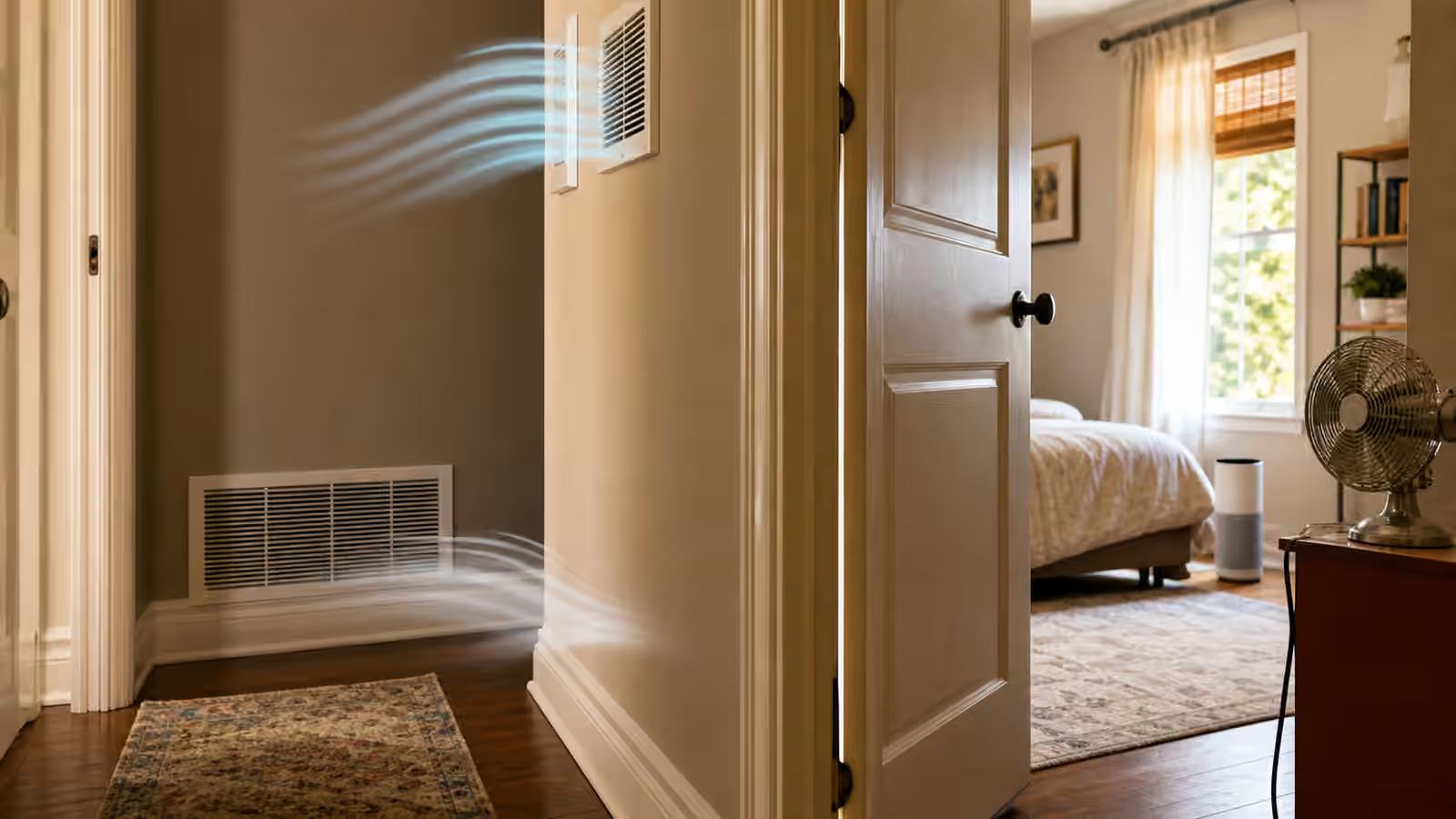
Most forced-air homes push conditioned air into each bedroom and office through a supply register, but the return grilles that pull air back to the system are few, and they usually sit in a hallway, a stairwell, or a central living area rather than in every room. With the door open, air flows in through the supply and drifts back out toward the distant return without trouble. Close the door, and that supplied air still has to go somewhere. If the only exit is the thin gap under the door, the incoming air backs up, the room gently pressurizes, and less fresh air can actually enter because the room is already full. That is how a room with a perfectly visible, blowing vent can still feel stale: air is being delivered but not exchanged.
The distinction worth holding onto is between moving air and exchanging it. A fan blowing across a bed stirs the same pocket of air around; it mixes, but it does not replace. A supply register pushes air in. A return path lets air leave so that new air can follow. Those are separate jobs, and no amount of mixing substitutes for a real path out. The ventilation basics for stale rooms guide makes the same point about windows and fans; the closed-door problem is that identical logic playing out inside the house, where the “outdoors” for a bedroom is really the hallway on the other side of the door.
How To Notice A Return Problem
You can spot a weak return path without any instruments. A door that tugs or thumps when the system kicks on, a faint whistle around the door gap, a curtain that stirs near the floor, or a bedroom that is noticeably stuffier than the hall by morning are all signs that air is struggling to leave. So is a room that never seems to clear after a shower, a workout, a candle, a litter box, or a long call, even though it has its own vent. If you want a quick check, hold a strip of tissue near the door gap with the central fan running and the door nearly shut. A sharp pull or a persistent flutter tells you air is being forced through that narrow gap because it has nowhere better to go. The tissue proves nothing on its own, but it usefully turns “why does this room feel bad” into “how does air get in, mix, and leave when the door is closed.”
If you own a carbon dioxide monitor, an occupied closed room is where it is most informative. Watching the reading climb through a night or a work session, then fall when you open the door, shows the exchange problem directly, though the number is a trend signal rather than a verdict, a boundary the CO2 monitors for home ventilation guide spells out. The Ventilation and CO2 Helper is a good place to turn those observations into a plan, weighing the room’s size and occupancy against how much air is actually reaching it.
Bedrooms And Offices Are The Usual Trouble Spots
Bedrooms concentrate the problem because people spend eight closed-door hours in them adding moisture from breathing, heat from bodies and chargers, and particles shed from bedding. A weak return path lets all of that accumulate, so the room feels close by morning while the rest of the house feels fine. The bedroom ventilation overnight guide covers the sleep routine itself; the return-path angle explains why an otherwise sensible routine can still be defeated by a door that seals the room off from the system.
Home offices show the same pattern in a compressed window. A closed door is a gift for calls and focus, but it cuts the room off from the rest of the home, and a person plus a laptop, a monitor, chair fabric, and carpet can make a small room feel dense by mid-afternoon. Opening the door for a few minutes between meetings often beats running a desk fan continuously, especially if the central system or a purifier can then draw the room’s air into a wider loop.
What Helps Without Remodeling
Start with the free experiment: change how the door sits. Leave it open during low-privacy stretches, crack it after a meeting, or open it for a short reset before sleep, and see whether the room improves. If it does, you have confirmed that exchange, not filtration, was the shortfall. A simple door stop can hold a consistent gap without leaving the door wide open. Running the system fan continuously rather than only during heating and cooling keeps air circulating between the room and the return whenever the door allows it, a trade the HVAC fan on auto versus circulate guide weighs in detail. A quiet fan can help if it nudges room air toward the doorway, but it should support the path out rather than just blast the occupant.
Purifier placement changes once a door closes, because the room becomes a smaller, more self-contained air system. The unit needs room air reaching its intake and cleaned air rejoining the space, so a purifier wedged behind a dresser or against a curtain may polish one corner while the rest of the room stays sluggish. Keep it clear of fabric piles and tight corners, and do not aim a fan so it robs the intake.
What To Leave To A Building Professional
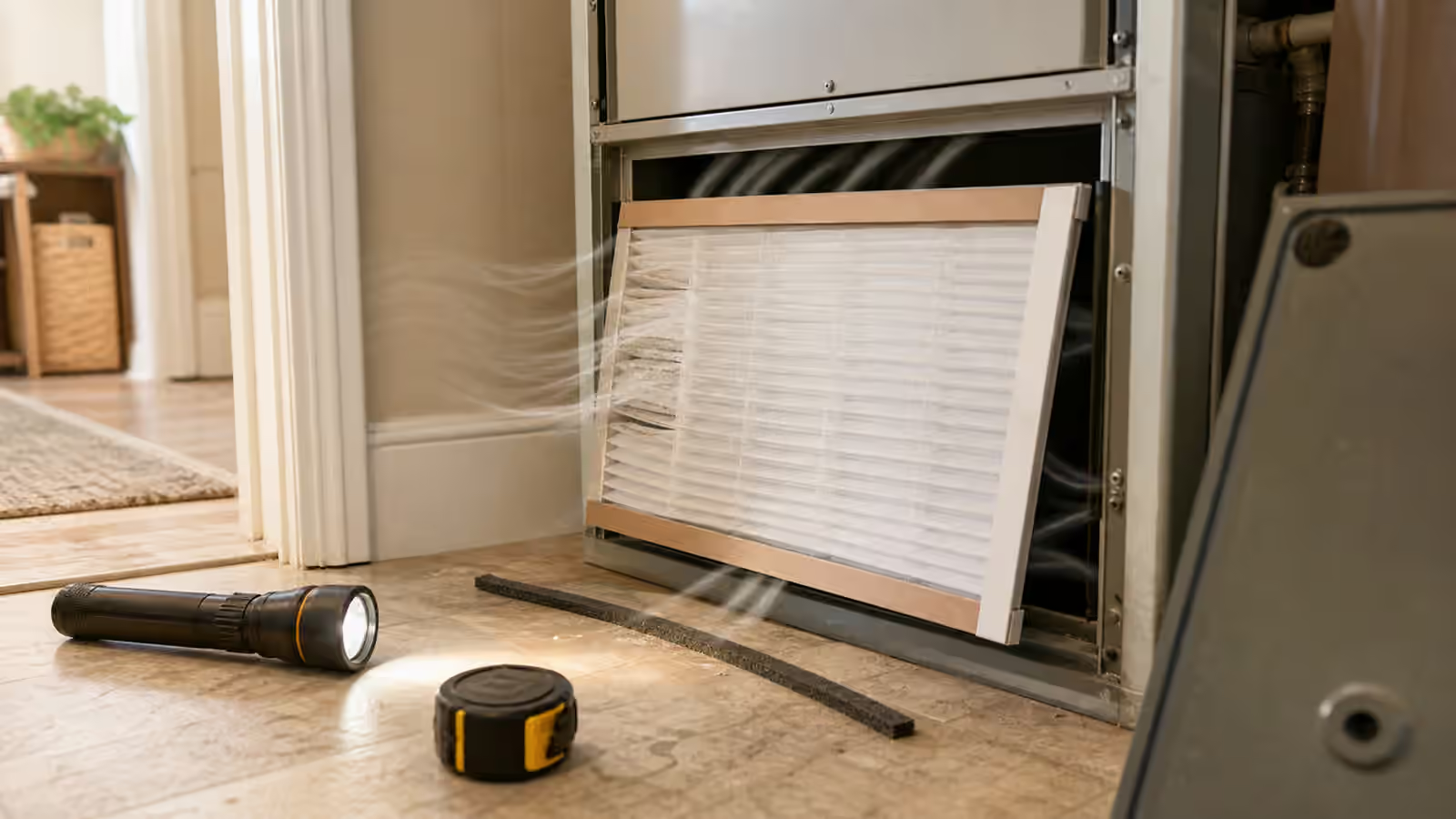
Some fixes are genuinely beyond casual DIY. Transfer grilles, jumper ducts, changes to the door undercut, added returns, and system balancing all touch noise, fire separation, privacy, dust movement, and how the whole system performs, and getting them wrong can make things worse elsewhere. Renters face lease limits on top of that. If a room is chronically pressured, loud, or uncomfortable, document how it behaves with the door open versus closed and ask for qualified HVAC input rather than cutting holes or blocking grilles. In particular, do not fix a pressure problem by closing supply registers blindly, taping over returns, or treating a towel jammed under the door as a permanent solution; each of those can shift airflow and comfort in ways you did not intend. And remember that filtration only works when air can reach the filter, pass through it, and return to the room, which a poor path defeats.
The Right Door Position Depends On The Day
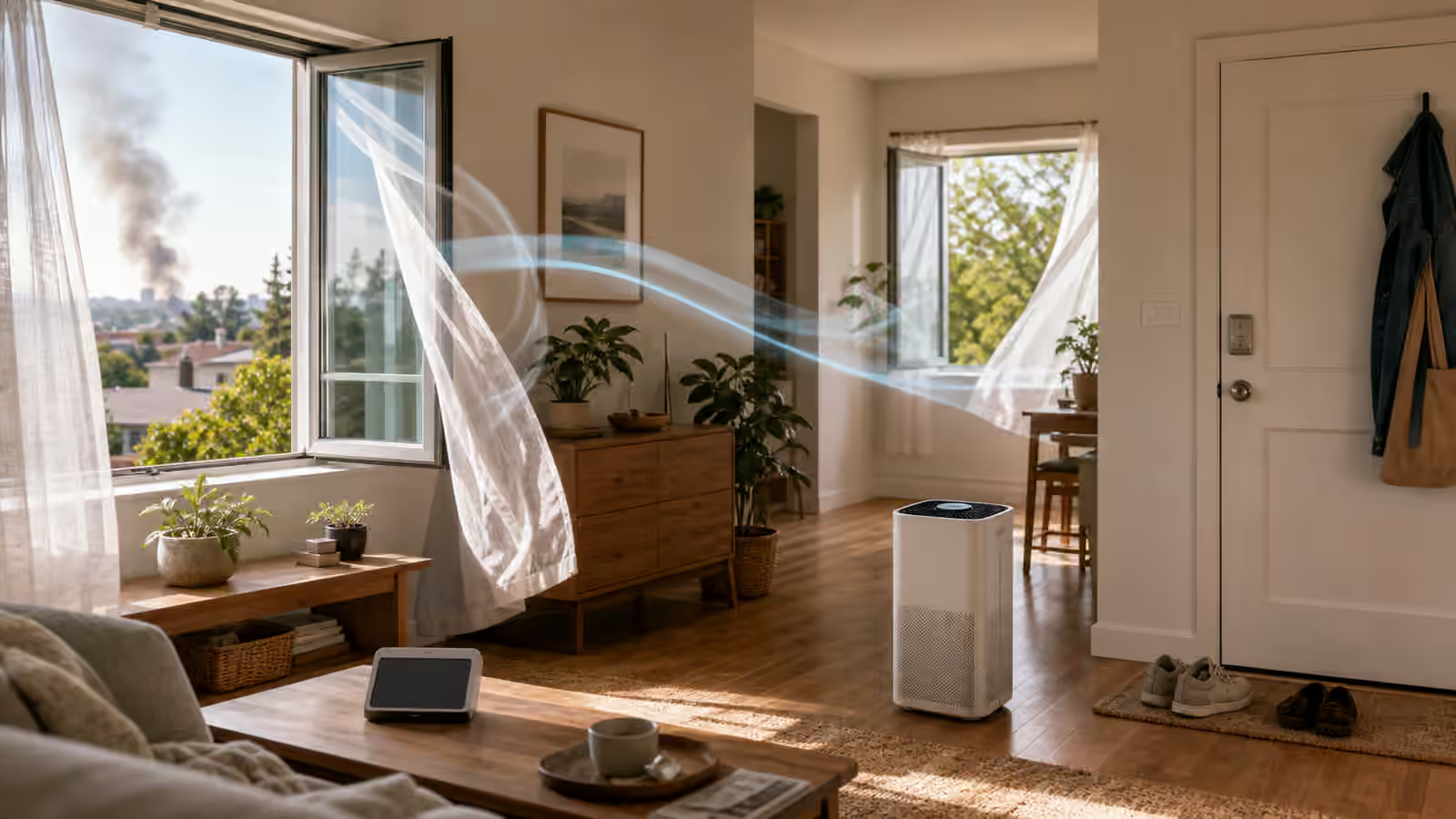
Open is not always the answer. During outdoor smoke, a clean room is often better sealed with the door closed and a strong local purifier running, minimizing traffic in and out. In pollen season, an open window can load a room faster than any exchange can clear it. In an apartment, a hallway carrying cooking odor or a neighbor’s smoke may make the entry door the boundary that matters most. The rule is simply that doors have consequences, and the best position depends on which air is cleaner that day: when the hallway and the rest of the home are cleaner than the closed room, use that connection; when they are worse, protect the room and lean on local filtration.
To tune a specific room, pick one and compare three ordinary states over a few days, door fully closed, cracked, and open during reset periods, keeping everything else as similar as you can. Notice odor, stuffiness, temperature, dust, purifier noise, and how fast the room recovers after use. The goal is a room that fits real life, where privacy, noise, pets, children, and sleepers all still matter, usually some combination of a door gap, a timed reset, a well-placed purifier, a maintained filter, and fewer indoor sources. Keep the boundary honest, too: this is practical education, not medical advice, and no airflow tweak makes a room safe on its own. A closed room that traps a fuel-burning appliance’s exhaust is a carbon monoxide concern for an alarm and a professional, not a door-gap fix, so escalate combustion, gas, mold, or building-airflow faults to qualified help and local guidance.