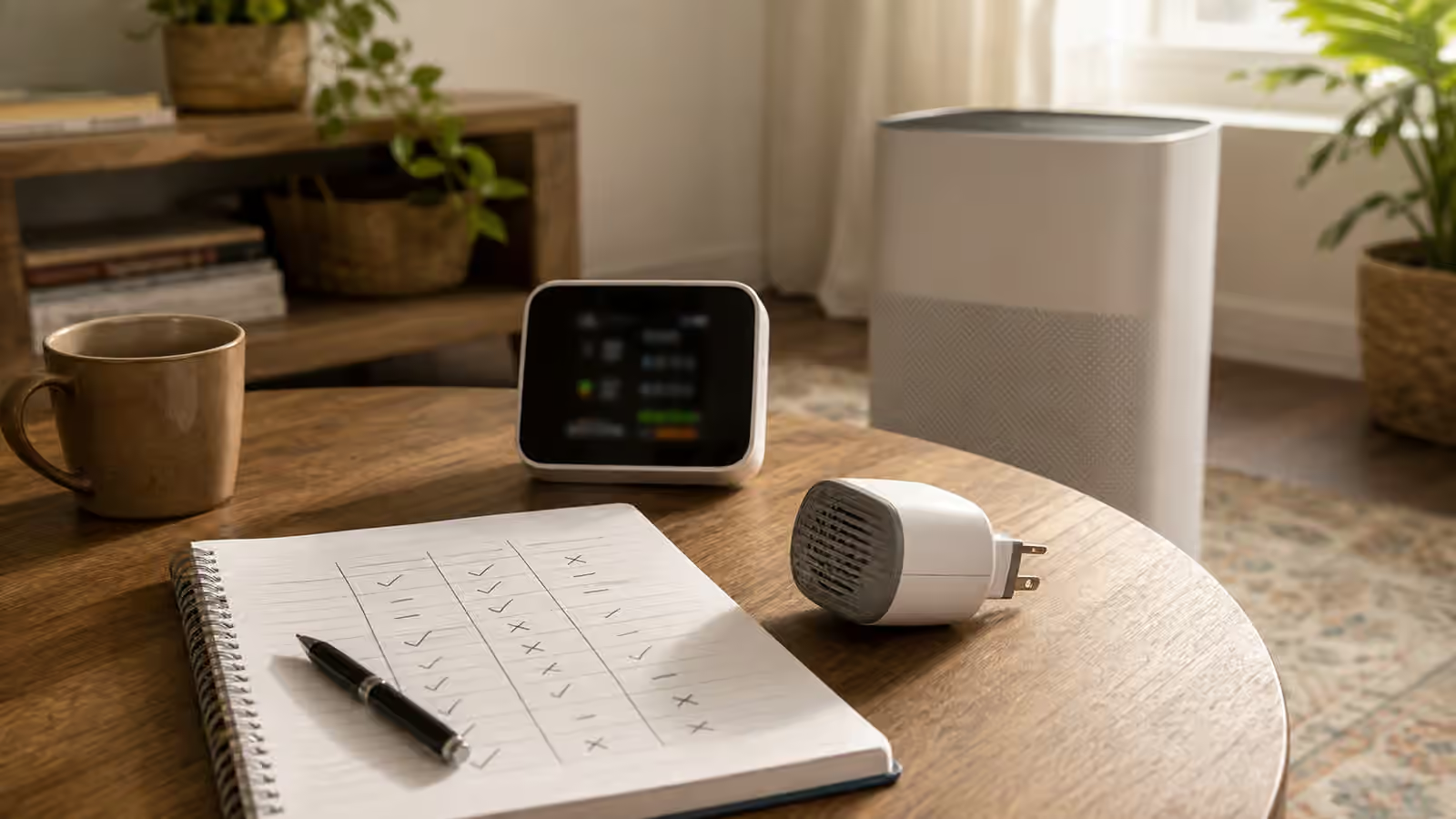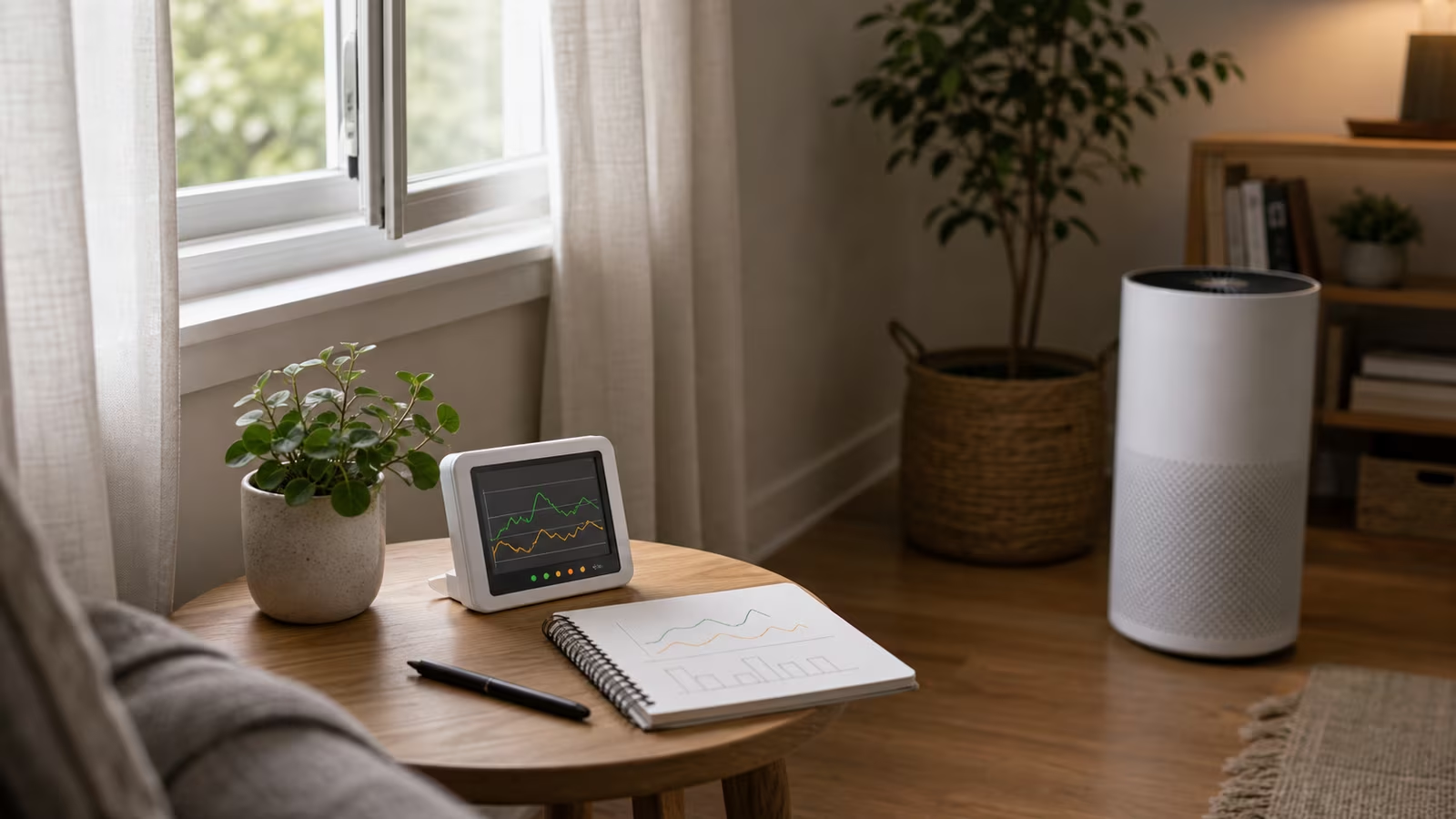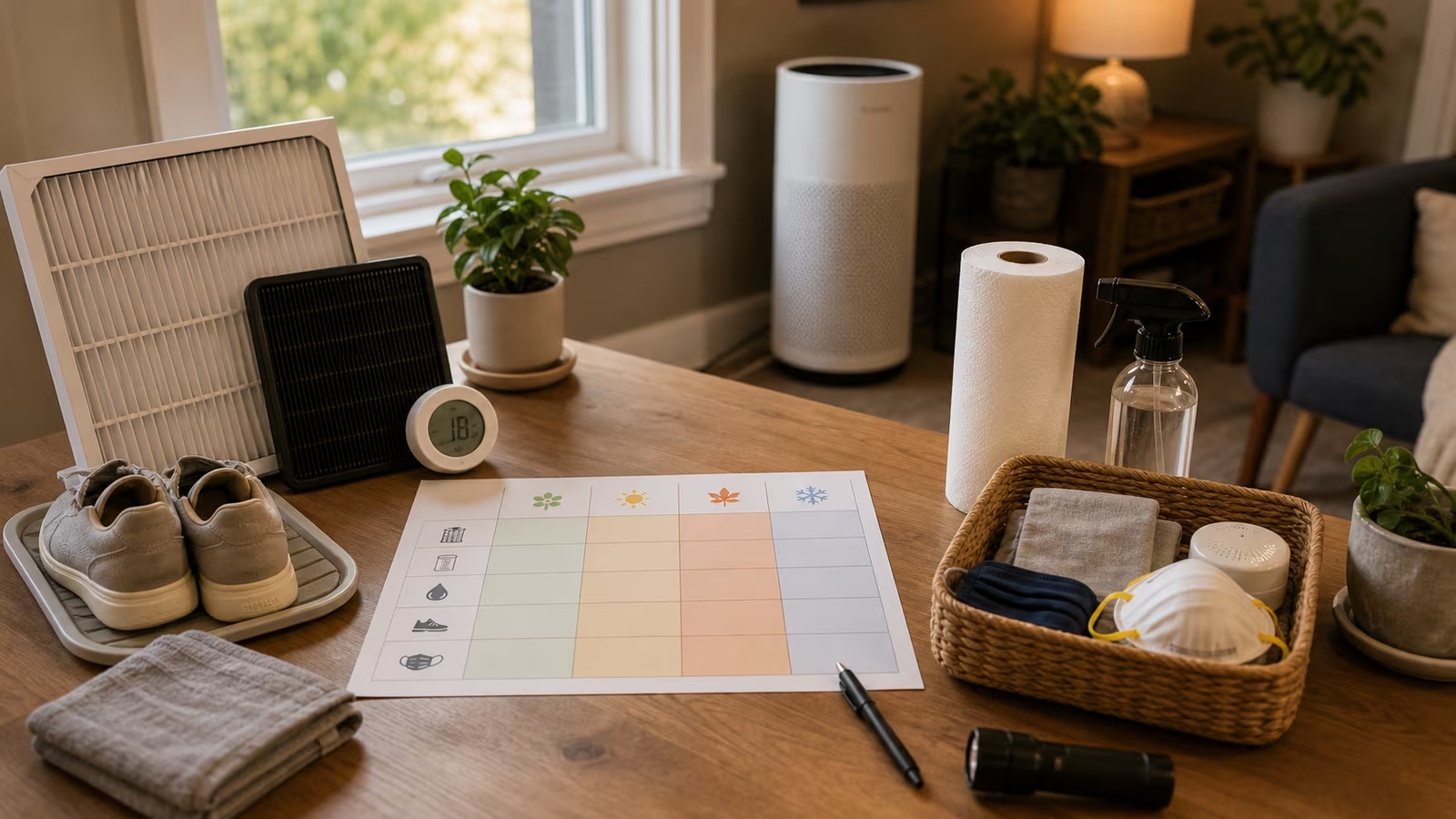
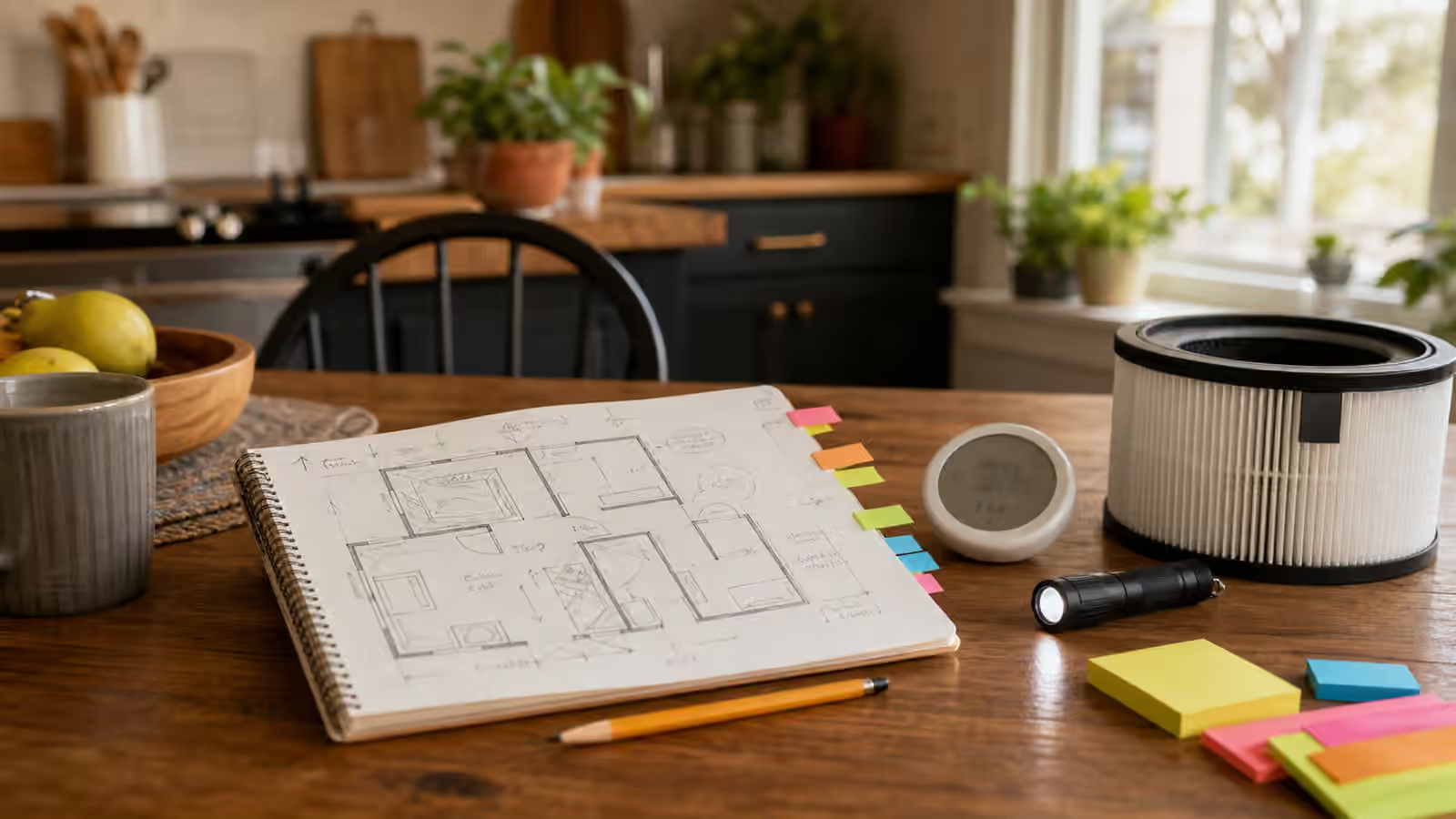
Most homes already contain the information you need to improve their air. It is just scattered across half-remembered moments: the guest room that always smells closed-up, the kitchen that hazes over during a Sunday roast, the corner of the closet that turns musty every spring. A room note simply catches those moments before they fade. The goal is not surveillance and it is not a diary of symptoms. It is a small, honest record of what a room does, so that the changes you make afterward are aimed at a real pattern instead of a mood.
Write For The Version Of You Who Forgets
The single most useful test for a room note is whether it will still make sense in a month. “Air felt bad” fails that test. “Back bedroom stale by evening whenever the door stays shut all day” passes it, because it names a place, a time, and a condition you can act on. A note is a message to a future self who has forgotten the details and only wants to know what to do. Keep it in the tense of that reader: concrete, dated when it matters, and pointed at a room rather than a feeling.
This is why the best notes are shorter than people expect. A room name, roughly when it happens, and the one thing you noticed is usually enough. The instinct to record everything is the same instinct that abandons the notebook by week two. You are trying to build a habit that survives a busy week, not a research project that collapses under its own thoroughness.
Anchor Each Note To Something That Repeats
A room condition on its own is a curiosity. A room condition tied to a repeating cause is a lead. So the discipline worth practicing is connecting what you notice to one of a few anchors: a source, a time of day, the weather, or a habit. The living room hazes when someone sears on the stove with the range hood off. The entryway grits up after a windy afternoon. The basement turns musty in the days after heavy rain. The office feels heavy after a two-hour call with the door closed. Each of those pairings turns a vague complaint into a testable idea.
The clean-air room walkthrough is the natural companion for the first pass through a room, because it teaches you to look for exactly these anchors: where a source sits, where air enters and leaves, which soft surfaces hold odor, and what changed recently. Do that walk once, then let your notes record only the anchors that keep reappearing. Over a few weeks the repeat offenders sort themselves out from the one-time flukes.
Note Events, Not Every Minute
Continuous logging is where good intentions go to die. Almost no household needs a reading every hour, and a wall of numbers with no context is harder to learn from than a handful of well-chosen moments. Event notes are the practical middle ground. You write something down when something happens: a cooking session that filled the kitchen, a smoke day when you kept the windows shut, a pollen-heavy week, the first musty whiff of the season, a filter change, a rearranged room. Between events, you leave the notebook alone.
If you own a monitor, treat it as a timer and a trend-teller rather than a scoreboard. Capture the shape of what it did around an event, not a transcript of every fluctuation. The guide to air-quality monitors and what to trust explains why the number on the screen is most useful as a prompt to open a window, run the hood, or wait a while, and least useful as a verdict about whether a room is fine.
Let Each Room Tell Its Own Story
Rooms misbehave for different reasons, and a note that treats them all the same hides the reason one of them needs help. A bedroom is a story about bedding, closed-door hours, pets on the covers, and laundry that piles up. A kitchen is a story about heat, grease, moisture, and odors that outlast the meal. A bathroom is a story about shower steam and how long the fan runs afterward. A basement is a story about cool surfaces, stored cardboard, and damp that rises. A home office is a story about people, electronics, and an upholstered chair in a room with the door shut.
Keeping the stories separate also protects your budget. When only one room misbehaves, the fix is usually local: a better door routine, a right-sized purifier for that space, a source moved or removed, or a moisture problem addressed at the wall. When several rooms show the same pattern at once, the cause is more likely shared, which points at HVAC filtration, outdoor air leaking in, or a whole-house humidity swing. Your notes are what let you tell those two situations apart before you spend anything.
Ventilation is the anchor people most often misjudge, because “it feels stuffy” and “the air is genuinely stale” are hard to separate by feel alone. When your notes keep returning to closed-door rooms that go heavy over a few hours, the ventilation and CO2 helper gives you a structured way to think about whether the room is exchanging enough air or just recirculating the same air past a fan. Use it after your notes have named a suspect room, not before, so you are testing an idea rather than fishing.
Always Record What You Changed
A note that says a room improved is worth far less than a note that says what you did right before it improved. Did you open the window once the outdoor air cleared? Run the bathroom fan an extra twenty minutes? Pull the purifier out from against the wall? Swap a loaded filter? Wash the dog’s blanket? Stop drying laundry in a closed room? The change is the part you can repeat or rule out later, so it is the part most worth writing down.
Where you can, change one thing at a time. If you replace a filter, move the purifier, crack the windows, and run a dehumidifier all on the same afternoon, the room may well feel better, but your note will never tell you which move earned the credit. During an urgent problem, a leak, a smoke event, a strong odor, stacking fixes is reasonable. For ordinary room tuning, single changes are what turn your notebook into something that teaches you.
Keep It Where It Will Be Used, And Keep It Plain
The best record is the one you actually reopen. For some households that is a paper pad taped near the filters; for others it is a phone note with a line per room, or a recurring calendar reminder for seasonal checks. Plain language keeps it usable by everyone: “stale after door closed,” “dust line along the window track,” “musty after rain, gauge reads higher than usual,” “filter loud on high, replacement due.” A roommate, partner, or landlord will act on a clear pattern far more readily than on a general grievance that the air is bad, and a dated note about the front hall smelling of smoke each night is a calmer way to start that conversation. A few notes carried over from smoke season, pollen season, and humid weeks also make the seasonal clean-air maintenance routine far easier to follow, because the home already remembers what it does each quarter.
Where Notes Stop, And What They Give You
Room notes are household observations, not building certifications, and not a substitute for appropriate help when something is genuinely wrong. This is practical education, not medical advice, and no notebook can promise that a room is fine. If someone’s symptoms are persistent, severe, or worrying, that belongs with a clinician rather than a log. And if there is any sign of carbon monoxide, extensive visible mold, sewage, a chemical spill, fire damage, radon, or trouble with fuel-burning equipment, stop logging and get the right people involved; a note is documentation, not a fix.
Within those limits, the payoff is quieter than a gadget but far more durable. After a few weeks the home stops resetting to zero every time the air feels off. The office turns out to need a door reset, not a new machine. The bedroom needs bedding and humidity attention more than an open window. The kitchen needs the hood on earlier. None of those discoveries is dramatic, and that is exactly why the habit lasts: it replaces worry with a calmer first move you can find written down.