There is a particular moment when a warm towel comes out of the dryer, and the smell of it reads as clean before anyone has checked whether it is actually dry, well rinsed, or headed for a stale closet. Fabric sprays trade on the same reflex: a few pumps and a sofa announces that it has been refreshed. The trouble for indoor air is that a scent is a claim, not a result. Fragrance tells you something was added; it does not tell you anything was removed. And textiles, more than almost any other surface in a home, hold that added scent long after the room has forgotten why it was applied.
This guide is not a campaign against smelling nice. Plenty of households genuinely enjoy scented laundry and would not trade it. The aim is narrower and more useful: to treat fragrance as a deliberate source you are choosing to add, rather than a background habit running on autopilot. Detergents, softeners, dryer sheets, scent beads, linen mists, odor sprays, and heavily perfumed cleaners all put compounds into fabric and into the air around it. Some people find that pleasant, some find it irritating, and many rooms become genuinely confusing because a strong scent papers over dampness, dust, pet odor, or stale storage air that would be better dealt with directly.
Soft Surfaces Are Reservoirs
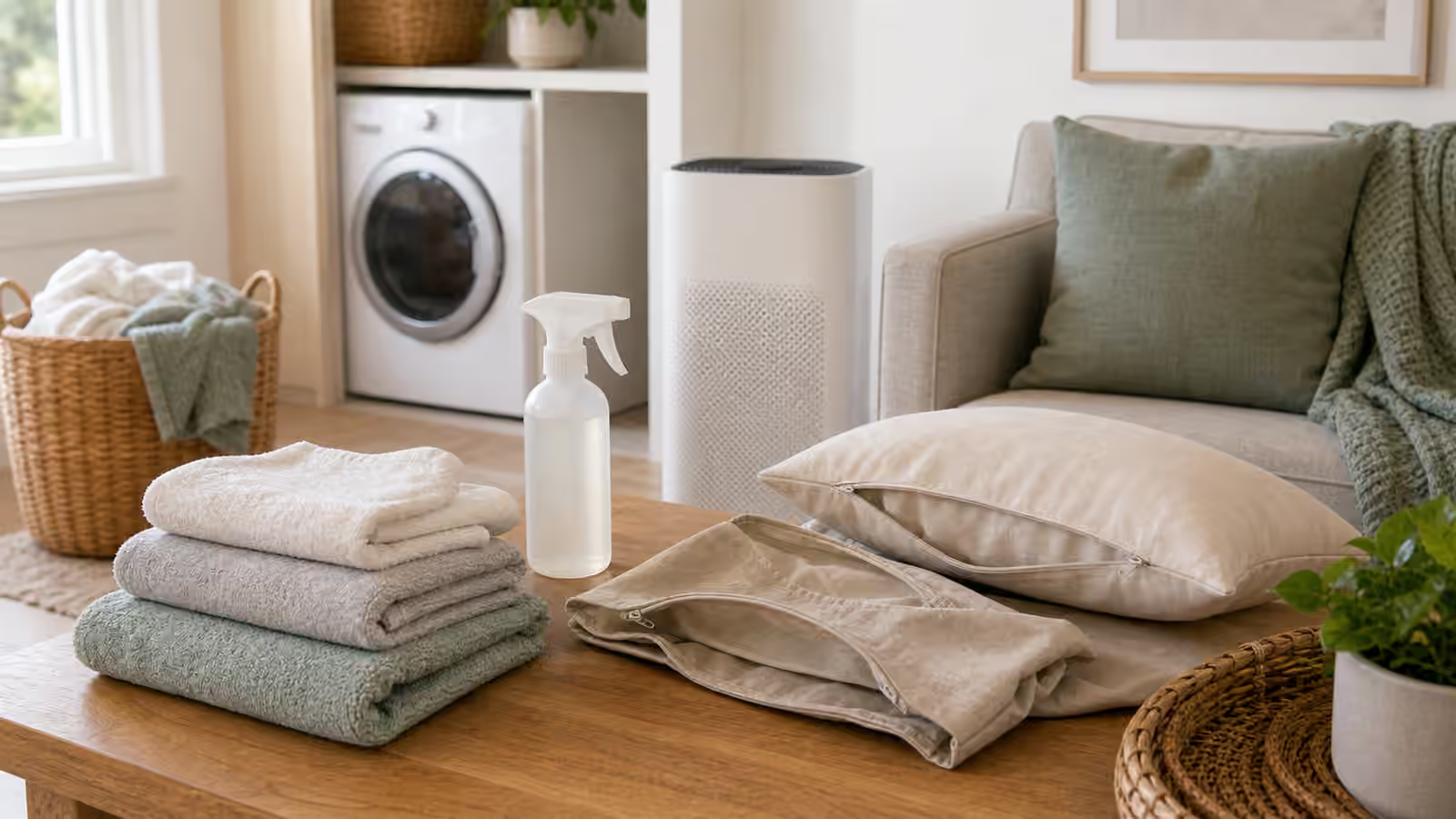
The reason fragrance lingers is that soft materials store it. Towels, sheets, curtains, throw pillows, sofa covers, rugs, coats, and fabric bins all soak up whatever passes through them, whether that is detergent perfume, body odor, cooking smells, smoke, dander, or a damp note from a slow-drying wash. When a spray makes a room smell better for ten minutes and then the old smell creeps back, that is the fabric reasserting itself. The pillow, the throw, the rug is the source, and the air is only reporting on it.
That reframing changes what you reach for. Instead of adding another layer on top, you ask which fabric is doing the talking and whether it can be reset. Washable items get washed and dried thoroughly. Non-washable items get aired out or cleaned according to their care instructions. A removable cushion cover is almost always a better target than the whole room, because you can wash the thing that actually holds the smell. The dust, bedding, and soft surfaces guide comes at the same reservoir problem from the angle of dust and allergens, and the two share a core move: treat the textile as the source rather than the air above it.
Less Product Often Reads As Cleaner
Laundry products are unusually easy to overdo, because the cap, the load size, and the strength of the scent rarely line up with what a given wash needs. Too much detergent leaves residue that keeps working long after the wash. Too much softener changes how a fabric feels and locks fragrance in. Scent beads and dryer products can make a folded stack smell intense days later, in a drawer nobody has opened. If you want calmer room air, the reliable experiment is to dial one product back and give the household a few cycles to notice.
This is a place where a small test beats an argument. Wash a set of towels with a plainer routine, dry them completely, and store them somewhere away from shoes, smoke, and damp. Live with the room for a week. If it smells less perfumed but still faintly musty, the scent was covering a moisture or storage problem all along. If it simply smells clearer and the towels still seem perfectly clean, the old routine was louder than it needed to be, and you have found headroom to reduce without losing anything you cared about.
Drying Beats Deodorizing
Damp fabric will out-argue any fragrance. Towels folded slightly too soon, a drying rack crammed into a closed room, a wash left overnight in the machine, or laundry parked in a humid closet all produce a stale note that no spray genuinely fixes; it only briefly masks. When the underlying issue is drying time, humidity, or crowding, the laundry, drying racks, and indoor moisture guide is the better companion, because it treats the water rather than the smell.
The working rule is simple: do not put fabric away until it is truly dry, and remember that thick towels, blankets, and cushion covers need more time than shirts. The drying space itself needs airflow and a bit of humidity awareness, so if the laundry nook is damp, fix the nook before you blame the fabric. And when something comes out fully dry but strongly perfumed, that is the moment to decide, on purpose, whether you want that scent riding along into every room the item will live in.
A Spray Is Not Ventilation, And Not Filtration
Fabric sprays feel active in a way that is worth being honest about. Before guests arrive, after cooking, when a sofa smells tired, a quick burst gives the room a new top note and the satisfaction of having done something. But it does nothing about the actual mechanism. If the problem is particles in the air, a spray does not filter them. If the problem is stale, over-breathed air in a closed room, a spray does not exchange any air. If the problem is a damp textile, a spray adds moisture and scent on top of moisture, which is precisely the wrong direction. The candles, incense, and fragrance-habits guide puts intentional scent from combustion in the same source-control frame; fabric sprays belong there too. Use them sparingly if you like them, keep them off materials that should not be sprayed, and notice when a room needs scent again and again, because a room that keeps asking for perfume is telling you where the real source is hiding.
Filtration has a genuine but bounded role. A particle filter helps with the lint, dust, dander, and pollen that lift when you move textiles around, and it can quietly improve the air in the seat where people actually sit. It will not pull the scent back out of a heavily fragranced blanket, and thin layers of activated carbon should not be sold to you as a reset button for a whole fragrance habit. Placement matters more than people expect: a purifier does its best work in the occupied zone, not buried behind a pile of laundry or shoved against a wall. The purifier placement planner is a practical way to decide where the unit should sit so it treats the air near the sofa rather than the corner, once you have already lowered the source it is meant to support.
Shared Homes Need Agreements, Not Escalation
Fragrance is deeply personal, but air is shared. In apartments, shared laundry rooms, guest bedrooms, and households where people react differently, a strongly scented routine can become a quiet source of friction even when no one means any harm. The point here is not a health verdict; it is that shared rooms simply work better when everyone knows what is being added and has a way to turn it down. A low-scent or unscented baseline for guest bedding is a courteous default unless a guest asks otherwise. Shared living rooms do best when fabric sprays are treated like candles: optional, noticeable, and used by agreement. And coats or blankets that come back from a smoky or heavily perfumed space are worth isolating and cleaning on their own, so a hallway closet full of scented outerwear does not season every room the closet opens onto.
Make The Routine Boring, And Know The Boundary
A calmer fabric routine is refreshingly undramatic. Wash what can be washed, dry it fully, avoid crowding damp items, store clean textiles away from shoes and strong odors, and use fragrance only when it is a choice you actually want to make. Keep removable covers genuinely removable by not burying their zippers. Air out guest bedding before the day you need it, and clean the laundry basket if it starts carrying odor between loads. When a room smells wrong, the first question is which fabric changed, new pillows, a damp towel, a freshly sprayed sofa, a pet blanket, a stored quilt, before the scent bottle comes out.
One honest limit belongs at the end. This is practical education about managing everyday fragrance and textile odor, not medical advice, and nothing here can promise that a given room is safe for a given person. Strong reactions to fragrances are real and personal, and persistent or serious symptoms are a conversation for a clinician, not a laundry routine. And if a smell points at something beyond ordinary fragrance, a musty odor that keeps returning may signal hidden moisture or mold, and any hint of gas, chemical residue, or fuel-burning trouble is out of scope entirely, step away from air freshening and get the right help. Within those bounds, treating textiles as sources is what finally lets a room stop needing perfume to explain itself.