
Secondhand smoke drifting in from a neighbor is one of the most frustrating indoor-air problems, because the source is real, it is not yours, and you cannot switch it off. You can smell it under the door at night, or catch it rising through a shared bathroom vent, or notice it curl in near a window that faces a courtyard. The frustration is compounded by how personal it feels. But the way through is not a heroic gadget or a confrontation in the hallway. It is a calmer, three-part approach: build evidence, reduce the pathways you actually control, and clean the air in the room where you spend the most time.
Understand How Smoke Gets In
In a multi-unit building, air does not respect walls the way people assume it does. Units connect through more openings than are obvious: the gap under the entry door, the shared corridor, plumbing and cable penetrations behind cabinets and under sinks, electrical outlet and switch boxes on shared walls, bathroom and kitchen exhaust risers, and windows or balconies that share the same outside air. Smoke follows pressure differences, moving from wherever it is produced toward wherever the air pressure is lower, which is often your unit when your own exhaust fans are running or when the stack effect pulls air upward through the building.
Knowing this changes what you look for. Instead of treating the smell as a vague invasion, you can trace it. Does it arrive at particular times, suggesting a neighbor’s routine? Is it strongest at the front door, pointing at the corridor? Does it appear when you run the bathroom fan, suggesting a shared riser or that your own fan is pulling makeup air from the wrong place? Each observation narrows the pathway and points at a specific, ordinary fix rather than a helpless one.
Build The Evidence First
Because the source belongs to someone else, documentation is not busywork; it is the thing that makes every later conversation productive. Keep a simple, dated record of when the smoke appears, where it is strongest, and how long it lasts. Note whether it correlates with weather, time of day, or your own fan use. This record does two things. It helps you and, later, a landlord or manager see the actual pattern instead of trading impressions, and it keeps you from over-reacting to a one-off while under-reacting to a genuine recurring problem.
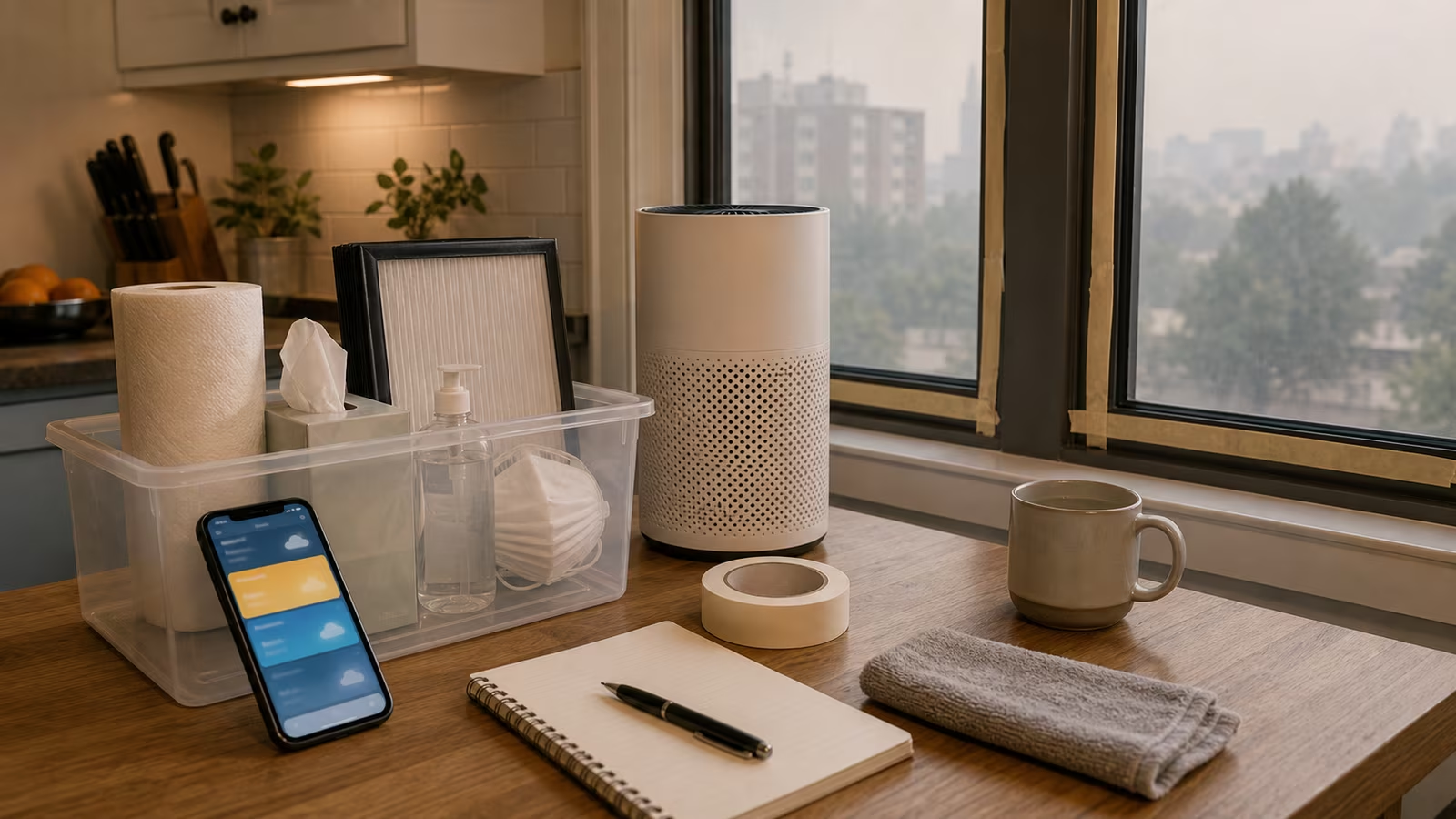
When you are ready to turn that record into a plan for a bad stretch, the smoke-day plan builder gives the loose notes some structure: it helps you decide which room to defend, what to check on your filters, which leaks to close first, and what to do when the smell arrives, so a smoky evening becomes a short checklist rather than an argument with yourself. Enter conservative guesses where you are unsure rather than forcing a confident answer; the point is a repeatable response, not false precision.
Seal The Pathways You Control
You cannot remodel a building you rent, but the small openings are often surprisingly reachable. A door sweep or even a rolled towel along the bottom of the entry door blunts the corridor pathway, which is frequently the biggest one. Foam gaskets behind outlet and switch plates on a shared wall are cheap and reversible. The gaps where pipes pass through cabinets under the kitchen and bathroom sinks can be closed with removable sealant or gap filler that a landlord is unlikely to object to. Weatherstripping on a leaky window helps with a courtyard or balcony source.
A subtler lever is pressure. When your own bathroom or kitchen exhaust fan runs, it lowers the pressure in your unit and pulls makeup air from somewhere, sometimes straight from a smoky corridor or riser. If running a fan reliably makes the smell worse, easing off on it, or cracking a window to a cleaner side while it runs, can change which direction the air moves. The goal throughout is to make your unit a slightly harder place for someone else’s smoke to enter, one modest, reversible fix at a time, so you can tell which one actually helped.
Filter The Room You Live In
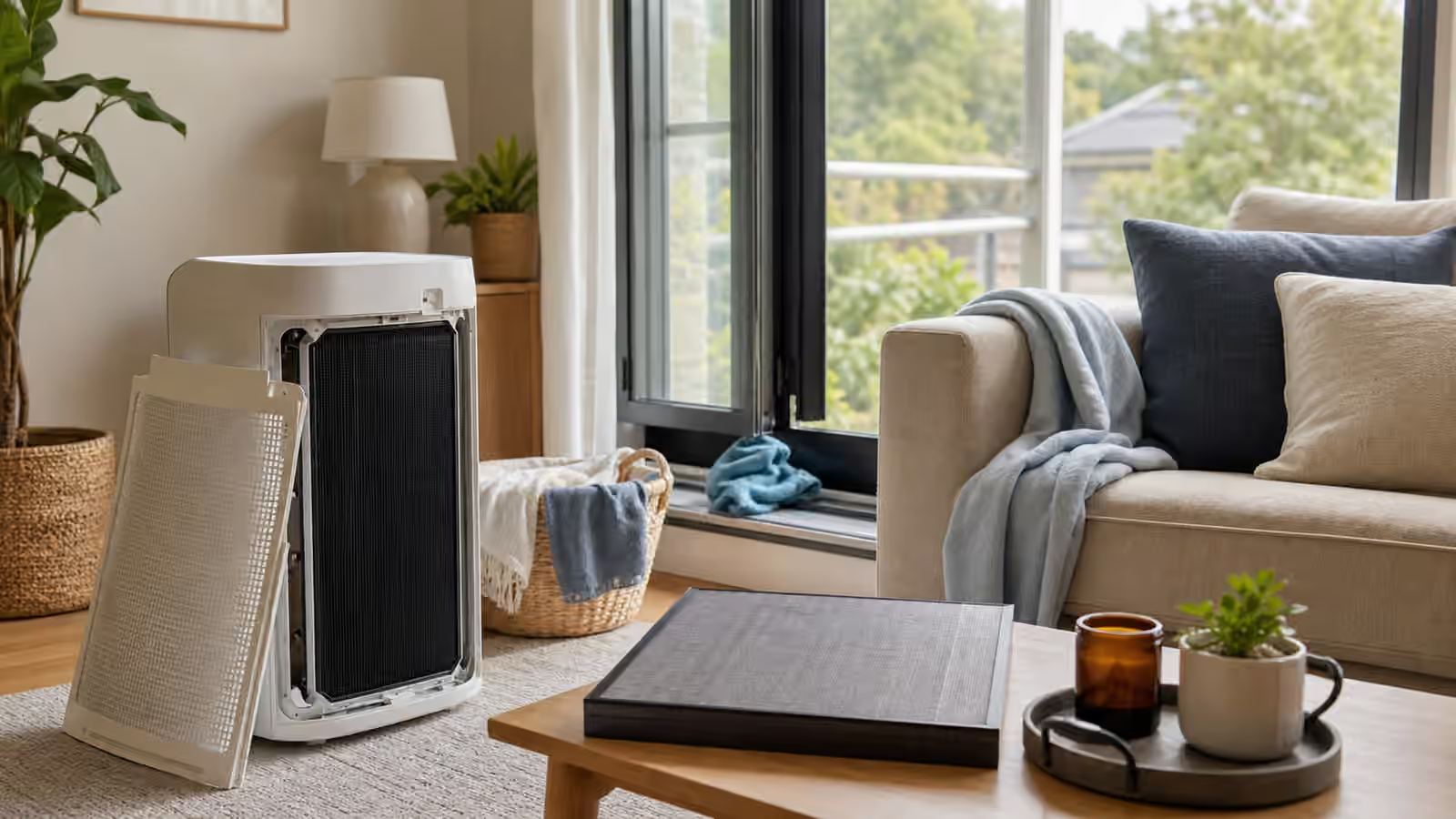
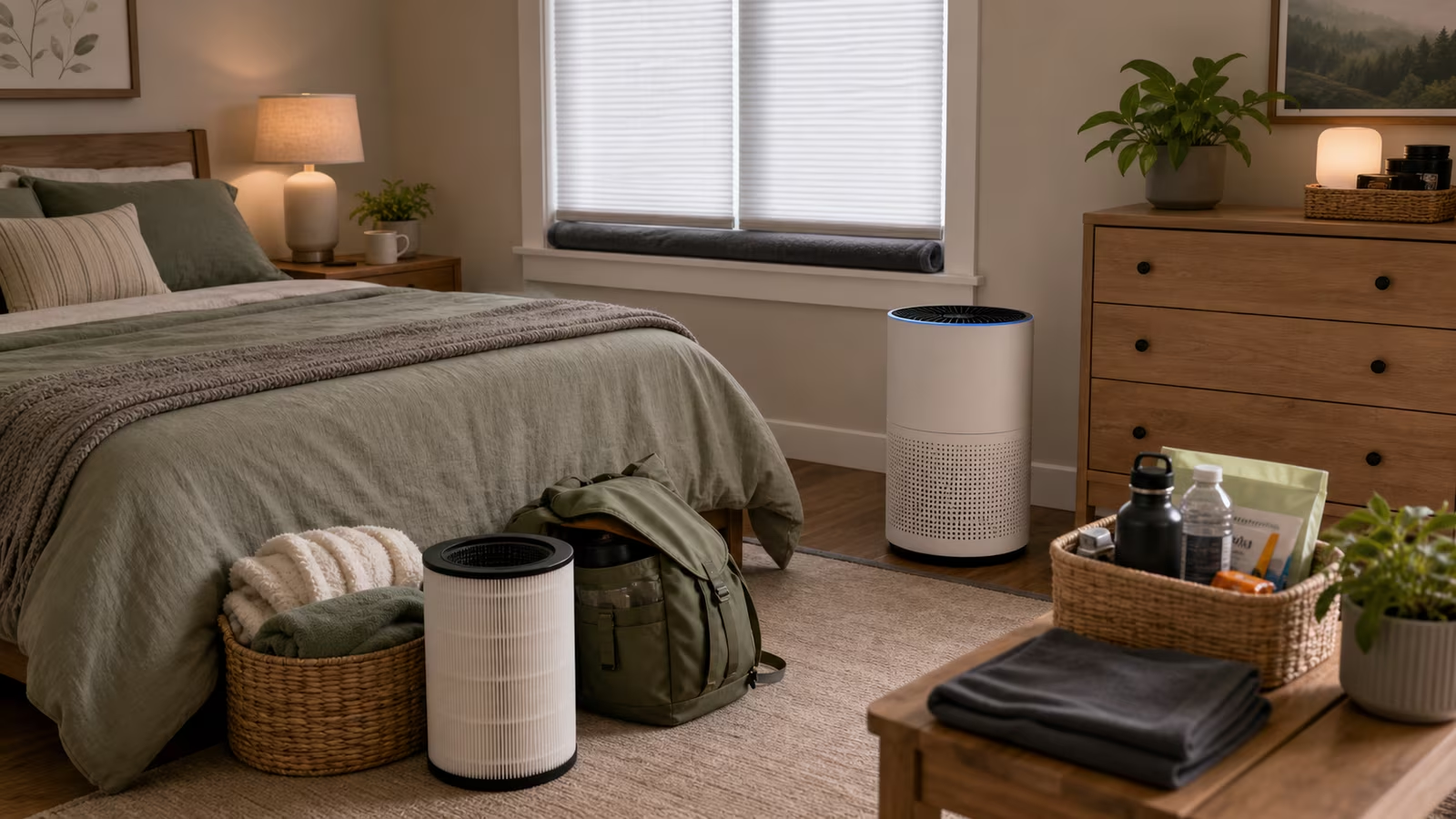
Sealing reduces how much smoke arrives; filtration handles what still gets through. Tobacco and cannabis smoke is mostly fine particles, and a properly sized portable air cleaner with a true particle filter, running in the room where you spend the most time, is the tool that genuinely helps with those particles. Size it for the actual room, not the biggest number on the box, and place it where air can reach it rather than jammed behind a sofa or against a wall. The same particle-handling logic that applies to your own cooking smoke and grease smells applies here; the difference is only that the source is on the far side of a wall.
Be honest with yourself about what filtration cannot do. A particle filter reduces the haze and much of the particulate load, but the lingering smell of smoke also involves gases that a thin filter will not fully remove; activated carbon can help with some of that odor when there is enough of it and enough airflow, and it is not a magic eraser. Smoke that has soaked into carpets, upholstery, and curtains becomes its own slow source, which is why dust control that works and attention to bedding and soft surfaces matter: washing and cleaning the textiles that have absorbed smoke keeps them from re-releasing it into a room you just cleaned. And please steer clear of ozone generators marketed as smoke removers; they add a lung irritant to a room instead of solving anything.
Use The Right Channels
Because the source is not yours, part of the solution lives outside your unit, and this is where the calm, documented approach pays off. A dated log of the pattern is far more persuasive to a property manager than a heated complaint, and many leases and local ordinances address smoke transfer between units more than tenants expect, so it is worth reading your lease and checking whether your building or jurisdiction has smoke-free housing provisions. Approaching a manager with a clear record and a specific request tends to move things; approaching a neighbor directly can work in some buildings and inflame things in others, so read the situation and lean on management when the relationship is strained. None of this is a fast fix, but combined with sealing and filtration it gives you leverage on the part of the problem you truly cannot solve alone.
Keep The Boundary Honest
A calm plan can meaningfully reduce how much secondhand smoke reaches you and how much particulate hangs in your rooms, and that is a genuine, worthwhile improvement. It is not the same as making the space smoke-free, and this guide cannot promise that any room is safe, because the source is beyond your control and no home filter captures everything. This is practical education, not medical advice. Secondhand smoke exposure is a real health concern, and if anyone in the household has persistent or serious symptoms, that belongs with a clinician rather than a purifier.
Keep the true emergencies in their own category as well. The steady seep of a neighbor’s cigarette is a chronic nuisance to manage; the sudden smell of something burning, a gas odor, or any sign of carbon monoxide is not something to filter or seal your way through. Make sure working smoke and carbon monoxide alarms are in place as life-safety devices entirely separate from any air-quality gadget, and if one sounds or you suspect fire or a fuel-burning problem, leave and call for help rather than reaching for the air cleaner. Within those limits, evidence, sealing, filtration, and the right channels together are the most effective calm response available to a renter who did not choose the smoke.